
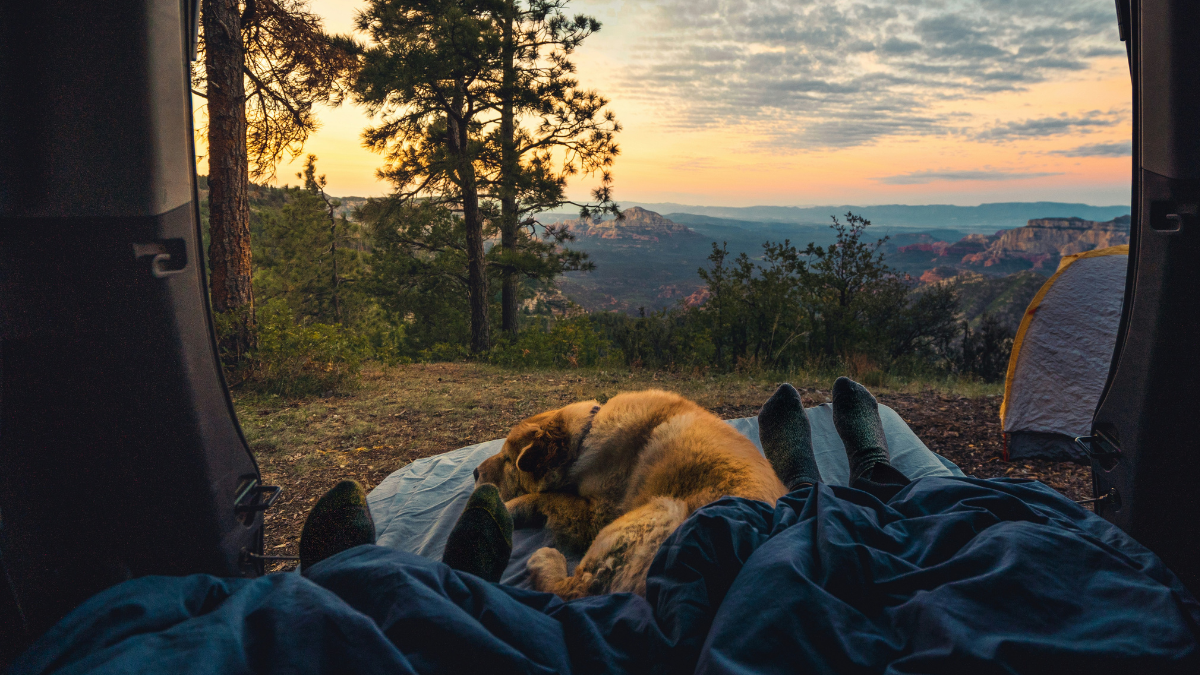

Camping with your dog can be one of the most rewarding experiences for both of you. Fresh air, starry skies and new trails to explore together make it a true adventure. But before you pitch a tent and hit the wilderness, your dog needs to be ready. Training your dog for camping isn’t just about obedience, it’s about ensuring they’re confident, calm and safe in an outdoor environment.
Authors Insight: On the first camping trip with my then puppy, Bowie, he managed to slip the harness attached to my camper van and proceeded to cause chaos around the campsite. I chased him from tent to tent pleading with him to come back, but he hadn’t learned recall yet (we still struggle with it, in all honesty) and, unfortunately, a 4 month old lurcher is still faster than your average human. Everything ended in good spirits, but it did drive the point home for me and it was that day we resolved to learn proper campsite etiquette.
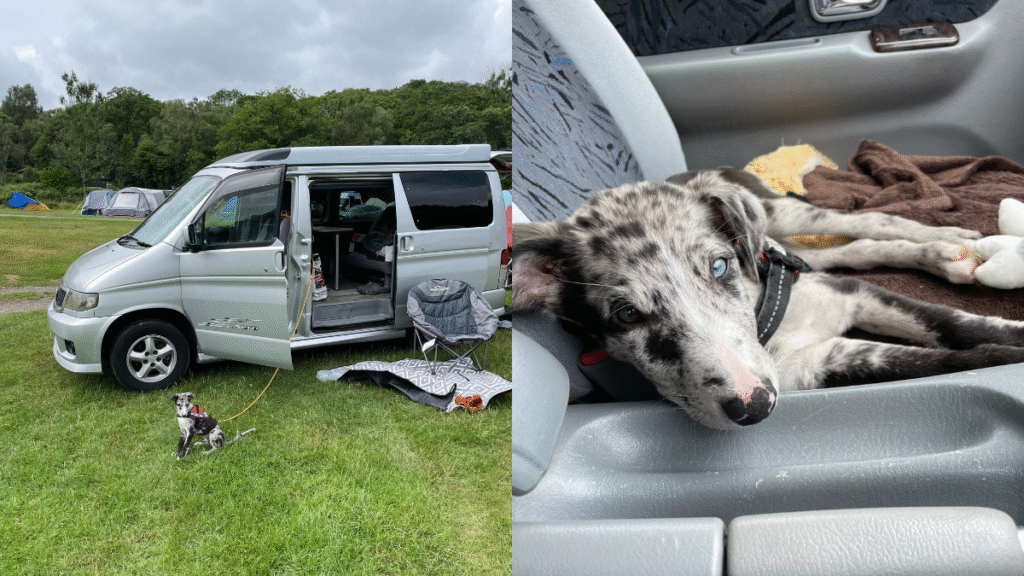
Remember, we were all beginners at camping with dogs at some stage.
Why Training Matters Before You Camp
Even well-behaved dogs can struggle in unfamiliar environments. Campsites are full of distractions, such as other dogs, wildlife, new scents and noises that can trigger excitement or anxiety. Proper preparation ensures your dog can enjoy the experience without stress, while also helping you avoid common issues like barking, bolting or unsafe behaviour near roads, fires or tents.
Core Skills Every Dog Should Learn Before Camping
1. Reliable Recall
Your dog should come back to you every single time, no matter the distraction. Practice recall in progressively busier environments—start indoors, then a fenced garden, and finally quiet trails. Reward generously with high-value treats or praise to reinforce success.
How to train it:
- Start indoors where there are no distractions. Call your dog’s name once in a happy tone.
- The moment they look at you or move toward you, reward with high-value treats.
- Gradually increase distance and distractions—move to the garden, then quiet trails.
- Never punish a slow recall. Always make coming back the best option with praise or play.
2. Leave It and Drop It
These commands can prevent your dog from eating something harmful or chasing wildlife. Use short daily training sessions, introducing low-level distractions first. Over time, increase the challenge by adding more tempting items.
- Hold a treat in your closed hand and let your dog sniff.
- Say “leave it.” When they stop trying to get it, reward them with a different treat from your other hand.
- For “drop it,” give them a toy, then offer a treat while saying “drop it.” Trade items until they learn to release on cue.
- Practice daily so it becomes second nature outdoors.
3. Calm Leash Walking
Campsites and trails can get busy. A calm, loose leash walk helps keep your dog under control while making walks more enjoyable. Practice stopping, rewarding eye contact and changing direction often so your dog learns to stay focused on you.
- Start in a quiet area. As soon as your dog walks beside you on a loose leash, mark the behaviour with “yes” and give a treat.
- If they pull, stop walking. Wait until the leash slackens, then move forward again.
- Vary your pace and direction so your dog learns to pay attention to you.
- Consistency is key—every walk is a training opportunity.
4. Settling on Command
Being able to relax on cue is vital for campsite life. Teach your dog to settle on a blanket or mat using positive reinforcement. Start indoors, then move this habit outdoors so they associate their mat with calm and rest, even with background noise.
- Choose a mat or blanket that will become your dog’s “settle spot.”
- Ask them to lie down on it and reward calm behaviour.
- Gradually increase how long they stay there before getting up.
- Practice in different environments so your dog learns to settle even when things are happening around them.
5. Confidence in New Environments
Dogs can be startled by tents, crackling fires and rustling sounds at night. Desensitise them gradually—set up your tent in the garden, play ambient campfire or nature sounds, and let them explore the setup at their own pace.
- Introduce camping gear at home—let your dog sniff the tent, sleeping bag and stove.
- Play nature sounds or gentle campfire audio at a low volume while rewarding calm reactions.
- Do short practice sessions outdoors to build familiarity.
- Keep experiences positive and end on a good note.
How to Get Started with Camping Preparation
Simulate a Mini-Camping Experience
Pitch your tent in the garden or at a quiet local park. Spend a few hours together, practising obedience, relaxing and staying calm around camping gear. Use this as a chance to identify any challenges before your first real trip.
Work on Socialisation
Your dog will encounter other dogs, people and possibly wildlife on a campsite. Regular social walks in busy areas will help them stay composed. Reward calm behaviour and ensure they’re comfortable around a variety of stimuli.
Gradually Extend Your Adventures
Start small. Begin with short day trips or one-night stays close to home. Monitor your dog’s reactions—are they eating, sleeping and settling normally? Gradual exposure builds confidence and resilience.
Practice Good Camp Etiquette
Train your dog not to approach other campers or animals uninvited. Keep them on a lead when required and always clean up after them. This ensures everyone, including other campers, enjoys their time outdoors.
Common Challenges and How to Overcome Them
- Barking at night: Bring familiar bedding and toys to comfort your dog. Keep your tent zipped to block outside sounds and scents.
- Overexcitement: Give plenty of exercise before arriving and provide mental stimulation through toys or scent games.
- Fear of the tent: Reward curiosity and calm behaviour around the tent rather than forcing your dog inside.
Final Thoughts
With a bit of patience and preparation, almost any dog can become the perfect camping companion. Training not only keeps them safe but deepens the bond between you as you explore the outdoors together.
If you’re unsure about your dog’s behaviour or training progress, it’s always best to seek advice from a qualified dog trainer or behaviourist before heading off on your first adventure.