
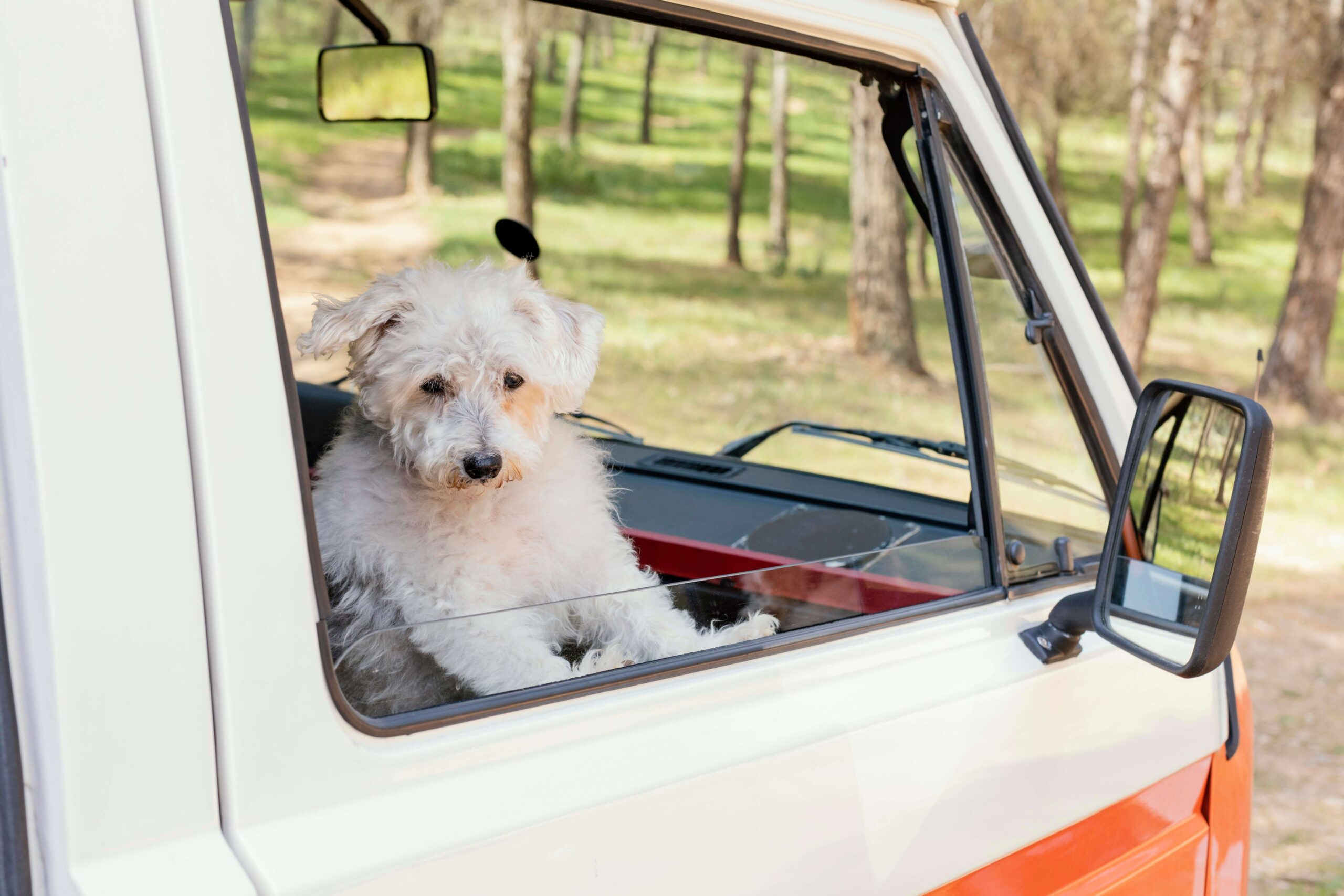

Hitting the road with the dog in your camper van is one of the best ways to explore the outdoors together. The freedom to roam, stop when you want and wake up to new views every day is unbeatable. But before you hit the road, it’s vital to think about camper van safety for your dog, particularly whilst in transit.
This guide covers everything you need to know about keeping your dog safe and comfortable during camper van travel.
Preparing Your Van for Safe Travel
Before you start the engine, make sure your van setup is suitable for your dog. Space, airflow and security are key considerations.
- Create a secure area: Your dog should travel in a properly secured spot, such as a seat-belt harness or a sturdy crate fixed in place. Never let them roam freely while driving.
- Plan for airflow: Proper ventilation prevents overheating, especially during summer. Roof vents, shaded windows and fans all help maintain a comfortable temperature.
- Flooring and surfaces: Non-slip flooring reduces the risk of injuries when your dog moves around the van.
- Storage safety: Keep food, cleaning products and other harmful items out of reach.
Choosing the Right Restraint System
UK law requires dogs to be suitably restrained in a vehicle. This helps prevent distraction to the driver and protects the dog in case of sudden braking or an accident.
The main options include:
- Seat-belt harness: Clips directly into your seat-belt socket and keeps your dog secure on the seat. Ideal for small and medium breeds.
- Travel crate: Provides solid protection and is great for dogs that feel safer in an enclosed space. Ensure it’s well-ventilated and strapped down firmly.
- Travel barrier: A metal or mesh guard that keeps dogs safely in the rear area. Best used alongside a bed or harness system.
Always choose equipment that meets crash-tested safety standards where possible.
Managing Temperature and Ventilation
Campervans can heat up quickly, even with windows cracked open. Dogs are far more vulnerable to heatstroke than humans.
- Avoid leaving your dog unattended in the van, especially on warm days.
- Use reflective shades and fans to regulate the temperature.
- Park smart: Choose shaded spots and orient the van to block direct sunlight.
- Monitor your dog’s behaviour: Heavy panting, drooling or lethargy can all be early signs of overheating.
In cold conditions, provide insulated bedding and ensure no draughts are blowing directly into their sleeping area.
Comfort on Long Journeys
Long road trips can be tiring for dogs, so build in regular stops and make sure they’re comfortable.
- Frequent breaks: Stop every couple of hours for toilet breaks, water and a short walk.
- Hydration: Always have a spill-proof water bowl accessible during travel.
- Familiar bedding: Use your dog’s usual bed or blanket to help them relax.
- Calming aids: Some dogs benefit from natural calming sprays or toys with familiar scents.
A calm, well-rested dog is far easier to travel with and less prone to anxiety.
Night-Time Safety and Security
Once parked up for the night, a few extra precautions can make all the difference.
- Secure doors and windows: Curious dogs can nudge latches or windows open.
- Use a reflective collar or light: Helps with visibility during late-night toilet trips.
- Check your surroundings: Campsites, lay-bys and rural areas can have hazards such as wildlife or nearby roads.
- Temperature control: Keep an eye on the temperature overnight, especially in small vans.
Legal and Insurance Considerations
In the UK, dogs must be restrained while travelling under the Highway Code (Rule 57). Failure to do so could result in fines or points on your licence if it leads to careless driving.
It’s also worth checking that your camper van insurance covers pets in case of an accident, and that your travel insurance includes emergency vet cover if you’re going abroad. Microchipping and ID tags are legal requirements, and a GPS tracker adds extra peace of mind.
Emergency Preparedness
Always plan for the unexpected.
- Carry a dog first aid kit (and make sure you know how to use it): Include bandages, antiseptic wipes, tick remover, and emergency vet contacts.
- Locate nearby vets: Use Google Maps or apps like Pet First Aid or PawSquad before you travel.
- Have a plan if your dog goes missing: Keep a recent photo and your dog’s microchip number accessible.
Final Thoughts
Travelling with your dog in a camper van is an unforgettable experience, but safety should always come first. With the right setup, restraint and preparation, your journeys can be both adventurous and stress-free. Make sure you have all of the information to make vanlife with your dog and fun and rewarding experience, for both of you!
A little planning goes a long way towards keeping tails wagging safely on the open road.