
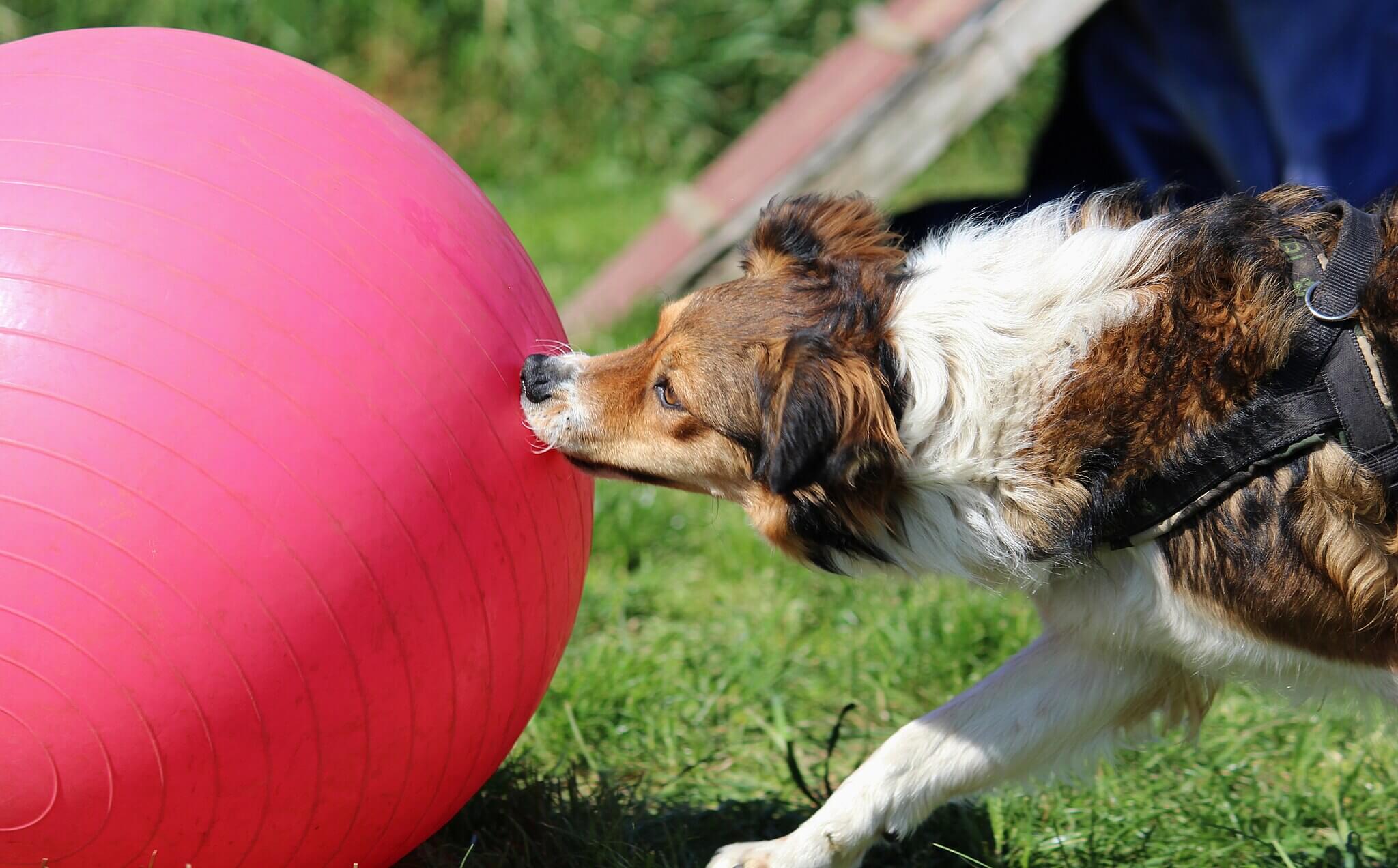

If you’ve ever watched your dog nudge a ball across the garden or herd their toys into a corner, Treibball might be the perfect sport for you both. Sometimes called “urban herding,” this clever, cooperative game combines brains, energy, and teamwork — and best of all, it’s suitable for almost every breed.
What is Treibball?
Treibball (pronounced “trib-ball”) originated in Germany as a way to give herding dogs mental and physical exercise without needing livestock. The sport involves guiding large exercise balls into a goal using only verbal cues, whistles, and body language.
Think of it like football meets sheep herding — but instead of sheep, you’ve got brightly coloured balls, and instead of running wild, your dog is responding to precise commands to “drive” the balls into place.
It’s an excellent activity for sharpening obedience, boosting focus, and strengthening your bond with your dog.
How Does It Work?
In a typical Treibball setup, eight large balls are arranged in a triangle formation in front of a goal. From a distance, the handler gives cues for the dog to push the balls one by one into the goal — using only their nose or shoulders.
Scoring is based on accuracy, teamwork, and communication. Competitions are often timed, but many owners play simply for fun, using it as a way to mentally stimulate their dogs while enjoying time outdoors.
What You’ll Need to Get Started
One of the great things about Treibball is that it doesn’t require much equipment or space. To start, you’ll need:
- Exercise balls (size matched to your dog — smaller balls for smaller breeds, larger for big dogs)
- A goal area (garden net, cones, or even between two trees)
- A few treats or a clicker for positive reinforcement
- Plenty of patience — Treibball relies on slow, step-by-step training
As your dog improves, you can add more balls, increase distance, or try timed sessions to make it more challenging.
Which Dogs Are Best Suited to Treibball?
While Treibball began as a herding dog sport, it’s now enjoyed by dogs of all shapes and sizes.
Breeds that tend to excel include:
- Border Collies
- Australian Shepherds
- Corgis
- Shetland Sheepdogs
That said, any breed with focus, enthusiasm, and a good “push” can take part. Even dogs with limited mobility can enjoy slower-paced versions of the game, making it a brilliant all-round activity.
Training Tips for Beginners
Start simple — your dog doesn’t need to move eight balls on day one!
- Introduce the ball slowly. Let your dog sniff and interact with it calmly.
- Reward nose touches. Each gentle nudge should earn praise or a treat.
- Add direction cues. Teach commands like “push,” “left,” or “right.”
- Increase the challenge. Once your dog understands the basics, add multiple balls or a goal target.
Short, positive sessions work best. The aim is teamwork, not competition.
Why Try Treibball?
Treibball is far more than a game — it’s a way to channel your dog’s instincts in a safe, controlled, and mentally enriching way.
It encourages:
- Stronger focus and impulse control
- Improved communication between dog and owner
- Confidence in shy or anxious dogs
- Physical activity without the rough play of other sports
For many owners, it becomes a weekly ritual that combines fun, teamwork, and exercise in one.
Getting Involved
Many dog training clubs now offer Treibball workshops and beginner classes across the UK. Alternatively, you can start at home with online tutorials and a single exercise ball.
If you’re part of the Wildpack Collective community, Treibball is a brilliant way to give your dog a new challenge — whether you’re training in your garden, local park, or campsite.
Final Thoughts
Treibball is proof that you don’t need sheep or fancy facilities to bring out your dog’s herding instincts. It’s accessible, engaging, and endlessly rewarding — a sport where communication matters more than speed.
If you’re looking for a fresh way to work as a team, give Treibball a try. You might also enjoy other dog sports, such as agility, flyball or canicross. Who knows? You might just discover your dog’s new favourite pastime.
Photo Credit: Tathiana Beltrami