
Northern Ireland rewards dog walkers in a way that few parts of the UK can match. The distances are short, the landscapes are wildly varied, and the sense of stepping somewhere genuinely remote arrives quickly and without much effort. Within an hour of Belfast you can be standing on the edge of ancient basalt cliffs, pushing through dense riverside forest beneath the Mourne Mountains, or crossing open moorland on the Antrim plateau with nothing ahead but sky.
These dog friendly walks in Northern Ireland cover the full range of what the country offers, from iconic coastal paths on the Causeway Coast to quiet forest circuits in County Fermanagh. Each one has been chosen for the quality of the experience, the practicality of the access and the character of the walking rather than simply for name recognition.
Giant’s Causeway and North Antrim Cliff Path
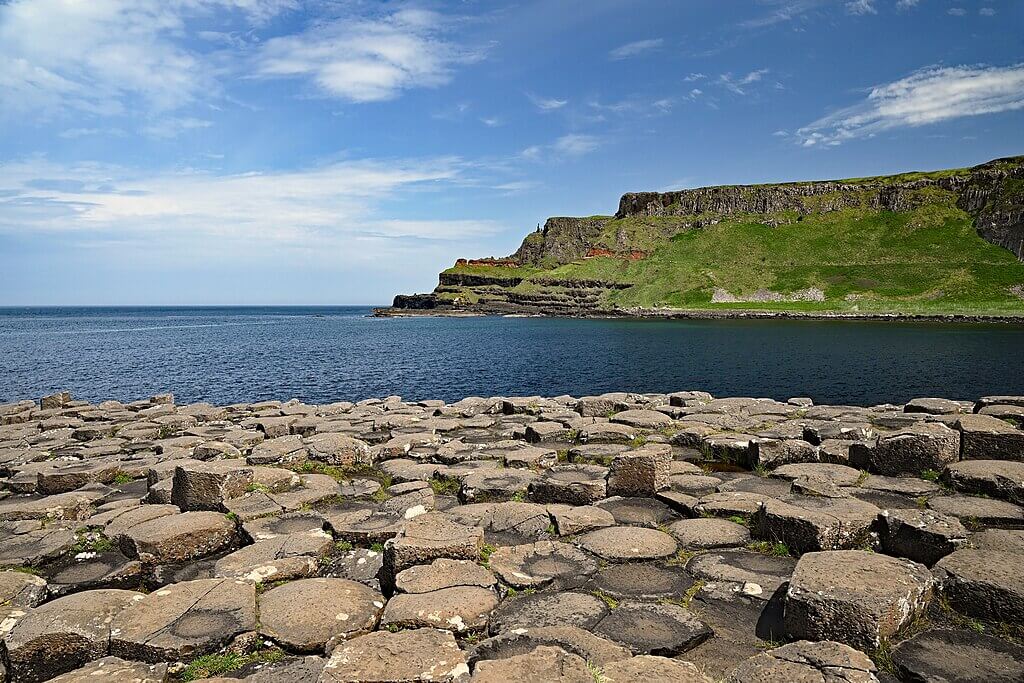
The North Antrim Cliff Path runs along the top of the basalt cliffs between the Giant’s Causeway and Dunseverick Castle, 8 miles of salt wind, crashing sea and the kind of exposure that puts dogs into a state of alert, attentive focus that you simply cannot replicate elsewhere. The path passes above deep coves where guillemots and razorbills nest in the cliff faces, threads past Benbane Head and Hamilton’s Seat at the highest point, and drops toward the ruins of Dunseverick with the sea always present and always loud.
For dogs, the combination of constant sea air, seabird scent drifting up from the cliff faces and wide, open ground underfoot makes this one of the most sensory-rich walks in the country. Leads are essential throughout given the cliff edges, but the path is wide enough and the pace relaxed enough that even energetic dogs settle quickly into the rhythm of the coast. Come in autumn or early spring and you will likely have long stretches of it entirely to yourselves.
- Distance: 12.9 km one way, 25.8 km return (8 miles one way, 16 miles return)
- Difficulty: Moderate, exposed cliff path with some undulation
- Parking: Giant’s Causeway Visitor Centre car park, pay and display
- Facilities: Visitor centre with café and toilets at Giant’s Causeway end
- Terrain: Coastal cliff path, grassy and rocky with some steep sections
- Best for: Dogs that love sea air, big horizons and continuous sensory stimulation
Tollymore Forest Park Shimna River Circuit
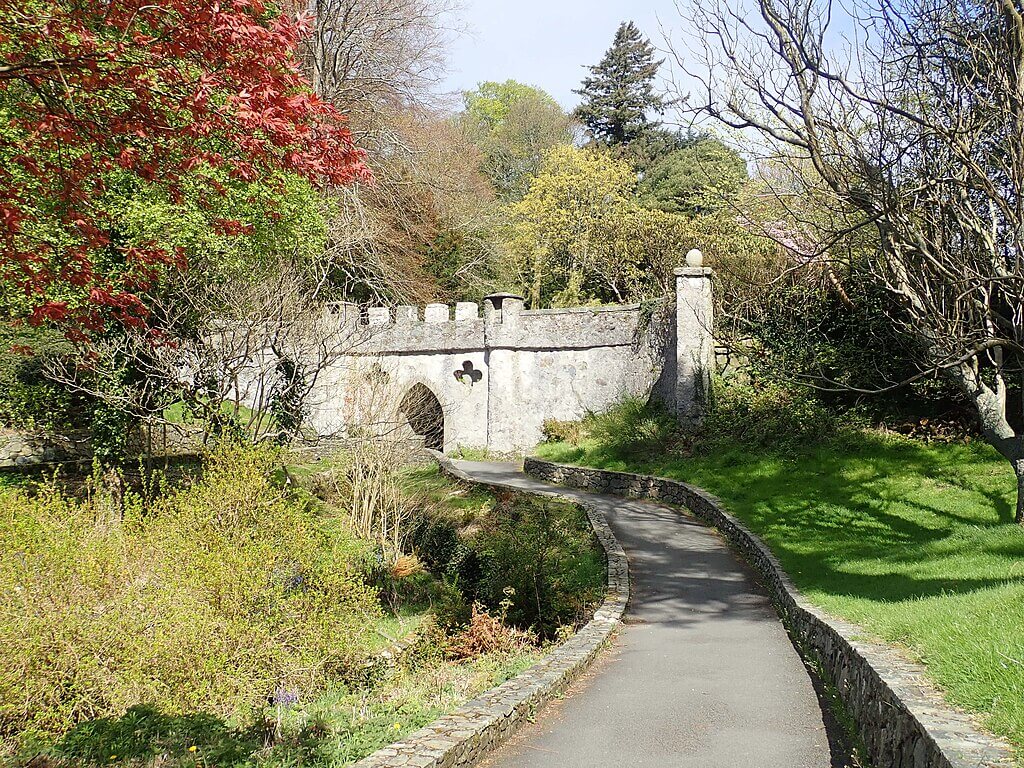

Tollymore Forest Park at the foot of the Mourne Mountains is what a forest should be. The Shimna River runs through the heart of it over stone bridges and past small waterfalls, through stretches of deep mixed woodland where the canopy closes overhead and the light drops to something dim and cathedral-like. The river is accessible in multiple places along the route, with shallow rocky sections that are perfect for dogs to wade, splash and generally lose their minds with pleasure.
The variety here is exceptional from a dog’s perspective. The scent landscape changes constantly, from damp riverbank to dry oak woodland to open meadow to conifer plantation, and the network of trails means there is no single prescribed loop. Longer circuits climb into the lower Mourne slopes where the trees give way to open ground and dogs that have been on lead in the woodland can stretch out properly. Few forests in the UK offer this level of textural variety in a single visit.
- Distance: 5 km to 12.9 km (3 to 8 miles) depending on route choice
- Difficulty: Easy to moderate, riverside terrain with optional hill sections
- Parking: Main Tollymore car park, Bryansford, pay and display
- Facilities: Toilets and picnic areas within the park
- Terrain: Riverside forest paths, stone bridges, woodland tracks
- Best for: Water-loving dogs and scent-driven explorers who need real variety underfoot
Slieve Donard from Bloody Bridge
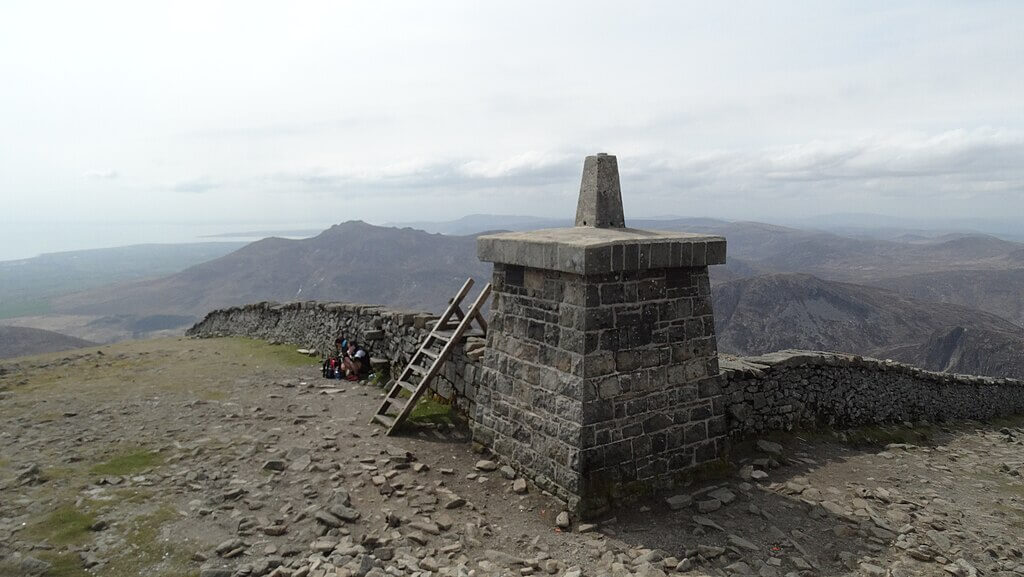

Slieve Donard is Northern Ireland’s highest mountain at 850 metres and the Bloody Bridge route is the most direct and satisfying way up it. The path follows the Bloody Bridge River upstream through open moorland before a sustained climb to the granite summit on the Mourne Wall, with the Irish Sea behind you and the full arc of the mountains ahead. It is a serious day out that demands proper hill kit and a dog that is genuinely fit and comfortable on rough mountain ground.
Dogs with the fitness for it will be in their element. The lower moorland section following the river is superb for confident off-lead running, with heather, bog grass and mountain stream crossings that most dogs find irresistible. Higher up, leads are sensible as the terrain becomes rockier and more exposed, but the mountain air up here is something dogs register immediately, heads high, completely alert and thoroughly alive. This is not a walk that merely tolerates dogs. It suits a particular kind of dog beautifully.
- Distance: 12.1 km (7.5 miles) circular
- Difficulty: Challenging, sustained mountain ascent with 750m of elevation gain
- Parking: Bloody Bridge car park, south of Newcastle, pay and display
- Facilities: None on route, cafés in Newcastle town
- Terrain: Moorland, riverside path and rocky mountain ridge
- Best for: Fit, confident dogs that thrive on open mountain terrain and stream crossings
Divis and Black Mountain Ridge Trail
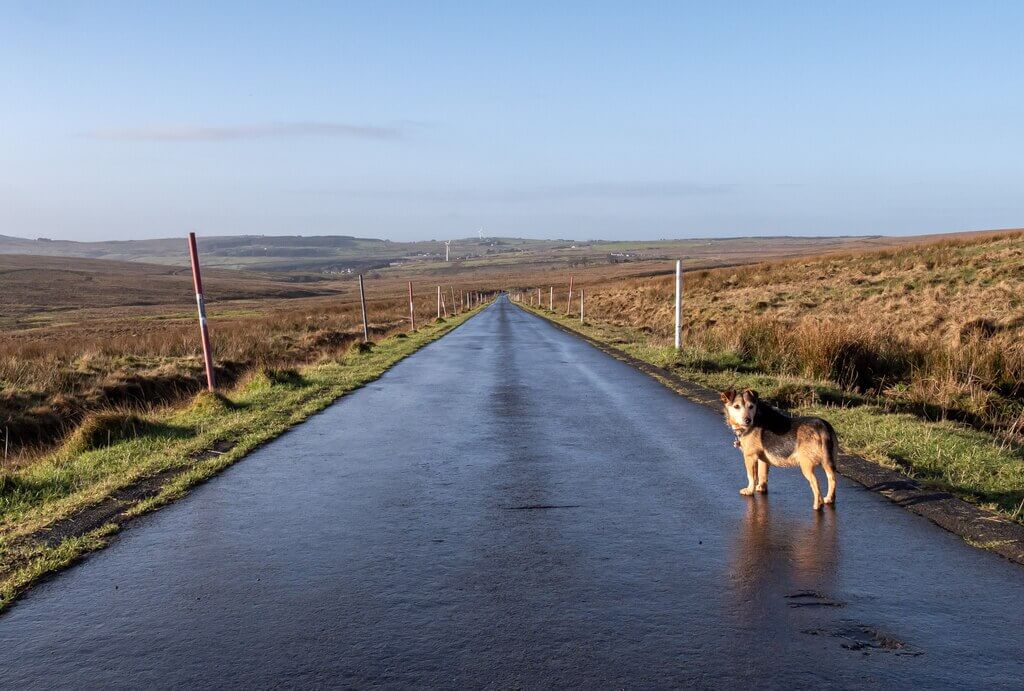

Divis and Black Mountain rise above Belfast in the National Trust’s care, and the ridge circuit between them is one of the most accessible stretches of proper open moorland in Northern Ireland. The path climbs steadily to 478 metres through deep heather and rough grassland, with Belfast spread below and, on clear days, the Mournes, the Isle of Man and the coast of Scotland visible from the summit plateau. The boardwalk sections protect the bog and make the walking easier underfoot without dulling the wildness of the surroundings.
Dogs that enjoy open, exposed ground with strong scents thrive here. The heather moorland holds grouse, hares and the kind of bird activity that keeps a dog’s nose working continuously, and the plateau is broad enough to allow genuine freedom in the right conditions. The Divis Coffee Barn near the entrance is properly dog welcoming, with outdoor seating, water bowls and staff who understand that a wet and muddy dog arriving from the hill is entirely normal. This is one of the best accessible moorland walks in Northern Ireland for dogs and owners who want big skies without a big drive.
- Distance: 6.8 km (4.2 miles) circular
- Difficulty: Moderate, steady climb on good paths and boardwalk
- Parking: National Trust Divis car park, free
- Facilities: Divis Coffee Barn with outdoor seating and water bowls near entrance
- Terrain: Open heather moorland, graded paths and boardwalk
- Best for: Dogs that love moorland smells, wide open ground and proper elevation close to the city
Glenariff Forest Park and Waterfall Trail
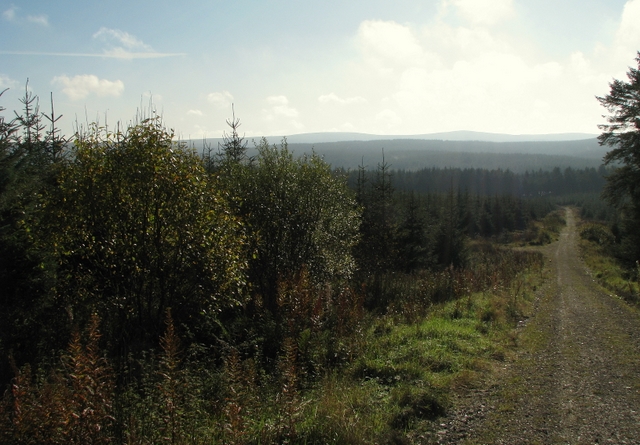
Glenariff is the Queen of the Antrim Glens and its Waterfall Trail is one of the most genuinely exciting short walks in the north, following the Glenariff River through a steep-sided gorge past two significant waterfalls on wooden boardwalks that carry you directly above rushing water. The noise of the falls below, the spray in the air and the dense green canopy above create a sensory intensity that dogs respond to immediately and visibly.
The gorge is alive with the sound and smell of fast-moving water throughout, which for most dogs means the walk never loses momentum. Dogs that are motivated by water, scent and shifting terrain will find this trail stimulating at every step. The wider forest trails that extend beyond the gorge offer longer stretches through mature woodland where the pace can relax and the exploration become more leisurely. It is a compact walk that punches well above its distance in terms of what it delivers.
- Distance: 3.2 km to 8 km (2 to 5 miles) depending on route choice
- Difficulty: Easy to moderate, some steep gorge sections
- Parking: Glenariff Forest Park car park, pay and display
- Facilities: Visitor centre with café and toilets
- Terrain: Forest paths, boardwalks above gorge, riverside walking
- Best for: Dogs energised by rushing water, dense woodland and continuously interesting terrain
Murlough National Nature Reserve Dune Circuit
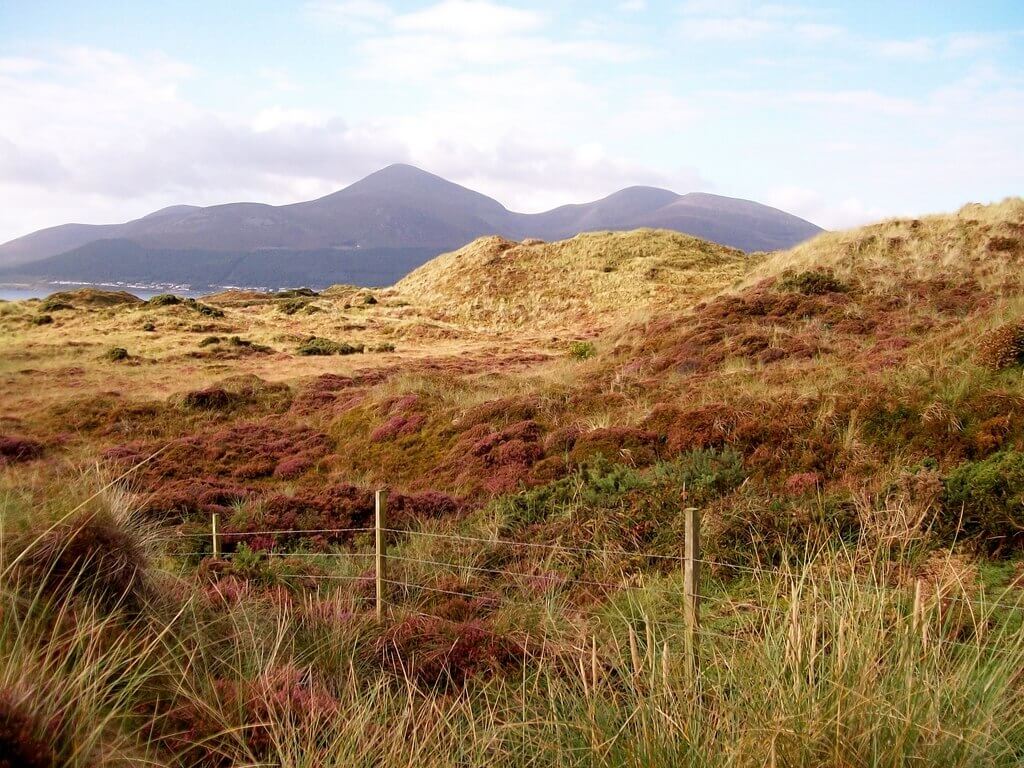

Murlough is a 6,000-year-old sand dune system on the County Down coast and it offers a dog walking experience genuinely unlike anywhere else in Northern Ireland. The boardwalk trails thread through ancient dune heathland where the vegetation is low and windswept, the smells are coastal and wild, and rabbit warrens run beneath the grass in every direction. The trail eventually opens onto the beach itself, where the dunes give way to wide open sand and the Mourne Mountains rise dramatically behind the shore.
For dogs, Murlough is a two-part experience. The dune circuit is full of interest in its own right, the heathland scent landscape is exceptional and the rabbits below ground keep noses busy throughout. The beach section then provides space to run, direct access to the water and the satisfaction of arriving somewhere properly open after the more contained walk through the reserve. Leads are required throughout to protect the dune ecosystem, but this is not a walk that needs off-lead time to deliver genuine fulfilment.
- Distance: 4 km (2.5 miles) circular
- Difficulty: Easy, flat dune boardwalk with beach section
- Parking: Murlough National Nature Reserve car park, National Trust, pay and display
- Facilities: Limited on site, cafés in Newcastle town
- Terrain: Dune boardwalk, heathland paths and sandy beach
- Best for: Dogs that love coastal air, rabbit-rich terrain and a beach reward at the end
Silent Valley Mountain Park
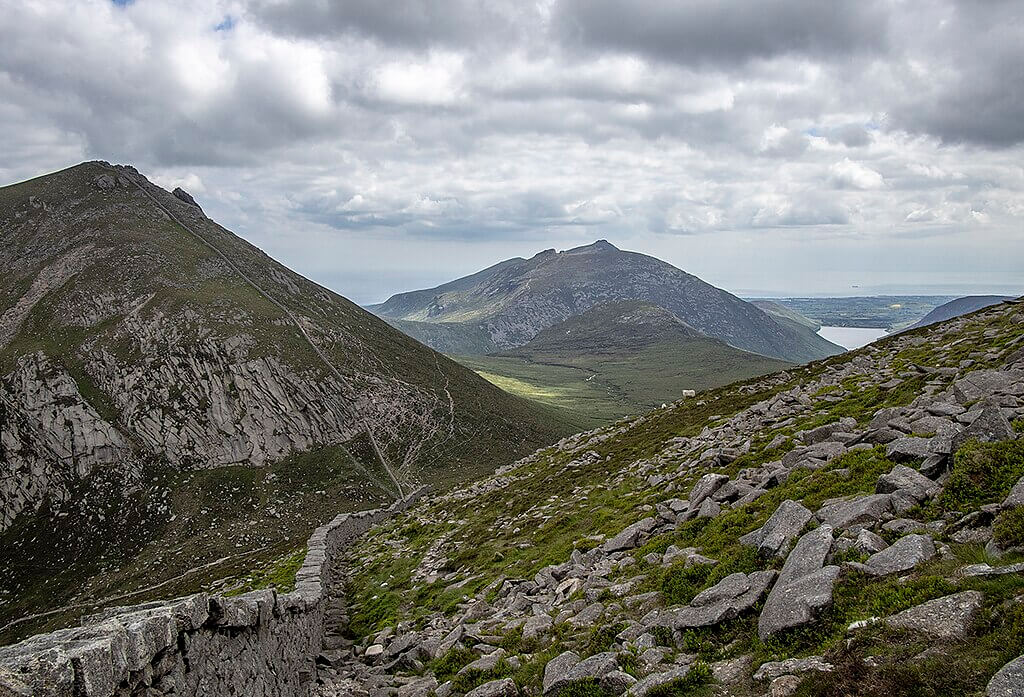

Silent Valley sits at the heart of the Mourne Mountains, a reservoir park enclosed by peaks on all sides and accessed through a valley that narrows steadily as you walk further in. The Ben Crom circuit climbs from the valley floor to the upper reservoir through genuine mountain terrain, with cold mountain streams crossing the path regularly and the scale of the surrounding peaks becoming more impressive with every kilometre.
Dogs that are stimulated by mountain environments will be thoroughly engaged from start to finish. The streams running off the hills are a particular draw, fast and cold and constantly varied, and the moorland sections between them smell of peat and open sky in a way that visibly lifts most dogs. The valley floor route suits a more moderate day while the full circuit to Ben Crom earns views and the kind of satisfying exhaustion that means a genuinely good walk happened. Either way, dogs leave this place well spent.
- Distance: 5 km to 14.5 km (3 to 9 miles) depending on route choice
- Difficulty: Easy to challenging, valley floor to mountain reservoir circuit
- Parking: Silent Valley car park, seasonal entry fee applies
- Facilities: Visitor centre with toilets, seasonal café
- Terrain: Mountain valley paths, moorland and reservoir shoreline
- Best for: Dogs that love mountain streams, cold air and proper wilderness character
Davagh Forest Dark Skies Loop
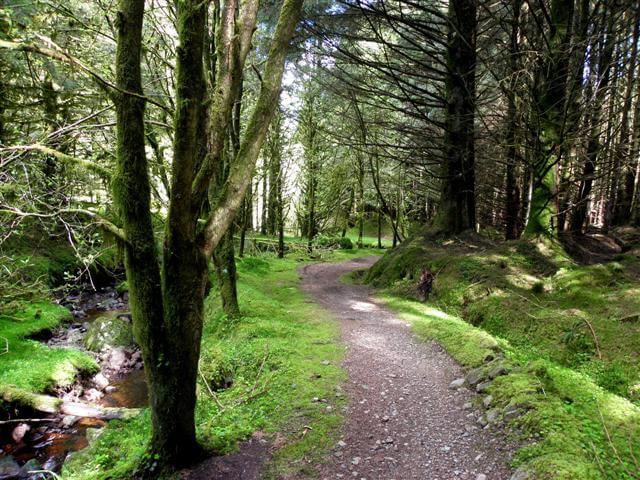

Davagh Forest in the Sperrin Mountains of County Tyrone is one of Northern Ireland’s better-kept secrets, a working forest with trails that climb through mature conifers and break out onto open Sperrin moorland with a quietness that is increasingly hard to find anywhere. The Davagh Water runs alongside much of the lower route, and the transition from enclosed riverside forest to wide, exposed heather above is one of the most satisfying habitat changes a dog walk can offer.
Dogs find Davagh continuously interesting precisely because it keeps shifting. The riverside section in the forest is dense with scent and the sound of moving water, while the moorland above is all exposure and wind and the kind of wide, wild air that sends dogs into a focused, purposeful trot. The Sperrins lack the fame of the Mournes and the Causeway Coast, which means Davagh stays genuinely quiet. For dogs who are overwhelmed by busy trails and over-used paths, this is exactly the right alternative.
- Distance: 8 km (5 miles) circular
- Difficulty: Moderate, forest and moorland with steady climbs
- Parking: Davagh Forest car park, free
- Facilities: Limited on site, nearest facilities in Cookstown
- Terrain: Forest tracks, moorland paths and riverside walking
- Best for: Dogs that thrive in quiet, uncrowded places with river access and open moorland above
Castle Archdale Forest and Lough Erne Circuit
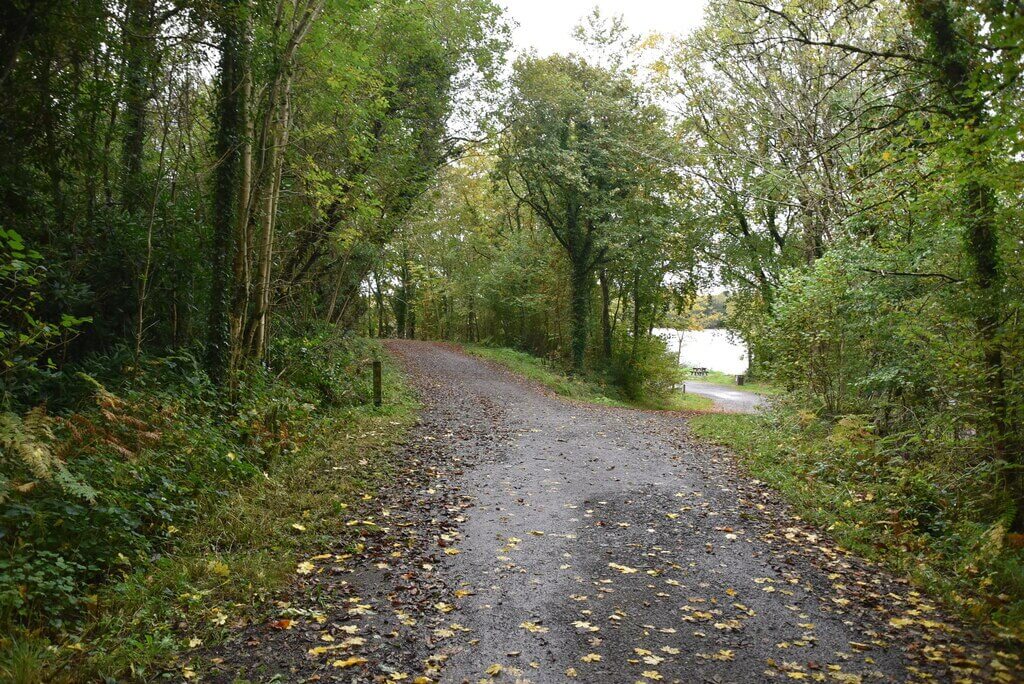

Castle Archdale sits on the shores of Lower Lough Erne in County Fermanagh, where the walking is completely different in character to anywhere else in Northern Ireland. The forest is mature and mixed, the lough is enormous and island-scattered, and the circuit to Tom’s Island follows woodland paths and lakeshore trails where the water laps the shoreline path throughout. Dogs that enjoy swimming will find calm, accessible entry points along the lough shore without any of the hazards of open sea or mountain river.
The woodland section is dense and layered with the kind of undergrowth and varied tree cover that provides sustained scent interest for most of the circuit. Tom’s Island extends into the lough and offers views back across the water with a genuine sense of arrival. This is not a dramatic or demanding walk, but it is deeply satisfying for dogs that respond to richness of environment rather than scale or elevation, and the lough setting is unlike anything the rest of Northern Ireland provides.
- Distance: 6.4 km (4 miles) circular
- Difficulty: Easy, flat forest and lakeshore terrain
- Parking: Castle Archdale Country Park car park, pay and display
- Facilities: Visitor centre with toilets and café nearby
- Terrain: Forest paths and lough shoreline
- Best for: Water-loving dogs and those that flourish in rich, layered woodland environments
Port Path: Portstewart to Portrush
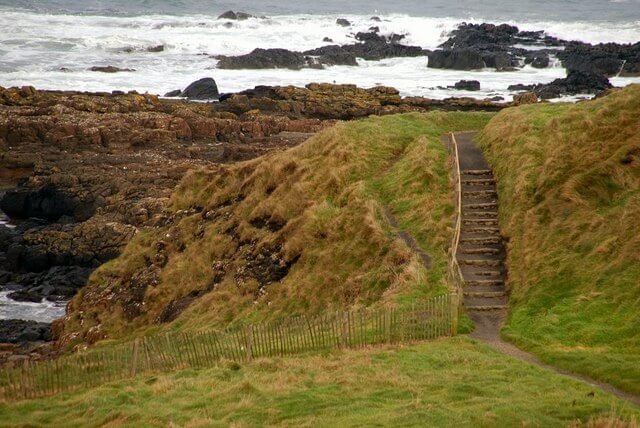
The Port Path connects Portstewart and Portrush along the north Antrim coast on a 10.5 km linear route that follows headlands, clifftops and coastal grassland above a succession of rocky coves. Starting from Portstewart Strand gives the option of a beach run at the start, dogs covering open sand before the clifftop path takes over and the landscape shifts to something wilder and more exposed. The wind off the North Channel is a constant companion that dogs find energising in a very particular way.
The coastal grassland sections between the headlands are excellent for dogs that want more freedom than cliff-edge sections allow, with good ground underfoot and a scent environment loaded with salt, seabird and marine life. Harry’s Shack café at Portstewart Strand is genuinely dog welcoming with water bowls and outdoor seating, making it a destination in its own right. Doing this walk early on an autumn morning, with the strand entirely to yourselves at the start, is one of the better dog walking experiences Northern Ireland has to offer.
- Distance: 10.5 km one way (6.5 miles one way)
- Difficulty: Moderate, undulating coastal path
- Parking: Portstewart Strand car park or Portrush seafront
- Facilities: Harry’s Shack café at Portstewart, cafés in Portrush
- Terrain: Coastal clifftop, headland paths and coastal grassland
- Best for: Dogs energised by sea air, open coastal ground and a beach run at the start
Map of Dog Friendly Walks in Northern Ireland
Use the map below to explore all ten walks. Given the geographic spread from Fermanagh to the Mournes and the Causeway Coast, the map is particularly useful for planning multi-day trips and understanding which walks cluster well together.
The Port Path connects Portstewart and Portrush along the north Antrim coast on a 10.5 km linear route that follows headlands, clifftops and coastal grassland above rocky coves. Starting from Portstewart Strand gives the option of a beach run at the start, dogs covering open sand before the clifftop path takes over and the landscape shifts to something wilder and more exposed. The wind off the North Channel is constant and dogs find it energising in a very particular way.
The coastal grassland sections between headlands are excellent for dogs that want more freedom than cliff edges allow, with good ground underfoot and a scent environment loaded with salt, seabird and marine life. Harry’s Shack café at Portstewart Strand is genuinely dog welcoming with water bowls and outdoor seating. Doing this walk early on an autumn morning with the strand to yourselves at the start is one of the better dog walking experiences Northern Ireland has to offer.
- Distance: 10.5 km one way (6.5 miles one way)
- Difficulty: Moderate, undulating coastal path
- Best for: Dogs energised by sea air, open coastal ground and a beach run at the start
Castle Archdale sits on the shores of Lower Lough Erne in County Fermanagh where the walking is completely different in character to anywhere else in Northern Ireland. The forest is mature and mixed, the lough is enormous and island-scattered, and the circuit to Tom’s Island follows woodland paths and lakeshore trails where the water laps the shoreline throughout. Dogs that enjoy swimming will find calm, accessible entry points with none of the hazards of open sea or mountain river.
The woodland section is dense and layered with the kind of undergrowth and varied tree cover that provides sustained scent interest throughout. Tom’s Island extends into the lough and offers views back across the water with a genuine sense of arrival. This is not dramatic or challenging walking, but it is deeply satisfying for dogs that respond to richness of environment rather than scale or elevation. Fermanagh’s water landscape is unlike anywhere else in the UK.
- Distance: 6.4 km (4 miles) circular
- Difficulty: Easy, flat forest and lakeshore terrain
- Best for: Water-loving dogs and those that flourish in rich, layered woodland environments
Davagh Forest in the Sperrin Mountains is one of Northern Ireland’s better-kept secrets, a working forest with trails that climb through mature conifers before breaking out onto open Sperrin moorland with genuine quietness. The trail follows the Davagh Water upstream through the forest, the river a constant presence that dogs find endlessly interesting, before the trees thin and the path crosses onto heather with long views in all directions.
The Sperrins lack the drama of the Mournes and the fame of the Causeway Coast, which means Davagh stays quiet. For dogs, the combination of river walking in the forest and open moorland above is excellent, and the transition between enclosed scent-rich woodland and wide exposed heather keeps the walk interesting throughout. The Sperrin Giants sculpture at the car park is the only infrastructure, and the rest feels properly detached from everything.
- Distance: 8 km (5 miles) circular
- Difficulty: Moderate, forest and moorland with steady climbs
- Best for: Dogs that thrive in quiet, uncrowded places with river access and open moorland above
Silent Valley sits at the heart of the Mourne Mountains, a reservoir park enclosed by peaks on all sides and accessed through a valley that narrows steadily as you walk further in. The Ben Crom circuit climbs from the valley floor to the upper reservoir through genuine mountain terrain, with cold mountain streams crossing the path regularly and the surrounding peaks becoming more impressive with every kilometre.
Dogs that are stimulated by mountain environments will be thoroughly engaged from start to finish. The streams running off the hills are fast, cold and irresistible to most dogs, while the moorland sections smell of peat and open sky in a way that visibly lifts their focus. The valley floor route suits dogs needing a moderate day while the full circuit to Ben Crom is a proper mountain challenge. Either way, dogs leave pleasantly exhausted and owners genuinely satisfied.
- Distance: 5 km to 14.5 km (3 to 9 miles) depending on route choice
- Difficulty: Easy to challenging, valley floor to mountain reservoir circuit
- Best for: Dogs that love mountain streams, cold air and proper wilderness character
Murlough is a 6,000-year-old sand dune system on the County Down coast that offers a dog walking experience genuinely unlike anywhere else in Northern Ireland. The National Trust boardwalk trails thread through ancient dune heathland where the vegetation is low and windswept, rabbit warrens run beneath the grass in every direction, and the smell of coastal air intensifies as the dunes thin toward the beach. The trail eventually opens onto wide sand with the Mourne Mountains rising dramatically behind.
For dogs, this is a two-part experience. The dune circuit itself is full of interest with coastal grassland, rabbits and the particular quality of sea air that dogs register immediately. The beach section provides space to run, direct access to the water and the reward of arriving somewhere properly open. Leads are required throughout to protect the nesting birds and dune system, but this is not a walk that needs off-lead time to deliver genuine fulfilment.
- Distance: 4 km (2.5 miles) circular
- Difficulty: Easy, flat dune boardwalk with beach section
- Best for: Dogs that love coastal air, rabbit-rich terrain and a beach reward at the end
Glenariff is the Queen of the Antrim Glens and its Waterfall Trail is genuinely exciting, following the river through a steep-sided gorge past two significant waterfalls on wooden boardwalks that carry you directly above rushing water. The noise of the falls, the spray in the air and the dense canopy create sensory intensity that dogs respond to immediately and visibly, making this one of the most stimulating short walks in Northern Ireland.
Dogs that are motivated by water, scent and complex terrain will find this trail engaging at every step. The boardwalk sections keep dogs moving safely through the most dramatic ground, while the wider forest trails beyond the gorge offer longer stretches through mature woodland where the pace can relax. This is a compact walk that punches far above its distance in terms of what it delivers.
- Distance: 3.2 km to 8 km (2 to 5 miles) depending on route choice
- Difficulty: Easy to moderate, some steep gorge sections
- Best for: Dogs energised by rushing water, dense woodland and continuously interesting terrain
Divis and Black Mountain rise above Belfast and offer one of the most accessible stretches of proper open moorland in Northern Ireland. The National Trust ridge circuit climbs to 478 metres through deep heather and rough grassland, with the city spread below and views extending to the Mournes, the Isle of Man and the coast of Scotland on clear days. The boardwalk sections protect the bog without dulling the wildness.
Dogs that enjoy open, exposed ground with strong scents thrive here. The heather moorland holds grouse, hares and constant bird activity that keeps a dog’s nose working throughout, and the plateau is broad enough to allow genuine freedom in the right conditions. The Divis Coffee Barn near the entrance is properly dog welcoming with outdoor seating, water bowls and staff who understand that wet and muddy dogs arriving from the hill are entirely normal.
- Distance: 6.8 km (4.2 miles) circular
- Difficulty: Moderate, steady climb on good paths and boardwalk
- Best for: Dogs that love moorland smells, wide open ground and proper elevation close to the city
Slieve Donard is Northern Ireland’s highest mountain at 850 metres and the Bloody Bridge route follows the river upstream through open moorland before a sustained climb to the granite summit on the Mourne Wall. This is a serious mountain day that demands proper kit and a dog that is genuinely fit and comfortable on rough ground, but for those with the ability it rewards with one of the finest summit experiences in Northern Ireland.
The lower moorland section following the river is superb for confident off-lead running, with heather, bog grass and mountain stream crossings that most dogs find irresistible. Higher up, leads are sensible as the terrain becomes rockier and more exposed, but the mountain air, peat smells and open sky create the kind of alertness and focus that only proper elevation delivers. This is not a walk that tolerates dogs, it suits a particular kind of dog beautifully.
- Distance: 12.1 km (7.5 miles) circular
- Difficulty: Challenging, sustained mountain ascent with 750m of elevation gain
- Best for: Fit, confident dogs that thrive on open mountain terrain and stream crossings
Tollymore Forest Park at the foot of the Mourne Mountains delivers exactly what a forest should. The Shimna River threads through 630 hectares of mixed woodland over stone bridges and past small waterfalls, with shallow rocky sections perfect for dogs to wade, splash and generally lose their minds with pleasure. The variety here is exceptional from a dog’s perspective, with scent landscapes changing constantly from damp riverbank to dry oak woodland to open meadow.
Multiple trail options range from relaxed riverside loops to longer circuits that climb into the lower Mourne slopes where dogs can be given more freedom on open ground. The network means there is no single prescribed route, you can follow the river for as long as it holds interest and branch off when something better presents itself. This is forest walking at its absolute best for water-loving dogs and those that thrive on continuously varied terrain.
- Distance: 5 km to 12.9 km (3 to 8 miles) depending on route choice
- Difficulty: Easy to moderate, riverside terrain with optional hill sections
- Best for: Water-loving dogs and scent-driven explorers who need real variety underfoot
The North Antrim Cliff Path runs along the top of towering basalt cliffs between the Giant’s Causeway and Dunseverick Castle, passing above deep coves where seabirds nest and dramatic headlands where the sea crashes far below. This is one of the most exposed and sensory-rich coastal walks in Northern Ireland, with constant salt wind, seabird scent and wide open ground that keeps dogs thoroughly engaged.
For dogs, the combination of sea air, the smell of guillemots and razorbills nesting in the cliff faces, and the steady rhythm of walking into the wind creates sustained focus and alertness. Leads are essential throughout given the cliff edges, but the path is wide and the pace relaxed enough that even energetic dogs settle into the flow of the coast. Visit in autumn or early spring for long stretches of solitude on what is normally a busy trail.
- Distance: 12.9 km one way, 25.8 km return (8 miles one way, 16 miles return)
- Difficulty: Moderate, exposed cliff path with some undulation
- Best for: Dogs that love sea air, big horizons and continuous sensory stimulation
Find dog friendly walking routes around the UK on our Wildpack Map.
Tips for Walking in Northern Ireland
Northern Ireland’s walking landscape is generally well managed but rewards preparation, particularly in the mountains and on exposed coastal paths.
- Mountain routes in the Mournes and Sperrins require proper boots, waterproofs and navigation skills regardless of forecast
- Leads are required in most National Trust sites and nature reserves, plan accordingly
- Weather on the north Antrim coast can change rapidly, layers are essential year round
- Silent Valley and Murlough have seasonal restrictions worth checking before travelling
- The Causeway Coast is significantly busier in summer, early starts make a real difference
- Carry water for dogs on mountain routes where streams may not be accessible or safe
- Parking charges apply at most managed sites, cash or card both generally accepted
What’s Nearby?
If you are spending time in Northern Ireland with your dog, the coastline and countryside offer further opportunities beyond the walks in this guide.
- Dog friendly beaches in Northern Ireland – Portstewart Strand, Murlough Beach, Ballycastle and quieter strands around County Down
- Dog friendly walks in County Donegal – dramatic sea cliffs, mountain ridges and empty coastline just across the border
- Dog friendly walks in the Lake District – a short ferry crossing opens up a completely different landscape for those travelling by boat
- The Causeway Coastal Route – one of the world’s great scenic drives, linking most of the north coast walking sites in a single journey