
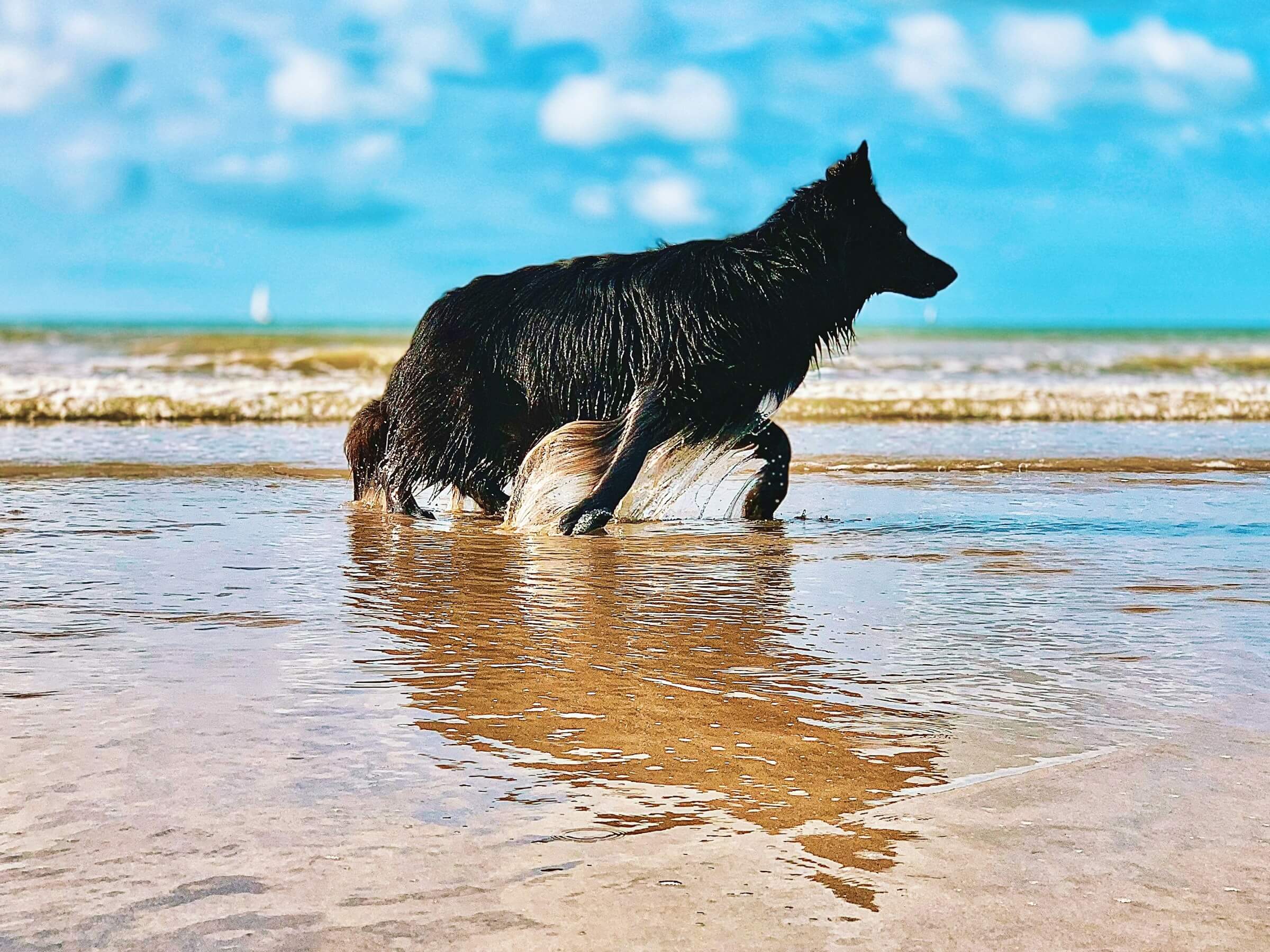

Norfolk’s coastline is one of the best in the UK for dog owners. Long sandy beaches, wide open skies, quiet dunes, and plenty of space even in peak season make it ideal for dogs that love to run, sniff, and explore. The smell of salt marsh, dried kelp, and warm sand drifts across most of the county’s beaches year round, and the sheer scale of places like Holkham and Brancaster means you can walk for hours without retracing your steps. That said, Norfolk does have a mix of year round dog friendly beaches and others with seasonal restrictions, usually running between May and September.
Signage is generally clear on arrival, but it’s always worth knowing what to expect before you go. Below, we’ve pulled together some of the very best dog friendly beaches in Norfolk, covering a range of beach types, facilities, and access points so you can find the right fit for you and your dog.
Holkham Beach
Dog Friendly Rating: 9/10 — One of the most spectacular dog friendly beaches in the country, with space that feels almost unlimited at low tide.
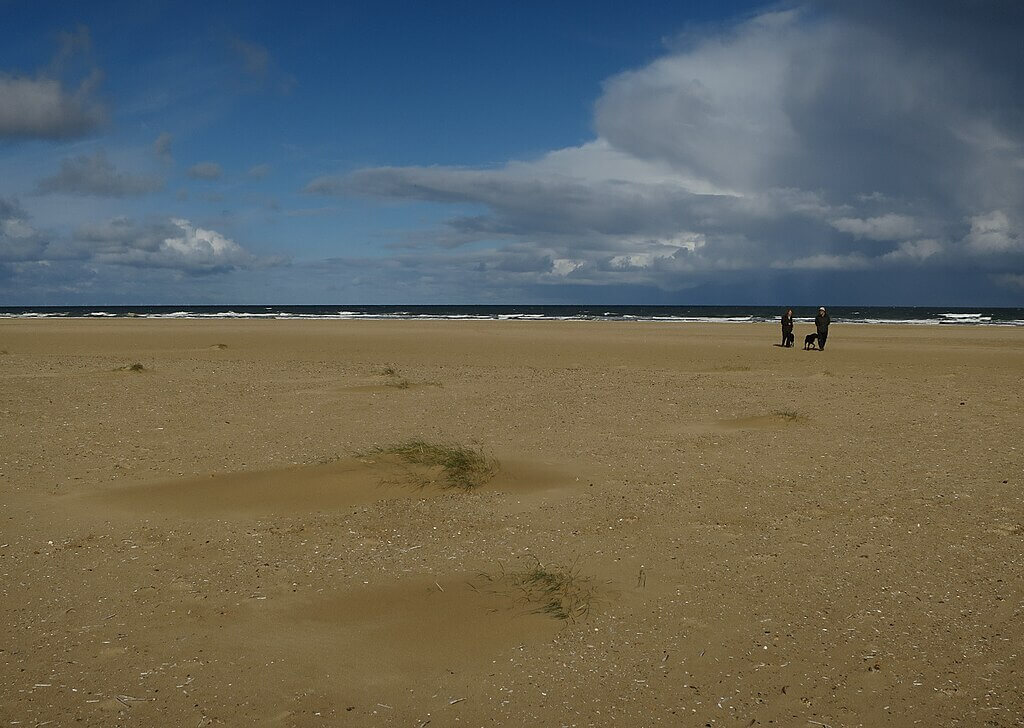 Holkham Beach – Photo Credit: Hugh Venables
Holkham Beach feels vast in the best possible way. Backed by rolling dunes and pinewoods, it offers mile after mile of open sand at low tide, making it perfect for long walks and dogs that love genuine space to stretch their legs. The beach sits within the Holkham National Nature Reserve, which adds a wild, undeveloped quality that larger resort beaches simply can’t match. Even on busier summer days, it rarely feels crowded once you move away from the main access points near Lady Anne’s Drive.
The scent here is distinctive: pine resin from the woodland mingles with salt air and the clean mineral smell of wet sand, and dogs that enjoy a complex nose-down sniff will find plenty to investigate along the tideline and dune edges. Dogs are welcome year round, but seasonal wildlife restrictions apply in certain areas during the ground nesting bird season, so leads will be required in signposted zones from around April to July. Outside those areas, and outside peak restrictions, there is still enormous freedom and space to enjoy a proper off-lead run. This is an exceptional beach for energetic dogs and owners who want a long, unhurried walk.
- Dog access: Year Round, with seasonal on-lead zones during bird nesting season (approximately April to July). Follow signage on arrival.
- Beach Type: Sand, Dunes
- Tide Notes: The beach opens up dramatically at low tide, revealing vast flat sands. At high tide the beach narrows considerably, so check tide times before a long walk.
- Off Lead Potential: High (outside seasonal restricted zones)
- Parking: Large paid car park at Lady Anne’s Drive, NR23 1RG
- Facilities: Seasonal café and toilets near the main car park. No permanent facilities on the beach itself.
Tip: The walk through the pinewoods from the car park to the beach is worth taking slowly. Dogs love the shaded woodland path, and it adds a pleasant contrast to the open sand beyond.
Wells-next-the-Sea Beach
Dog Friendly Rating: 7/10 — A great all-round beach day with good facilities, though restrictions near the huts mean you’ll need to walk a little to find the best dog friendly sections.
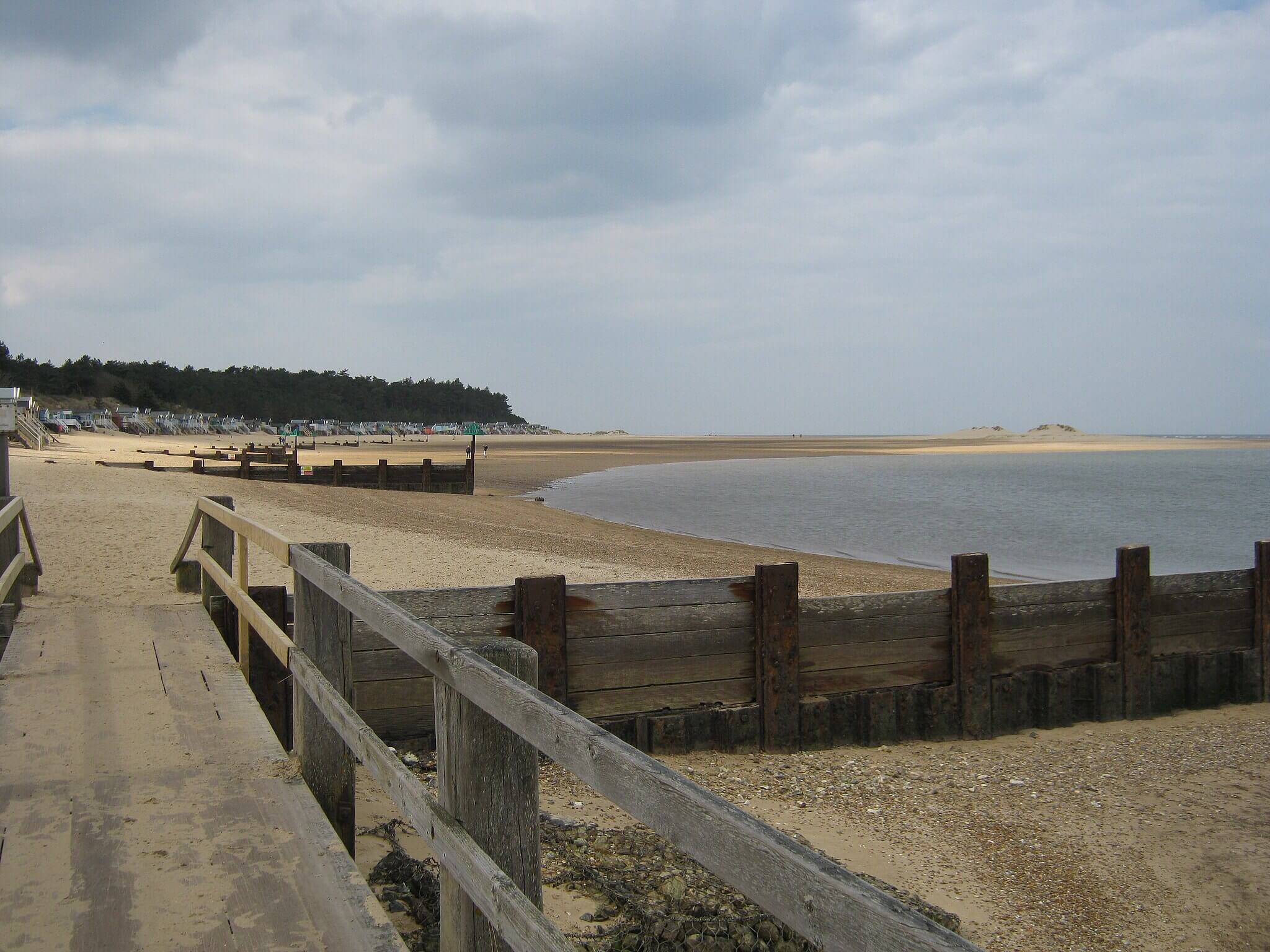 Wells-next-the-Sea Beach – Photo Credit: Robert Powell
Wells-next-the-Sea combines a classic Norfolk seaside feel with excellent walking potential. The beach is expansive once the tide goes out, and the pinewoods stretching back from the sand provide shelter on windier days, as well as a pleasant wooded path that dogs seem to enjoy as much as the beach itself. The colourful beach huts lining the upper shore are a well-known feature, but the real appeal for dog owners lies further along, where the sand opens up and the crowds thin out. The town harbour and quay are a short walk away, with plenty of dog friendly cafés and shops if you want to build a full day around the visit.
The smell along the shoreline here shifts with the tide, with exposed mud and seaweed near the tidal channels giving way to cleaner, saltier air out on the open sand. Dogs that enjoy wading will find shallow water to splash through at low tide. There are restrictions near the main beach entrance and around the beach hut zone, where dogs should be kept on leads to respect other visitors, but walking beyond this section opens up more relaxed and spacious stretches. This beach works well for sociable dogs and owners who want good facilities within easy reach.
- Dog access: Year Round with partial restrictions near the main entrance and beach hut area. Walk further along the beach to find unrestricted sections.
- Beach Type: Sand, Dunes
- Tide Notes: The beach changes significantly with the tide. At low tide the sands are wide and easy to walk; at high tide the usable beach narrows noticeably.
- Off Lead Potential: Moderate (High once away from the restricted entrance zone)
- Parking: Beach car park at Beach Road, NR23 1DR, plus town centre car parks
- Facilities: Toilets at the beach car park. Cafés, shops, pubs, and harbour nearby in the town.
Tip: The miniature railway between the town and the beach is a fun addition for a family visit, and dogs are welcome on board.
Brancaster Beach
Dog Friendly Rating: 8/10 — One of Norfolk’s most reliably open and spacious beaches, with minimal restrictions outside the summer season.
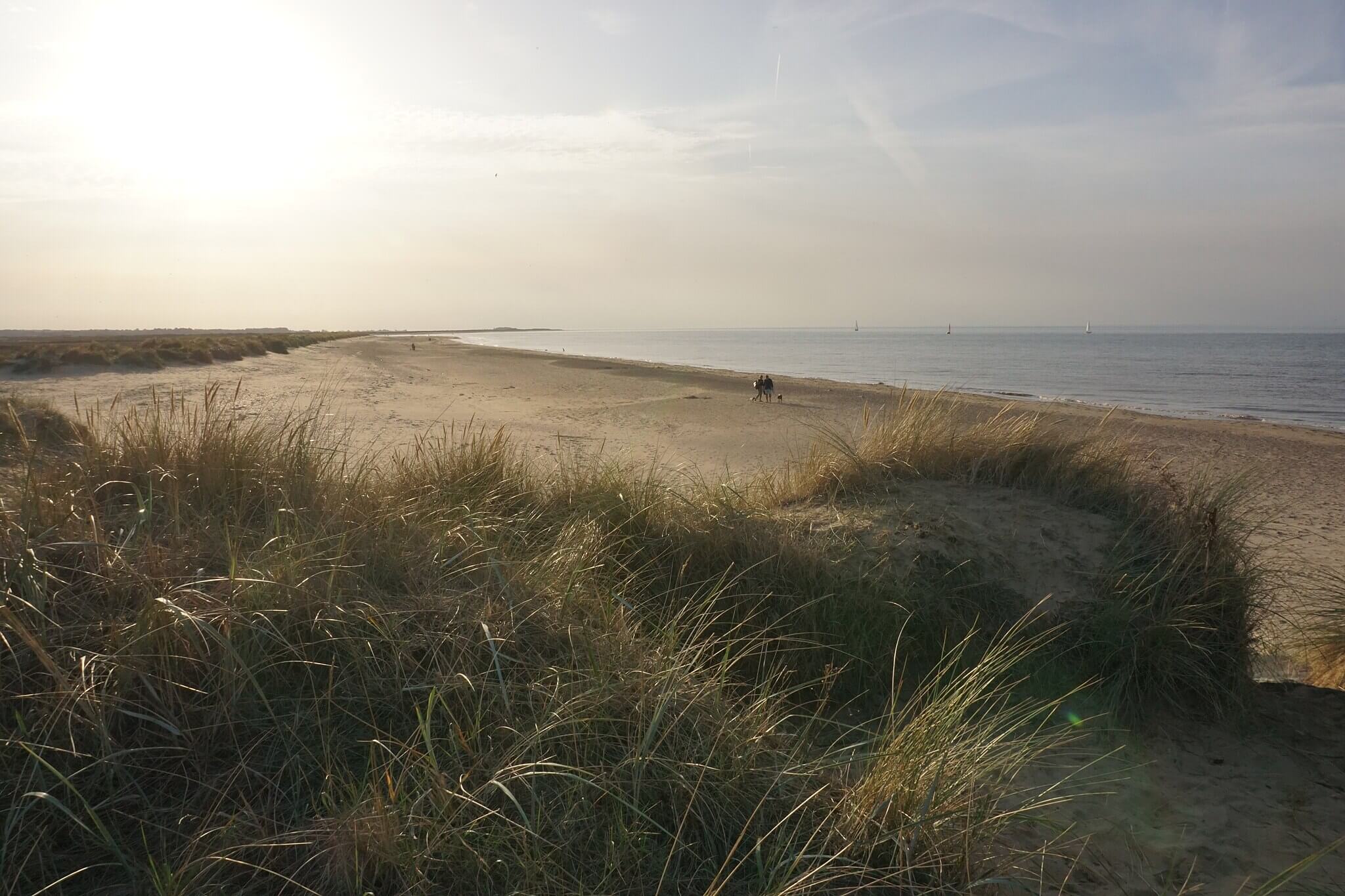 Brancaster Beach – Photo Credit: Bill Boaden
Brancaster Beach is one of the finest stretches of sand on the north Norfolk coast. It is known for its long, flat expanse and wide uninterrupted horizons, making it a straightforward and rewarding beach walk with no complicated terrain to navigate. The beach is backed by dunes and salt marsh, and the surrounding area forms part of a National Trust and RSPB managed nature reserve that gives the whole place a properly wild, unspoilt feel. There is a clearly marked seasonal dog-free zone at the eastern end of the beach during the summer months to protect nesting birds, but outside of this area dogs are welcome and the beach is enormous enough that you will rarely feel hemmed in.
The air here carries a strong salt and sea lavender scent, particularly around the marsh edges, and dogs that enjoy following scent trails will be occupied for a long time. The firm, flat sand is easy on paws and well suited to older dogs or those still building their walking stamina. At low tide, tidal channels weave across the beach and offer dogs the chance to wade through shallow water, though care should be taken as conditions can change quickly. This is a particularly good beach for energetic dogs that need room to run, and for owners who want a long, uninterrupted walk without having to think too hard about the route.
- Dog access: Year Round, with a seasonal dog-free zone at the eastern end of the beach during summer (typically May to September). Check signage on arrival.
- Beach Type: Sand, Dunes
- Tide Notes: Tidal channels cross the beach at low tide and can cut off sections. Plan walks around low tide for the most accessible and enjoyable conditions.
- Off Lead Potential: High (outside the seasonal restricted zone)
- Parking: National Trust car park at Brancaster Beach, PE31 8BW. Paid during peak season.
- Facilities: Toilets and seasonal refreshments near the car park.
Tip: The beach is managed by the National Trust and RSPB, so wildlife is a genuine priority here. Scan ahead for nesting tern signage in early summer and give birds a wide berth.
Old Hunstanton Beach
Dog Friendly Rating: 8/10 — The quieter, more natural alternative to the main Hunstanton beach, with dunes, space, and a noticeably more relaxed atmosphere.
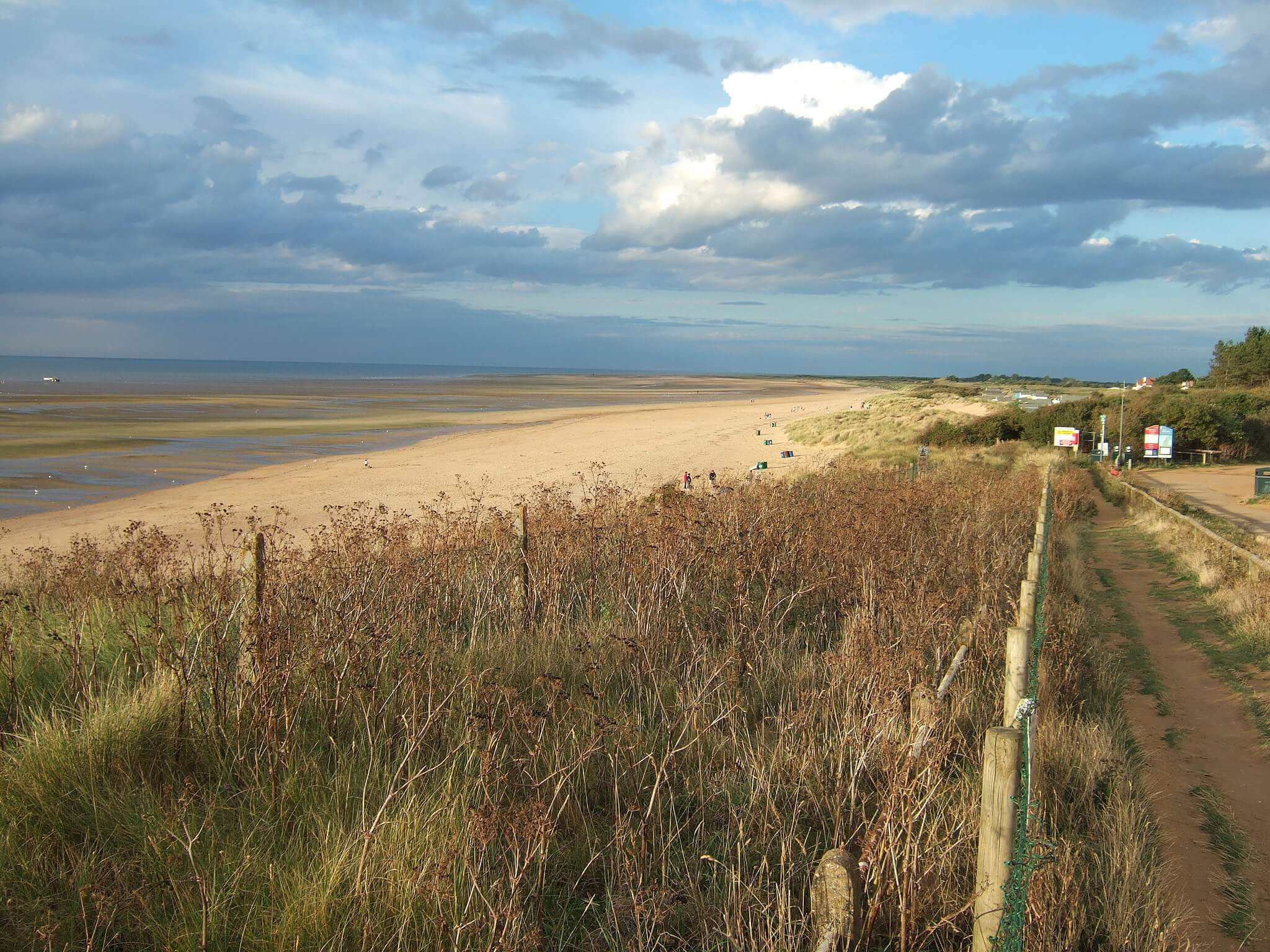 Old Hunstanton Beach – Photo Credit: Richard Humphrey
Old Hunstanton sits a short walk north of the main Hunstanton promenade and offers a completely different experience. The beach is sandy with dune-backed edges, and the distinctive striped cliffs of chalk and red-brown carrstone above the shoreline make this one of the more photogenic stretches on the west-facing Norfolk coast. Because it faces west rather than east, like most of the county’s beaches, Old Hunstanton catches evening light in a way that is genuinely unusual for this part of England, and the sunsets here are worth planning around. It is quieter and less managed than the promenade beach, with fewer facilities but considerably more freedom.
The scent at the dune edge carries warm marram grass and salt, with a chalky, mineral undercurrent from the cliffs that dogs tend to investigate with interest. The sand is firm near the waterline and comfortable underfoot for most dogs. Dogs are welcome here without the promenade restrictions that affect the main Hunstanton beach, and there is enough open space to allow a proper off-lead run in the dune and beach area. This beach suits owners who want the practical convenience of Hunstanton nearby without the busier, more restricted atmosphere of the main resort stretch.
- Dog access: Year Round
- Beach Type: Sand, Dunes
- Tide Notes: The beach faces west into the Wash and the tide goes out a considerable distance, revealing wide firm sands ideal for walking. Arrive around low tide for the most space.
- Off Lead Potential: High
- Parking: Car park at Old Hunstanton, PE36 6EQ
- Facilities: Limited directly at the beach. Full facilities including cafés, toilets, and shops available in Hunstanton town a short walk south.
Tip: Walk north from the car park to leave the main access point behind quickly. Within ten minutes you will have noticeably more space and a much quieter stretch of beach.
Sheringham Beach
Dog Friendly Rating: 7/10 — A reliable year-round beach that rewards a relaxed pace, particularly for those who want easy access to facilities alongside their walk.
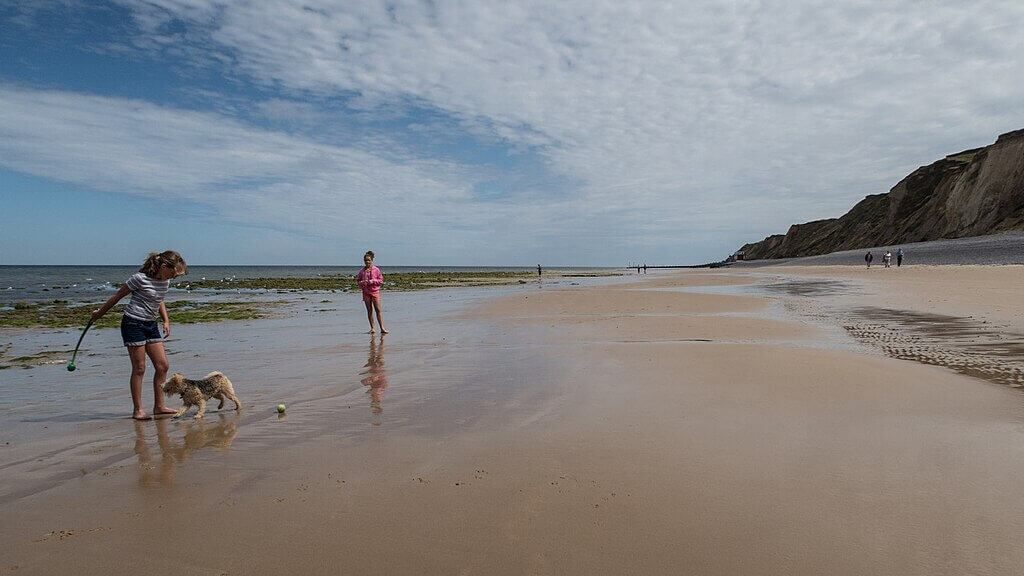 Sheringham Beach – Photo Credit: Kim Fyson
Sheringham Beach sits at the foot of a traditional Norfolk seaside town and has a comfortable, unhurried feel that suits dogs and owners who are not chasing vast open spaces. The beach itself is mainly shingle with patches of sand depending on the tide, and it works particularly well as part of a longer coastal walk rather than as a destination in its own right. The North Norfolk Coastal Path runs through Sheringham, making it easy to extend the visit into a more substantial day out along the clifftops or inland. The town directly behind the beach offers some of the best practical support of any beach on the Norfolk coast, with independent cafés, fish and chip shops, a weekly market, and a heritage steam railway.
Dogs pick up a strong seaweed and salt smell along the shoreline here, with the pebbly upper beach often holding rockpools that provide plenty of interest at low tide. The shingle surface is worth considering for dogs with sensitive paws, as it can be sharper in places than sand. Dogs are welcome year round at Sheringham without the seasonal restrictions that affect some of the more wildlife-sensitive beaches further along the coast. This makes it a consistently reliable option across all seasons, and it is a particularly good choice in winter or early spring when many of the larger beaches feel exposed and remote.
- Dog access: Year Round
- Beach Type: Shingle, Sand
- Tide Notes: Sand patches are most accessible at low tide. The upper beach is mainly shingle at all tidal states.
- Off Lead Potential: Moderate
- Parking: Town car parks in Sheringham, NR26 8LH
- Facilities: Toilets, cafés, shops, and pub all available in the town immediately behind the beach.
Tip: The clifftop path east toward Beeston Bump makes for an excellent extension to a beach visit and gives dogs a proper run on grass and open ground above the shore.
West Runton Beach
Dog Friendly Rating: 7/10 — A quieter, characterful beach with good coastal path connections, ideal for dogs that enjoy exploring rather than sprinting.
 West Runton Beach – Photo Credit: Florriebee
West Runton is one of the less famous beaches on the north Norfolk coast, and that is a significant part of its appeal. Set beneath low clay and chalk cliffs, it offers a more rugged and intimate feel than the wider, more open beaches to the west, and it rarely gets crowded even in summer. The beach is a mix of sand and shingle depending on the tide, with rock platforms exposed at low tide that harbour marine life and give dogs something genuinely interesting to sniff around. West Runton is also notable for being the site where the largest complete mammoth skeleton ever found in Britain was discovered in the early 1990s, which makes for an interesting bit of history to share while you walk.
The smell at low tide here is distinctly rockpoolish: brine, exposed weed, and the slightly sharp mineral scent of wet chalk. Dogs that enjoy investigating textures underfoot will find the varied surface, moving between shingle, sand patches, and smooth rock, engaging throughout the walk. The beach links naturally into the Norfolk Coastal Path, which heads east toward Sheringham and west toward Cromer, making it a useful base for a longer walking day. Dogs are welcome year round without seasonal restrictions, which makes West Runton a dependable option when other beaches along the coast are operating with summer rules in place.
- Dog access: Year Round
- Beach Type: Sand, Shingle, Rock
- Tide Notes: Rock platforms are exposed at low tide and worth exploring, but care is needed as surfaces can be slippery. Arrive around mid to low tide for the most accessible conditions.
- Off Lead Potential: Moderate
- Parking: Village car park at West Runton, NR27 9QH
- Facilities: Limited. A pub in the village. Sheringham and Cromer both within easy driving distance for more complete facilities.
Tip: At very low tides, the rocky platforms reveal good natural pools that dogs tend to find irresistible. Keep an eye on the tide coming back in if you venture far out onto the rocks.
Sea Palling Beach
Dog Friendly Rating: 7/10 — A spacious and underrated beach with good year-round access across most of its length, away from the designated swimming zones.
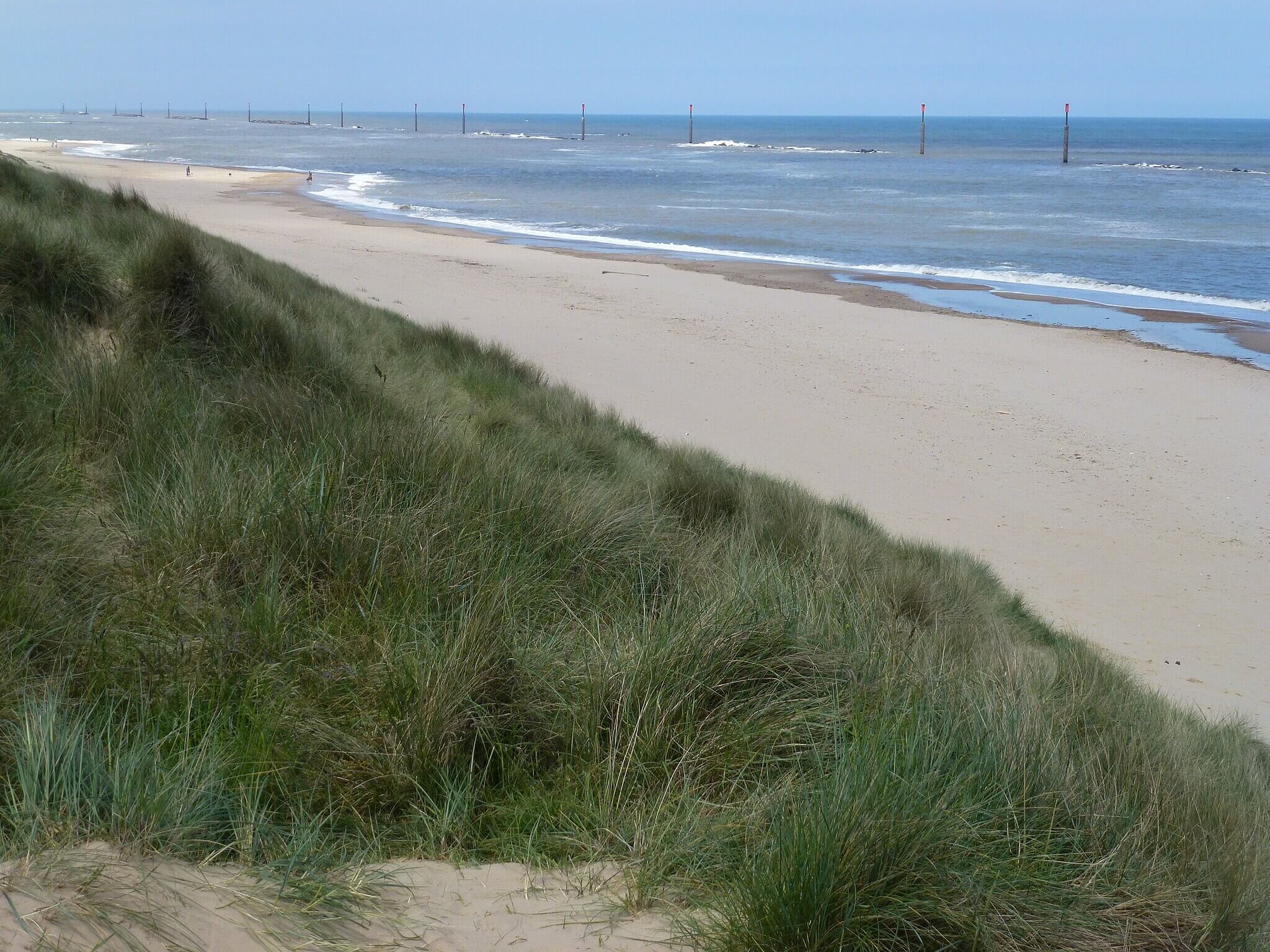 Sea Palling Beach – Photo Credit: Richard Humphrey
Sea Palling sits on the quieter, less-visited southern stretch of the Norfolk coast and has a broad, open feel that contrasts with the narrower beaches further west. It is best known for its artificial offshore reefs, built to protect the vulnerable coastline, which create calmer inshore water and sheltered swimming areas. For dog owners, the beach is wide and sandy with extensive dunes behind it, and there is usually enough space to find a comfortable spot away from the busier sections near the lifeboat station. The combination of open beach and dune edge gives dogs a range of terrain to move through within a relatively compact area.
The scent here is clean and uncomplicated: strong sea salt on the breeze, with the warm, dry smell of marram grass in the dunes on sunnier days. Seasonal dog restrictions apply on certain sections of the beach during the summer months, typically around the main beach access and swimming areas, so it is worth checking signage when you arrive. Outside of restricted sections, dogs can enjoy the beach freely, and off-season visits offer a particularly spacious and unhurried experience. This is a good beach for dogs that enjoy open sandy runs and owners who want a more relaxed, less managed feel than some of the larger, more well-known Norfolk beaches.
- Dog access: Seasonal Restrictions on certain sections, typically May to September near the main beach and swimming areas. Year-round access across unrestricted sections.
- Beach Type: Sand, Dunes
- Tide Notes: The offshore reefs calm the water considerably inshore, making swimming conditions safer than at more exposed beaches. The beach changes little in width with the tide compared to some north Norfolk stretches.
- Off Lead Potential: Moderate (High outside seasonal restricted sections)
- Parking: Paid car park at Sea Palling, NR12 0AL
- Facilities: Toilets and seasonal cafés near the main beach access. Lifeboat station on site.
Tip: The dune system behind the beach is worth exploring with dogs, but stick to the established paths to avoid disturbing dune vegetation and nesting birds during the spring and summer months.
Winterton-on-Sea
Dog Friendly Rating: 8/10 — One of the most unspoilt and genuinely wild-feeling beaches in Norfolk, with extensive dunes and a quieter, more natural atmosphere than many of the coast’s better-known spots.
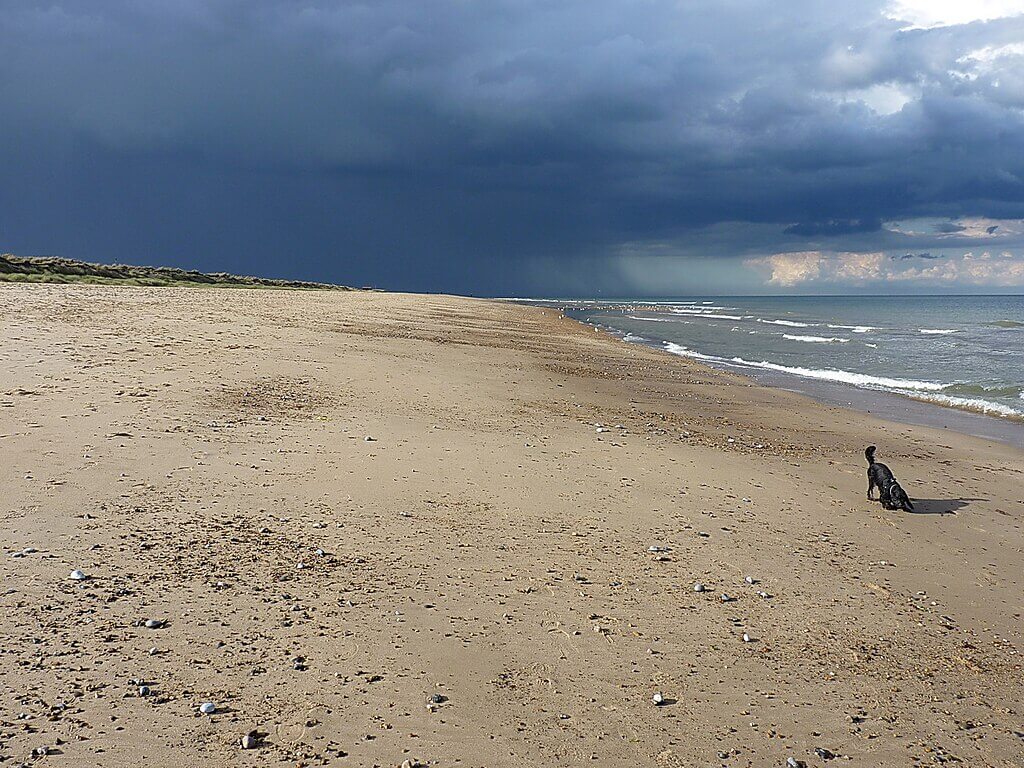 Winterton-on-Sea – Photo Credit: Richard Law
Winterton-on-Sea sits a few miles north of Great Yarmouth but feels a world removed from the resort atmosphere of that stretch of coast. The beach is wide and sandy, backed by one of the largest dune systems in Norfolk, which stretches north and provides a genuine sense of wildness and open space. It is a favourite among dog owners who want to get away from the managed, facility-heavy beaches and enjoy something that feels more like an undiscovered coastline. The car park is small and the village is quiet, which naturally limits visitor numbers and keeps the beach from ever feeling overrun.
The smell here is particularly rewarding for dogs: marram grass and warm sand in the dunes, salt and seaweed along the tideline, and the occasional sharp, briny scent from the tidal pools that form behind the beach at certain times of year. Dogs are welcome year round, but Winterton is an important site for grey seals, which pup on the beach in late autumn and winter. During the pupping season, temporary exclusion areas are set up to protect them, and owners should keep dogs well away from any seals and follow guidance from the wardens who are usually present. Outside of seal season, the beach is wonderfully open and relaxed. This is a top choice for owners with energetic dogs who value space, wildness, and a quiet car park over facilities and convenience.
- Dog access: Year Round, with temporary wildlife exclusion zones during seal pupping season (typically November to January). Follow warden guidance and any signage in place.
- Beach Type: Sand, Dunes
- Tide Notes: The beach is wide and accessible at most tidal states, though the dune edges can shift over time. No significant tidal hazards on the main beach stretch.
- Off Lead Potential: High (outside temporary seasonal exclusion zones)
- Parking: Small car park at Winterton-on-Sea, NR29 4AJ
- Facilities: Pub in the village. Café and toilets near the main car park in season.
Tip: Arrive early if visiting in summer, as the small car park fills quickly on warm weekends. A weekday visit out of season is the best way to experience this beach at its finest.
Cley Beach
Dog Friendly Rating: 7/10 — A genuinely different kind of beach walk, better suited to owners who value atmosphere and wildlife over sand and facilities.
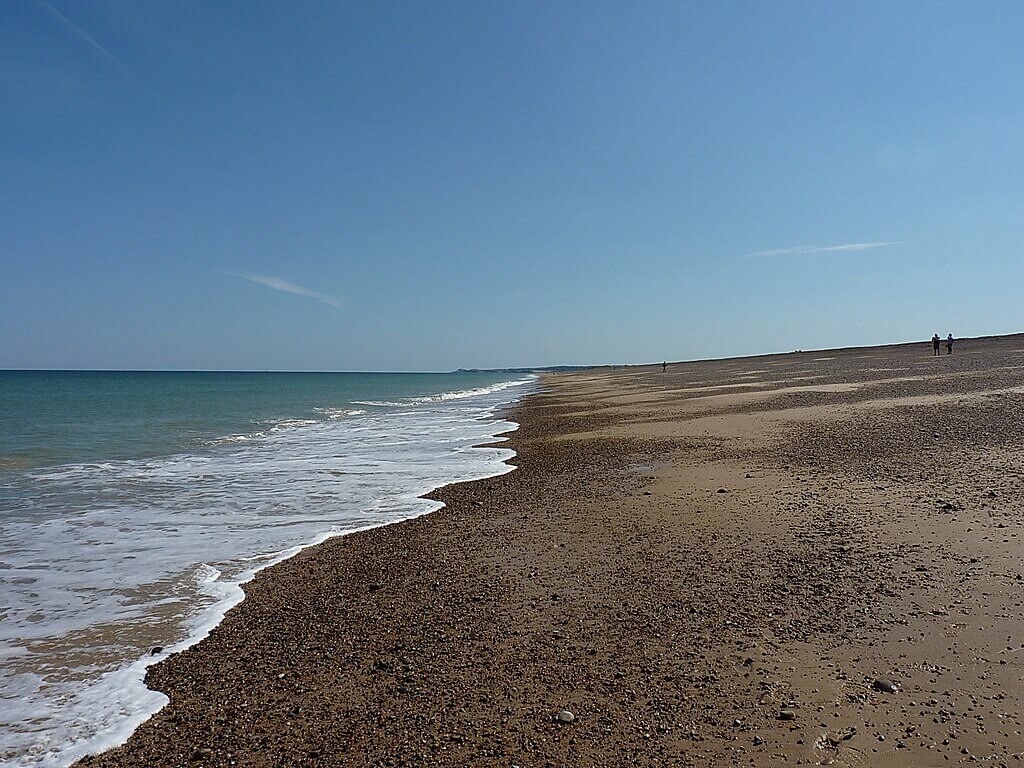 Cley Beach – Photo Credit: Richard Law
Cley Beach is unlike anywhere else on the Norfolk coast. Rather than open sand, it offers a dramatic shingle ridge stretching for miles, backed by the lagoons and reed beds of Cley Marshes, one of the most important nature reserves in England. The result is a landscape that feels ancient and elemental: big skies, salt-laden wind off the North Sea, and an extraordinary amount of birdlife that makes this stretch of coast a destination in its own right for wildlife enthusiasts. The beach itself is not one for sunbathing or lounging, but for a purposeful walk with a dog that enjoys varied terrain and interesting smells, it is exceptional.
The scent profile is distinctive and complex: brine from the sea, the earthy, damp richness of salt marsh, and the sharp, reedy smell of the nature reserve that runs immediately inland. Dogs that enjoy sniffing and exploring will be occupied throughout, though the deep shingle can be tiring on paws, particularly for older dogs or those not used to unstable ground. Dogs are generally welcome on the beach year round, but the proximity to Cley Marshes means keeping dogs under close control is important, particularly during spring and summer when ground nesting birds are active. Leads are recommended near the marsh edge and reserve boundary at all times of year. This is a beach for owners who want something genuinely different from the typical coastal walk.
- Dog access: Year Round. Dogs should be kept under close control year round due to the proximity of Cley Marshes nature reserve. Leads recommended near the marsh boundary.
- Beach Type: Shingle, Mud (salt marsh behind the ridge)
- Tide Notes: The shingle ridge itself is exposed at all tidal states. No sandy sections are revealed at low tide. The sea can be rough and the beach drops away steeply at the waterline.
- Off Lead Potential: Low (due to proximity to nature reserve and bird nesting activity throughout the year)
- Parking: Small car park at Cley Beach, NR25 7RZ. Can fill quickly on busy weekends.
- Facilities: Very limited at the beach. The Cley Marshes visitor centre is nearby with toilets and a small café.
Tip: The George Hotel in Cley village is dog friendly and makes an excellent stop before or after the beach, particularly on a cold or windy day when the shingle ridge can feel particularly exposed.
Map of Dog Friendly Beaches in Norfolk
Looking to explore some of the most beautiful and dog friendly beaches that Norfolk has to offer? The map below shows where each of these 9 dog friendly beaches sits in Norfolk, and how close they are to one another.
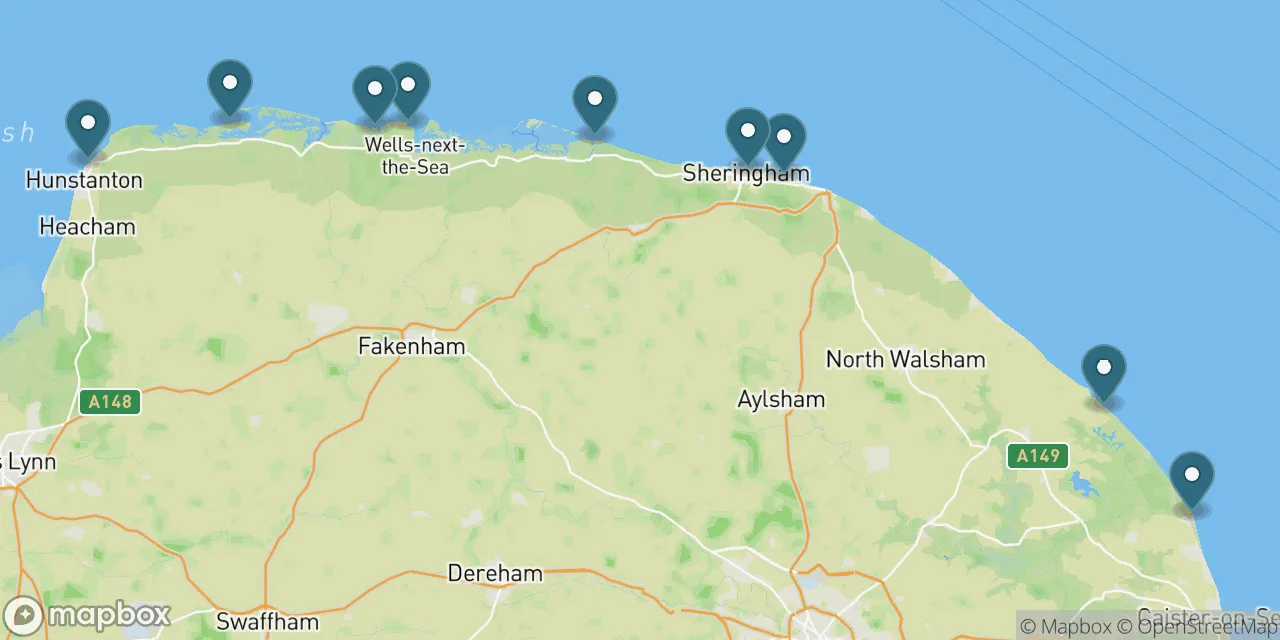 9 beaches on this page
Map these beaches, and thousands more
The Wildpack Map plots every dog friendly walk, beach, stay and attraction we have listed across the UK. Open it to see what else is within reach in Norfolk, filter by what your dog needs, and get directions to the car park.
Explore even more dog friendly beaches and other points of interest across the UK, including walking routes, campsites and swimming spots. The Wildpack Map is our specially curated list of dog friendly locations in the UK.
Tips for Visiting Dog Friendly Beaches in Norfolk
Be mindful on the nature reserves: A significant portion of Norfolk’s coast falls within protected wildlife areas. The habit of keeping dogs close on the marsh edges and dune systems protects the birds and wildlife that make this coastline special.
Check tide times before you go: Norfolk’s tidal beaches can change dramatically between high and low water. At Holkham and Brancaster in particular, the beach shrinks significantly at high tide, so plan your arrival to coincide with low or mid tide for the best conditions.
Bring fresh water for your dog: Long stretches of Norfolk’s coast have no shade and can feel surprisingly exposed even on mild days. Pack more water than you think you’ll need, especially in summer when tidal flats can get warm underfoot.
Know the seasonal restrictions before you visit: Several beaches operate dog-free zones between May and September to protect nesting birds and popular swimming areas. Holkham, Brancaster, and Sea Palling are the main ones affected. Checking signage on arrival is always worthwhile, but knowing what to expect makes the trip less stressful.
Give seals space at Winterton: Grey seals pup on the beach at Winterton-on-Sea from late November through January. Dogs should be kept well away from any seals, which can move quickly and may react defensively. Wardens are usually present during pupping season and their guidance should always be followed.
Watch for deep shingle at Cley: The shingle ridge at Cley Beach is deep and shifting, which can tire dogs’ paws quickly, particularly older dogs or those unaccustomed to uneven ground. Keep walks shorter here than you might on sand.
Frequently Asked Questions
Are dogs allowed on Norfolk beaches year round?
Most of Norfolk’s beaches allow dogs year round, but several have seasonal restrictions between May and September. These typically affect specific sections of beaches such as Holkham, Brancaster, and Sea Palling, and are in place to protect nesting birds and formal swimming zones. Always check signage on arrival.
Which Norfolk beaches are best for dogs off lead?
Holkham, Brancaster, and Winterton-on-Sea are the standout choices for off-lead freedom, offering large areas of open beach where dogs can run without restriction outside of seasonal wildlife zones. Brancaster is particularly good for dogs that enjoy a long, uninterrupted run across flat, firm sand.
Are there dog friendly beaches near Great Yarmouth?
Winterton-on-Sea, a few miles north of Great Yarmouth, is the best dog friendly option in that part of the county. The main Great Yarmouth seafront beaches have seasonal restrictions on dogs during summer. Winterton has a much quieter, more natural feel and is open to dogs year round.
Can dogs swim at Norfolk beaches?
Yes, dogs can swim at most Norfolk beaches. The calmer conditions at Sea Palling, created by its offshore reefs, make swimming safer there than at some more exposed stretches. Always keep dogs away from designated human bathing areas and be aware of tidal currents, particularly in the tidal channels at Brancaster and around Holkham.
Is Holkham Beach dog friendly?
Yes, Holkham Beach is dog friendly year round. There are seasonal on-lead zones in certain areas during the ground nesting bird season, typically from around April to July, but these are clearly signposted and there is still a vast amount of open beach to enjoy even with restrictions in place.
What should I bring to a dog friendly beach in Norfolk?
Fresh water and a collapsible bowl are essential, as many of the more remote beaches have no facilities. A long line or lead is useful for beaches with seasonal wildlife considerations. Poo bags are a basic requirement on all beaches, and a towel for your dog is worth packing given how enthusiastically most dogs approach the sea.
What’s nearby?
Norfolk is an ideal base for a longer dog friendly trip, with beaches, countryside and coastal walking routes all within easy reach. If you’re staying for a few days, these nearby areas are well worth building into your plans:
- Dog friendly walks in Norfolk – From coastal paths and salt marshes to woodland and heathland, Norfolk offers a wide mix of easy-going walks away from the sand.
- Dog friendly beaches in Suffolk – Head south for another under-the-radar coastline, with quieter beaches, nature reserves and long shoreline walks.
- Dog friendly beaches in Lincolnshire – Travel north for big skies, wide sands and some of the most spacious dog friendly beaches on England’s east coast.
- The Norfolk Coast Path – Perfect for linking beach walks together, with miles of waymarked coastal walking and plenty of access points.
- Dog friendly places to stay in Norfolk – Coastal cottages, campsites and campervan-friendly spots make it easy to turn a beach walk into a longer stay.
Norfolk’s flat terrain and long distances between busy resorts make it particularly well suited to slow, multi-day trips with a dog, especially if you prefer quieter stretches of coast over traditional seaside towns.
Final Thoughts
Norfolk is one of the best coastal counties in the UK for dog owners, offering everything from vast sandy beaches to quiet, windswept stretches of coast. Whether you want a full day out with cafés and facilities or a peaceful walk with nothing but dunes and sea air, there’s a dog friendly beach here to suit you.
With a little planning around seasonal restrictions and tides, you’ll find Norfolk’s coastline an incredibly rewarding place to explore with your dog.
Some links in this guide are affiliate links. We may earn a commission if you book through them, at no extra cost to you. It never affects which places we list or what we say about them.