
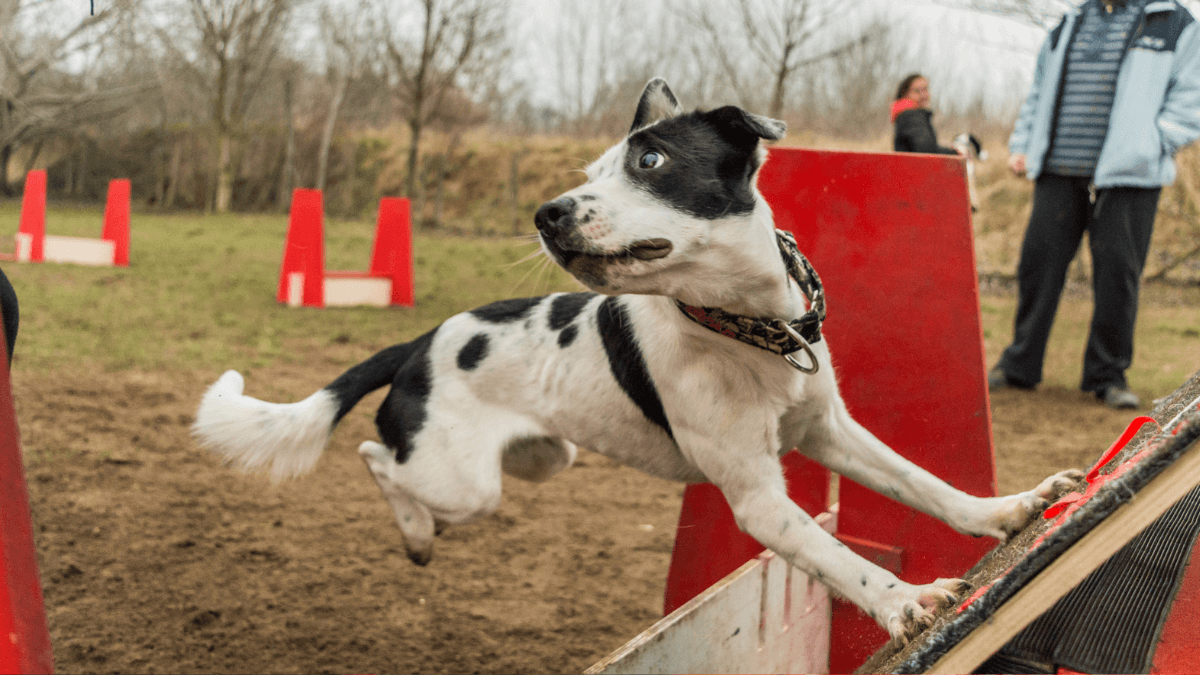

Flyball is one of the most exciting and accessible dog sports around. Fast, noisy, and full of energy, it’s a team relay where dogs race over hurdles, trigger a spring-loaded box to release a ball, and sprint back to their handler.
It combines obedience, speed, and teamwork — and for dogs who love chasing and fetching, there’s nothing quite like it.
Whether you’re looking to build your dog’s confidence, burn off energy, or join a fun community, Flyball is an excellent place to start. Here’s everything you need to know about the sport, how it works, and how to get involved.
What Is Flyball?
Flyball is a relay race for dogs, played between two teams of four. Each dog takes a turn running down a 51-foot course made up of four low hurdles. At the end of the lane, they press a spring-loaded box that releases a tennis ball.
The dog must catch the ball and race back over the hurdles to their handler before the next team member begins their run. The first team to have all four dogs complete the course cleanly wins the heat.
The setup encourages excitement and precision in equal measure. Dogs must stay focused despite barking teammates, handlers shouting encouragement, and the intense energy of the arena.
How the Game Works
The Course
- Each Flyball lane has four hurdles set ten feet apart.
- At the far end sits the Flyball box, angled to pop the ball back towards the returning dog.
- The hurdles are adjusted in height based on the smallest dog on the team to keep it fair for all breeds.
The Race
- Two teams race side by side in separate lanes.
- The first dog runs down, triggers the box, grabs the ball, and returns over all four jumps.
- Once the first dog crosses the start line, the next one goes — just like a baton pass in a human relay.
- If a dog drops the ball or misses a hurdle, they have to re-run, so accuracy matters as much as speed.
The Dogs
Flyball welcomes all breeds and sizes. From Collies and Whippets to Spaniels and Terriers, any dog with good recall and toy drive can compete. Mixed breeds are also common.
The sport rewards enthusiasm and control more than pure athleticism. Some of the smallest dogs end up being the stars because their size sets the jump height for the whole team.
Benefits of Flyball
- Physical exercise: Few activities burn energy like Flyball. It’s an excellent outlet for high-drive breeds.
- Mental stimulation: Timing, turns, and focus keep the dog’s brain working as hard as their body.
- Teamwork and bonding: Dogs learn to work closely with handlers and teammates, developing confidence and control.
- Socialisation: Flyball events are friendly, community-based, and great places to meet other active dog owners.
- Confidence building: For nervous or reactive dogs, the structure and excitement can help improve focus and self-assurance.
How to Get Started
You don’t need to buy specialist equipment or set up a professional course to try Flyball. The best way to begin is through a local club or training group.
Find a local Flyball club
- In the UK, clubs are registered with the British Flyball Association (BFA) and often run introductory sessions or beginner courses.
- Search online for clubs near you, or check out events hosted by the BFA or UK Flyball League to see the sport in action.
- Many clubs welcome spectators, so you can observe before signing up.
Training basics at home
Before attending a club, you can work on the foundation skills:
- Recall: A reliable recall is essential for Flyball. Practise calling your dog from distractions.
- Retrieve: Build excitement around fetching a ball or tug toy and bringing it back to you.
- Hurdles: Start with low, soft obstacles and encourage your dog to jump for fun.
- Impulse control: Teach your dog to wait for your signal before chasing the ball. This discipline becomes vital when racing in a team.
(If you’re new to outdoor training, our guide on how to train your dog to go camping includes similar steps for focus and recall in distracting environments.)
Equipment Used in Flyball
While you don’t need professional gear to get started, it’s helpful to know what’s used in the sport:
- Flyball box: The spring-loaded launcher that holds and releases the ball.
- Tennis balls: Standard size for medium to large dogs; smaller dogs often use miniature balls.
- Hurdles: Four jumps per lane, adjustable to team height.
- Electronic timing gates: Used in competitions to record start, split, and finish times.
For practice at home, you can improvise with low jumps made from broom handles and cones, and use a standard ball launcher until you’re ready to train with a real box.
Safety Considerations
Flyball is physically demanding, so preparation is key:
- Warm up properly before each session with gentle jogging or stretches to avoid injury.
- Check the surface: Avoid hard or slippery ground — grass or rubber matting is ideal.
- Keep sessions short: Overworking dogs can lead to joint strain, especially in younger animals.
- Age matters: Puppies should wait until their growth plates have closed (usually around 12–18 months) before full jumping work.
A quick health check with your vet before starting any high-impact sport is always sensible.
Getting Involved in Events
Once you and your dog have the basics down, joining local competitions can be an incredible experience. Events are often held throughout spring and summer, featuring multiple divisions to suit all ability levels.
Even if you don’t plan to compete, many clubs hold social training days and demonstrations at local shows. The energy and atmosphere alone are worth experiencing.
Final Thoughts
Flyball is a sport built on excitement, teamwork, and trust. It’s a perfect outlet for dogs who love to chase, fetch, and stay active — and for owners who enjoy working closely with their dogs in a positive, structured environment.
If you’re looking for a sport to get into with your dog, there are many alternative dog sports you can try, such as agility or Canicross.
Start slow, focus on building the basics, and find a local club that prioritises fun and welfare over pure competition. With time, your dog will learn to channel their energy into something truly special — and you’ll both walk away from each session smiling.
Image credit: Peter Kiss via Wikimedia
.jpeg)