
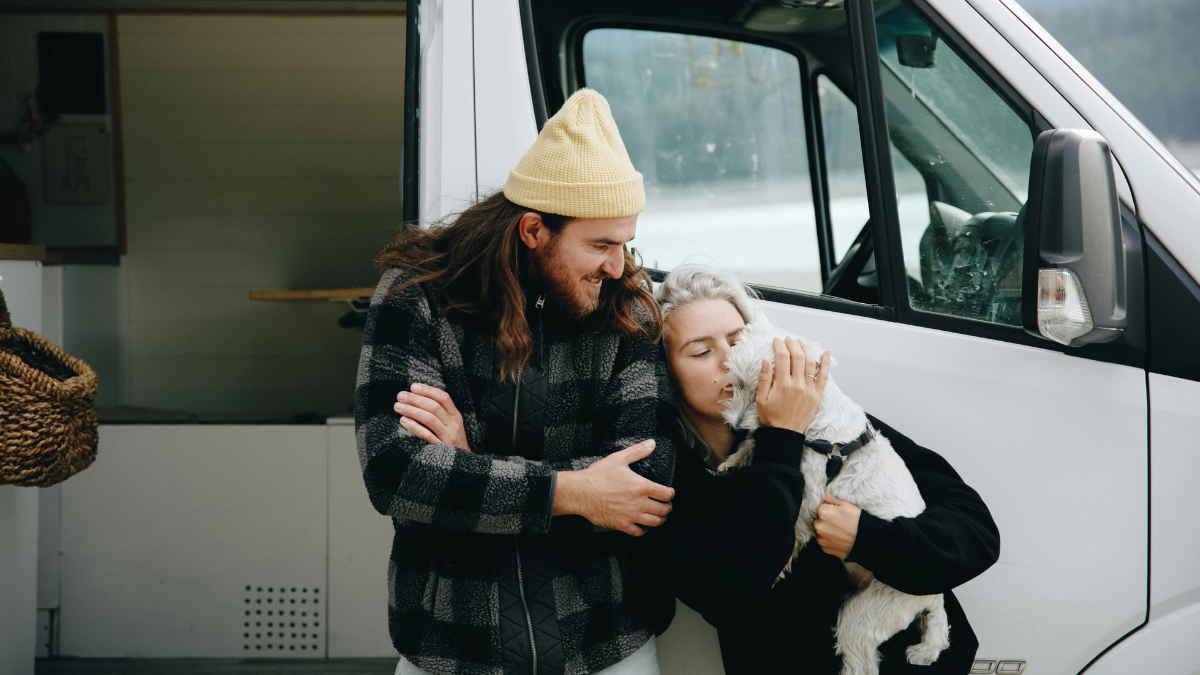

If you’re planning a van conversion and your four-legged travel companion is coming along for the ride, it’s worth taking a little extra time to design a dog friendly van build. From safety and comfort to clever storage and ventilation, thoughtful planning can make all the difference when you’re living life on the road together.
Author’s Insight: I got my first van back when my dog was a puppy, a Mazda Bongo. It was really basic, but it suited us and, after all, he didn’t take up much space anyway! As he got older, more active and, of course, bigger I started to crave a more dog friendly van design. This guide outlines the key features I wish that I had included to make both mine and my dogs vanlife camping trips even more fun.
Why a Dog Friendly Van Conversion Matters
Van life with a dog is an incredible experience, but it also brings extra considerations. Space is limited, temperatures can fluctuate, and your setup needs to be both practical and comfortable for everyone on board.
Building with your dog in mind from the start ensures your van is safe, clean, and easy to live in — even on long adventures.
Key Features for a Dog Friendly Van Conversion
1. Dedicated Sleeping Area
A fixed sleeping spot helps your dog feel settled and secure. Ideally, this should be:
- Out of the main walkway to avoid tripping hazards
- Ventilated but away from draughts
- Fitted with a washable bed or custom-built box with removable cushions
If you’re building raised platforms or benches, consider creating a “dog den” underneath the bed area with a curtain or gate for privacy and safety while driving.
2. Durable, Easy-Clean Flooring
Dogs and muddy paws go hand-in-hand, so choose materials that can handle wear and tear.
- Vinyl, rubber, or laminate are ideal for quick cleaning
- Avoid carpet or fabric flooring
- Keep a small mat or towel by the door to catch dirt and moisture
This small detail will save you hours of cleaning after wet hikes or beach days.
3. Built-In Storage for Dog Gear
Dog gear adds up quickly — leads, towels, food, bowls, toys. Design dedicated storage early in your conversion:
- A pull-out drawer near the door for daily use
- A small cupboard for dry food and treats
- Hooks for leads and harnesses near the entrance
Keeping these essential vanlife items for your dog organised makes van life smoother and prevents clutter.
4. Proper Ventilation and Climate Control
Vans heat up fast. To keep your dog comfortable:
- Fit roof vents or fans to help circulate air
- Install windows that can be opened securely for fresh air
- Use reflective window covers to block sunlight on hot days
If you plan to travel in warmer climates, consider a 12V fan near your dog’s area and insulated panels to help regulate temperature year-round.
5. Safe Travel Setup
Dogs should always be secure while driving. Options include:
- A crate or travel cage fixed to the van structure
- A crash-tested harness and seatbelt clip if space is tight
- A removable barrier between the cab and living area
Never let your dog roam freely while you’re driving — it’s unsafe for both of you.
6. Outdoor Shower or Rinse Station
A small outdoor shower (or even a simple hose connection) is a game-changer for cleaning muddy paws. Install it near the rear doors so you can rinse your dog before they jump inside. Pair this with a small drying area or dedicated towel rack inside the van.
7. Feeding Station
A fold-out feeding platform or slide-out drawer for bowls keeps mealtimes tidy. Avoid loose bowls that slide around the floor.
If you feed raw or wet food, plan for a small 12V fridge compartment and ensure water storage is easily accessible.
8. Lighting and Visibility
Soft LED lighting near the floor helps your dog see at night and avoids bright overhead lights disturbing them while resting. A motion sensor light near the door can also be useful for late-night toilet trips.
Practical Tips and Advice
- Start with your dog’s routine: Think about where they sleep, eat, and rest at home, and replicate that comfort on the road.
- Ventilation is vital: Dogs can overheat quickly. Test your setup in different conditions before committing to long trips.
- Use washable materials: Removable covers, waterproof fabrics, and wipe-clean surfaces make life easier.
- Secure everything: Sudden braking can turn loose items into hazards. Always anchor furniture and storage units properly.
- Plan for access: Dogs get muddy, wet, and tired. Make sure they can easily get in and out of the van — a small ramp is worth considering for older dogs.
Our vanlife dog hacks article has some fantastic advice aside from your initial build.
Common Pitfalls to Avoid
- Overlooking temperature control – Even with vents, vans can get dangerously hot. Never leave your dog inside unattended for long periods.
- Lack of space for drying – Wet dogs need somewhere to dry off that won’t soak your bedding.
- Ignoring storage – Dog gear takes up more room than you expect. Build it in from the start.
- Not testing the layout – Try spending a night in your van during the build phase to see how your dog settles before finalising everything.
Final Thoughts
Designing a dog friendly van conversion is all about thinking ahead. The goal isn’t luxury, it’s comfort, safety, and practicality — for both of you. With the right planning, you’ll have a van that feels like home on every adventure, whether you’re parked up in the mountains or exploring the coast.
So before you start cutting panels or fitting units, take a moment to picture how your dog will experience life on the road. A few thoughtful touches now will make your travels together unforgettable.