
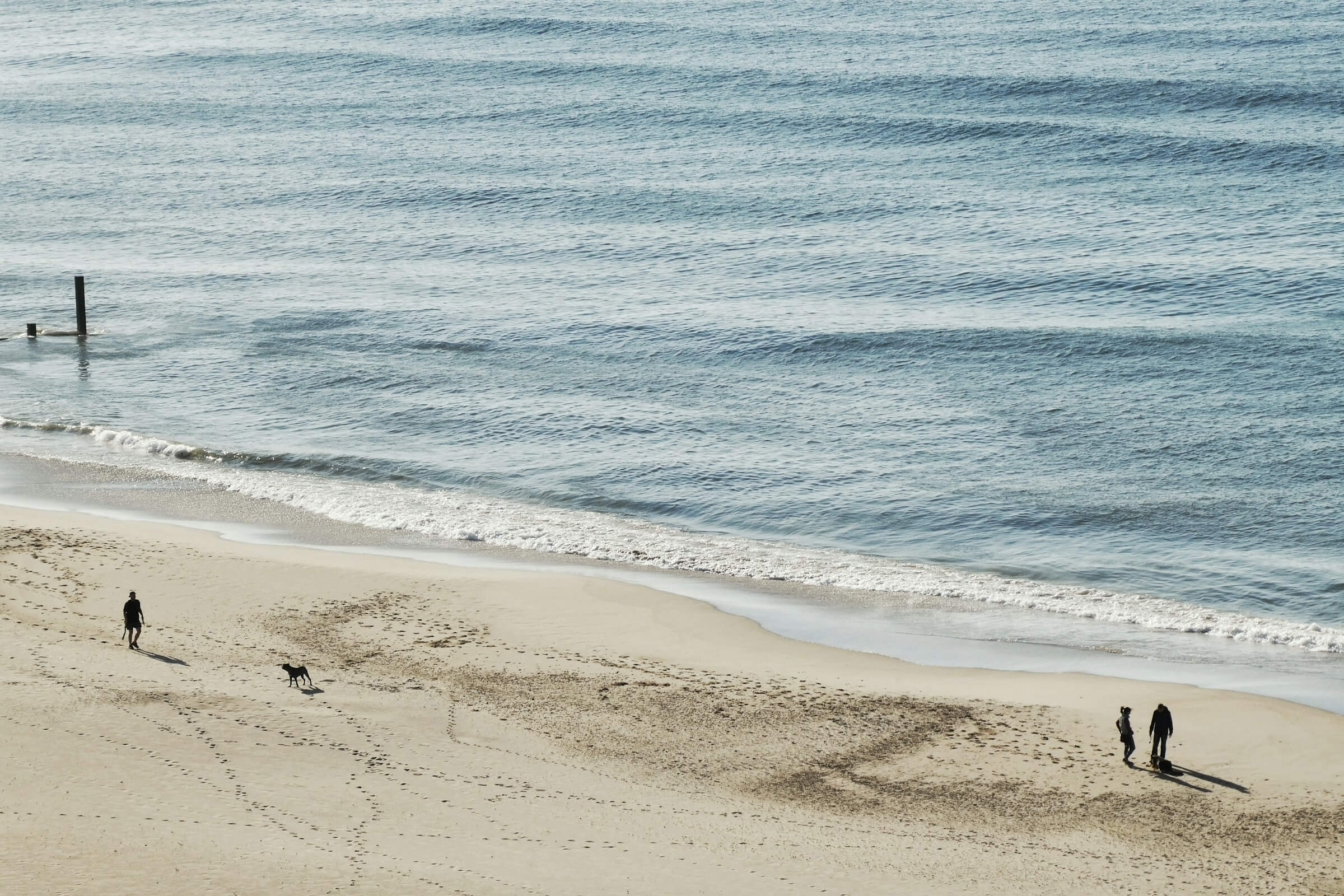

Dorset’s coastline runs for over 90 miles along England’s south coast, taking in some of the most dramatic scenery anywhere in the country. The Jurassic Coast alone is a UNESCO World Heritage Site, and its beaches range from wide sandy sweeps to rocky ledges packed with fossils and marine life. For dog owners, this stretch of coastline offers a genuine mix of experiences, from quiet shingle coves beneath towering cliffs to long open bays where your dog can stretch out and run.
Seasonal dog restrictions apply on many of Dorset’s beaches, typically running from 1 May to 30 September under the Dorset Council Public Spaces Protection Order. This guide breaks down what you need to know for each beach, including access dates, terrain, parking and the details that actually matter when you are planning a visit with your dog.
Hive Beach, Burton Bradstock
Dog Friendly Rating: 7/10 – A stunning Jurassic Coast beach with reliable off season access and a dog friendly cafe right on the shoreline.
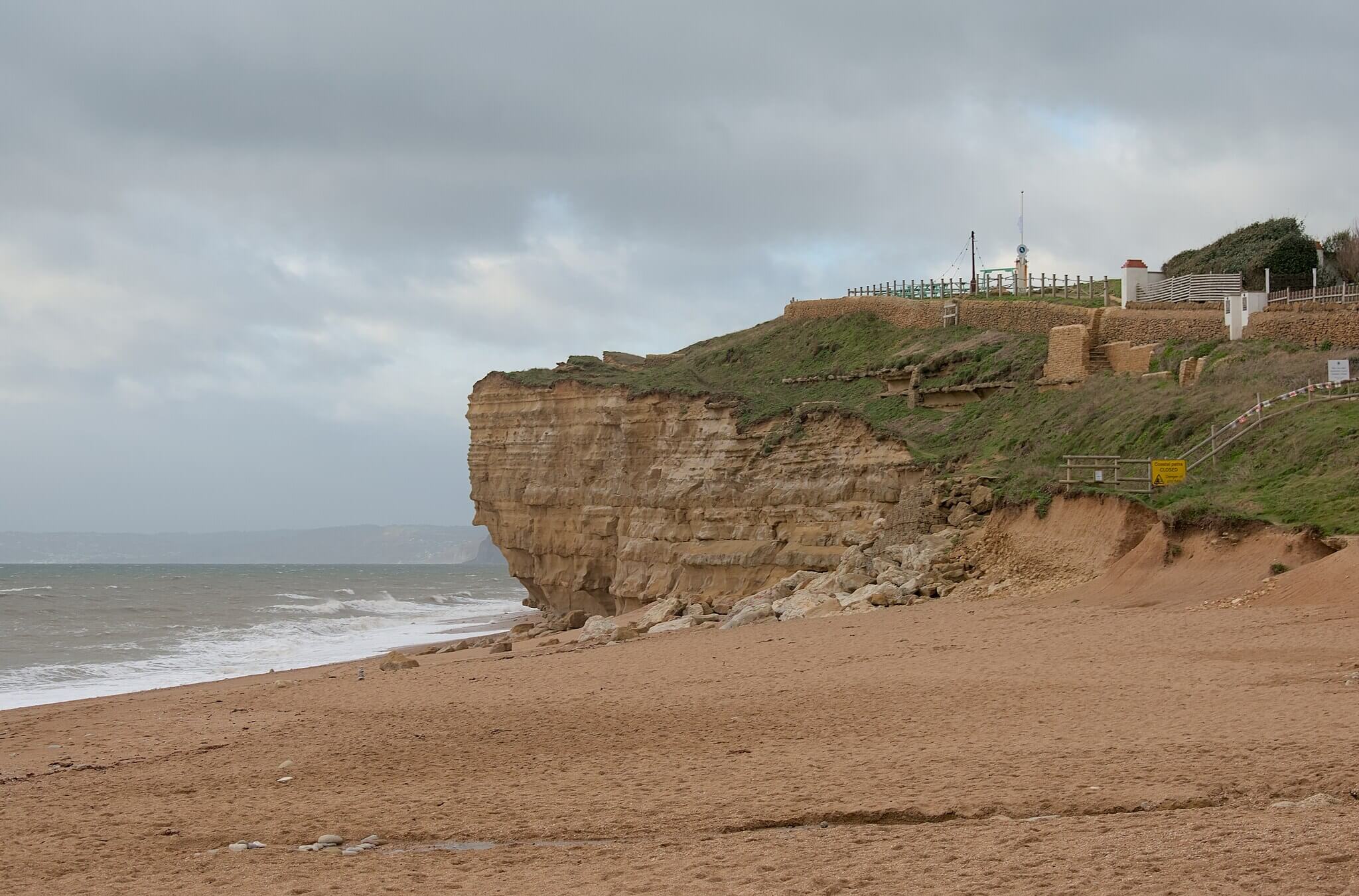
Hive Beach sits beneath the golden sandstone cliffs of Burton Bradstock, looking out across Lyme Bay with views stretching towards Portland Bill on a clear day. The beach itself is a mix of shingle and coarse sand, and at lower tides a broader sandy strip opens up along the waterline. The South West Coast Path passes directly above, and the award winning Hive Beach Cafe sits right beside the car park, making this one of the most accessible Jurassic Coast beaches for a day out. The National Trust manages the car park and surrounding land, so the infrastructure here is well maintained.
Dogs are not permitted on the main beach directly in front of the cafe from 1 June to 30 September, but outside those months this is a brilliant spot for dogs. The shingle crunches underfoot and carries the salty, seaweedy tang of a working shoreline, and at low tide your dog will find damp sand, shallow pools and plenty of washed up kelp to investigate. The section east towards Cogden Beach remains accessible with dogs on lead during the restricted period, so it is not a total write off in summer either. The cafe welcomes dogs, which makes this a strong option for owners who want a proper coastal walk followed by good food.
- Dog Access: Seasonal Restrictions. Dogs not permitted on the main beach from 1 June to 30 September. East Beach section towards Cogden accessible on lead year round.
- Beach Type: Shingle, Sand
- Tide Notes: Sand exposed at lower tides, shingle dominant at high tide. Beach narrows significantly when the tide is in.
- Off Lead Potential: High (outside restriction dates)
- Parking: National Trust pay and display car park at the beach. Free for NT members.
- Facilities: Hive Beach Cafe (dog friendly), toilets, National Trust welcome hut.
Tip: The Hive Beach Cafe is one of the best dog friendly cafes on the Dorset coast, known for its fresh seafood. Arrive early on sunny weekends as the car park fills quickly and there is limited overflow.
Charmouth Beach
Dog Friendly Rating: 7/10 – A long, varied shoreline with year round access on the east beach and excellent fossil hunting at low tide.
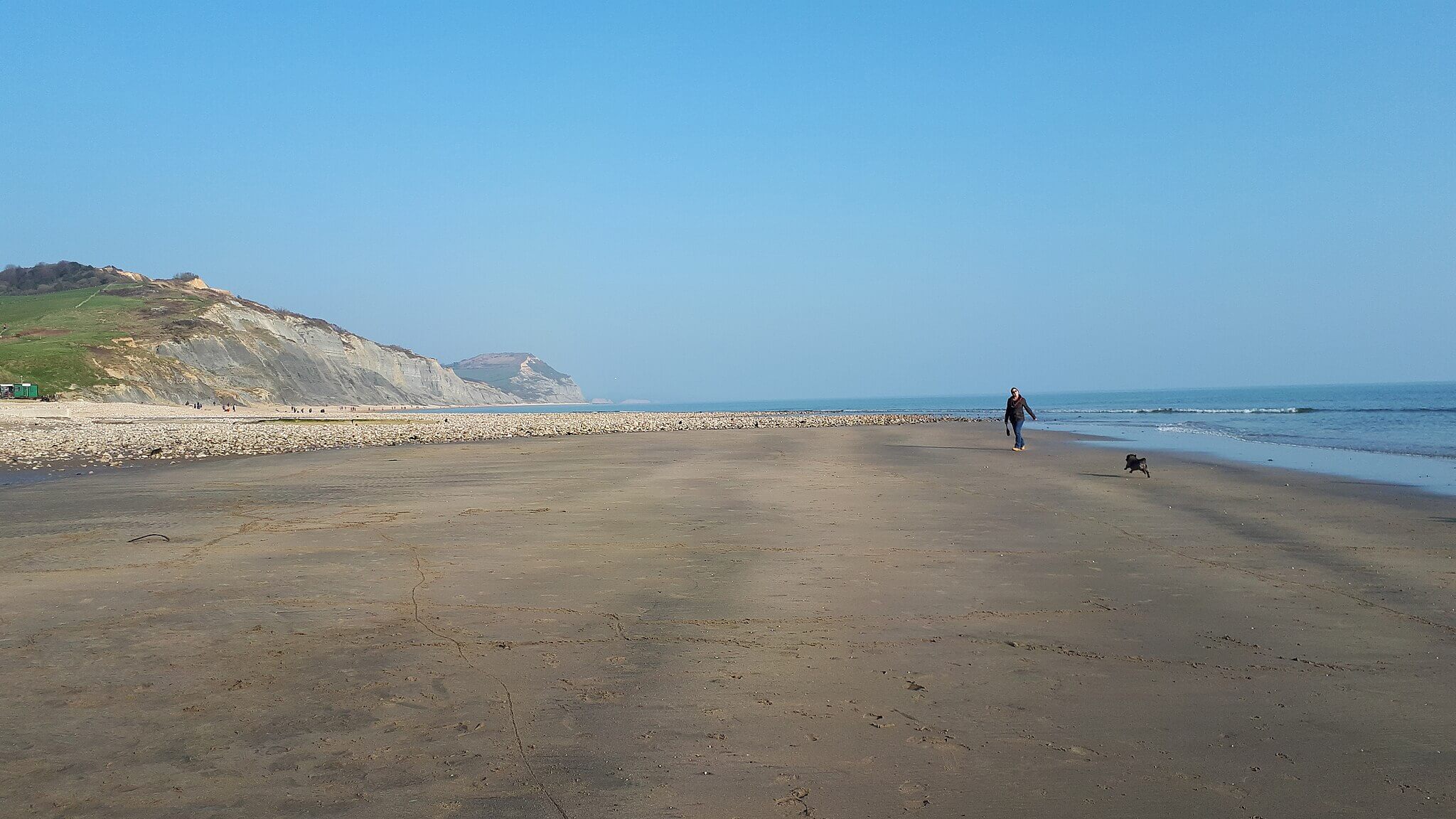

Charmouth Beach is one of the Jurassic Coast’s best known fossil hunting spots, stretching either side of the River Char with dramatic views towards the dark landslip cliffs of Black Ven. The east beach is the larger section, opening up at low tide into a broad expanse of firm sand that runs beneath towering clay cliffs all the way towards Golden Cap. The Heritage Coast Centre sits above the beach and runs guided fossil walks throughout the year. Parking is available in several car parks close to the seafront, and the village itself is a short walk uphill with pubs, cafes and shops.
Dogs are welcome year round on the east beach (the Bridport side of the River Char), which is the larger and more interesting section for walking. The west beach and central area in front of the promenade are restricted from 1 May to 30 September. At low tide, the east beach is a sensory feast for dogs: the clay and shale underfoot carries a rich, mineral earthiness, and there are rock pools, shallow streams and strips of exposed sand for paddling. The river crossing can be waded at low tide, though it can run deeper and faster than it looks. This is a great beach for dogs who love to explore rather than sprint, with new scents and textures around every turn.
- Dog Access: Seasonal Restrictions. East Beach (east of River Char) open to dogs year round. Central beach and West Beach restricted from 1 May to 30 September.
- Beach Type: Shingle, Sand, Rock
- Tide Notes: Significant sand exposure at low tide on east beach. River crossing possible at low tide but check conditions. Beach narrows at high tide beneath cliffs, so watch the incoming tide carefully.
- Off Lead Potential: High (on east beach year round)
- Parking: Pay and display car parks at the seafront. No motorhomes or caravans in the council car park.
- Facilities: Toilets, Heritage Coast Centre (free entry), beach cafes, shops in the village.
Tip: Stay well back from the base of the cliffs, especially after heavy rain. Landslips at Black Ven are an ongoing feature of this stretch of coast and can happen without warning.
Beach Must-Haves





As an Amazon Associate we earn from qualifying purchases.
Seatown Beach
Dog Friendly Rating: 6/10 – A quiet, atmospheric shingle beach beneath Golden Cap, best visited outside the summer restriction period.
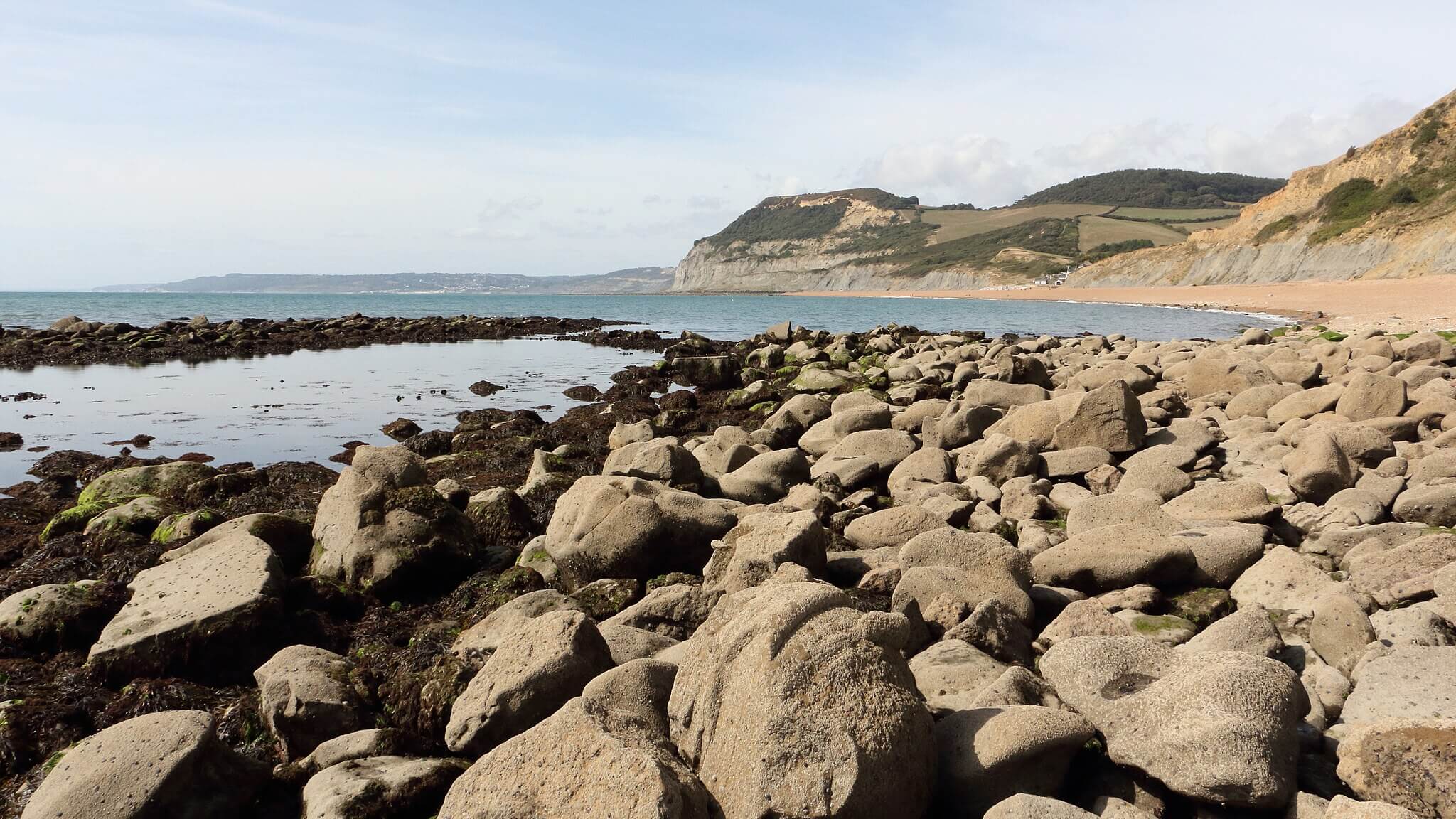

Seatown is a small, tucked away beach at the foot of a narrow lane that winds down from the village of Chideock. The setting is dramatic: Golden Cap, the highest point on England’s south coast, rises to the east, and the cliffs of Thorncombe Beacon frame the western end. The beach is mostly shingle, curving gently between the two headlands, and the South West Coast Path passes directly through the village. It feels remote and unhurried compared to the busier beaches further along the coast, and even on a good day you will often have space to yourself.
Dogs are not permitted on Seatown Beach from 1 May to 30 September under the Dorset PSPO. Outside those dates, the beach is a lovely spot for dogs, with off lead freedom on the open shingle. The air here carries the sharp, briny smell of exposed seaweed and wet stone, and your dog will find plenty to investigate along the tideline. The shingle is firm enough for comfortable walking and the beach feels properly spacious once the summer crowds have gone. The Anchor Inn in the village is dog friendly and popular with walkers, making this a good option for a coast path walk followed by a warm pub lunch.
- Dog Access: Seasonal Restrictions. Dogs not permitted from 1 May to 30 September. Off lead access from 1 October to 30 April.
- Beach Type: Shingle
- Tide Notes: Shingle beach remains walkable at most tide states. No significant sand exposure.
- Off Lead Potential: High (October to April)
- Parking: Pay car park in the village, approximately 100 spaces. Can fill quickly on good weather days.
- Facilities: The Anchor Inn (dog friendly), seasonal toilets.
Tip: Seatown is the most popular starting point for the walk up Golden Cap. The climb is steep but short, and the views from the top across the Jurassic Coast are some of the best in Dorset.
Studland Beach
Dog Friendly Rating: 8/10 – Four miles of sandy beach backed by dunes and heathland, with year round access and off lead freedom outside summer months.
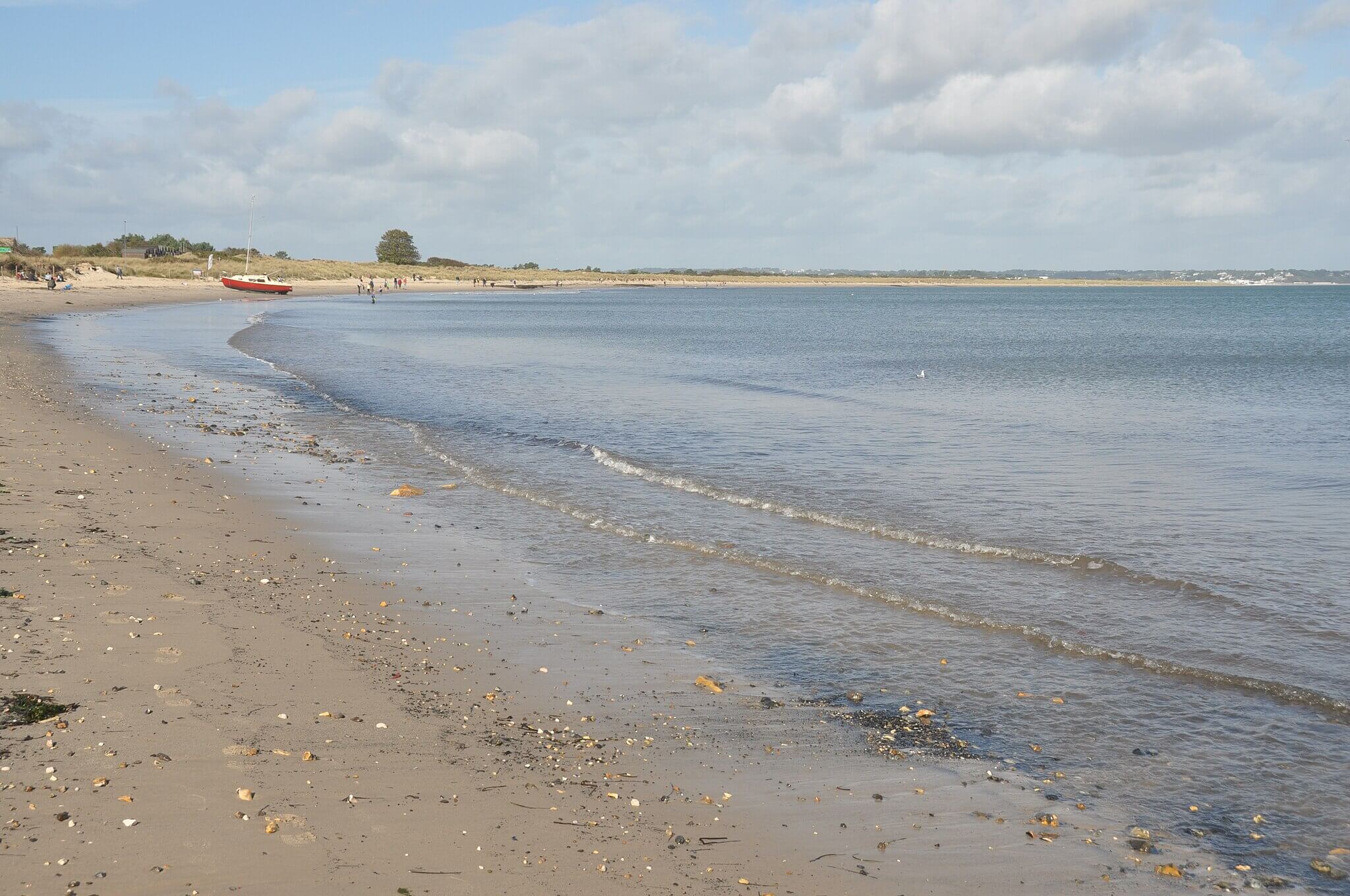
Studland Bay stretches for four miles along the eastern edge of the Isle of Purbeck, from Shell Bay in the north to South Beach near Old Harry Rocks. The beach is almost entirely soft sand, backed by dunes and lowland heathland that forms part of the Studland and Godlingston Heath National Nature Reserve. The National Trust manages the whole area, and facilities at Knoll Beach include a cafe (with outdoor dog friendly seating), toilets, a shop and water bowls. The beach is accessed from several car parks, and the Sandbanks chain ferry provides a route in from the Poole and Bournemouth side.
Dogs are welcome on all sections of Studland Beach year round, but must be kept on a lead of no more than 2 metres from 1 May to 30 September. Outside those months, dogs can be off lead under close control. The sand here is soft and pale, and at the water’s edge your dog will find the firm, damp strip perfect for running. The dune grass and heathland behind the beach carry the warm, resinous scent of gorse and heather, and in autumn and winter the whole landscape opens up into something genuinely wild. Dogs must also be on lead in the dunes and heathland from 1 March to 31 July to protect ground nesting birds including nightjars and Dartford warblers. Dogs can swim in the sea off lead year round.
- Dog Access: Seasonal Restrictions. Dogs on lead (max 2m) on the beach from 1 May to 30 September. Off lead under close control from 1 October to 30 April. On lead in dunes and heathland from 1 March to 31 July to protect nesting birds.
- Beach Type: Sand, Dunes
- Tide Notes: Gently shelving sandy beach. Remains broad and walkable at most tide states. Sheltered bay with calm conditions most of the year.
- Off Lead Potential: High (October to April), Low (May to September, on lead required)
- Parking: National Trust car parks at Shell Bay, Knoll Beach and Middle Beach. Free for NT members.
- Facilities: Knoll Beach Cafe (dog friendly outdoor seating), toilets at Knoll Beach, Middle Beach and Shell Bay, water bowls, beach wheelchair hire.
Tip: The heathland behind Studland is home to all six of Britain’s native reptile species, including adders. Keep dogs on the paths and under close control when walking through the heathland, particularly in spring and early summer when adders are most active.
Kimmeridge Bay
Dog Friendly Rating: 9/10 – A year round, off lead rocky bay with world class rock pools, fossil ledges and a properly wild atmosphere.
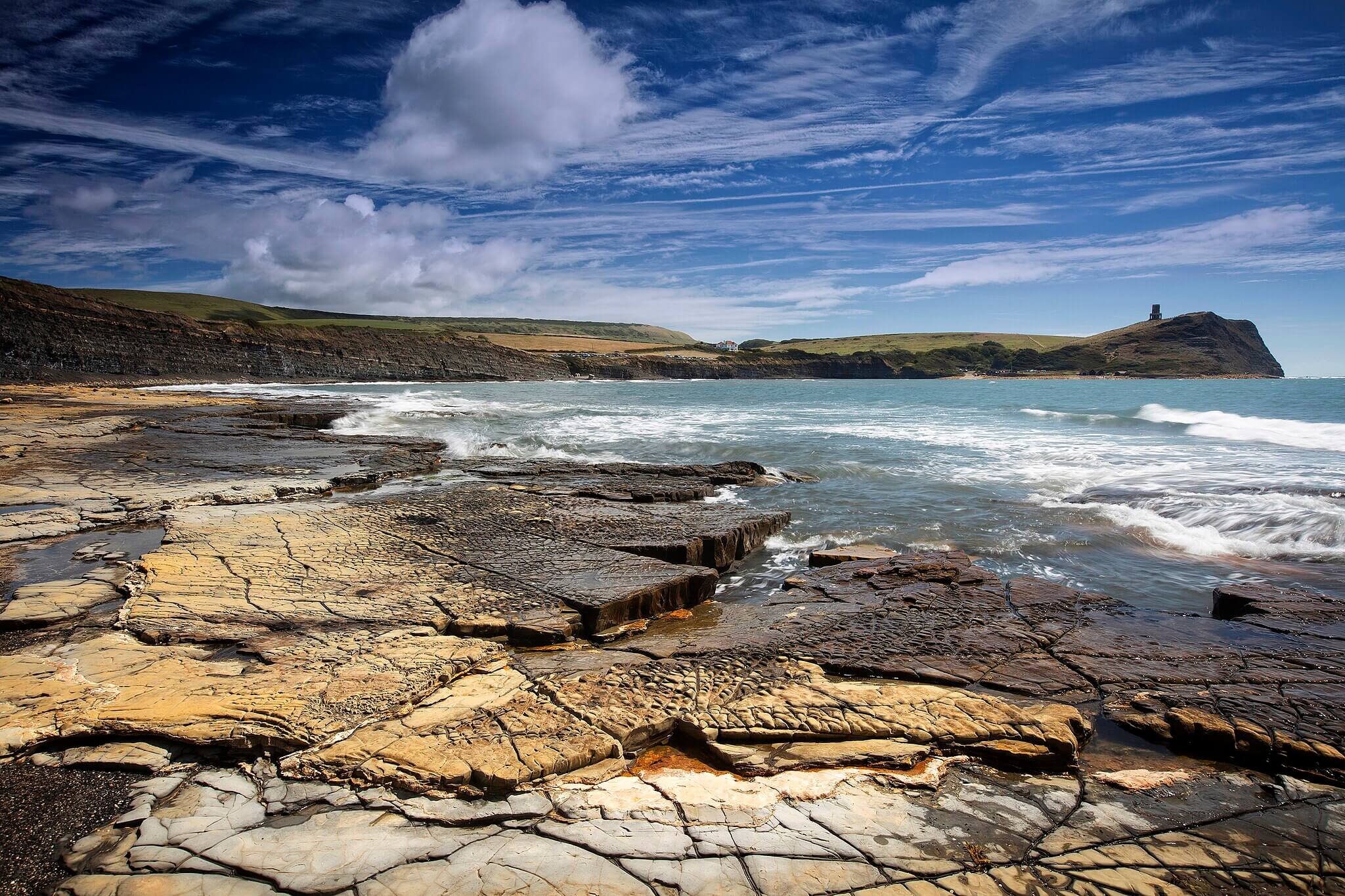
Kimmeridge Bay is unlike any other beach on this list. Instead of sand or shingle, the shoreline is made up of dark limestone ledges, rocky platforms and shallow pools that extend out into clear, sheltered water. The bay sits within a Marine Special Area of Conservation and is one of the best rock pooling spots in the country, with crabs, anemones, seaweed forests and small fish visible in the shallows. The Wild Seas Centre by the slipway (free entry, run by Dorset Wildlife Trust) is worth a visit, and the Etches Collection fossil museum in the village is outstanding. Access is via a toll road through private land, and there is a small car park at the bay.
Dogs are welcome at Kimmeridge Bay year round with no restrictions, making this one of the most reliably dog friendly beaches in Dorset. The rocky ledges carry the deep, briny scent of exposed seaweed and marine life, and your dog will find endless things to sniff and investigate among the pools and crevices. The footing is uneven and can be slippery, so this suits dogs (and owners) who are happy with a slower, more exploratory pace rather than flat out running. The water is clear and calm enough for paddling on settled days. This is a beach that rewards patience and curiosity, and most dogs absolutely love it.
- Dog Access: Year Round. No restrictions.
- Beach Type: Rock, Shale, Pebble
- Tide Notes: Rocky ledges and pools exposed at low tide. Beach access can narrow at higher tides. Best visited on a falling or low tide for maximum exploration.
- Off Lead Potential: High
- Parking: Car park at the bay, accessed via a private toll road. Charges apply.
- Facilities: Toilets near the car park, Wild Seas Centre (free, seasonal opening), ice cream van in summer. Village cafe approximately 20 minutes’ walk.
Tip: The limestone ledges can be extremely slippery when wet, especially where seaweed has built up. Wear shoes with good grip and keep an eye on dogs near the deeper rock pools at the water’s edge.
West Bay Beach
Dog Friendly Rating: 6/10 – A lively harbour beach with dramatic cliffs and year round access on the third beach, but significant summer restrictions on the main sections.
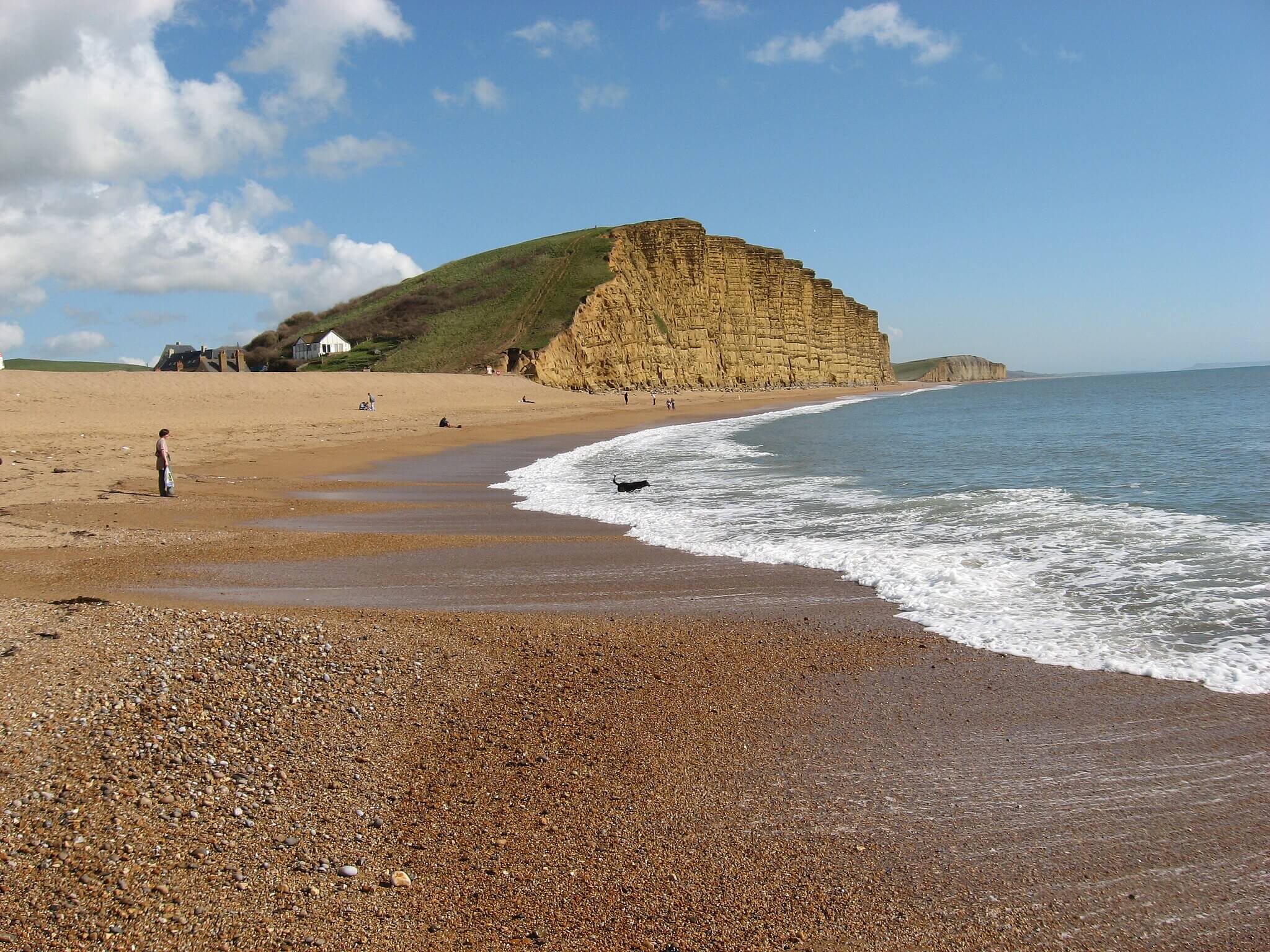
West Bay is one of Dorset’s most recognisable coastal spots, with its towering golden cliffs (familiar from the TV series Broadchurch), busy harbour and three distinct beach sections. East Beach stretches away to the east beneath the cliffs, West Beach sits to the west of the pier, and a third, smaller beach lies beyond West Beach separated by a large rock groyne. The South West Coast Path passes directly through, and the harbour area has a good selection of cafes, pubs, fish and chip shops and an ice cream parlour. Parking is available in several car parks close to the seafront.
Dogs are not permitted on East Beach or West Beach from 1 May to 30 September. The third beach, beyond the rock groyne, has no restrictions and welcomes dogs year round. Outside summer, all three beaches are open to dogs off lead. The third beach is smaller and more sheltered, with a mix of shingle and sand, and the salty harbour smell mingles with the tar and rope scent of the working quayside. Dogs should be kept on lead around the harbourside and on the esplanade at all times. For owners visiting in summer, the third beach combined with the coast path makes for a satisfying outing even when the main beaches are restricted.
- Dog Access: Seasonal Restrictions. East Beach and West Beach restricted from 1 May to 30 September. Third beach (beyond rock groyne on the west side) has no restrictions year round. Dogs on lead around harbour and esplanade at all times.
- Beach Type: Shingle, Sand
- Tide Notes: Beach character varies by section. East Beach is more exposed, third beach more sheltered. Sand exposed at lower tides.
- Off Lead Potential: High (October to April on all beaches), Moderate (May to September, third beach only)
- Parking: Several pay and display car parks near the seafront.
- Facilities: Toilets, cafes, pubs, shops, ice cream. Full range of facilities around the harbour.
Tip: The cliffs at West Bay are unstable and rock falls are a genuine hazard. Keep well back from the cliff base, particularly after heavy rain, and keep dogs away from the cliff foot on both East Beach and the coast path sections above.
Weymouth Beach
Dog Friendly Rating: 6/10 – A classic sandy beach with designated year round dog areas and wide open space outside the summer restriction months.
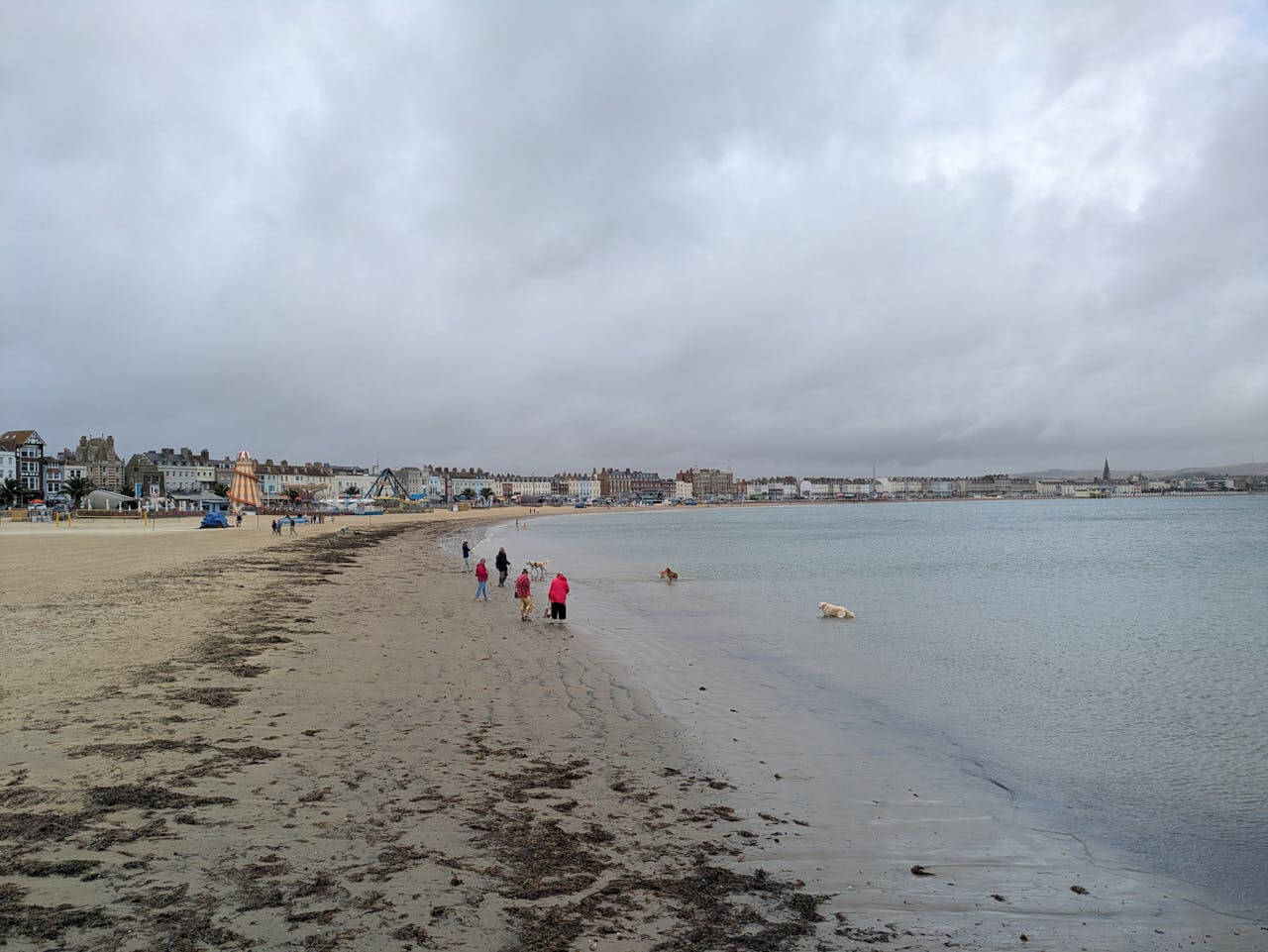
Weymouth Beach is one of Dorset’s most famous stretches of sand, curving gently around Weymouth Bay with shallow, sheltered water and a wide, flat shoreline backed by a traditional promenade. The beach feels spacious even on busier days, and the sand is fine and golden with a gentle shelf into the sea. The town centre, harbour and full range of shops, restaurants and attractions sit just behind the seafront. It is a proper seaside destination with all the infrastructure that comes with it.
The central beach and Greenhill section are restricted from 1 May to 30 September, but dogs are allowed year round in the designated exercise area beside the Pavilion at the harbour end, and on the stretch from Greenhill Groyne to Overcombe at the eastern end. Outside summer, the whole beach opens up and becomes a completely different experience: quieter, more spacious and far more relaxed for dog owners. The sand underfoot is soft and clean, and the sheltered bay means the water is usually calm enough for dogs to paddle safely. The salt air and open sweep of the bay give it a sense of space that few other town beaches can match. Dogs must be kept on lead on the promenade at all times.
- Dog Access: Seasonal Restrictions. Central beach and Greenhill restricted from 1 May to 30 September. Dog exercise area beside the Pavilion and Greenhill Groyne to Overcombe open year round. Full beach access from 1 October to 30 April.
- Beach Type: Sand
- Tide Notes: Wide, gently shelving sandy beach. Remains broad and walkable at most tide states. Sheltered bay with generally calm conditions.
- Off Lead Potential: Moderate (year round in designated areas), High (October to April on full beach)
- Parking: Multiple pay and display car parks in the town centre and along the seafront.
- Facilities: Toilets, cafes, restaurants, shops, promenade facilities, seasonal lifeguards.
Tip: The dog exercise area beside the Pavilion is clearly signposted and offers sandy beach access even in the height of summer. It is the best option if you are visiting Weymouth with a dog between May and September.
Map of Dog Friendly Beaches in Dorset
Explore these dog friendly beaches in Dorset using our handy map below, simply click the pins to get information on each of the beaches. Once you’ve chosen the one you would like to visit, click ‘Get Directions’ and we’ll guide you there.
Weymouth Beach is one of Dorset’s most famous stretches of sand, curving gently around Weymouth Bay with shallow, sheltered water and a wide, flat shoreline backed by a traditional promenade. The beach feels spacious even on busier days, and the sand is fine and golden with a gentle shelf into the sea. The town centre, harbour and full range of shops, restaurants and attractions sit just behind the seafront. It is a proper seaside destination with all the infrastructure that comes with it.
The central beach and Greenhill section are restricted from 1 May to 30 September, but dogs are allowed year round in the designated exercise area beside the Pavilion at the harbour end, and on the stretch from Greenhill Groyne to Overcombe at the eastern end. Outside summer, the whole beach opens up and becomes a completely different experience: quieter, more spacious and far more relaxed for dog owners. The sand underfoot is soft and clean, and the sheltered bay means the water is usually calm enough for dogs to paddle safely. The salt air and open sweep of the bay give it a sense of space that few other town beaches can match. Dogs must be kept on lead on the promenade at all times.
- Dog Access: Seasonal Restrictions. Central beach and Greenhill restricted from 1 May to 30 September. Dog exercise area beside the Pavilion and Greenhill Groyne to Overcombe open year round. Full beach access from 1 October to 30 April.
- Beach Type: Sand
- Tide Notes: Wide, gently shelving sandy beach. Remains broad and walkable at most tide states. Sheltered bay with generally calm conditions.
- Off Lead Potential: Moderate (year round in designated areas), High (October to April on full beach)
- Parking: Multiple pay and display car parks in the town centre and along the seafront.
- Facilities: Toilets, cafes, restaurants, shops, promenade facilities, seasonal lifeguards.
Tip: The dog exercise area beside the Pavilion is clearly signposted and offers sandy beach access even in the height of summer. It is the best option if you are visiting Weymouth with a dog between May and September.
West Bay is one of Dorset’s most recognisable coastal spots, with its towering golden cliffs (familiar from the TV series Broadchurch), busy harbour and three distinct beach sections. East Beach stretches away to the east beneath the cliffs, West Beach sits to the west of the pier, and a third, smaller beach lies beyond West Beach separated by a large rock groyne. The South West Coast Path passes directly through, and the harbour area has a good selection of cafes, pubs, fish and chip shops and an ice cream parlour. Parking is available in several car parks close to the seafront.
Dogs are not permitted on East Beach or West Beach from 1 May to 30 September. The third beach, beyond the rock groyne, has no restrictions and welcomes dogs year round. Outside summer, all three beaches are open to dogs off lead. The third beach is smaller and more sheltered, with a mix of shingle and sand, and the salty harbour smell mingles with the tar and rope scent of the working quayside. Dogs should be kept on lead around the harbourside and on the esplanade at all times. For owners visiting in summer, the third beach combined with the coast path makes for a satisfying outing even when the main beaches are restricted.
- Dog Access: Seasonal Restrictions. East Beach and West Beach restricted from 1 May to 30 September. Third beach (beyond rock groyne on the west side) has no restrictions year round. Dogs on lead around harbour and esplanade at all times.
- Beach Type: Shingle, Sand
- Tide Notes: Beach character varies by section. East Beach is more exposed, third beach more sheltered. Sand exposed at lower tides.
- Off Lead Potential: High (October to April on all beaches), Moderate (May to September, third beach only)
- Parking: Several pay and display car parks near the seafront.
- Facilities: Toilets, cafes, pubs, shops, ice cream. Full range of facilities around the harbour.
Tip: The cliffs at West Bay are unstable and rock falls are a genuine hazard. Keep well back from the cliff base, particularly after heavy rain, and keep dogs away from the cliff foot on both East Beach and the coast path sections above.
Kimmeridge Bay is unlike any other beach on this list. Instead of sand or shingle, the shoreline is made up of dark limestone ledges, rocky platforms and shallow pools that extend out into clear, sheltered water. The bay sits within a Marine Special Area of Conservation and is one of the best rock pooling spots in the country, with crabs, anemones, seaweed forests and small fish visible in the shallows. The Wild Seas Centre by the slipway (free entry, run by Dorset Wildlife Trust) is worth a visit, and the Etches Collection fossil museum in the village is outstanding. Access is via a toll road through private land, and there is a small car park at the bay.
Dogs are welcome at Kimmeridge Bay year round with no restrictions, making this one of the most reliably dog friendly beaches in Dorset. The rocky ledges carry the deep, briny scent of exposed seaweed and marine life, and your dog will find endless things to sniff and investigate among the pools and crevices. The footing is uneven and can be slippery, so this suits dogs (and owners) who are happy with a slower, more exploratory pace rather than flat out running. The water is clear and calm enough for paddling on settled days. This is a beach that rewards patience and curiosity, and most dogs absolutely love it.
- Dog Access: Year Round. No restrictions.
- Beach Type: Rock, Shale, Pebble
- Tide Notes: Rocky ledges and pools exposed at low tide. Beach access can narrow at higher tides. Best visited on a falling or low tide for maximum exploration.
- Off Lead Potential: High
- Parking: Car park at the bay, accessed via a private toll road. Charges apply.
- Facilities: Toilets near the car park, Wild Seas Centre (free, seasonal opening), ice cream van in summer. Village cafe approximately 20 minutes’ walk.
Tip: The limestone ledges can be extremely slippery when wet, especially where seaweed has built up. Wear shoes with good grip and keep an eye on dogs near the deeper rock pools at the water’s edge.
Studland Bay stretches for four miles along the eastern edge of the Isle of Purbeck, from Shell Bay in the north to South Beach near Old Harry Rocks. The beach is almost entirely soft sand, backed by dunes and lowland heathland that forms part of the Studland and Godlingston Heath National Nature Reserve. The National Trust manages the whole area, and facilities at Knoll Beach include a cafe (with outdoor dog friendly seating), toilets, a shop and water bowls. The beach is accessed from several car parks, and the Sandbanks chain ferry provides a route in from the Poole and Bournemouth side.
Dogs are welcome on all sections of Studland Beach year round, but must be kept on a lead of no more than 2 metres from 1 May to 30 September. Outside those months, dogs can be off lead under close control. The sand here is soft and pale, and at the water’s edge your dog will find the firm, damp strip perfect for running. The dune grass and heathland behind the beach carry the warm, resinous scent of gorse and heather, and in autumn and winter the whole landscape opens up into something genuinely wild. Dogs must also be on lead in the dunes and heathland from 1 March to 31 July to protect ground nesting birds including nightjars and Dartford warblers. Dogs can swim in the sea off lead year round.
- Dog Access: Seasonal Restrictions. Dogs on lead (max 2m) on the beach from 1 May to 30 September. Off lead under close control from 1 October to 30 April. On lead in dunes and heathland from 1 March to 31 July to protect nesting birds.
- Beach Type: Sand, Dunes
- Tide Notes: Gently shelving sandy beach. Remains broad and walkable at most tide states. Sheltered bay with calm conditions most of the year.
- Off Lead Potential: High (October to April), Low (May to September, on lead required)
- Parking: National Trust car parks at Shell Bay, Knoll Beach and Middle Beach. Free for NT members.
- Facilities: Knoll Beach Cafe (dog friendly outdoor seating), toilets at Knoll Beach, Middle Beach and Shell Bay, water bowls, beach wheelchair hire.
Tip: The heathland behind Studland is home to all six of Britain’s native reptile species, including adders. Keep dogs on the paths and under close control when walking through the heathland, particularly in spring and early summer when adders are most active.
Seatown is a small, tucked away beach at the foot of a narrow lane that winds down from the village of Chideock. The setting is dramatic: Golden Cap, the highest point on England’s south coast, rises to the east, and the cliffs of Thorncombe Beacon frame the western end. The beach is mostly shingle, curving gently between the two headlands, and the South West Coast Path passes directly through the village. It feels remote and unhurried compared to the busier beaches further along the coast, and even on a good day you will often have space to yourself.
Dogs are not permitted on Seatown Beach from 1 May to 30 September under the Dorset PSPO. Outside those dates, the beach is a lovely spot for dogs, with off lead freedom on the open shingle. The air here carries the sharp, briny smell of exposed seaweed and wet stone, and your dog will find plenty to investigate along the tideline. The shingle is firm enough for comfortable walking and the beach feels properly spacious once the summer crowds have gone. The Anchor Inn in the village is dog friendly and popular with walkers, making this a good option for a coast path walk followed by a warm pub lunch.
- Dog Access: Seasonal Restrictions. Dogs not permitted from 1 May to 30 September. Off lead access from 1 October to 30 April.
- Beach Type: Shingle
- Tide Notes: Shingle beach remains walkable at most tide states. No significant sand exposure.
- Off Lead Potential: High (October to April)
- Parking: Pay car park in the village, approximately 100 spaces. Can fill quickly on good weather days.
- Facilities: The Anchor Inn (dog friendly), seasonal toilets.
Tip: Seatown is the most popular starting point for the walk up Golden Cap. The climb is steep but short, and the views from the top across the Jurassic Coast are some of the best in Dorset.
Charmouth Beach is one of the Jurassic Coast’s best known fossil hunting spots, stretching either side of the River Char with dramatic views towards the dark landslip cliffs of Black Ven. The east beach is the larger section, opening up at low tide into a broad expanse of firm sand that runs beneath towering clay cliffs all the way towards Golden Cap. The Heritage Coast Centre sits above the beach and runs guided fossil walks throughout the year. Parking is available in several car parks close to the seafront, and the village itself is a short walk uphill with pubs, cafes and shops.
Dogs are welcome year round on the east beach (the Bridport side of the River Char), which is the larger and more interesting section for walking. The west beach and central area in front of the promenade are restricted from 1 May to 30 September. At low tide, the east beach is a sensory feast for dogs: the clay and shale underfoot carries a rich, mineral earthiness, and there are rock pools, shallow streams and strips of exposed sand for paddling. The river crossing can be waded at low tide, though it can run deeper and faster than it looks. This is a great beach for dogs who love to explore rather than sprint, with new scents and textures around every turn.
- Dog Access: Seasonal Restrictions. East Beach (east of River Char) open to dogs year round. Central beach and West Beach restricted from 1 May to 30 September.
- Beach Type: Shingle, Sand, Rock
- Tide Notes: Significant sand exposure at low tide on east beach. River crossing possible at low tide but check conditions. Beach narrows at high tide beneath cliffs, so watch the incoming tide carefully.
- Off Lead Potential: High (on east beach year round)
- Parking: Pay and display car parks at the seafront. No motorhomes or caravans in the council car park.
- Facilities: Toilets, Heritage Coast Centre (free entry), beach cafes, shops in the village.
Tip: Stay well back from the base of the cliffs, especially after heavy rain. Landslips at Black Ven are an ongoing feature of this stretch of coast and can happen without warning.
Hive Beach sits beneath the golden sandstone cliffs of Burton Bradstock, looking out across Lyme Bay with views stretching towards Portland Bill on a clear day. The beach itself is a mix of shingle and coarse sand, and at lower tides a broader sandy strip opens up along the waterline. The South West Coast Path passes directly above, and the award winning Hive Beach Cafe sits right beside the car park, making this one of the most accessible Jurassic Coast beaches for a day out. The National Trust manages the car park and surrounding land, so the infrastructure here is well maintained.
Dogs are not permitted on the main beach directly in front of the cafe from 1 June to 30 September, but outside those months this is a brilliant spot for dogs. The shingle crunches underfoot and carries the salty, seaweedy tang of a working shoreline, and at low tide your dog will find damp sand, shallow pools and plenty of washed up kelp to investigate. The section east towards Cogden Beach remains accessible with dogs on lead during the restricted period, so it is not a total write off in summer either. The cafe welcomes dogs, which makes this a strong option for owners who want a proper coastal walk followed by good food.
- Dog Access: Seasonal Restrictions. Dogs not permitted on the main beach from 1 June to 30 September. East Beach section towards Cogden accessible on lead year round.
- Beach Type: Shingle, Sand
- Tide Notes: Sand exposed at lower tides, shingle dominant at high tide. Beach narrows significantly when the tide is in.
- Off Lead Potential: High (outside restriction dates)
- Parking: National Trust pay and display car park at the beach. Free for NT members.
- Facilities: Hive Beach Cafe (dog friendly), toilets, National Trust welcome hut.
Tip: The Hive Beach Cafe is one of the best dog friendly cafes on the Dorset coast, known for its fresh seafood. Arrive early on sunny weekends as the car park fills quickly and there is limited overflow.
Explore even more dog friendly locations nearby and across the UK using The Wildpack Map, our expertly curated map of dog friendly locations, including walking routes, campsites, swimming spots and much more.
Tips for Visiting Dorset Beaches With Your Dog
- Check restriction dates before you travel: Most Dorset beach restrictions run from 1 May to 30 September under the Dorset Council Public Spaces Protection Order, but some beaches have slightly different dates (Hive Beach starts 1 June, for example). Always check local signage when you arrive as enforcement is active.
- Watch the tides on shingle and rocky beaches: Beaches like Charmouth and Kimmeridge Bay change dramatically between high and low tide. At high tide, some sections narrow significantly or become impassable beneath cliffs. Check tide times before setting out and keep an eye on the water if walking towards headlands.
- Cliff fall hazards are real along the Jurassic Coast: The cliffs at West Bay, Charmouth and Burton Bradstock are actively eroding and rock falls can happen without warning. Keep dogs well away from the cliff base, especially after heavy rain, and take warning signs seriously.
- Bring fresh water on every visit: Many Dorset beaches have limited shade and no fresh water access. On warm days, shingle and sand can get hot underfoot, and saltwater is not a substitute for drinking water. A collapsible bowl and a bottle of water are essentials.
- Keep dogs on lead on coast path sections near livestock: The South West Coast Path passes through farmland at many points along the Dorset coast, particularly around Seatown, Burton Bradstock and the Purbeck section. Livestock are regularly present in fields adjacent to the path, so carry a lead and use it where required.
- National Trust car parks are free for members: Several of the best dog friendly beaches in Dorset, including Hive Beach, Studland and the surrounding coast, are managed by the National Trust. If you visit regularly, membership pays for itself quickly through free parking alone.
Frequently Asked Questions
Are dogs allowed on Dorset beaches all year round?
It depends on the beach. Some, like Kimmeridge Bay, welcome dogs year round with no restrictions. Others, including Weymouth, West Bay and Seatown, have seasonal bans running from 1 May to 30 September. Always check the specific beach before visiting, as rules vary by location.
Which Dorset beaches are dog friendly in summer?
Kimmeridge Bay has no restrictions at any time of year. Charmouth’s east beach (east of the River Char) is open to dogs year round. Studland allows dogs on lead throughout summer. Hive Beach’s eastern section towards Cogden is accessible on lead, and the dog exercise area at Weymouth Beach beside the Pavilion is also open year round.
What are the dog restriction dates for Dorset beaches?
Most restrictions run from 1 May to 30 September under the Dorset Council Public Spaces Protection Order. Hive Beach’s main beach restriction runs from 1 June to 30 September. Studland requires dogs on lead (max 2m) from 1 May to 30 September. Always check local signage as dates can vary.
Can dogs swim in the sea at Dorset beaches?
Yes, on beaches where dogs are permitted. Studland explicitly allows dogs to swim in the sea off lead year round, even during the on lead beach period. Kimmeridge Bay and Charmouth’s east beach also offer sea access. Always assess water conditions and be cautious of strong currents, particularly on shingle beaches with steep shelving.
Are there dog friendly cafes near Dorset beaches?
Several beaches have dog friendly cafes close by. Hive Beach Cafe at Burton Bradstock is one of the best known, and the Knoll Beach Cafe at Studland has dog friendly outdoor seating. The Anchor Inn at Seatown welcomes dogs, and Charmouth has several dog friendly options in the village. West Bay and Weymouth both have multiple dog friendly pubs and cafes within easy reach of the beach.
Do I need to pay for parking at Dorset beaches?
Most Dorset beach car parks are pay and display. National Trust sites (Hive Beach, Studland) are free for members. Kimmeridge Bay is accessed via a private toll road with separate car park charges. Weymouth and West Bay have council operated pay and display car parks.
What’s Nearby?
If you’re planning a longer stay or a road trip through the area, Dorset works well alongside other dog friendly destinations:
- Dog friendly walks in Dorset – coastal paths, countryside routes and cliff top hikes
- Dog friendly beaches in Devon – ideal for extending a Jurassic Coast trip west
- New Forest National Park – Fantastic dog friendly walks and hikes just a little East
- Dog friendly walks in Bournemouth – Ideal if you’re staying in the popular seaside town
- Dog Friendly Beaches in Bournemouth – Even more beautiful beaches to explore with your pup
- Dog friendly beaches Isle of Wight – Just across the water you’ll find stunning dog friendly beaches.
- Dog friendly beaches in Hampshire – A quieter south coast option with open shingle shores, salt marsh landscapes.
- Dog friendly walks in Hampshire: From peaceful Test and Itchen Valley walks to open countryside and coastal routes along the Solent.
These nearby guides make it easy to build a few days of dog friendly adventures without travelling far.
Final Thoughts
Dorset offers an excellent mix of dog friendly beaches, from iconic sandy stretches to quieter, rugged coves that reward a bit of exploration. With good signage, clear seasonal rules and easy access to coastal walking routes, it’s a county that works well for dog owners throughout the year.
A little planning around tides and restrictions goes a long way, and once you’re there, Dorset delivers some of the most memorable coastal walks in the UK for both you and your dog.