
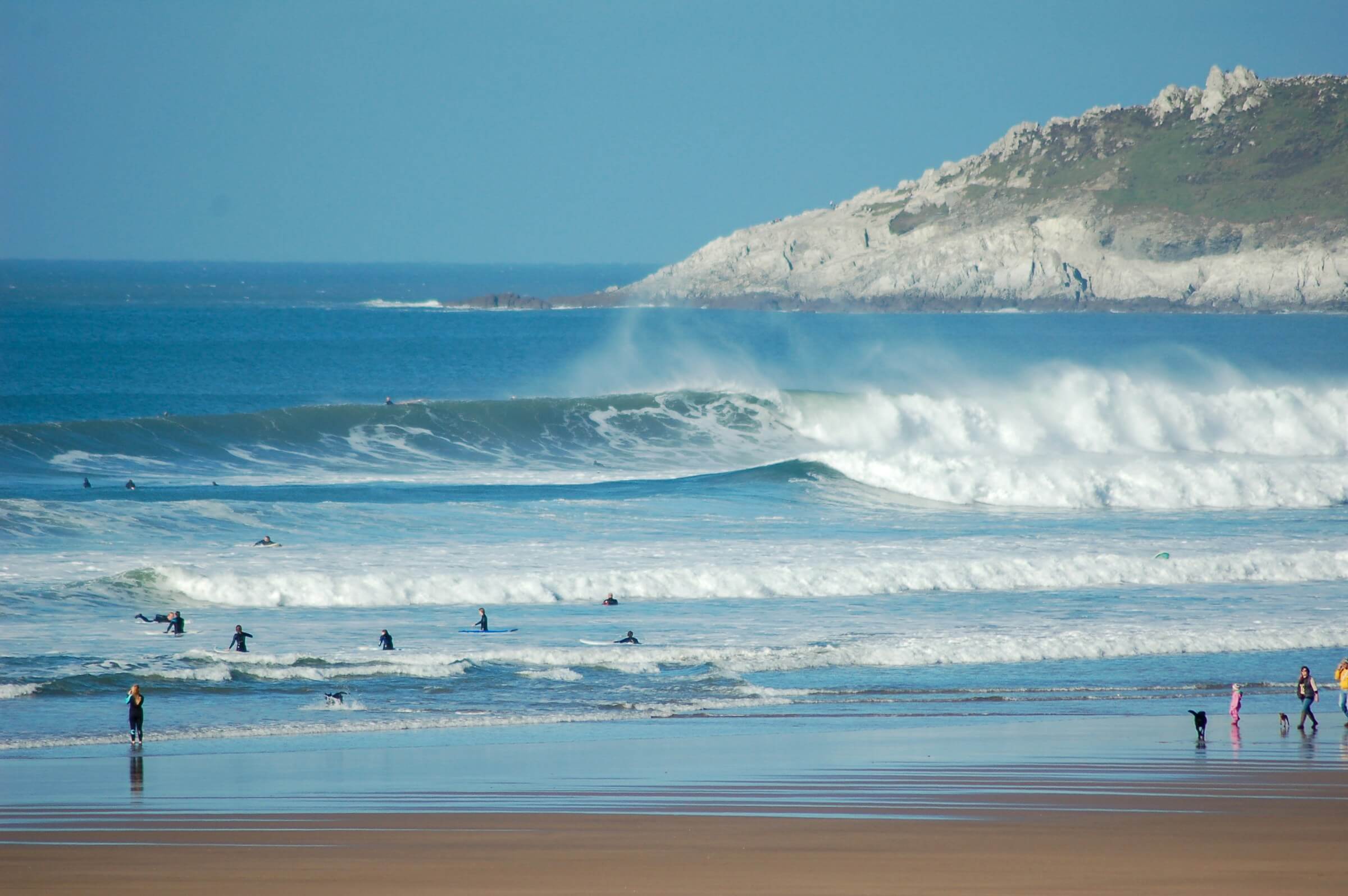

With two very different coastlines to explore, Devon is one of the best counties in the UK for seaside days out with your dog. The north coast faces the full force of the Atlantic, with wide, windswept beaches backed by dunes and dramatic cliff scenery. The south coast is calmer and more sheltered, offering golden sand bays, shingle coves and views across to iconic landmarks like Burgh Island and Thurlestone Rock.
Whether you want a long, leg-stretching walk across miles of open sand or a quieter potter around rock pools with the smell of salt and seaweed in the air, Devon has something to suit. This guide covers some of the best dog friendly beaches across both coasts, with clear details on access, seasonal restrictions and what each beach is actually like for your dog.
Woolacombe Beach
Dog Friendly Rating: 9/10 – A massive Atlantic beach with a zone system that still leaves miles of unrestricted sand for dogs to run year round.
 Woolacombe Beach – Photo Credit: Lewis Clarke
Woolacombe is one of Devon’s most iconic stretches of coast, running for over two miles along the North Devon shoreline within the North Devon Area of Outstanding Natural Beauty. At low tide, the sand is vast and firm, opening up a huge area for walking with views across to Morte Point and Lundy Island. The South West Coast Path links above the beach, and the dune system behind the sand adds another layer of landscape to explore. Facilities are good, with car parks, cafes, surf hire and toilets close to the main access points.
For dogs, Woolacombe is hard to beat. The sheer scale means there is always room, and the firm low-tide sand is perfect for running, fetching and exploring at full tilt. The air carries the clean bite of Atlantic salt and surf wax, with kelp and driftwood scattered along the tideline for investigation. A zone system operates from April to September, with dogs excluded from a small section at the north end (Zone A) and required on leads between the stream and Mill Rock (Zone B, from May). South of Mill Rock, dogs can run free year round, which still leaves a huge stretch of beach to enjoy.
- Dog access: Seasonal Restrictions. Zone A (north end to stream): no dogs from 1 April to 30 September. Zone B (stream to Mill Rock): dogs on leads from 1 May to 30 September. Zone C (south of Mill Rock): year round, no restrictions
- Beach type: Sand
- Tide notes: Vast at low tide with firm sand ideal for long walks. Much of the beach is covered at high tide, so timing matters for the best experience
- Off lead potential: High
- Parking: Multiple car parks in Woolacombe village plus parking along Marine Drive to the south. Charges apply
- Facilities: Cafes, beach shops, surf hire, toilets at various locations along the seafront
Tip: Head south towards Putsborough for the quietest stretches and guaranteed off-lead access year round. The further you walk from the village, the more space you will find.
Saunton Sands
Dog Friendly Rating: 9/10 – Over three miles of open sand with no seasonal ban, backed by a UNESCO-listed dune system that makes it one of Devon’s most reliable dog friendly beaches.
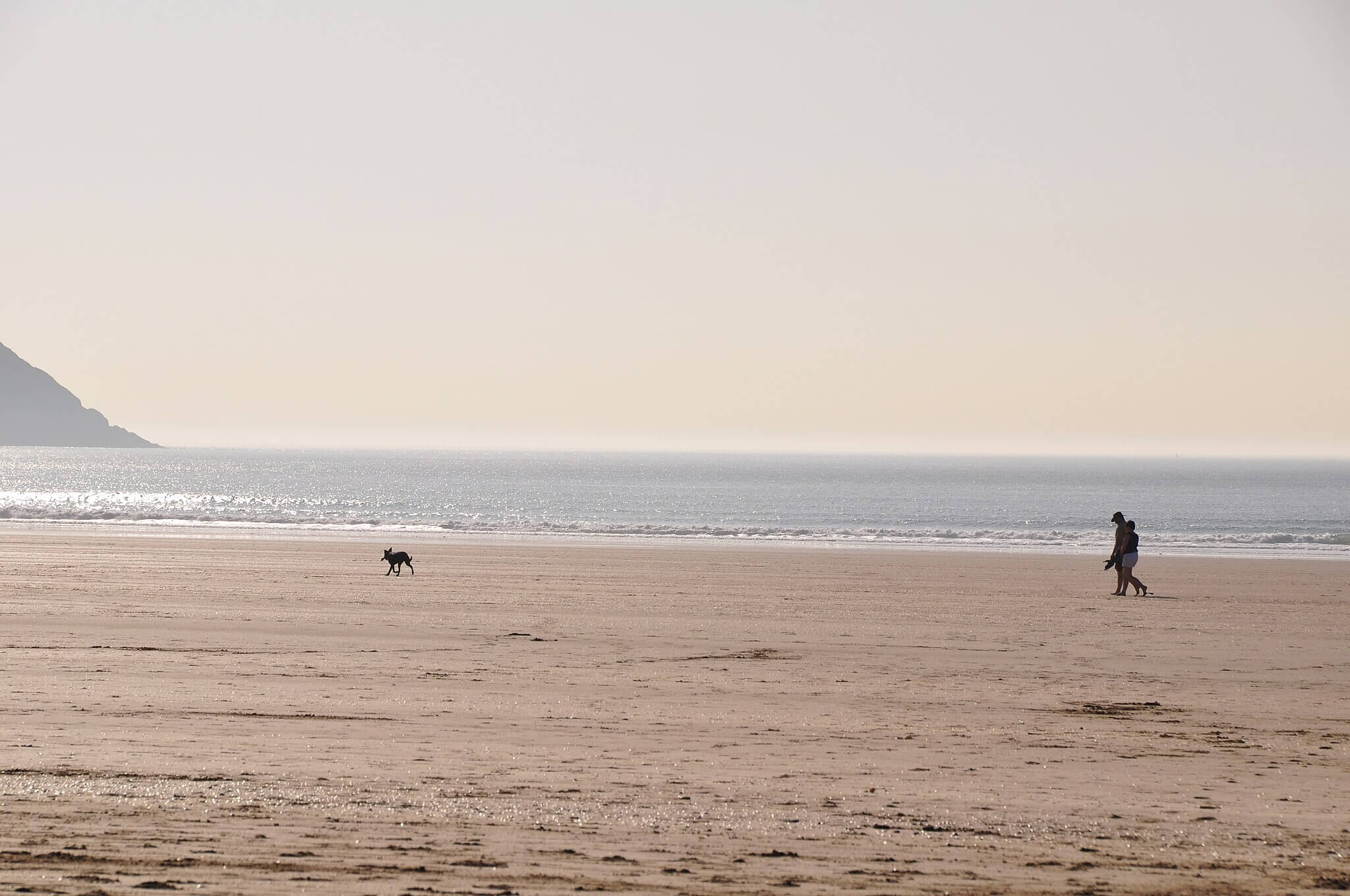
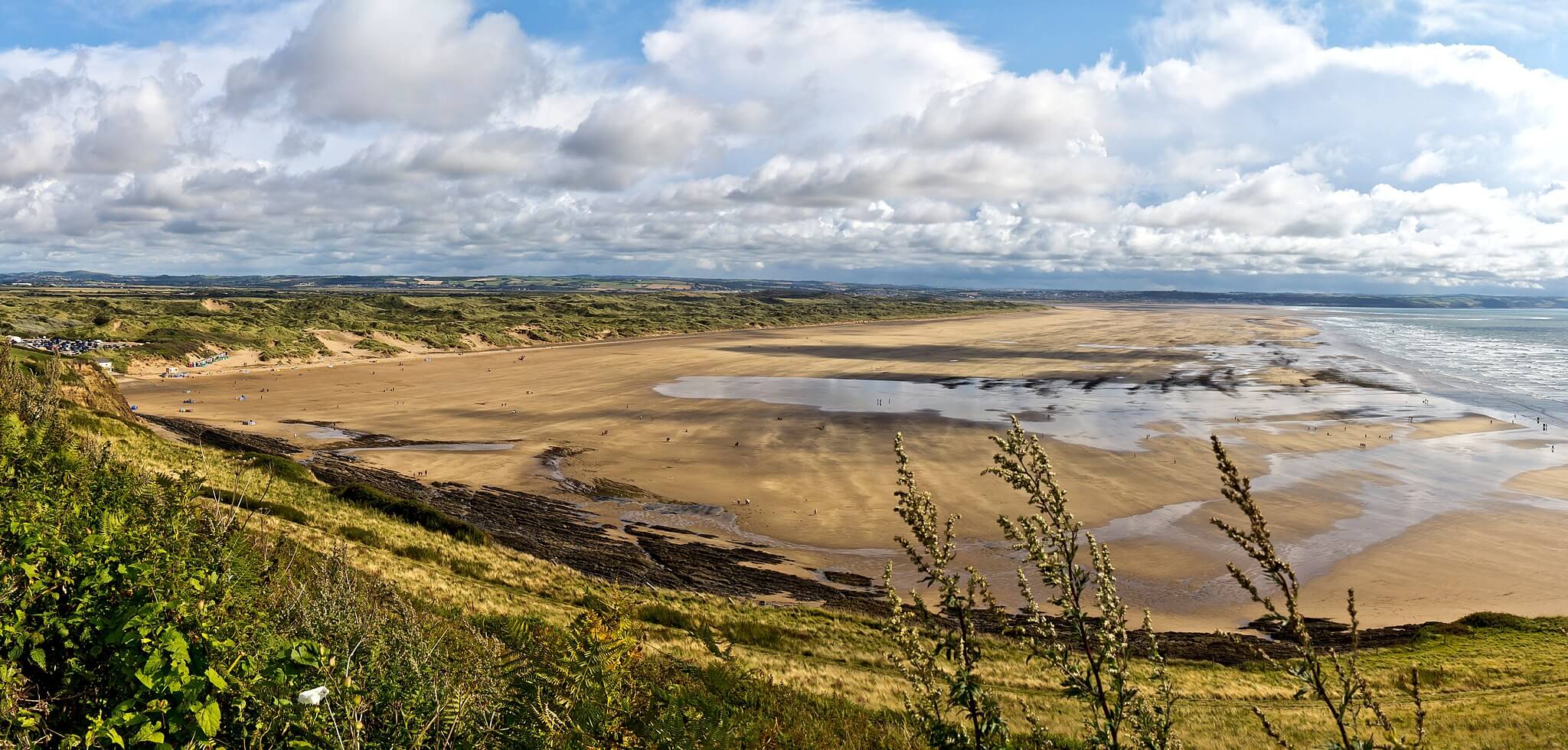 Saunton Sands – Photo Credit: Raimond Spekking
Saunton Sands stretches for over three miles along the North Devon coast, backed by the rolling dune system of Braunton Burrows, a UNESCO Biosphere Reserve. It is one of the longest beaches in Devon and feels genuinely wild and spacious, even on busy summer days. The sand is fine and golden, the surf is consistent, and the landscape behind the beach adds a sense of scale that most beaches simply cannot match. The main car park, cafe and toilets sit near the northern end by the slipway.
Dogs will love the sheer openness here. The flat, firm sand at low tide gives them room to run properly, and the dune edges are rich with the earthy scent of marram grass, rabbit trails and warm sand. There is no seasonal ban, which makes Saunton one of the most reliable year-round options on the North Devon coast. Dogs are asked to stay on leads near the beach huts at the northern end and are not permitted on the small section north of the slipway, but once you head south the beach is wide open. If your dog is reactive, a shortcut through the dunes from the left-hand side of the car park leads directly onto the quieter southern stretches.
- Dog access: Year Round. Dogs not permitted north of the slipway. On leads in front of beach huts. Remainder of the beach is open year round
- Beach type: Sand
- Tide notes: Huge at low tide with over three miles of walkable sand. At high tide the beach narrows significantly towards the dune line
- Off lead potential: High
- Parking: Main car park near the slipway (charges apply, can be expensive in peak season)
- Facilities: Cafe, beach shop, toilets near the main car park. Surf hire available
Tip: Parking can be pricey in summer. Arrive early to secure a spot, or walk south from the car park to leave the busier section behind quickly.
Westward Ho! Beach
Dog Friendly Rating: 7/10– The north end stays open to dogs year round and backs onto Northam Burrows, giving reliable access even when the main beach is restricted in summer.
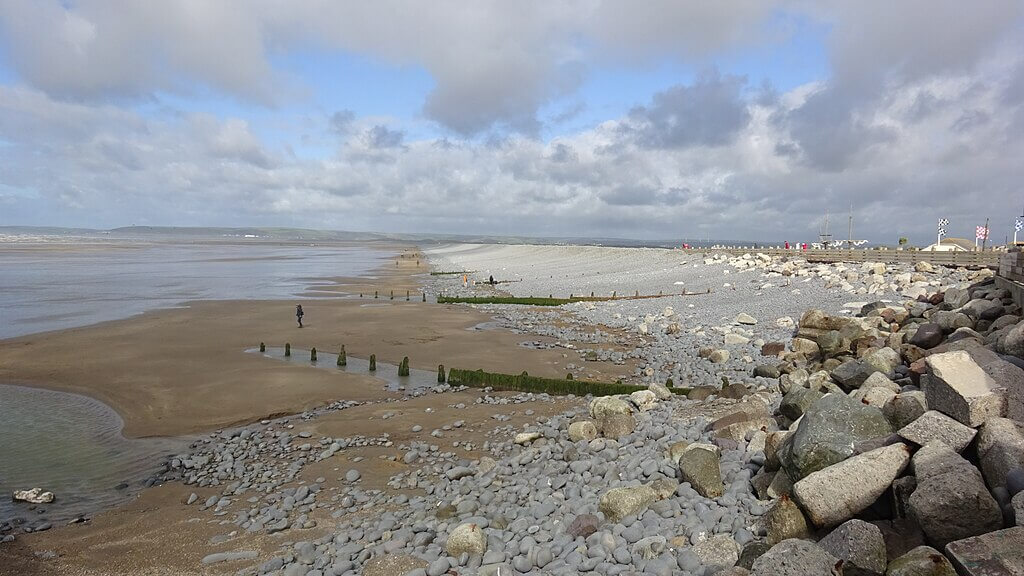 Westward Ho! Beach – Photo Credit: Rosser1954
Westward Ho! offers around two miles of beach combining a distinctive pebble ridge with broad sandy sections that open up well at low tide. The northern end backs onto Northam Burrows Country Park, which adds further walking options through open grassland and dunes. The village side of the beach has a more traditional seaside feel with promenade access, cafes and shops close to the sand. It holds Blue Flag status and is one of the more accessible beaches on the North Devon coast.
For dogs, the north end of the beach is the place to head. This section, accessed from Northam Burrows, is open to dogs year round and offers a mix of pebble, sand and wide open space with the briny, wind-carried smell of estuary mud and exposed seaweed along the tideline. Between May and September, dogs are restricted from the southern section closer to the village, so the Northam Burrows entrance is the best starting point during summer. Outside the restricted months, the full beach is available and dogs can explore freely across both halves.
- Dog access: Seasonal Restrictions. North end (north of Sandymere Bridge): year round, no restrictions. South end: no dogs from 1 May to 30 September. Dogs must be on leads on the promenade during restricted months
- Beach type: Sand, Pebble
- Tide notes: Good sandy stretches revealed at low tide, particularly on the southern half. The pebble ridge runs along the back of the beach year round
- Off lead potential: Moderate
- Parking: Car parks by the seafront in Westward Ho! and at Northam Burrows Country Park (charges apply at both)
- Facilities: Cafes, beach shops and toilets in Westward Ho! village. More limited facilities at the Northam Burrows end
Tip: During summer, park at Northam Burrows Country Park and access the dog friendly north end directly, avoiding the restricted southern section entirely.
Bantham Beach
Dog Friendly Rating: 6/10 – The main beach is closed to dogs all summer, but the year-round estuary beach at low tide is a sandy, sheltered alternative with views across to Burgh Island.
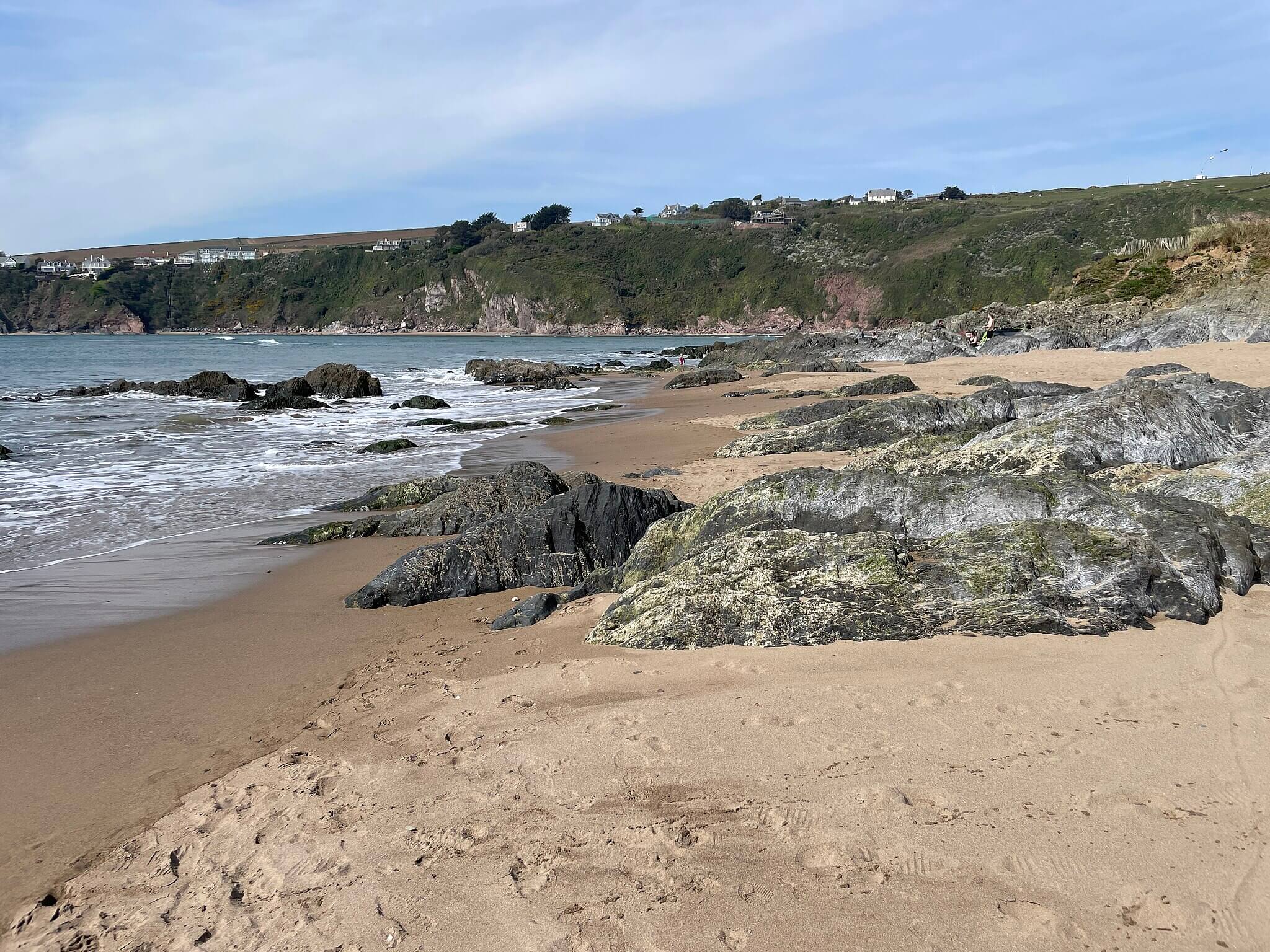 Bantham Beach – Photo Credit: Mr Ignavy
Bantham is one of the most beautiful beaches in South Devon, with fine golden sand, rolling surf and sweeping views across to Burgh Island. It sits at the mouth of the River Avon within the South Devon Area of Outstanding Natural Beauty and has a more sheltered, laid-back feel than the big North Devon beaches. Facilities include a large car park, the seasonal Gastrobus food vans, and The Sloop Inn in the village nearby.
The main beach is off limits to dogs from 1 May to 30 September, which is a significant restriction during the busiest months. However, dogs are welcome year round on the estuary beach (River Beach) north of Hams End, which at low tide opens into a large sandy area with the warm, brackish scent of river mud, tidal pools and washed-up bladder wrack. The estuary section is clearly signposted, and the gatekeeper can point you in the right direction on arrival. Outside the restricted months, the full beach is available and is superb for dogs that love paddling, digging and exploring rock pools.
- Dog access: Seasonal Restrictions. Main beach: no dogs from 1 May to 30 September. River Beach (north of Hams End, estuary side): year round, no restrictions. The dog friendly area can be hard to access at high tide
- Beach type: Sand
- Tide notes: The estuary beach expands significantly at low tide, providing a large sandy area. At high tide, access to the dog friendly section is limited. The main beach is tidal and best at low to mid tide
- Off lead potential: Moderate
- Parking: Large car park at Bantham (charges apply, space for over 1,000 cars)
- Facilities: Seasonal Gastrobus food vans near the car park. The Sloop Inn in Bantham village. Toilets at the car park entrance
Tip: If visiting between May and September, ask the gatekeeper for directions to the dog friendly River Beach section. Time your visit for low tide to make the most of the space.
Thurlestone Sands
Dog Friendly Rating: 8/10 – Year round access on a National Trust beach with rock pools, clear water and a direct link to the South West Coast Path in both directions.
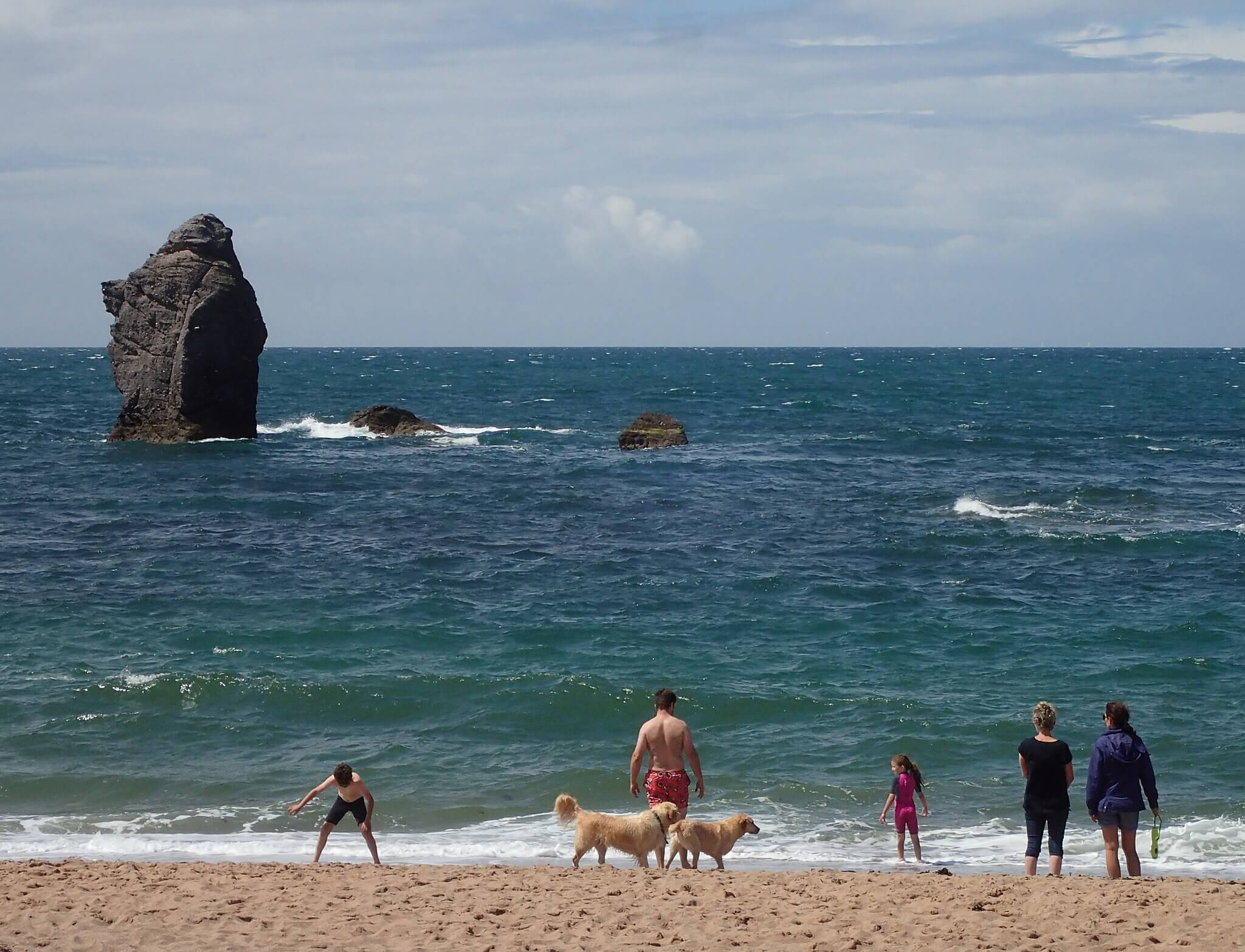 Thurlestone Sands – Photo Credit: Robert Ashby
Thurlestone Sands, also known as South Milton Sands at its southern end, is a broad, sandy beach framed by dramatic coastal scenery and the famous Thurlestone Rock arch. Owned by the National Trust, the beach sits within the South Devon Area of Outstanding Natural Beauty and links well with the South West Coast Path in both directions. South Milton Sands has a car park, the BeachHouse cafe (open year round), and toilets. The northern end at Thurlestone village is accessed via a set of steps.
Dogs are welcome here all year round, which makes it one of the most reliable options on the South Devon coast. The beach has a lovely mix of firm sand, rock pools at the southern end and sheltered water that suits paddling and splashing. Your dog will pick up the clean mineral smell of tidal rock pools, drying seaweed and warm sand carried on the breeze. At low tide, the beach opens out into a wide stretch of sand with plenty of space to roam. The combination of year-round access, beautiful scenery and coast path connections makes this a standout option for dog owners in the South Hams.
- Dog access: Year Round. Dogs welcome on the full beach at all times. Keep dogs under close control
- Beach type: Sand, Rock
- Tide notes: Wide and sandy at low tide with excellent rock pools to explore. The beach narrows at high tide but remains accessible
- Off lead potential: High
- Parking: National Trust car park at South Milton Sands (pay and display). Separate car park at Thurlestone village for the northern end. Overflow fields may open in summer
- Facilities: BeachHouse cafe at South Milton (open year round), toilets, beach shop (seasonal). Village pub and shop at Thurlestone
Tip: South Milton Sands car park fills quickly on warm weekends. Arrive early or try the Thurlestone village car park for a quieter approach from the north.
Beesands Beach
Dog Friendly Rating: 8/10 – A quiet, year-round shingle beach with a working fishing village, two excellent dog friendly eateries and coast path access in both directions.
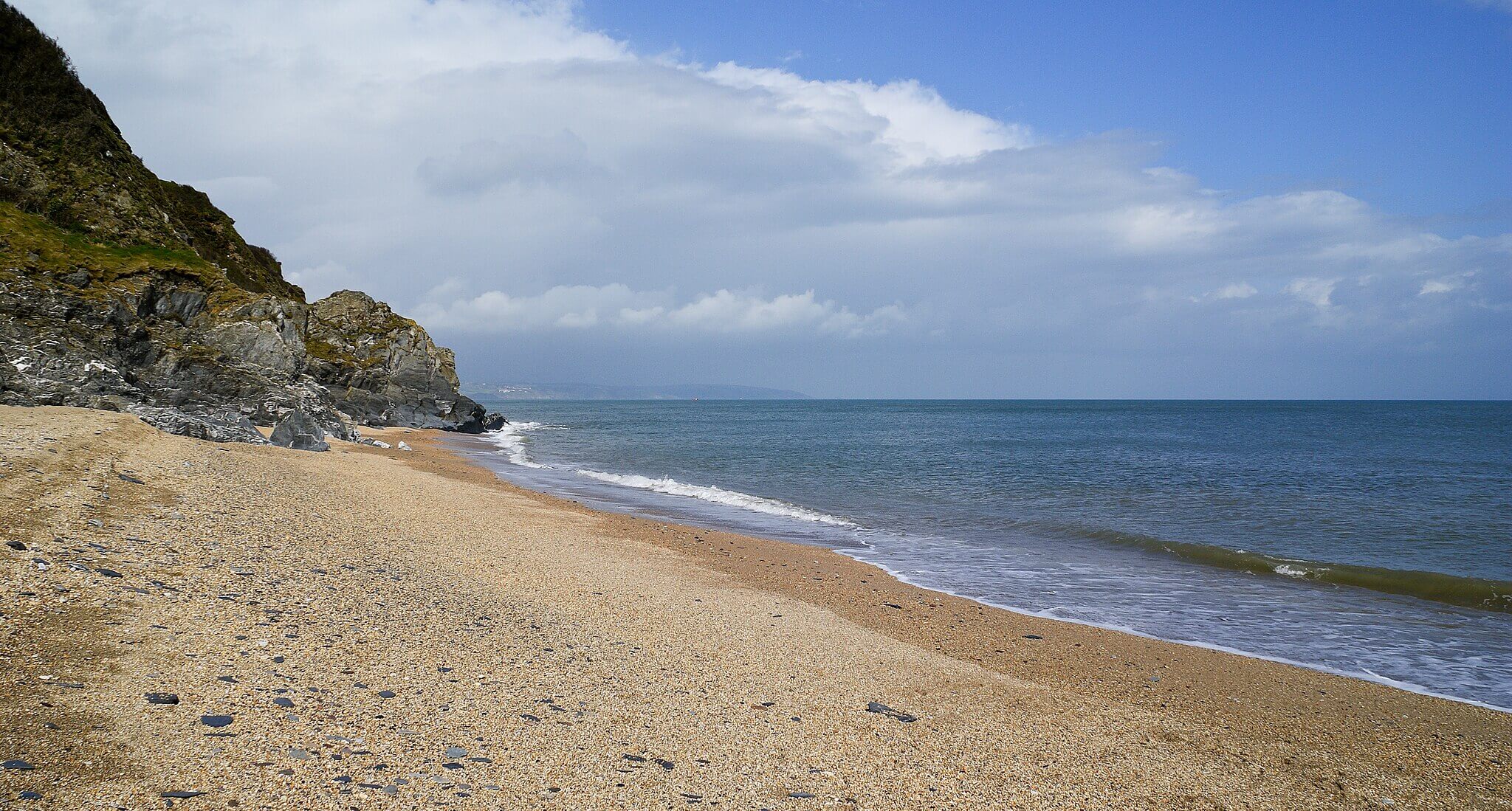 Beesands Beach – Photo Credit: Herbythyme
Beesands is a mile-long shingle beach backed by fields and the freshwater Widdicombe Ley, sitting within a small fishing village that still feels wonderfully unchanged. The beach overlooks Start Bay with views stretching from Start Point lighthouse to Dartmouth, and links directly to the South West Coast Path towards Hallsands and Torcross. The village has two excellent dog friendly eateries: Britannia @ The Beach and The Cricket Inn, both serving fresh seafood caught in the bay.
Dogs are welcome all year round, and the relaxed pace here suits dogs (and owners) who prefer a quieter coastal experience. The shingle underfoot is coarser than sand, so it suits steady walks more than flat-out sprinting. But the sensory experience is rich: the sharp salt-and-fish smell of the working beach, the sound of waves dragging shingle, and the constant movement of wading birds along the waterline. Grassy areas above the beach offer softer ground, and the coast path gives the option to extend into a longer walk. This is one for dogs that enjoy exploring, sniffing, and taking their time.
- Dog access: Year Round. No restrictions at any time
- Beach type: Shingle
- Tide notes: The shingle beach is accessible at all tide states. The sea wall protects the village from coastal erosion. Rock formations and interesting geology at the cliff end
- Off lead potential: Moderate
- Parking: Small car park in the village close to the beach (charges apply)
- Facilities: Britannia @ The Beach (dog friendly cafe), The Cricket Inn (dog friendly pub), toilets, children’s playground
Tip: Combine Beesands with a coast path walk to Hallsands (around 1.5 miles south) for a longer outing. The ruined village at Hallsands is worth the walk and the beach there is also dog friendly year round.
Hope Cove
Dog Friendly Rating: 7/10 – Two sheltered sandy coves in an old smuggling village, with year-round lead-on access at Harbour Beach and seasonal restrictions only on Mouthwell Sands.
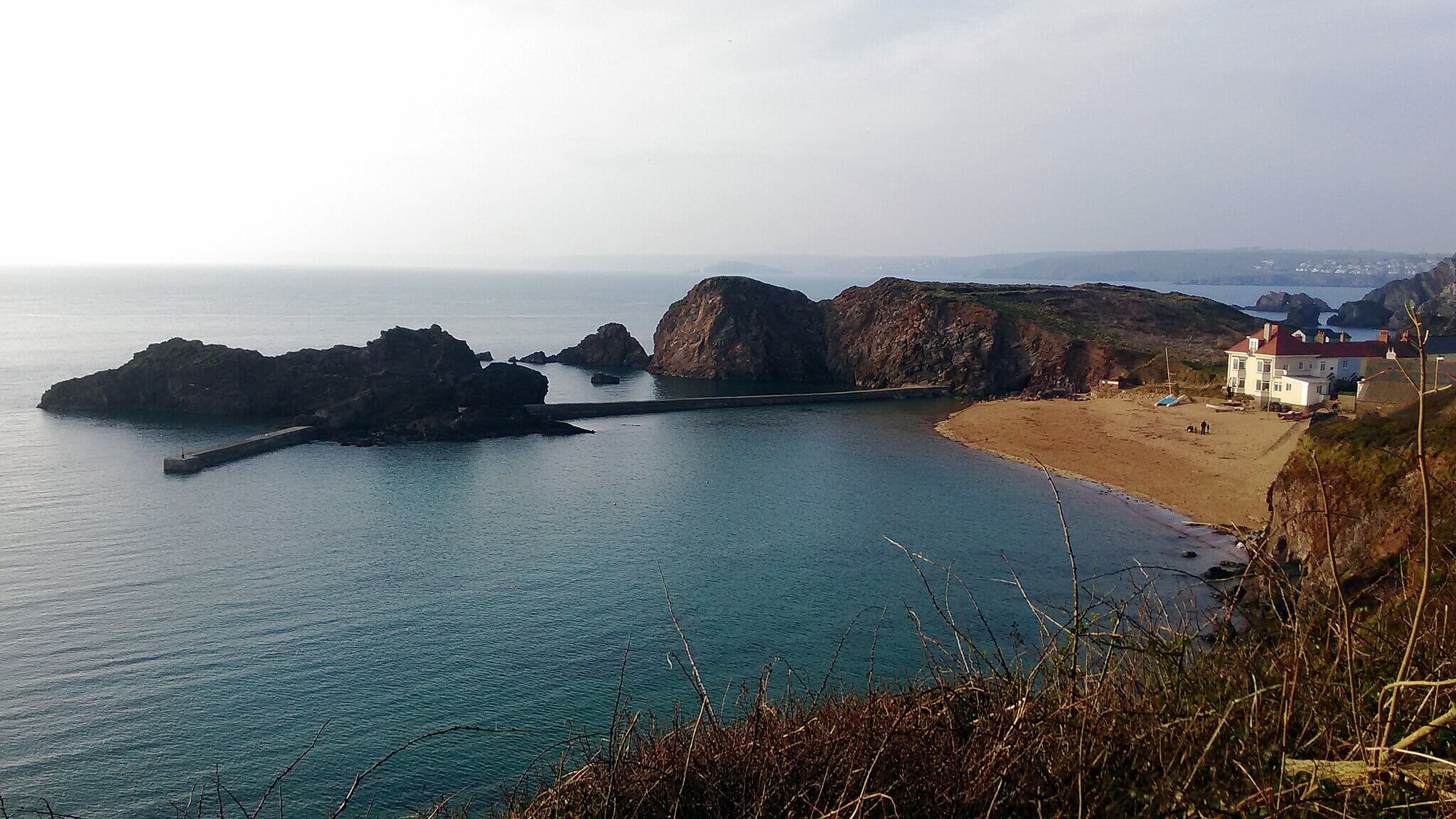 Hope Cove – Photo Credit: Paul Farmer
Hope Cove is a picturesque former smuggling village made up of two small beaches: Harbour Beach at Inner Hope and Mouthwell Sands at Outer Hope. Both are sandy, sheltered by red sandstone cliffs, and backed by thatched cottages and narrow lanes that give the place an immediate sense of character. The South West Coast Path passes directly through the village, linking towards Bolt Tail to the south and Thurlestone to the east. There is a car park at Outer Hope, village parking at Inner Hope, and a handful of pubs and cafes.
Harbour Beach is dog friendly year round (dogs must be on leads), while Mouthwell Sands has a seasonal dog ban from 1 May to 30 September between 10am and 7pm. Outside of restricted months, dogs can explore both beaches freely. The rock pools here are some of the best in South Devon, and the air carries the warm, mineral-rich scent of tidal sandstone and drying sea lettuce. A stream runs across Mouthwell Sands, which is a favourite with dogs for splashing and paddling. For a longer outing, the coast path around Bolt Tail offers stunning clifftop walking with views over Bigbury Bay.
- Dog access: Seasonal Restrictions. Harbour Beach (Inner Hope): year round, dogs on leads. Mouthwell Sands (Outer Hope): no dogs from 1 May to 30 September, 10am to 7pm
- Beach type: Sand, Rock
- Tide notes: Both beaches are relatively sheltered but change with the tide. Rock pools are best explored at low tide. Be aware of the risk of being cut off at high tide around the headland between the two coves
- Off lead potential: Moderate
- Parking: Car park at Outer Hope (charges apply year round). Layby parking at Inner Hope
- Facilities: The Hope and Anchor pub (dog friendly, beachside), Lobster Pod Bistro, beach shop, basic toilets
Tip: Visit Harbour Beach for guaranteed year-round access with your dog. If you are visiting Mouthwell Sands outside of peak season, early mornings are especially peaceful and the rock pools are at their best.
Dawlish Warren
Dog Friendly Rating: 6/10 – A groyne-based zone system keeps a decent stretch of beach open to dogs year round, but the nearby nature reserve means leads and awareness of wildlife are essential.
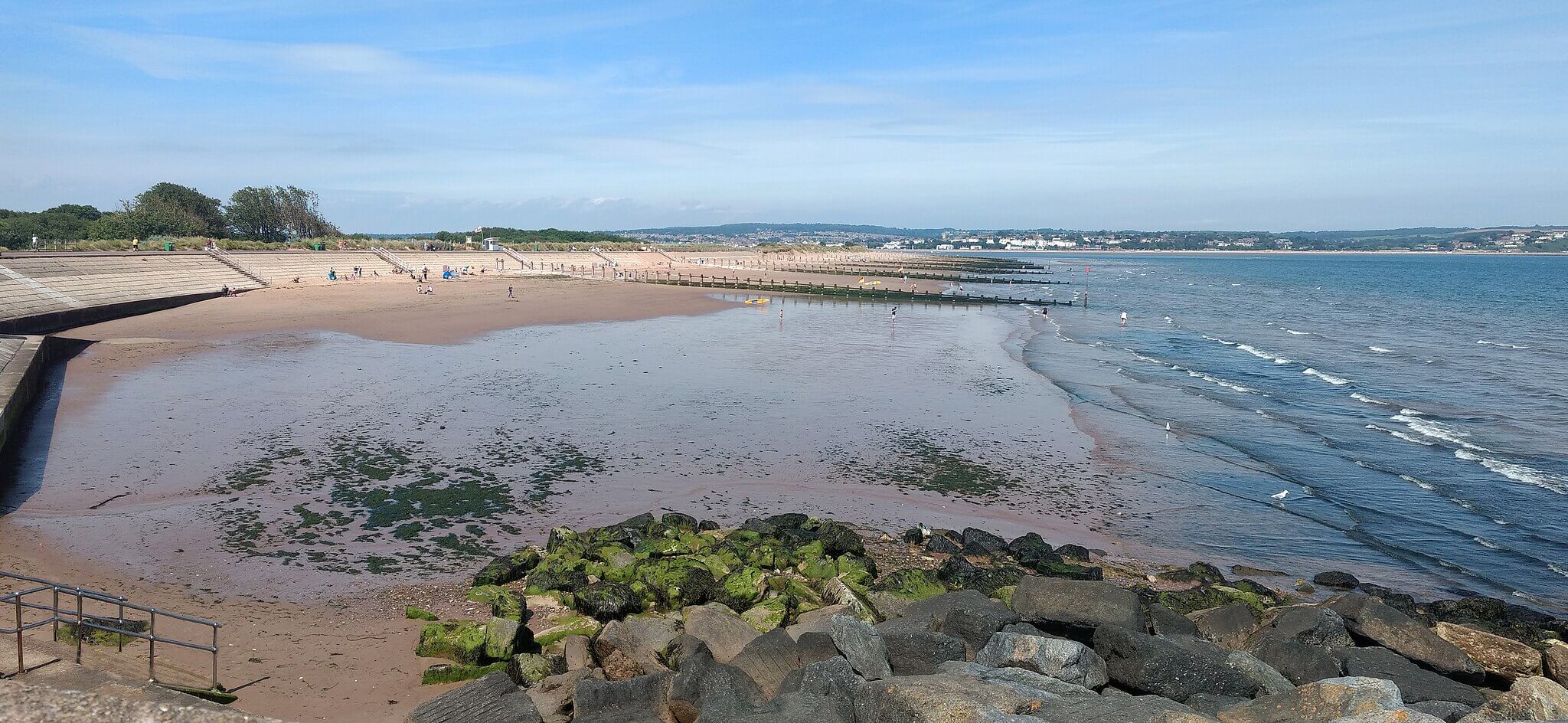 Dawlish Warren – Photo Credit: Delta 51
Dawlish Warren is a long sandy beach extending north towards the mouth of the River Exe, backed by an internationally recognised nature reserve with sand dunes, grassland and wetland habitat. It is a Blue Flag beach with good facilities including a car park, cafes, shops and toilets close to the main entrance. The nature reserve is a Site of Special Scientific Interest and a Special Area of Conservation, adding ecological interest to any visit.
Dog access here works on a groyne-based zone system, so it is important to understand the layout. Dogs are welcome year round on the beach between groynes 3 and 9, which provides a decent stretch for walking. Dogs are not permitted beyond groyne 9 at any time, and the area between the lifeguard tower and groyne 3 is restricted from April to September. In the nature reserve itself, dogs must be on leads no longer than two metres. Your dog will pick up the distinctive mix of dune grass, salt marsh and estuary mud that gives the Warren its unique character, and the birdlife on the reserve is exceptional for those who enjoy a slower pace. This is a beach that rewards knowledge of the rules rather than spontaneous visits.
- Dog access: Seasonal Restrictions. Between groynes 3 and 9: year round, no restrictions. Between lifeguard tower and groyne 3: no dogs from 1 April to 30 September. Beyond groyne 9: no dogs at any time. Nature reserve: dogs on leads (max 2m) year round
- Beach type: Sand, Dunes
- Tide notes: Sandy and spacious at low tide. The sea retreats a fair distance, opening up a wide area for walking. At high tide, the beach narrows and the dog friendly zone feels more limited
- Off lead potential: Moderate
- Parking: Main car park at Dawlish Warren (charges apply)
- Facilities: Cafes, shops and toilets near the main entrance. Nature reserve visitor centre
Tip: The nature reserve is home to nesting birds and rare sand lizards, so keeping dogs on leads and sticking to paths in the dune area is essential. The beach between groynes 3 and 9 offers the best off-lead experience.
Map of Dog Friendly Beaches in Devon
Explore these dog friendly beaches across North and South Devon using our handy map below.
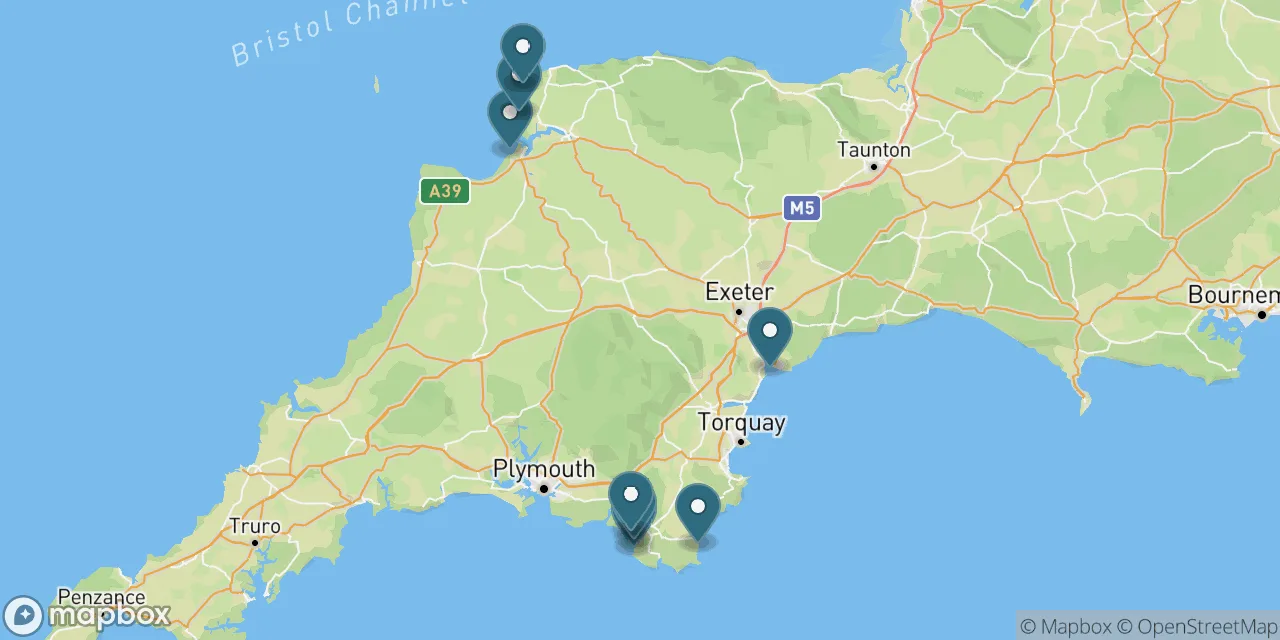 8 beaches on this page
Map these beaches, and thousands more
The Wildpack Map plots every dog friendly walk, beach, stay and attraction we have listed across the UK. Open it to see what else is within reach in Devon, filter by what your dog needs, and get directions to the car park.
Tips for Visiting Devon Beaches With Your Dog
- Time visits around the tide: Devon’s beaches change dramatically between high and low tide. Beaches like Saunton Sands and Woolacombe offer vast walking at low tide but narrow considerably when the water comes in. Check tide times before setting out, especially on beaches where the dog friendly section is tide-dependent (such as Bantham’s estuary beach)
- Understand the zone systems: Several Devon beaches, including Woolacombe and Dawlish Warren, operate groyne or zone-based restrictions rather than simple yes/no rules. Check signage at the car park before heading onto the sand, as the boundaries can be unclear if you are unfamiliar with the beach
- Watch for livestock on the coast path: The South West Coast Path passes through farmland in many places across Devon, particularly on the North Devon coast around Woolacombe and Morte Point. Livestock is common in spring and summer, so leads may be needed even away from the beach
- Rinse and dry after saltwater swims: Devon’s beaches can leave dogs sandy and salty. Bring fresh water and a towel, especially if your dog is keen on swimming. Some beaches, like Beesands, have shingle that can also pick up in paw pads
- Protect the nature reserves: Dawlish Warren and Braunton Burrows (behind Saunton) are protected habitats with sensitive wildlife. Leads are required in these areas, and dogs should not be allowed to chase birds or enter fenced-off dune sections
Frequently Asked Questions
Are dogs allowed on Devon beaches all year round?
It depends on the beach. Some, like Saunton Sands, Thurlestone Sands and Beesands, welcome dogs year round with no seasonal restrictions. Others, including Woolacombe, Westward Ho! and Dawlish Warren, operate zone systems where some sections are restricted from around April or May through to September. Bantham restricts dogs on the main beach between May and September but allows them on the estuary beach year round. Always check signage when you arrive.
Which Devon beach is best for dogs?
For sheer space and year-round access, Saunton Sands is hard to beat. Over three miles of open sand with no seasonal ban makes it one of the most dog friendly beaches in the country. Woolacombe is equally impressive in scale but does have seasonal zones to navigate. For a quieter experience, Thurlestone Sands or Beesands are excellent year-round options on the south coast.
Can dogs go off lead on Devon beaches?
On many beaches, yes, but it varies. Saunton Sands, Thurlestone and Beesands all offer good off-lead potential. At Woolacombe, dogs can go off lead south of Mill Rock year round. Hope Cove requires leads on Harbour Beach at all times. The key is to check the specific rules for each beach and respect any zoned areas.
Are there dog friendly cafes near Devon’s beaches?
Several beaches have excellent dog friendly options nearby. Beesands has Britannia @ The Beach and The Cricket Inn. Hope Cove has the Hope and Anchor. South Milton Sands has the BeachHouse cafe, which is open year round. Many of Devon’s coastal villages are welcoming to dogs in pubs and cafes.
What should I bring for a dog beach day in Devon?
Fresh water and a bowl (saltwater is not good for dogs to drink), a towel for drying off, poo bags, and a lead for zoned areas. If visiting in summer, consider going early or late in the day to avoid the heat. On shingle beaches like Beesands, check paws for trapped stones.
What’s Nearby?
If you’re exploring Devon’s dog friendly beaches, these nearby adventures make it easy to turn a coastal visit into a full day or weekend away:
- Dog friendly walks in Dartmoor National Park: A classic Devon pairing, with open moorland, rivers and woodland walks just inland from both coasts.
- Dog friendly walks in Devon: Ideal if you’re mixing beach time with countryside routes, riverside paths or gentler inland walks.
- Dog friendly walks in Exmoor National Park: Perfect for North Devon trips, combining dramatic coastline with high moorland and wooded valleys.
- The Atlantic Highway road trip: A natural continuation from North Devon into Cornwall, linking some of the South West’s best coastal scenery and dog friendly stops.
- Dog friendly beaches in Somerset: Known for its huge tidal range and expansive sands, Somerset is ideal for long coastal walks with your dog.
- Dog Friendly Walks in Somerset: Thoughtfully chosen countryside walks offering views, woodland and easy-going paths for dogs of all abilities.
- Dog friendly beaches in Cornwall: Perfect if you’re extending your coastal plans west, with a huge variety of sandy bays, coves and year-round dog friendly beaches.
- Dog friendly walks in Cornwall: Coastal paths, woodlands and countryside walks that complement Cornwall’s beaches and work well as part of a multi-day trip.
Some links in this guide are affiliate links. We may earn a commission if you book through them, at no extra cost to you. It never affects which places we list or what we say about them.