
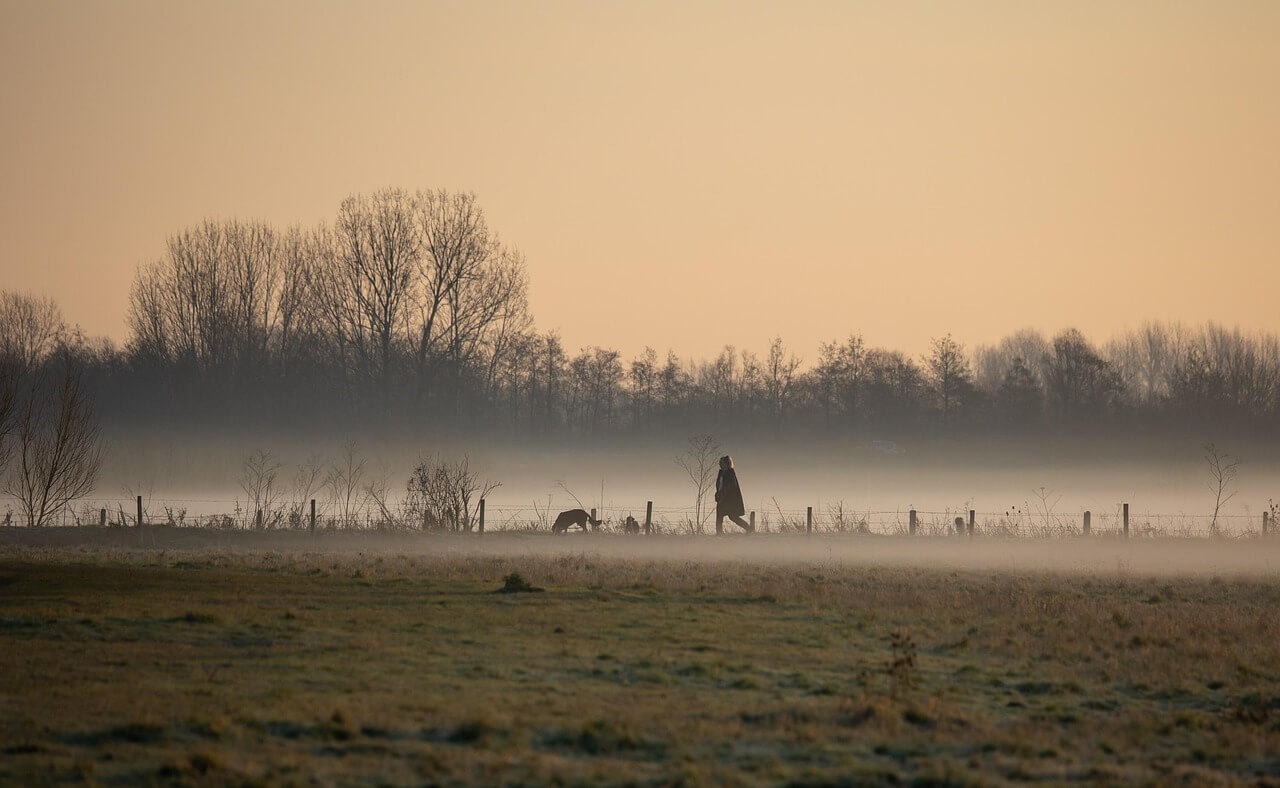

Wiltshire is a county made for unhurried walking. Long chalk ridges roll between ancient woodland, canal towpaths drift through open countryside, and old trackways connect villages that feel largely untouched by tourism. It is not dramatic in the loud sense, but it is deeply atmospheric, especially when explored on foot with a dog.
This guide focuses on dog friendly walks in Wiltshire that offer clearly defined routes, varied terrain, and a genuine sense of place. Each walk below is a specific, proven loop or linear route, with practical detail to help you plan confidently and enjoy the landscape without guesswork.
Savernake Forest Circular from Tottenham House
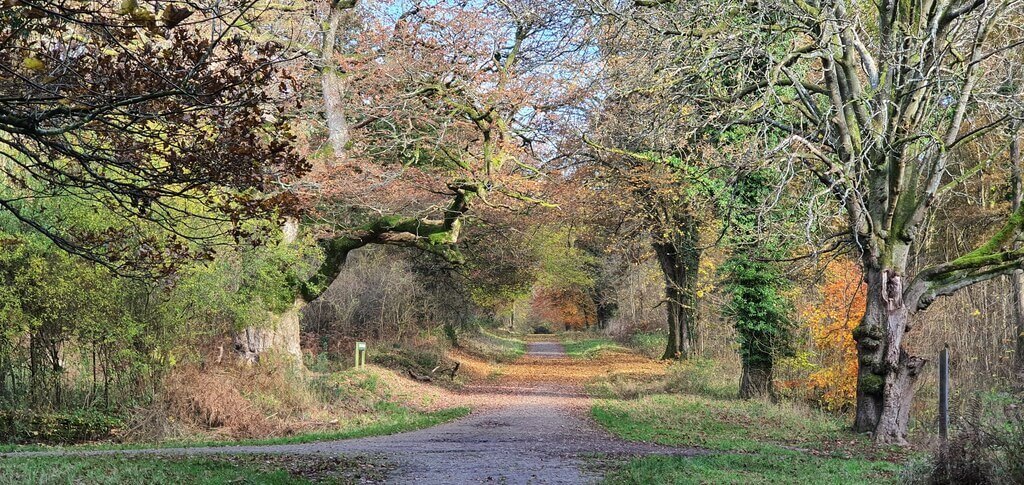 Savernake Forest – Photo Credit: Rebecca A Wills
Savernake Forest is one of the most atmospheric woodlands in southern England, with ancient oaks, beech avenues and a feeling of scale that makes it easy to forget how close you are to Marlborough. This circular route starts near Tottenham House and loops through the heart of the forest, following wide rides and quieter woodland paths.
Walking here with a dog is a pleasure thanks to the space and variety underfoot. Long straight tracks allow for steady pacing, while smaller paths weave through denser woodland where scents and wildlife are plentiful. The terrain is mostly forgiving, making this a reliable year-round option, particularly in warmer months when shade is welcome.
- Distance: 5.6 miles / 9 km
- Difficulty: Moderate
- Terrain: Woodland tracks, forest paths, gentle undulation
- Best for: Ancient woodland and shaded walking
- Restrictions: Deer and livestock present, dogs should be kept under close control
Westbury White Horse and Bratton Camp Circular
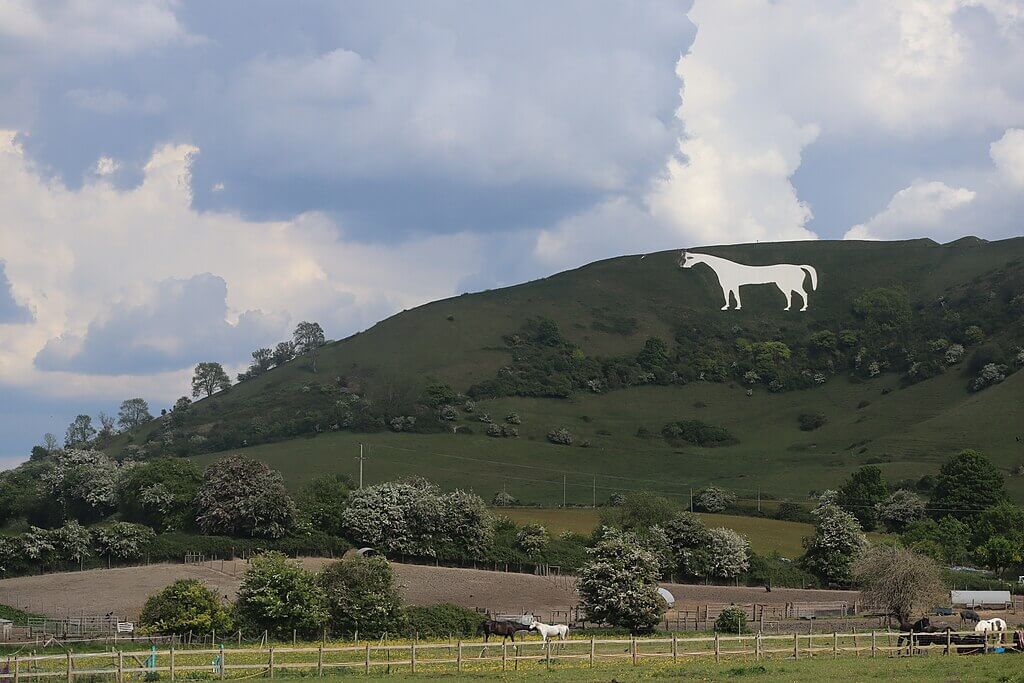 Westbury White Horse – Photo Credit: Stinkycheesey
This classic chalk downland loop takes in the Westbury White Horse before circling Bratton Camp, an Iron Age hillfort with expansive views across the Wiltshire plain. The route climbs steadily from the car park, quickly opening out into wide, airy landscapes that feel far bigger than their modest elevation suggests.
It is an invigorating walk with a dog, particularly on clear days when the views stretch for miles. The exposed nature of the downs means it can be breezy, and the chalk paths can become slippery after rain, but the sense of space and history more than compensates. Expect a rewarding mix of climbs, open grassland and long-distance views.
- Distance: 4.3 miles / 6.9 km
- Difficulty: Moderate
- Terrain: Chalk paths, grassy tracks, steep sections
- Best for: Big views and historic landscapes
- Restrictions: Grazing livestock, dogs should be kept under close control
Kennet and Avon Canal Walk from Devizes to Caen Hill Locks
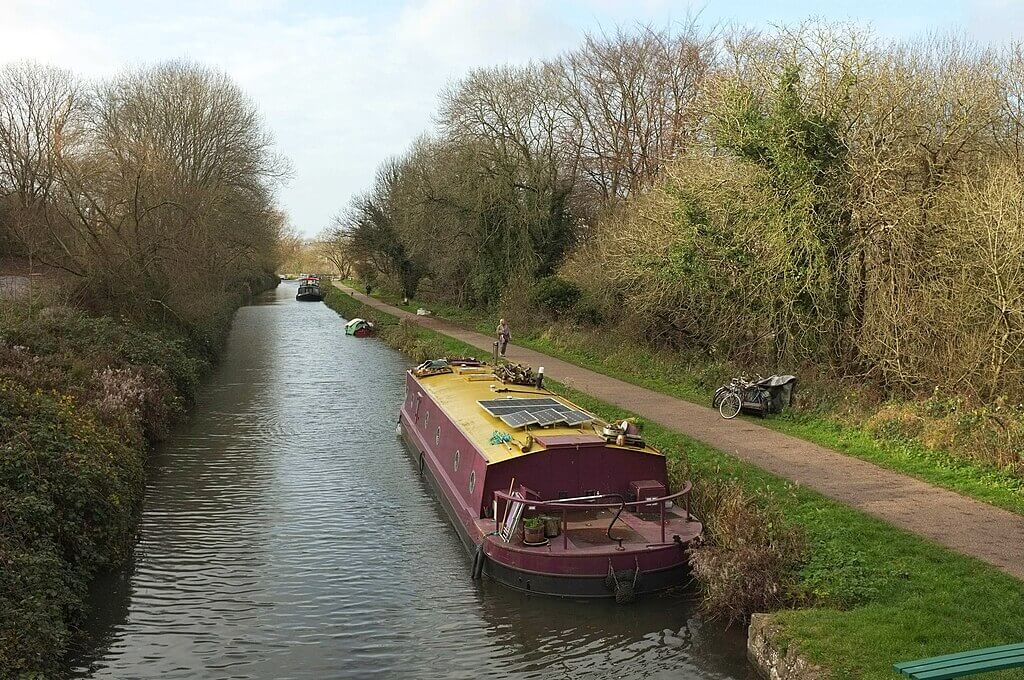 Kennet and Avon Canal – Photo Credit: Derek Harper
This linear canal walk follows one of the most impressive engineering features in the country, the Caen Hill flight of locks. Starting in Devizes, the route heads west along the towpath before gradually rising through the lock system and returning the same way.
The towpath makes for easy, steady walking with a dog, and the constant presence of water adds interest without difficulty. It is an excellent choice for days when you want something relaxed but still distinctive, with plenty to watch as boats navigate the locks. The surface is generally good, though muddy patches can appear in winter.
- Distance: 4.5 miles / 7.2 km (out and back)
- Difficulty: Easy to moderate
- Terrain: Canal towpath, compacted gravel, some muddy sections
- Best for: Relaxed walking and waterside scenery
- Restrictions: Dogs should be kept under control near water and boats
Bradford on Avon to Avoncliff Aqueduct Circular
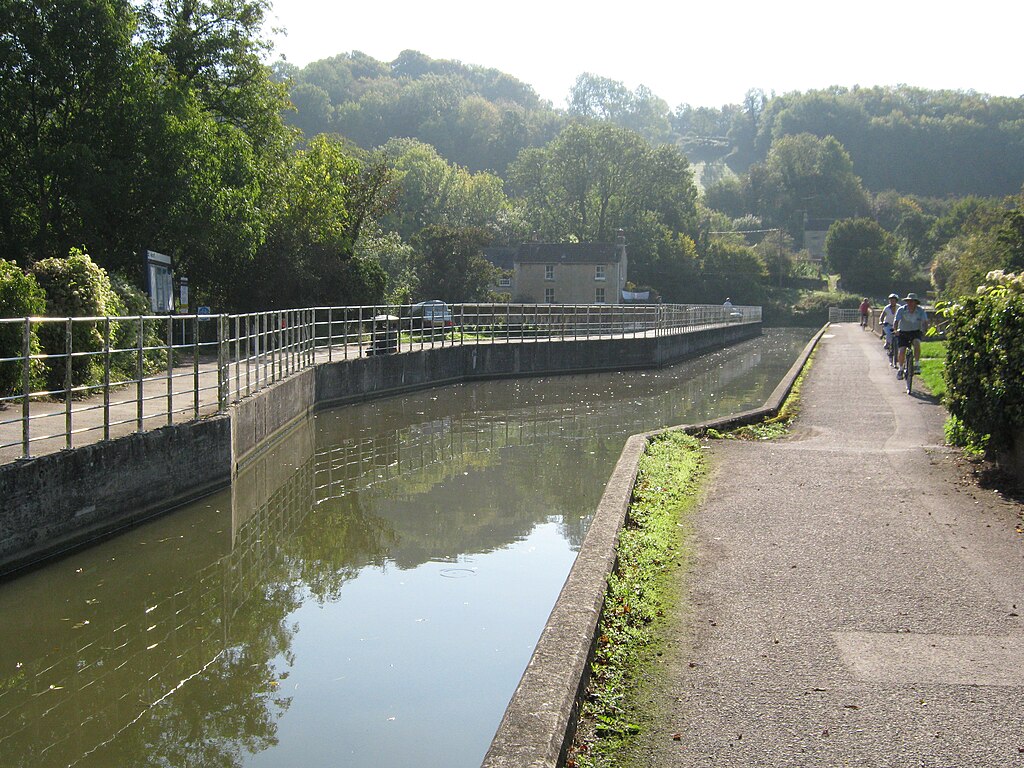 Avoncliff Aqueduct – Photo Credit: Robert Powell
This picturesque route combines riverside walking with elevated views over the Avon Valley. Starting in Bradford on Avon, the walk follows the Kennet and Avon Canal to the impressive Avoncliff Aqueduct before looping back through fields and quiet lanes.
It is a varied and rewarding walk with a dog, offering a balance of flat canal walking and gently rising countryside paths. The aqueduct itself is a standout moment, while the return leg feels rural and calm. Care is needed around livestock on the inland section, particularly in spring and summer.
- Distance: 5 miles / 8 km
- Difficulty: Moderate
- Terrain: Canal towpath, fields, rural lanes
- Best for: Waterside walking and classic Wiltshire scenery
- Restrictions: Grazing livestock, dogs should be kept under close control
Barbury Castle and Hackpen Hill Circular
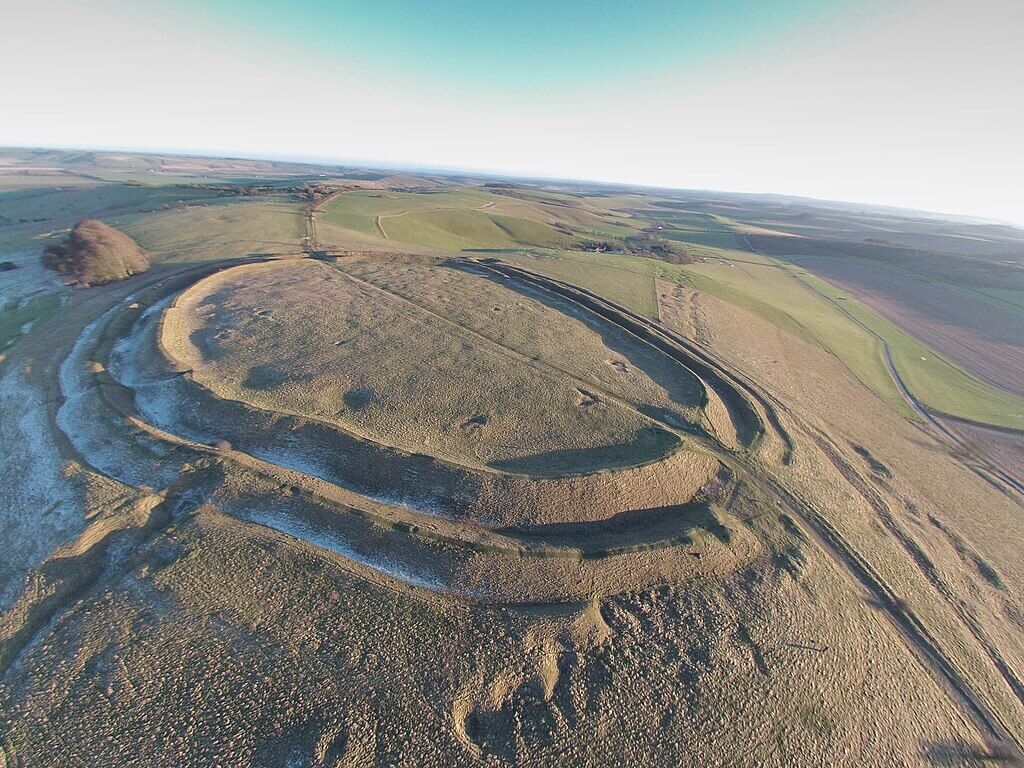 Barbury Hill Iron Age Fort – Photo Credit: Geotrekker72
This chalk downland route explores the rolling hills around Barbury Castle hillfort, following sections of the Ridgeway National Trail and quieter permissive paths. The landscape here feels open and expansive, with long views and a strong sense of movement through the land.
Walking with a dog here feels adventurous without being overly technical. The climbs are steady rather than sharp, and the wide tracks give plenty of room. It is especially enjoyable in dry conditions, when the chalk paths are firm underfoot and the views stretch across the Vale of Pewsey.
- Distance: 4.8 miles / 7.7 km
- Difficulty: Moderate
- Terrain: Chalk tracks, grassy paths, open downland
- Best for: Open landscapes and ridge walking
- Restrictions: Livestock grazing, dogs should be kept under close control
Lacock Abbey and Countryside Loop
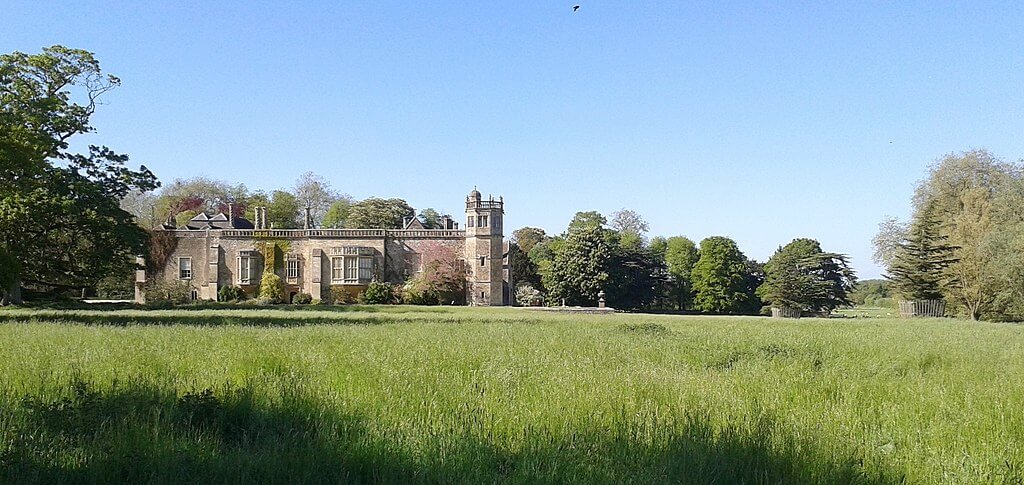 Lacock Abbey – Photo Credit: Paquita Lamacraft
This gentler walk starts in the historic village of Lacock and loops through surrounding countryside, combining riverside paths, fields and quiet woodland edges. The route offers a softer, more pastoral side of Wiltshire, ideal for slower-paced days.
It is a good option for dogs that enjoy variety without steep climbs. The village itself is busy at times, but the countryside sections quickly feel calmer and more rural. Expect a peaceful walk with plenty of interest and a strong sense of place.
- Distance: 3.9 miles / 6.3 km
- Difficulty: Easy to moderate
- Terrain: Field paths, riverside trails, village lanes
- Best for: Gentle walking and historic surroundings
- Restrictions: Livestock in fields, dogs should be kept under close control
Pewsey White Horse and Wansdyke Circular
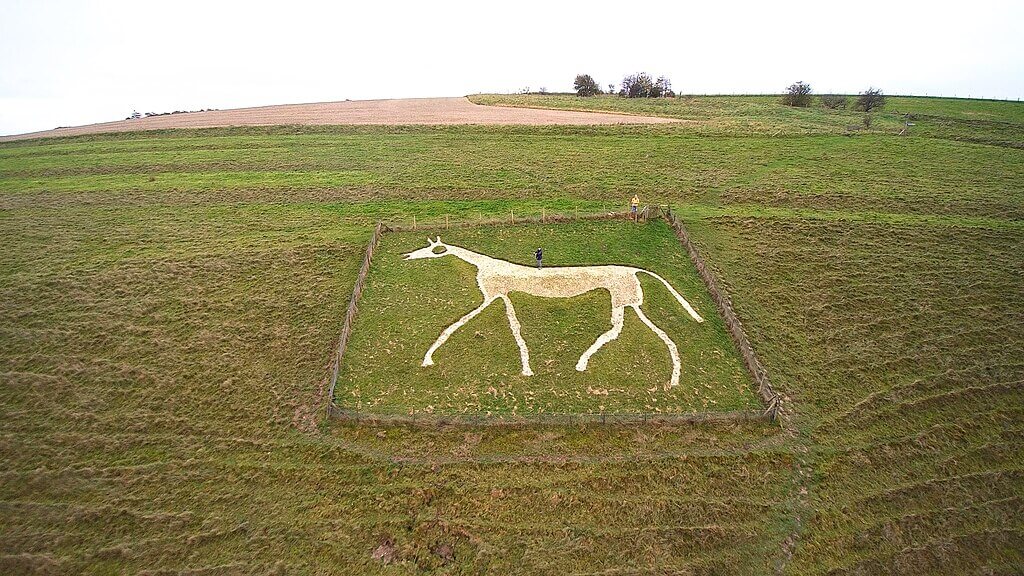 Pewsey White Horse – Photo Credit: Detmar Owen
This chalk downland route climbs above the Vale of Pewsey to the Pewsey White Horse before following sections of the ancient Wansdyke earthwork. The landscape feels open and expansive, with long grassy tracks and clear views across the vale and surrounding hills.
Walking here with a dog is rewarding but exposed. The climbs are steady rather than sharp, and the terrain stays consistent throughout, making it a good choice for confident walkers. In clear conditions the sense of space is the main draw, while the history underfoot adds quiet depth to the experience.
- Distance: 4.6 miles / 7.4 km
- Difficulty: Moderate
- Terrain: Chalk tracks, grassy paths, open downland
- Best for: Open views and historic earthworks
- Restrictions: Grazing livestock, dogs should be kept under close control
Farleigh Hungerford Castle and River Frome Circular
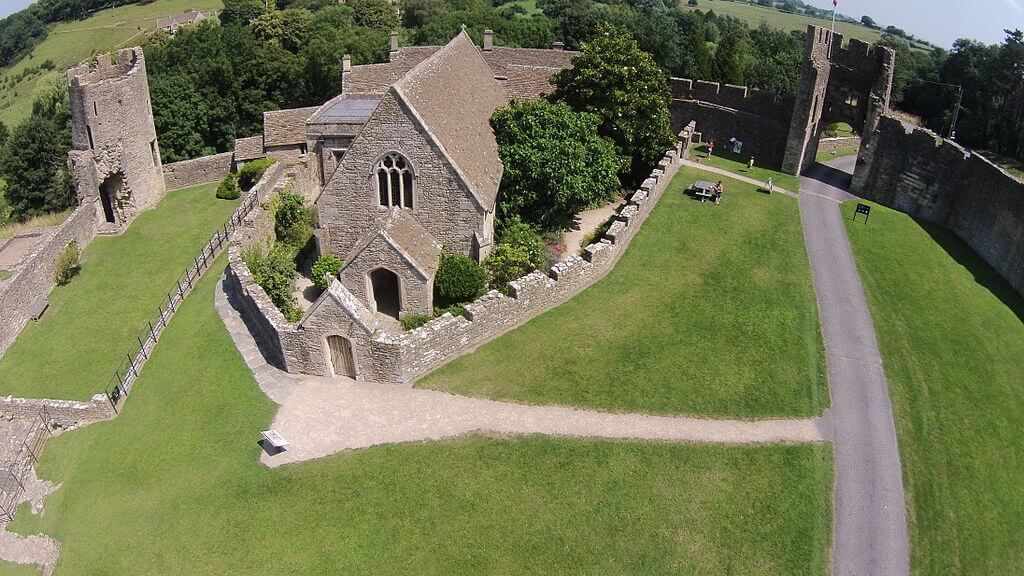 Farleigh Hungerford Castle – Photo Credit: Rodw
This varied route combines riverside walking with gently rising countryside paths around the ruins of Farleigh Hungerford Castle. Starting near the village, the walk follows the River Frome before looping back through fields and wooded edges.
It is a calm, scenic walk with plenty of interest for dogs, particularly along the river section where scents and wildlife are abundant. The inland paths are quieter and feel more rural, though care is needed around livestock during parts of the year.
- Distance: 5.1 miles / 8.2 km
- Difficulty: Moderate
- Terrain: Riverside paths, fields, woodland edges
- Best for: Peaceful countryside and waterside walking
- Restrictions: Livestock present, dogs should be kept under close control
Silbury Hill and West Kennet Avenue Circular
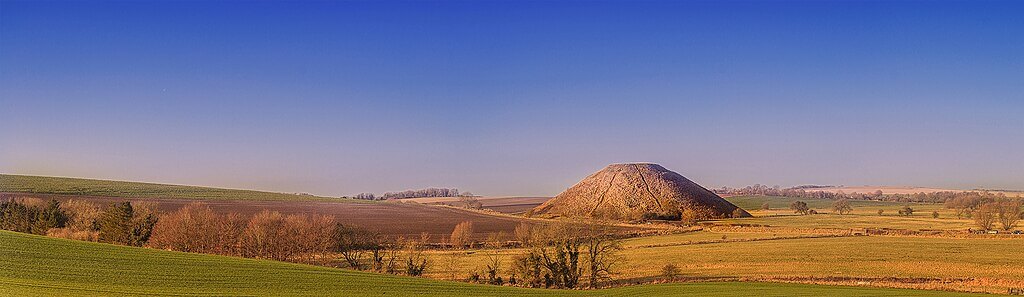 Silbury Hill – Photo Credit: JohnLeBrocq
This route explores the extraordinary prehistoric landscape around Avebury, looping past Silbury Hill and along sections of the West Kennet Avenue. Despite the popularity of the area, the route quickly moves into open countryside where the scale of the landscape becomes the focus.
Walking here with a dog feels both grounding and unusual, with ancient features never far from view. Paths are mostly well maintained, but the openness means little shelter in poor weather. Early mornings or quieter days offer the best experience.
- Distance: 4.2 miles / 6.8 km
- Difficulty: Moderate
- Terrain: Field paths, grassy tracks, open countryside
- Best for: Prehistoric landscapes and wide horizons
- Restrictions: Livestock grazing, dogs should be kept under close control
Grovely Wood and River Wylye Circular
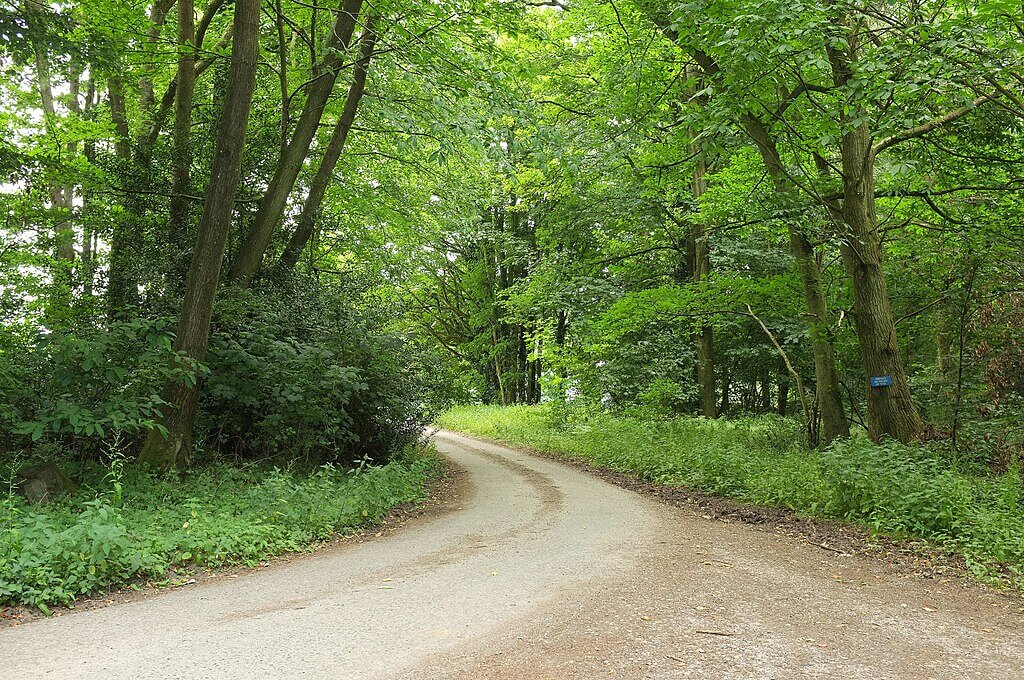 Grovely Wood – Photo Credit: Derek Harper
This woodland-and-river route explores Grovely Wood, one of the largest areas of woodland in southern Wiltshire, before dropping down to the River Wylye for a gentler return. The contrast between dense woodland and open valley gives the walk a varied, satisfying feel.
Dogs enjoy the change in terrain here, with plenty to explore under the trees before the calmer riverside stretch. Paths can become muddy after wet weather, but the overall route is forgiving and well suited to steady, relaxed walking.
- Distance: 5.4 miles / 8.7 km
- Difficulty: Moderate
- Terrain: Woodland paths, river trails, uneven ground
- Best for: Varied scenery and quieter woodland walking
- Restrictions: Deer and livestock present, dogs should be kept under close control
Map of Dog Friendly Walks in Wiltshire
The map below shows the locations of all the dog friendly walks featured in this guide, helping you plan your route, group walks together, or build a longer Wiltshire itinerary.
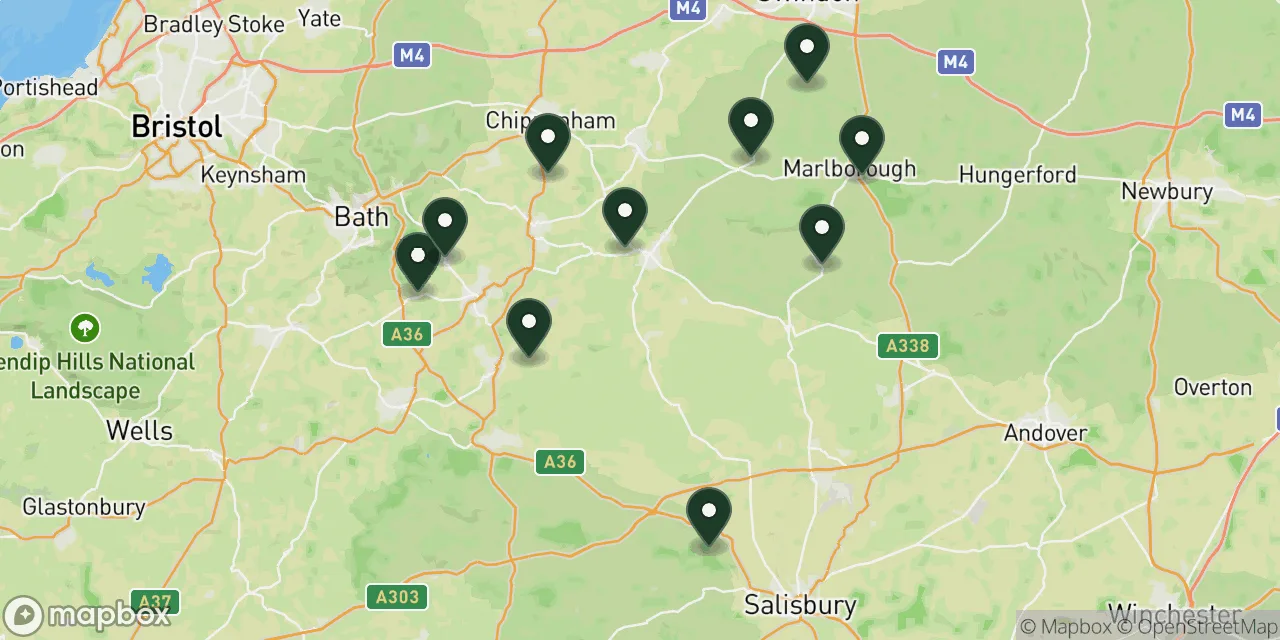 10 walks on this page
Map these walks, and thousands more
The Wildpack Map plots every dog friendly walk, beach, stay and attraction we have listed across the UK. Open it to see what else is within reach in Wiltshire, filter by what your dog needs, and get directions to the car park.
Find even more dog friendly walks across the UK on our Wildpack Map.
Tips for Walking Dogs in Wiltshire
Wiltshire’s landscapes are heavily farmed, and livestock is common across downs and valleys. Even where dogs are allowed off lead, close control is essential, particularly during lambing season. Chalk paths can become slippery after rain, and exposed routes offer little shelter in bad weather, so planning matters.
Water can be scarce on downland routes, especially in summer, so carrying enough for your dog is important. In return, you get quieter paths, wide horizons and a slower, more contemplative walking experience that suits dogs and humans alike.
What’s Nearby?
If you’re exploring Wiltshire, it’s easy to extend your adventures into neighbouring regions with very different landscapes:
- Dog friendly walks in the Cotswolds – rolling hills, limestone villages and long-distance paths that suit relaxed, scenic days out
- Dog friendly walks in and around Bristol – urban-edge nature, river valleys and woodland escapes that feel surprisingly wild
- Dog friendly walks in Somerset – a mix of gentle countryside, hills and quieter inland routes
- Dog friendly walks in Dorset – chalk downs, woodland and coastal hinterland walking
- Dog friendly beaches in Dorset – perfect for pairing inland walks with open sands and sea air
- Dog friendly walks in Berkshire — a county of pleasing contrasts, with open chalk downland
Some links in this guide are affiliate links. We may earn a commission if you book through them, at no extra cost to you. It never affects which places we list or what we say about them.