
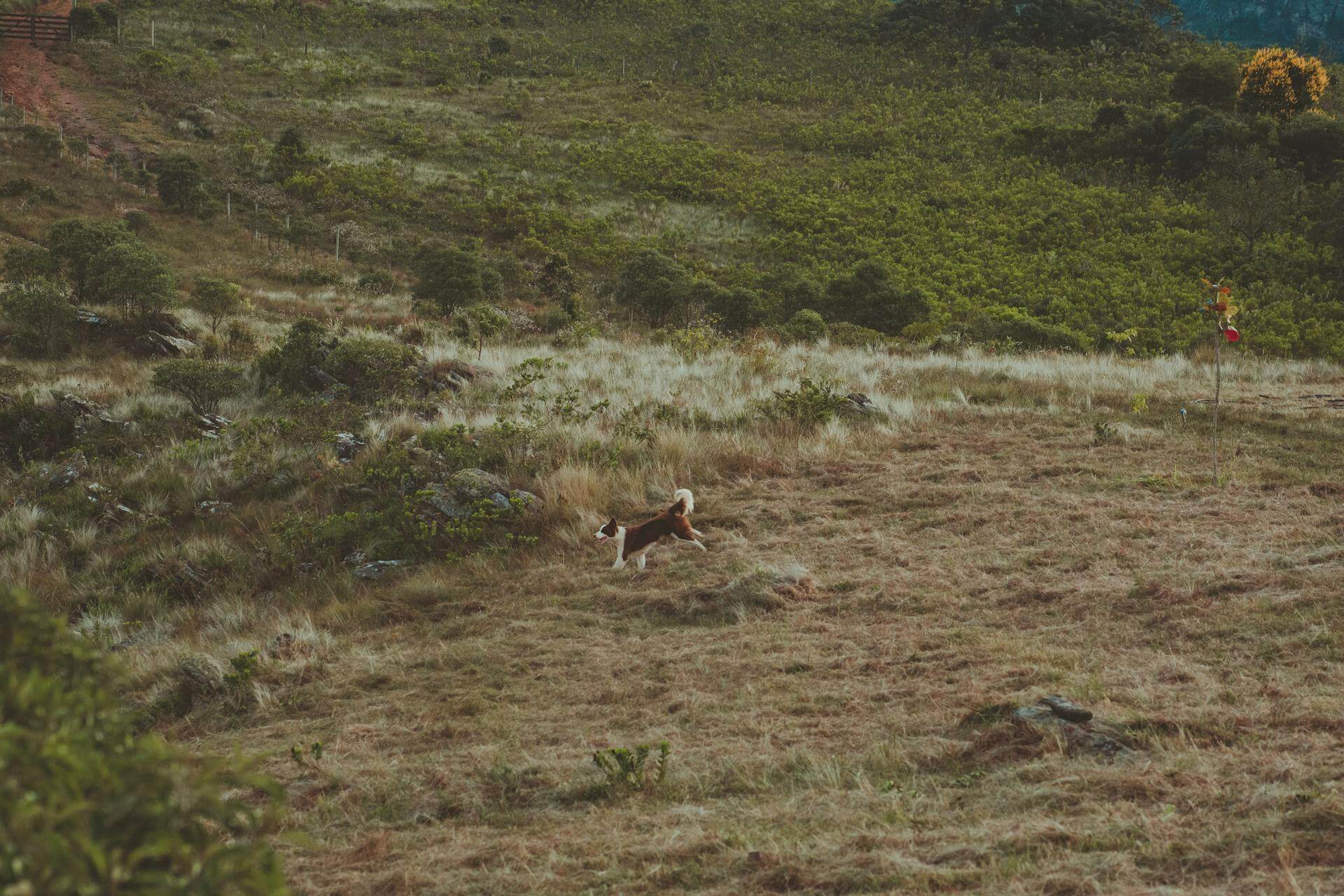

Buckinghamshire is one of England’s most rewarding counties for dog walking, shaped by the dramatic ridge of the Chiltern Hills running from southwest to northeast and opening out into the broad, flat Vale of Aylesbury beyond. The Chilterns bring ancient beech hangers, chalk grassland, deep sunken lanes and wooded escarpments that drop sharply into farmland valleys: terrain that rewards dogs and walkers alike with interest at every turn. To the south, the county edges into the Thames Valley and the green corridors of the Colne and Chess valleys, while the Grand Union Canal threads north through the lowlands, providing flat, towpath walking whatever the season.
What makes Buckinghamshire particularly good for dogs is the sheer variety compressed into a relatively small county. A morning in the Chilterns means ancient woodland floors thick with leaf mould and the chalk-sweet smell of well-drained hillside paths; an afternoon by the Aylesbury Vale’s waterways or canal brings a completely different kind of walk: flatter, more open, rich with waterfowl and reed-lined channels. The county has strong public rights of way, a well-maintained network of Chiltern Society footpaths, and several large country parks and National Trust properties with dog-friendly access.
Wendover Woods and Hale Lane Loop
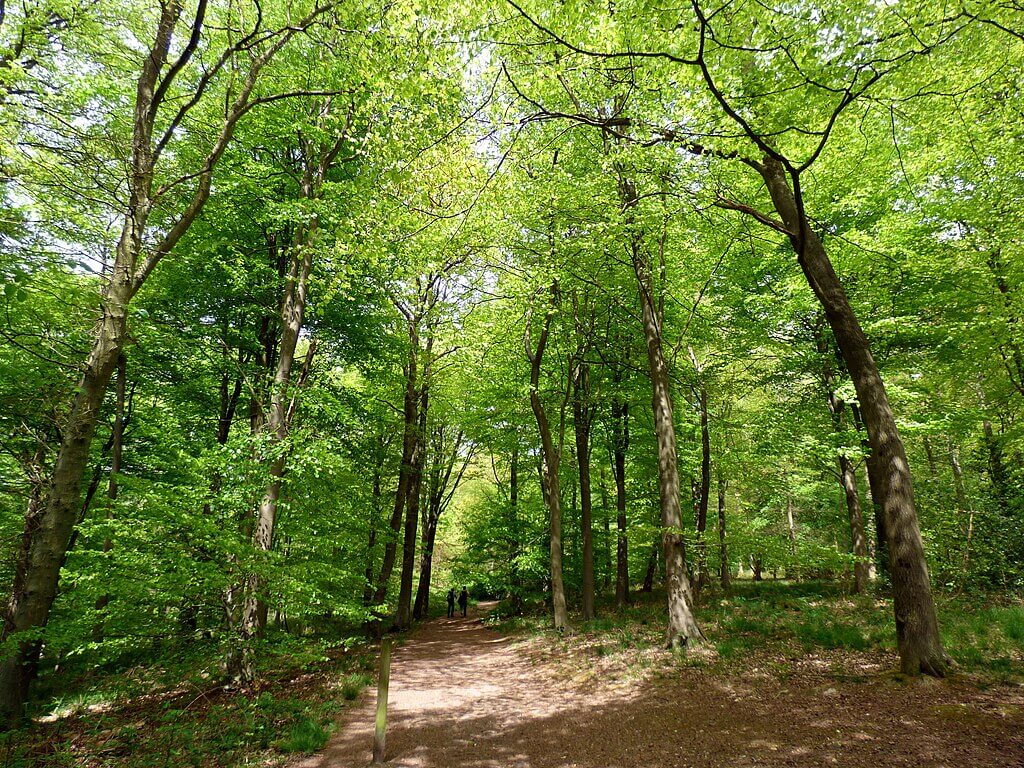
Wendover Woods sits on the chalk escarpment above the market town of Wendover, managed by Forestry England and offering some of the finest beech woodland walking in the Chilterns. The main loop takes in mixed woodland, a fire tower viewpoint at 267 metres (the highest point in the Chilterns), and sweeping views south over the Vale. At 7.5 km (4.7 miles), the circular Firecrest Trail is a good base for the route, though most walkers extend into the quieter eastern sections of the forest where the beech canopy closes overhead and the paths become leaf-cushioned and narrow.
Dogs find Wendover Woods excellent territory. The forest floor carries the deep, layered smell of old chalk beech woodland: damp leaf mould, fungus in autumn, sweet mast underfoot from October onwards. The paths are wide enough to let dogs range forward without snagging on undergrowth. The main trails are off-lead friendly throughout. There are no livestock in the woodland itself, and the site has a small dog-friendly café and water tap near the main car park. Streams run through the lower sections of the forest in wetter months.
- Distance: 7.5 km (4.7 miles)
- Difficulty: Moderate
- Parking: Forestry England pay-and-display car park, HP22 5NQ
- Facilities: Dog-friendly café, toilets, water tap at car park
- Terrain: Well-maintained chalk and gravel forest trails, some rooted sections underfoot
- Best for: Dogs who love to range in woodland; families; those after a viewpoint reward
Ivinghoe Beacon and the Ridgeway
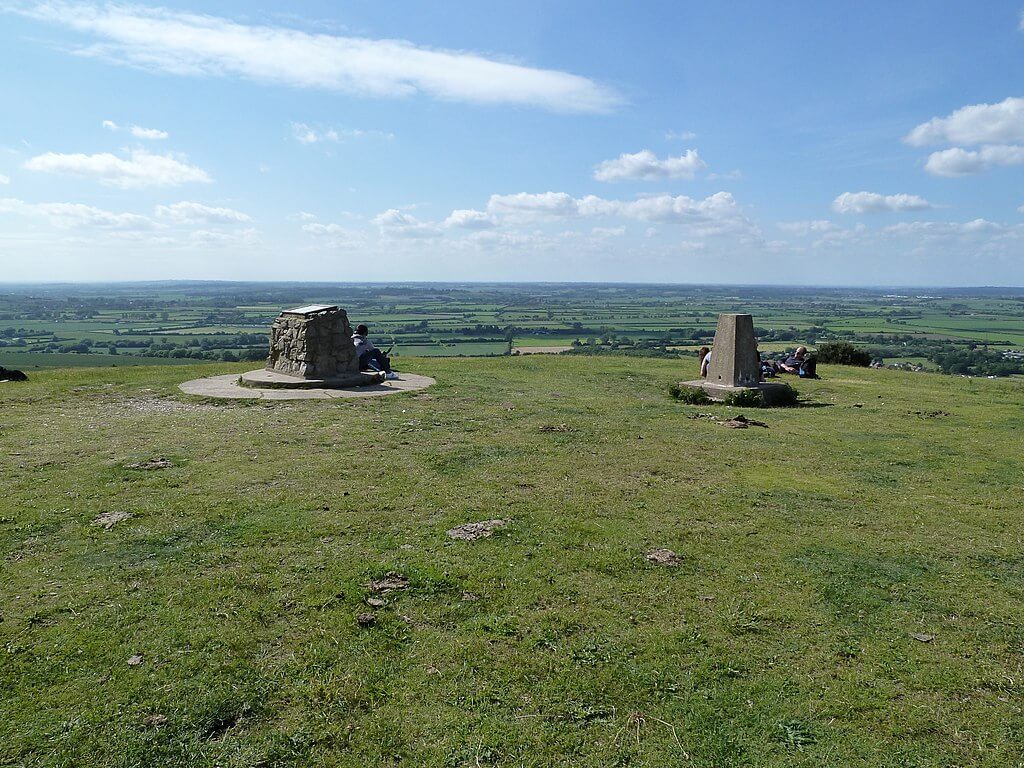

Ivinghoe Beacon is the northeastern terminus of the Ridgeway National Trail and one of the most distinctive landmarks in the Chilterns: a bare chalk hill with an Iron Age hillfort and views extending across the Vale of Aylesbury to the north and the wooded Chiltern scarp to the south. The walk from the Ridgeway car park at Steps Hill covers 8.2 km (5.1 miles) in a loop, climbing the open flanks of the beacon before descending through the chalk grassland of the Ashridge Estate and returning via the quiet lanes and field paths beneath the escarpment.
The open chalk grassland of Ivinghoe Beacon is exceptional for dogs: the turf carries that sharp, mineral-sweet smell of short chalk sward, the kind of scent that keeps dogs working low and purposeful. Views are expansive, giving dogs and owners alike a strong sense of space. Leads are required on the upper slopes during the ground-nesting bird season from March to July, particularly on the open hillfort area managed by the National Trust, and the surrounding Ashridge grazing land carries cattle in summer. The lower field paths and woodland edges below the scarp are reliably off-lead territory outside livestock enclosures.
- Distance: 8.2 km (5.1 miles)
- Difficulty: Moderate
- Parking: National Trust Ivinghoe Beacon car park, LU6 2EL
- Facilities: None on route; nearest facilities in Ivinghoe village
- Terrain: Chalk grassland, some steep ascents, field paths and quiet lane sections
- Best for: Dogs and owners who enjoy open, exposed walking with big views
Grand Union Canal: Marsworth to Tring Reservoirs
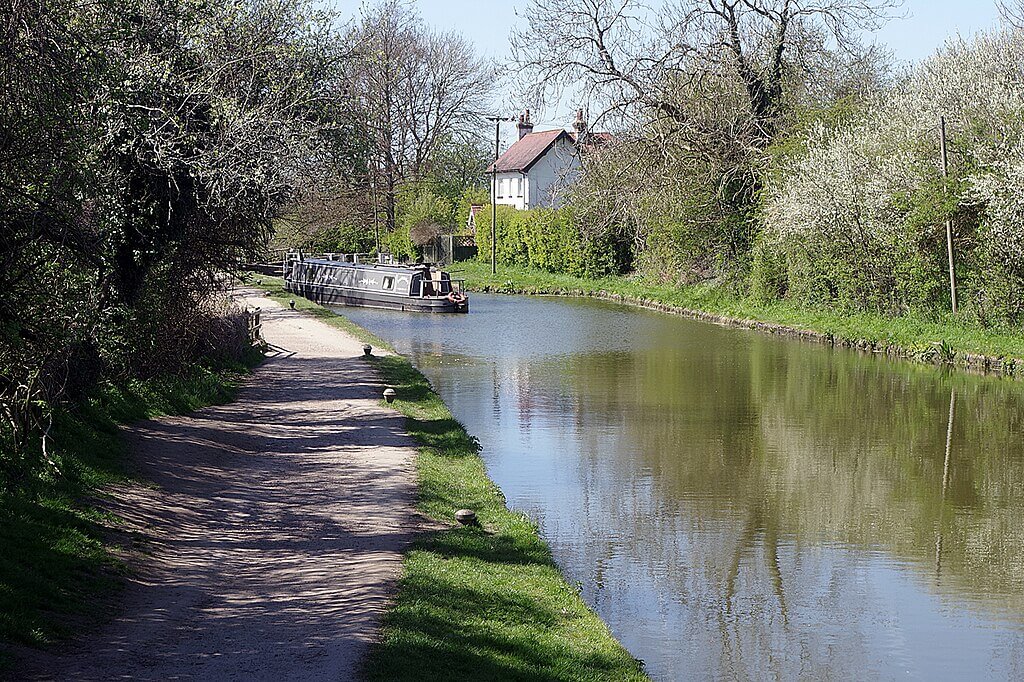

The stretch of the Grand Union Canal between Marsworth and the Tring Reservoirs is one of the finest lowland waterway walks in the county: flat, well-surfaced, and rich with wildlife. The walk from Marsworth village traces the towpath past the Marsworth flight of locks, four reservoirs (Startops End, Marsworth, Tringford and Wilstone) and returns via the reservoir path and field edges for a loop of 8.6 km (5.3 miles). The reservoirs are Sites of Special Scientific Interest and important bird reserves, managed by the Canal and River Trust.
Dogs manage this walk comfortably whatever the weather: the towpath is wide and largely stone-surfaced, and there are multiple water access points along the canal edge. The reservoirs carry a strong reed and waterfowl smell that dogs find compelling, though leads are required along the reservoir banks and boardwalk areas where ground-nesting birds use the marginal vegetation. The canal sections are generally off-lead provided no livestock are present in adjacent fields. Tow path dogs will enjoy this route’s easy rhythm; working breeds and scent hounds will find the reed margins particularly rewarding.
- Distance: 8.6 km (5.3 miles)
- Difficulty: Easy
- Parking: Startops End Reservoir car park, HP23 4LJ
- Facilities: The White Lion pub in Marsworth is dog-friendly; no formal facilities on route
- Terrain: Flat canal towpath, gravel reservoir paths, some grass field sections
- Best for: Older dogs, less mobile owners, dogs who enjoy water; year-round walking
Burnham Beeches
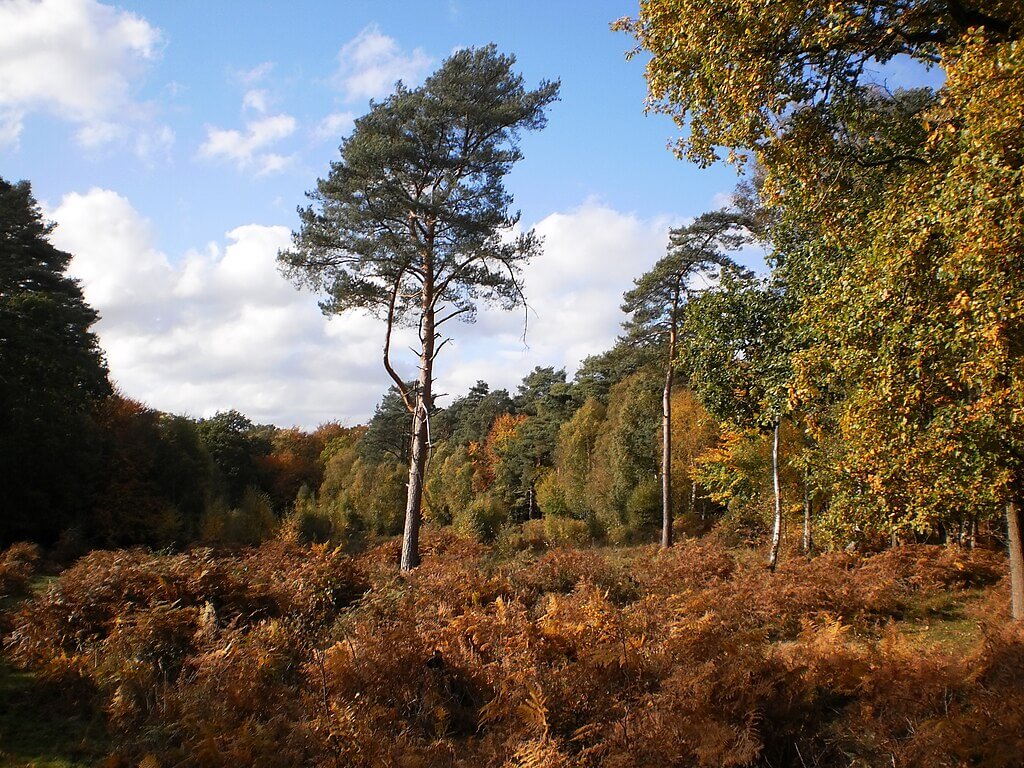

Burnham Beeches is a National Nature Reserve of international significance: 374 hectares of ancient beech and oak woodland, much of it pollarded for centuries, producing the extraordinary gnarled and hollowed veteran trees that make this one of the most atmospheric woodland landscapes in southern England. Managed by the City of London Corporation, it sits southwest of Slough and offers a web of well-marked paths without a single fixed circuit, allowing walks of 4 to 10 km depending on how deeply you explore. A good central loop of 6.2 km (3.9 miles) takes in Druids Oak, Mendelssohn’s Slope and the open heath sections of the northern plateau.
The veteran beeches at Burnham are extraordinary sensory territory for dogs: the ancient hollow trunks and deep root channels carry compressed scent histories, and the heathland sections carry a dry, resinous smell very different from the cooler damp of the woodland interior. Dogs are welcome off-lead throughout most of the reserve, and the terrain varies from soft sandy heath to moss-cushioned woodland paths and sunken bridleways. The Beeches contain several ponds and a network of small seasonal streams. Leads are requested near the road crossing at East Burnham Common and around the small car park café area.
- Distance: 6.2 km (3.9 miles)
- Difficulty: Easy
- Parking: Burnham Beeches main car park (East Burnham Common), SL2 3EL
- Facilities: Small café and toilets at the main car park
- Terrain: Sandy heathland tracks, woodland paths, rooted and mossy underfoot in places
- Best for: All dogs; those who love ancient woodland; short or extended walks
Haddenham and the Thame Valley
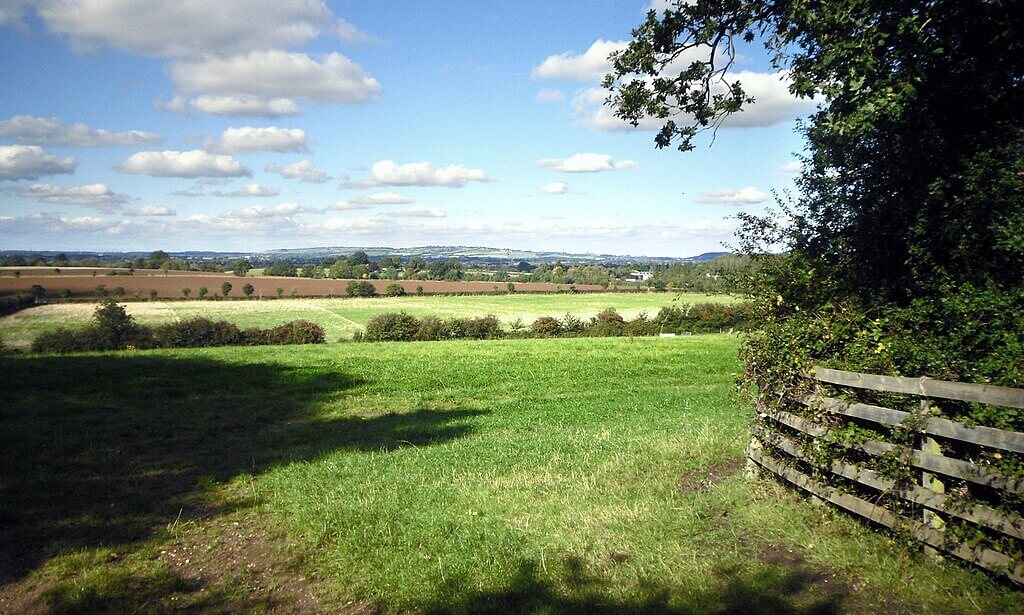

The Thame Valley between Haddenham and Long Crendon offers a gentle but rewarding lowland walk through the broad, flat meadows of the Vale of Aylesbury: a complete contrast to the Chiltern escarpment walks and worth making the trip for its open, unhurried character. The 9.4 km (5.8 miles) circular route from Haddenham village crosses the floodplain meadows of the River Thame, passes through the village of Cuddington and returns via field paths with long views north across the Vale.
The floodplain meadows carry the rich, earthy smell of alluvial grass that dogs find deeply rewarding: cattle-grazed pasture in summer and seasonally flooded winter ground that holds scent strongly. The River Thame itself offers swim access at several points, though the banks are slippery in wet weather. Leads are required through the grazing meadows where cattle are present in summer months; the hedged field paths and village sections are generally off-lead. This is a quiet, genuinely rural walk with very little road walking.
- Distance: 9.4 km (5.8 miles)
- Difficulty: Easy to Moderate
- Parking: Roadside parking in Haddenham village, HP17 8EE
- Facilities: Pub and café in Haddenham village; nothing on route
- Terrain: Flat to gently rolling grass meadow paths, can be muddy after rain
- Best for: Dogs who enjoy open countryside and river swimming; relaxed walkers
Whiteleaf Hill and Brush Hill, Princes Risborough
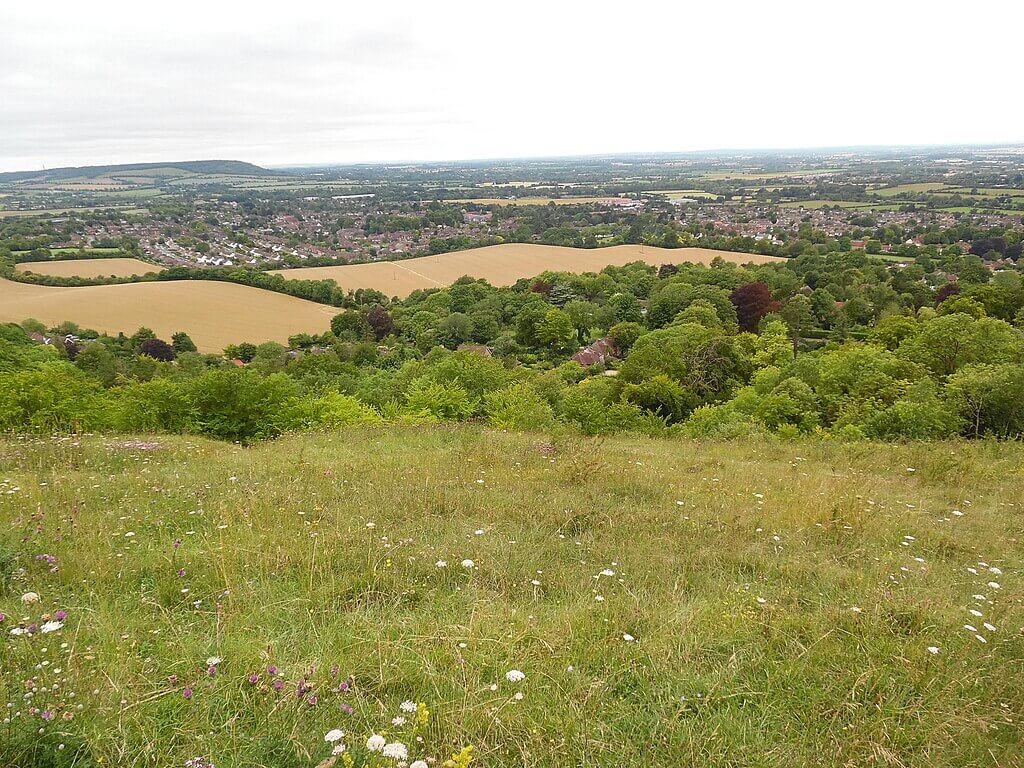

Whiteleaf Hill rises sharply above the market town of Princes Risborough and offers one of the most dramatic short walks on the Chiltern escarpment: a steep climb through mixed woodland to open chalk downland with a Neolithic barrow and a hill figure cut into the chalk below. The circular walk from Lower Icknield Way car park covers 6.8 km (4.2 miles), looping across Whiteleaf Hill, into the Brush Hill Nature Reserve and returning through the beechwoods of the escarpment slope.
The chalk grassland at the summit is dense with the sweet-dry mineral smell of ancient turf, and the woodland sections of the climb carry a cool, leafy damp underfoot: chalk soil, beech leaf and occasional chalk rubble where the path erodes into the hillside. Dogs can be off-lead on most of the woodland path and along the open ridgeline, though the chalk grassland itself is part of a nature reserve managed for ground-nesting birds and the rare flora of unimproved chalk downland; leads are appreciated on the open grassland sections. The descent returns through tall beeches with deep, soft leaf floors.
- Distance: 6.8 km (4.2 miles)
- Difficulty: Moderate
- Parking: Lower Icknield Way car park, HP27 0LY
- Facilities: None on route; Princes Risborough has cafés and pubs
- Terrain: Steep chalk woodland ascent, open downland, good woodland paths on return
- Best for: Dogs and owners who enjoy a climb; dogs who love woodland exploration
Stowe Landscape Garden and Silverstone Estate Paths
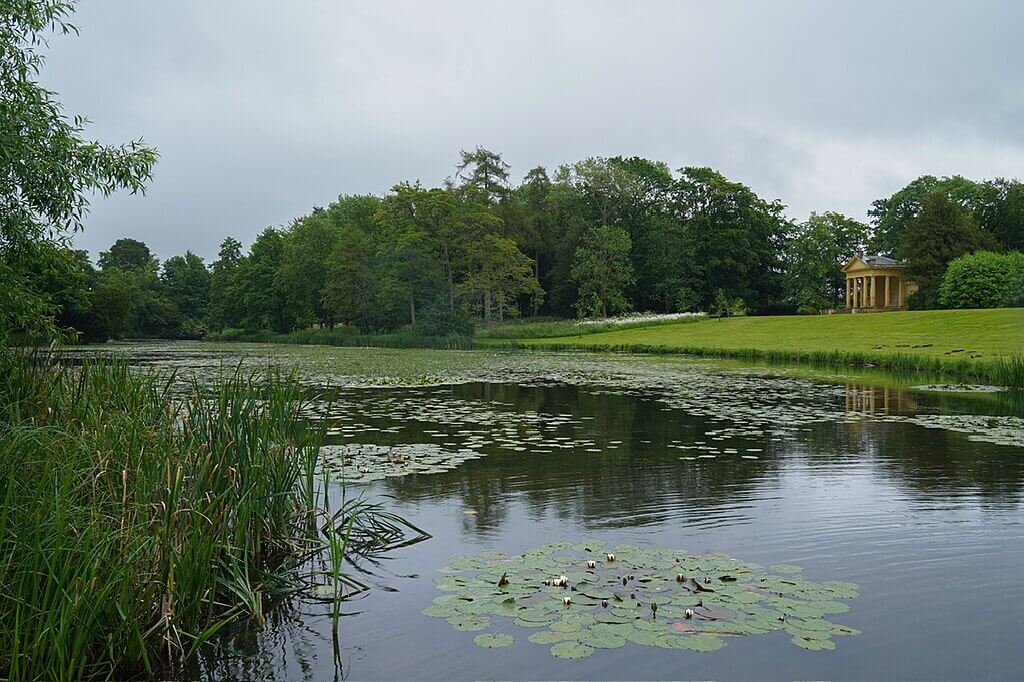
The estate paths and permissive access surrounding Stowe Landscape Garden in north Buckinghamshire provide a rare opportunity to walk in one of England’s greatest 18th-century landscape parks, with long views across ha-ha walls and parkland to the garden temples beyond. The walk from the estate car park at Stowe uses the public bridleway and estate footpaths to loop 10.1 km (6.3 miles) through the Lamport Estate fields, Chackmore village and back across the parkland perimeter: a bigger walk than it first appears on the map, with genuine north Buckinghamshire countryside away from the formal garden.
Dogs enjoy the estate for its sweep of open parkland and the mixed hedgerow smell of farmed Midlands countryside: cattle fields, old oak parkland, and the dusty, warm smell of dry bridleway chalk in summer. The National Trust formal garden itself is dog-friendly on leads, with the ha-ha and parkland fringe accessible throughout. The estate bridleways surrounding the garden are off-lead territory, though cattle graze the surrounding fields. This is a useful walk for larger dogs who need distance; the parkland perimeter is generous.
- Distance: 10.1 km (6.3 miles)
- Difficulty: Moderate
- Parking: Stowe Estate car park, MK18 5EH
- Facilities: National Trust café and toilets at Stowe garden entrance (dog-friendly outside)
- Terrain: Parkland grass, estate bridleways, some arable field margins, generally firm
- Best for: Energetic dogs needing distance; those who enjoy grand historic landscape
Chess Valley: Chesham to Latimer
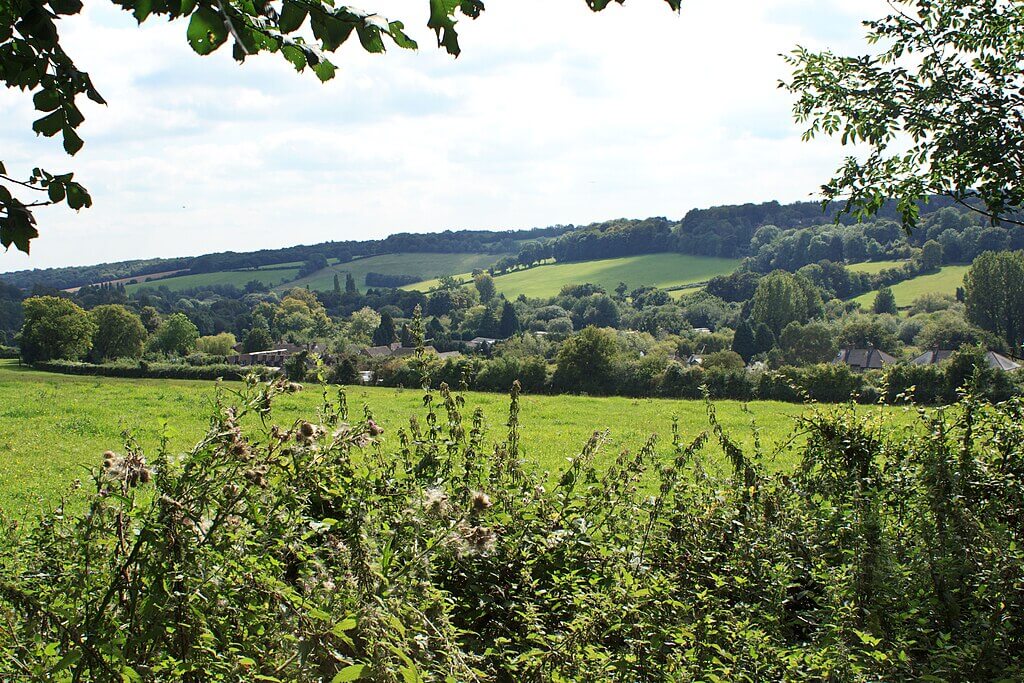

The River Chess is one of the Chilterns’ finest chalk streams: clear, spring-fed and cold even in summer, running through a deep valley with ancient water meadows and beech hangers on the valley sides. The walk from Chesham station to Latimer village follows the Chess Valley Walk for 8.9 km (5.5 miles) through a sequence of old watercress beds, restored chalk stream margins and traditional floodplain meadows before climbing to Latimer Park above the valley. Return is by field path and bridleway along the eastern valley side.
The Chess is excellent swimming water for dogs: chalk-cold, clean and reasonably shallow at most access points. The valley bottom carries the sweet-mineral smell of chalk stream gravel and water crowfoot that is quite distinct from muddier lowland rivers. Dogs can be off-lead on the valley floor footpaths where no livestock are present, though the water meadows around Latimer Park are grazed and require leads in season. The wooded valley sides above the stream are particularly good for scent: beech leaf mould, chalk soil, and occasional badger runs.
- Distance: 8.9 km (5.5 miles)
- Difficulty: Moderate
- Parking: Chesham station car park or roadside, HP5 1HL; or drive to Latimer and walk both directions
- Facilities: Pub at Latimer village; café in Chesham
- Terrain: Chalk stream valley floor, meadow paths, moderate valley-side climbs; can be wet in winter
- Best for: Dogs who love chalk stream swimming; those who enjoy valley walking
Bernwood Forest and Oakley Wood
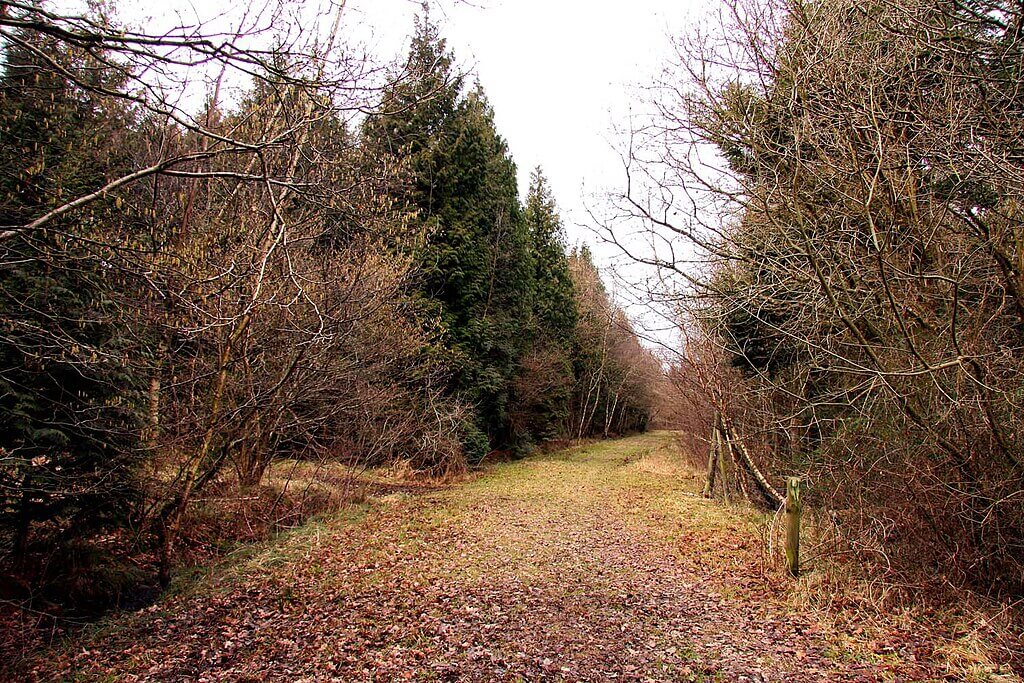
Bernwood Forest, straddling the Buckinghamshire-Oxfordshire border east of Bicester, is a remnant of the ancient Royal Forest of Bernwood: a patchwork of ancient oak woodland, young conifer plantation and open rides managed by Forestry England and the Woodland Trust. The main circular walk from the Forestry England car park at Oakley Wood covers 7.3 km (4.5 miles) through the Bucks section of the forest, taking in the oldest oak stands, some wide fire ride sections and the quieter woodland margins used by deer, woodcock and nightingale.
Dogs find Bernwood deeply rewarding territory. The ancient oak sections carry a dense, complex woodland floor smell: old oak bark, wet leaf, small mammal runs and the occasional deer track that cuts through the rides in the early morning. Bernwood is well-used by deer and dogs will often pick up strong scent lines in the quieter east section of the forest. Most of the route is off-lead on Forestry England land; the Woodland Trust sections at the southern margin ask for close control. There is a small stream crossing in the western section, providing water for dogs on longer summer walks.
- Distance: 7.3 km (4.5 miles)
- Difficulty: Easy to Moderate
- Parking: Forestry England Bernwood Forest car park, HP18 9UB
- Facilities: None on route; nearest facilities in Oakley village
- Terrain: Forest rides and woodland paths, soft underfoot in wet weather
- Best for: Scent hounds and working breeds; those who enjoy ancient woodland; quieter walks away from crowds
Dorney Common and the Thames Path near Windsor
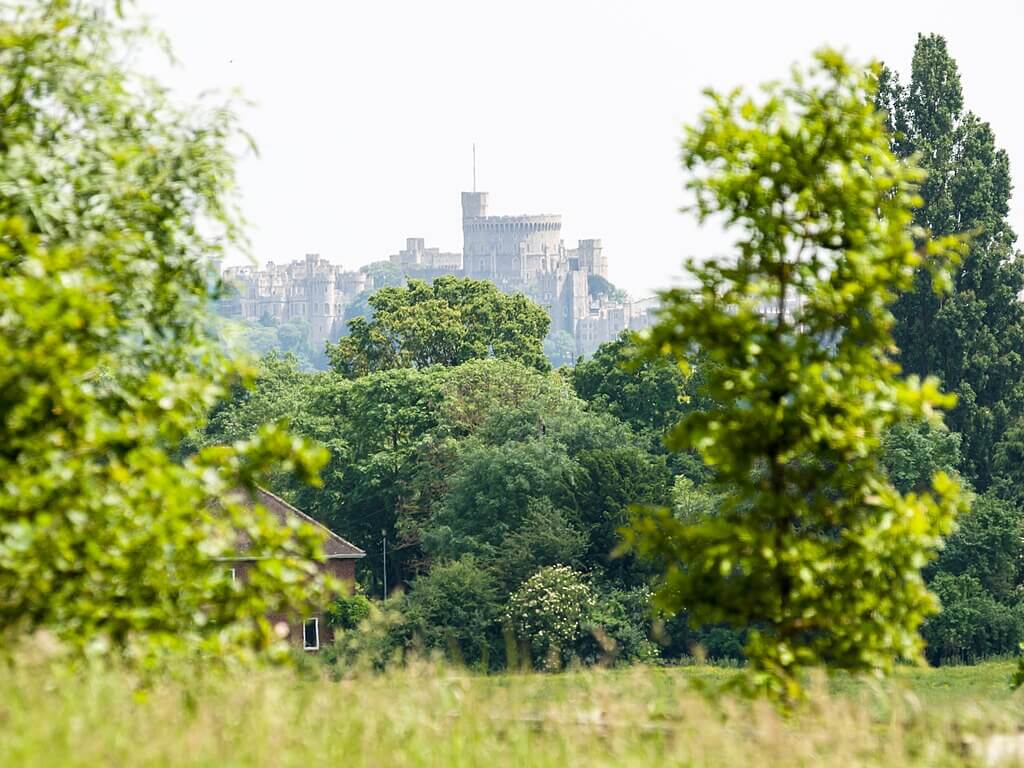
Dorney Common is a rare surviving example of ancient common land: unfenced, grazed by cattle and ponies since the medieval period, running along the Thames flood plain between Eton and Dorney village. The walk from Dorney village uses the common, picks up the Thames Path for a short section past Boveney Lock and returns across the fields for a gentle 5.5 km (3.4 mile) loop. This is the flattest and shortest walk in this selection, and one of the most straightforward for nervous dogs or owners wanting an easy outing.
The common grazing land means cattle are present for much of the year, so dogs need to be kept on leads or under strict close control around the livestock: this is genuine working common land, not managed parkland. Off-lead freedom comes on the Thames Path itself and along the riverside, where the river is wide and accessible for water-loving dogs at several points. The scent profile here is distinctly lowland Thames: river water, river mud, damp grass and the sweet, slightly sour smell of long-grazed common. It is very different from the chalk Chilterns and an interesting contrast for dogs used to woodland walks.
- Distance: 5.5 km (3.4 miles)
- Difficulty: Easy
- Parking: Roadside parking in Dorney village, SL4 6QW
- Facilities: The Palmer Arms pub in Dorney village is dog-friendly
- Terrain: Flat grass common, Thames Path, field edges; can flood in winter
- Best for: Older dogs, less mobile owners, those wanting a flat easy walk; water-loving dogs
Map of Dog Friendly Walks in Buckinghamshire
The walks in this guide span the full length of Buckinghamshire, use the map below to find your nearest starting point or plan a walking weekend across the county.
Dorney Common is a rare surviving example of ancient common land, unfenced and grazed by cattle and ponies since the medieval period, running along the Thames floodplain between Eton and Dorney village. The walk picks up the Thames Path past Boveney Lock and returns across the fields for a gentle loop that is the flattest and most straightforward in this selection.
The Thames Path offers off-lead freedom and river access for water-loving dogs, while the common itself requires leads or close control around the grazing livestock. The scent profile is distinctly lowland Thames: river water, river mud and the sweet, slightly sour smell of long-grazed common grassland.
- Distance: 5.5 km (3.4 miles)
- Difficulty: Easy
- Parking: Roadside parking in Dorney village, SL4 6QW
- Facilities: The Palmer Arms pub in Dorney village is dog-friendly
- Terrain: Flat grass common, Thames Path, field edges; can flood in winter
- Best for: Older dogs, less mobile owners, those wanting a flat easy walk; water-loving dogs
Bernwood Forest is a remnant of the ancient Royal Forest of Bernwood, straddling the Buckinghamshire-Oxfordshire border east of Bicester and managed by a combination of Forestry England and the Woodland Trust. The circular walk takes in the oldest oak stands, wide forest ride sections and the quieter woodland margins regularly used by deer, woodcock and nightingale.
The ancient oak sections carry a dense, complex woodland floor smell that dogs find deeply rewarding, and the forest is well-used by deer with strong scent lines running through the rides. Most of the route is off-lead on Forestry England land, with a small stream crossing in the western section providing water for dogs on longer summer days.
- Distance: 7.3 km (4.5 miles)
- Difficulty: Easy to Moderate
- Parking: Forestry England Bernwood Forest car park, HP18 9UB
- Facilities: None on route; nearest facilities in Oakley village
- Terrain: Forest rides and woodland paths, soft underfoot in wet weather
- Best for: Scent hounds and working breeds; those who enjoy ancient woodland; quieter walks away from crowds
The River Chess is one of the Chilterns’ finest chalk streams, clear, spring-fed and cold even in summer, running through a deep valley with ancient water meadows and beech hangers on the valley sides. The walk follows the Chess Valley Walk from Chesham through old watercress beds and restored chalk stream margins before climbing to Latimer Park above the valley.
The Chess offers excellent swimming for dogs at multiple access points along the route, and the valley bottom carries the distinctive sweet-mineral smell of chalk stream gravel and water crowfoot. The wooded valley sides above the stream are rich in scent, with beech leaf mould, chalk soil and regular deer and badger activity.
- Distance: 8.9 km (5.5 miles)
- Difficulty: Moderate
- Parking: Chesham station car park or roadside, HP5 1HL
- Facilities: Pub at Latimer village; café in Chesham
- Terrain: Chalk stream valley floor, meadow paths, moderate valley-side climbs; can be wet in winter
- Best for: Dogs who love chalk stream swimming; those who enjoy valley walking
The estate paths surrounding Stowe Landscape Garden in north Buckinghamshire offer a generous circular walk through one of England’s greatest 18th-century landscape parks, with long views across ha-ha walls and open parkland to the garden temples beyond. The route loops through the Lamport Estate fields and Chackmore village before returning across the parkland perimeter.
Dogs enjoy the wide sweep of open parkland and the mixed hedgerow smell of farmed Midlands countryside, and the estate bridleways are off-lead territory throughout. The National Trust formal garden is also dog-friendly on leads, and entry is not required to walk the surrounding estate paths.
- Distance: 10.1 km (6.3 miles)
- Difficulty: Moderate
- Parking: Stowe Estate car park, MK18 5EH
- Facilities: National Trust café and toilets at Stowe garden entrance (dog-friendly outside)
- Terrain: Parkland grass, estate bridleways, some arable field margins, generally firm
- Best for: Energetic dogs needing distance; those who enjoy grand historic landscape
Whiteleaf Hill rises sharply above Princes Risborough and offers one of the most dramatic short walks on the Chiltern escarpment, climbing steeply through mixed woodland to open chalk downland with a Neolithic barrow and a chalk hill figure cut into the hillside below. The circular route loops across Whiteleaf Hill and into the Brush Hill Nature Reserve before returning through tall beeches on the escarpment slope.
The chalk grassland at the summit is ancient and botanically rich, carrying the sweet-dry mineral smell of undisturbed chalk turf. Dogs can be off-lead on the woodland paths and along the open ridgeline; leads are appreciated on the open grassland sections managed for ground-nesting birds and rare chalk flora.
- Distance: 6.8 km (4.2 miles)
- Difficulty: Moderate
- Parking: Lower Icknield Way car park, HP27 0LY
- Facilities: None on route; Princes Risborough has cafés and pubs
- Terrain: Steep chalk woodland ascent, open downland, good woodland paths on return
- Best for: Dogs and owners who enjoy a climb; dogs who love woodland exploration
This circular walk from Haddenham village crosses the broad floodplain meadows of the River Thame, passes through the village of Cuddington and returns via field paths with long views north across the Vale of Aylesbury. It is a gentle, genuinely rural walk typical of the lowland Buckinghamshire countryside away from the Chiltern hills.
The alluvial meadows carry a rich, earthy scent that dogs find deeply rewarding, and the River Thame offers swim access at several points along the route. Leads are required through grazing meadows where cattle are present in summer.
- Distance: 9.4 km (5.8 miles)
- Difficulty: Easy to Moderate
- Parking: Roadside parking in Haddenham village, HP17 8EE
- Facilities: Pub and café in Haddenham village; nothing on route
- Terrain: Flat to gently rolling grass meadow paths, can be muddy after rain
- Best for: Dogs who enjoy open countryside and river swimming; relaxed walkers
Burnham Beeches is a National Nature Reserve of international significance, covering 374 hectares of ancient beech and oak woodland southwest of Slough, managed by the City of London Corporation. The veteran pollarded trees here are among the most extraordinary in southern England, their hollow trunks and gnarled root systems creating a woodland landscape unlike anywhere else in the Chilterns.
Dogs are welcome off-lead throughout most of the reserve, and the varied terrain moves between soft sandy heath, moss-cushioned woodland paths and sunken bridleways. There is no single fixed circuit, making it easy to tailor the walk to the dog and the day.
- Distance: 6.2 km (3.9 miles)
- Difficulty: Easy
- Parking: Burnham Beeches main car park (East Burnham Common), SL2 3EL
- Facilities: Small café and toilets at the main car park
- Terrain: Sandy heathland tracks, woodland paths, rooted and mossy underfoot in places
- Best for: All dogs; those who love ancient woodland; short or extended walks
This circular walk from Marsworth traces the Grand Union Canal towpath past the Marsworth flight of locks before opening out around four reservoirs — Startops End, Marsworth, Tringford and Wilstone — all managed as Sites of Special Scientific Interest and important bird reserves. The route is flat, well-surfaced and reliable in all weathers.
It is one of the best easy walks in Buckinghamshire for dogs, with wide canal towpaths, multiple water access points along the canal edge, and the rich reed and waterfowl smell of the reservoir margins. Leads are required along the reservoir banks where ground-nesting birds use the marginal vegetation.
- Distance: 8.6 km (5.3 miles)
- Difficulty: Easy
- Parking: Startops End Reservoir car park, HP23 4LJ
- Facilities: The White Lion pub in Marsworth is dog-friendly; no formal facilities on route
- Terrain: Flat canal towpath, gravel reservoir paths, some grass field sections
- Best for: Older dogs, less mobile owners, dogs who enjoy water; year-round walking
Ivinghoe Beacon is the northeastern terminus of the Ridgeway National Trail and one of the most distinctive landmarks in the Chilterns, a bare chalk hill topped by an Iron Age hillfort with views stretching across the Vale of Aylesbury to the north and the wooded Chiltern scarp to the south. The circular walk from the National Trust car park climbs the open flanks of the beacon before descending through the chalk grassland of the Ashridge Estate.
The open chalk grassland carries that sharp, mineral-sweet smell of short chalk sward that dogs find particularly rewarding, and the route offers genuine off-lead freedom on the lower field paths and woodland edges. Leads are required on the upper slopes during ground-nesting bird season from March to July.
- Distance: 8.2 km (5.1 miles)
- Difficulty: Moderate
- Parking: National Trust Ivinghoe Beacon car park, LU6 2EL
- Facilities: None on route; nearest facilities in Ivinghoe village
- Terrain: Chalk grassland, some steep ascents, field paths and quiet lane sections
- Best for: Dogs and owners who enjoy open, exposed walking with big views
Wendover Woods sits on the chalk escarpment above the market town of Wendover, managed by Forestry England and covering several hundred hectares of mixed beech and conifer woodland. The main circular route climbs to the highest point in the Chilterns at 267 metres, passing a fire tower viewpoint with sweeping views south over the Vale of Aylesbury.
It is one of the most reliably good woodland walks in Buckinghamshire for dogs, with wide forest trails, no livestock, and a dog-friendly café at the car park. Streams run through the lower sections of the forest in wetter months, and the beech floor is deep with leaf mould and mast from autumn onwards.
- Distance: 7.5 km (4.7 miles)
- Difficulty: Moderate
- Parking: Forestry England pay-and-display car park, HP22 5NQ
- Facilities: Dog-friendly café, toilets, water tap at car park
- Terrain: Well-maintained chalk and gravel forest trails, some rooted sections underfoot
- Best for: Dogs who love to range in woodland; families; those after a viewpoint reward
Explore dog friendly walks all across the UK on our Wildpack Map.
Tips for Walking with Dogs in Buckinghamshire
- Chiltern livestock on the chalk escarpment: The open grassland walks at Ivinghoe Beacon and Whiteleaf Hill pass through or near National Trust grazing land. Cattle and sheep are present on the upper slopes from late spring through autumn, so keep dogs on leads in these sections and always use the gate fasteners provided, as the grazing supports the rare chalk flora of these nature reserves.
- Chess Valley season: The River Chess is at its best in early summer when water levels are lower and the chalk stream margins are in flower. By late summer in dry years the river can run very low; for swimming dogs, late spring is the best time to visit. Avoid the valley floor paths after prolonged heavy rain in winter as the water meadows flood readily.
- Burnham Beeches road crossings: The Beeches are divided by a minor road through the reserve, and some dogs can be startled by traffic emerging from the woodland. Keep dogs on leads near the East Burnham Common road crossing until safely into the woodland section.
- Forestry England car park charges: Both Wendover Woods and Bernwood Forest use pay-and-display parking. Charges apply year-round. The Forestry England app allows pre-payment and is worth downloading if you visit regularly.
- Adder awareness on the heath: The heathland sections at Burnham Beeches support adder populations, particularly in early spring when snakes are emerging to bask. Keep dogs to the paths between February and April when adder activity is highest, and be cautious around log piles and sunny, south-facing banks.
- Stowe estate access: The National Trust formal garden at Stowe charges an entry fee for the gardens themselves. Dogs are welcome throughout the gardens on leads, but the surrounding estate bridleways are free to use at any time without entry to the paid garden area.
What’s Nearby
Dog Friendly Walks in Oxfordshire – Cotswolds limestone villages, Thames water meadows and a strong network of Chiltern ridge paths continuing south from the Bucks border make Oxfordshire excellent walking territory.
Dog Friendly Walks in Hertfordshire – The Chilterns continue northeast through Hertfordshire with further beechwood escarpment walking, the Ashridge Estate and the Ver, Gade and Lea river valleys.
Dog Friendly Walks in Bedfordshire – Greensand Ridge woodland, the Ouse Valley and large country parks including Rushmere and Maulden Wood provide varied walking north of the Ivinghoe area.
Dog Friendly Walks in Northamptonshire – Rolling ironstone countryside, reservoir walking at Pitsford and Ravensthorpe, and the Nene Valley beyond the north Bucks border.
Dog Friendly Walks in Berkshire – Windsor Great Park, the Thames Path and the Berkshire Downs begin immediately south of the county, with excellent chalk downland and woodland walking throughout.