
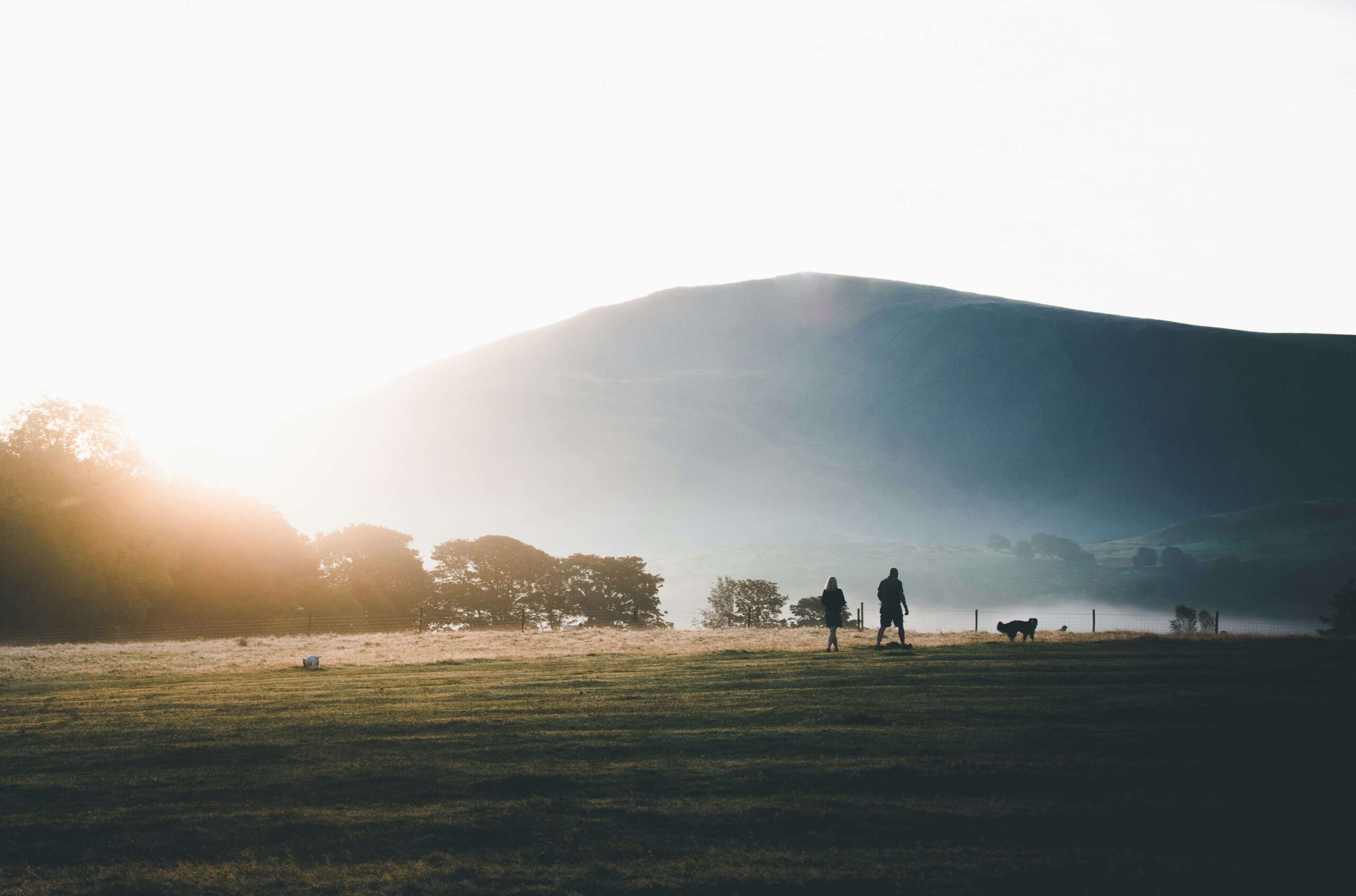

The Lake District is one of the best places in the UK to explore on foot with your dog, offering everything from gentle lakeside paths to high fell routes with wide-open views. Whether you’re after a relaxed wander beside the water or a more demanding hike into the hills, there’s no shortage of dog friendly trails to choose from.
In this guide, we’ve pulled together some of the best dog friendly hiking trails in the Lake District, focusing on routes that combine great scenery, varied terrain and a genuine sense of adventure. From short, iconic climbs to longer, quieter circuits, these walks are ideal for dogs that love to stretch their legs and owners who want to experience the Lakes at its best.
Cat Bells (Near Keswick)
Rating: 7/10 — Open fell with beautiful views and good off-lead freedom, but there is limited water on the ridge and also sheep on the lower slopes to be aware of.
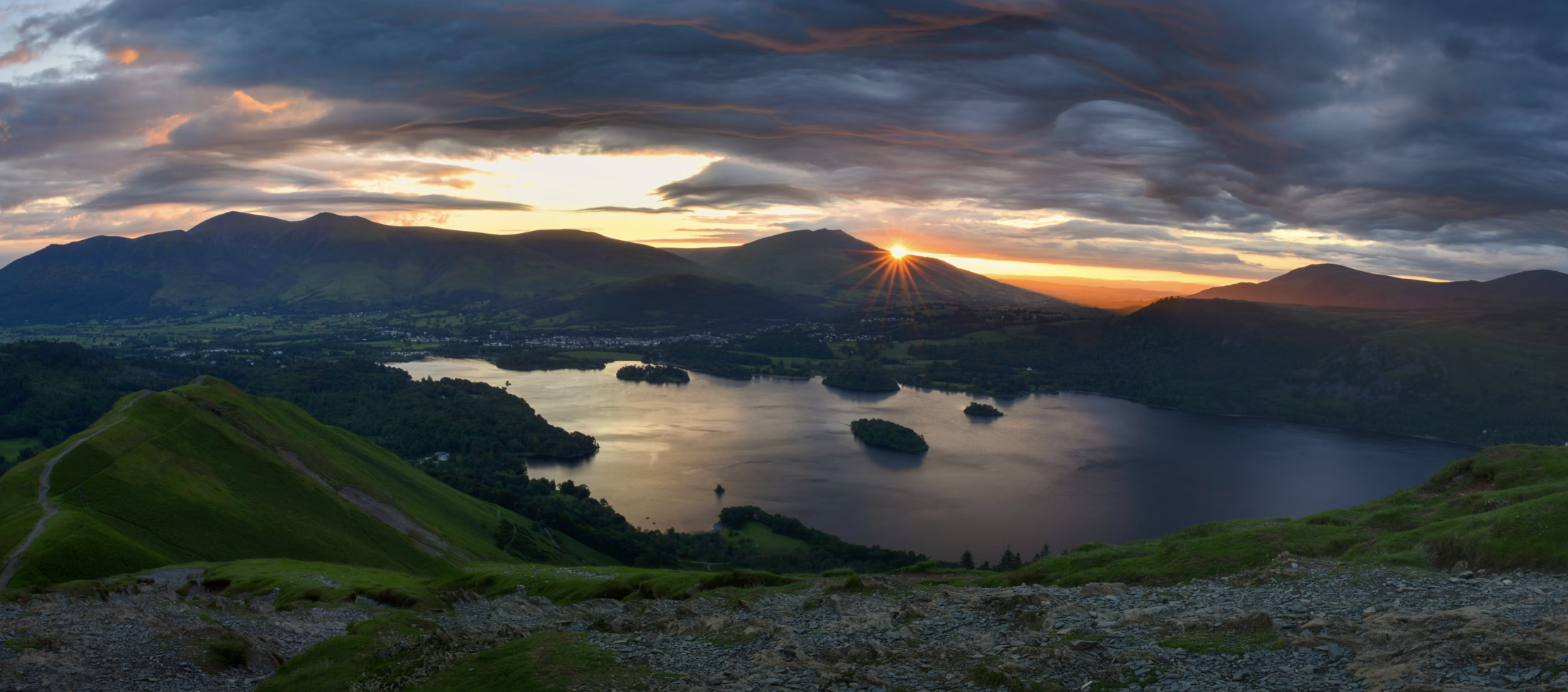
Cat Bells is one of the most iconic short fell walks in the Lake District, a steep-sided ridge rising above the western shore of Derwentwater with views that open up almost immediately. The route climbs from Hawse End, follows the ridge to the summit at 451 metres, and can be looped back via Manesty or retraced for a shorter out-and-back. A few rocky sections and light scrambles near the top add interest without making the walk technically demanding.
Dogs find the open fell here absorbing, with the sharp mineral scent of heather and sun-warmed rock carrying across the ridge on most days. The upper sections are largely off lead, though leads are needed on the lower slopes where sheep graze the unfenced fell. There is no reliable water on the ridge itself, so carry enough for the climb; Derwentwater is accessible at the start and finish for a cool-down. This walk suits active, confident dogs comfortable with rocky terrain and open exposure.
- Distance: 5.6 km (3.5 miles)
- Duration: 2 hrs
- Difficulty: Moderate
- Elevation Gain: 300 m
- Walk Type: Peak
- Route Type: Out and Back
- Terrain: Grassy lower slopes, rocky ridge, short scramble sections near summit
- Off Lead Potential: Moderate
- Livestock Potential: Moderate
- Facilities: No facilities on route; cafés and pubs in Keswick nearby
Tip: Go early or late in the day to avoid crowds. Pop into The Dog & Gun in Keswick afterwards for a post-hike pint and water bowls at the ready.
Tarn Hows (Near Coniston)
Rating: 8/10 — Gentle, accessible circuit with good water access and relaxed off-lead potential; leads needed near the car park and in busier sections.
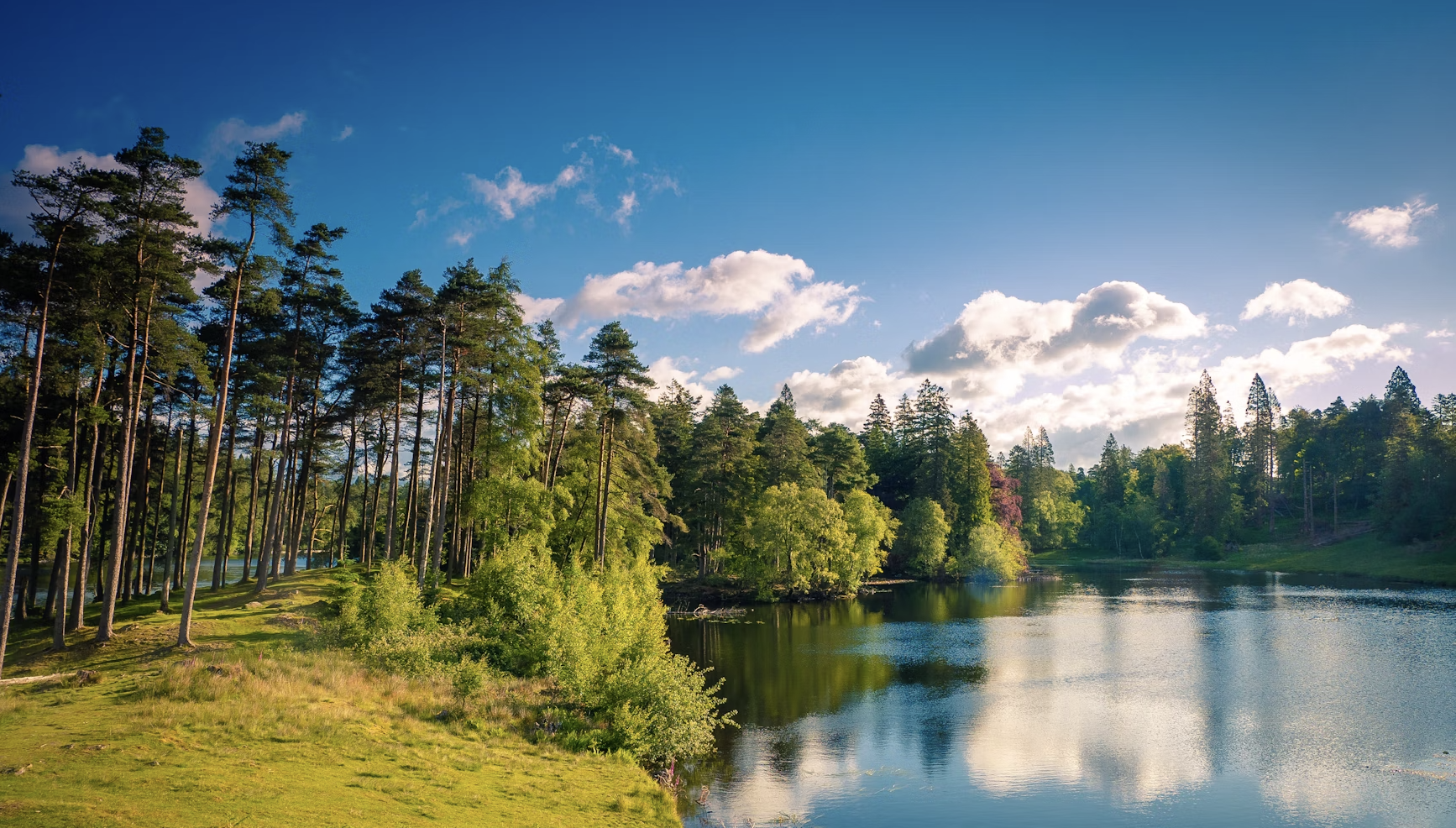
Tarn Hows is one of the most visited spots in the national park, and for good reason: the circular path around the tarn is beautiful in every season, with wooded hillsides, open water and views toward the Coniston fells making it consistently rewarding. The route is largely level, following a well-maintained gravel path that loops around the tarn with minimal elevation change. A short detour down to Tom Gill and its waterfall adds something extra if the main circuit feels too brief.
The tarn carries a clean, peaty scent that dogs find immediately engaging, and the grassy margins offer plenty of sniffing along the route. Most of the circuit allows off-lead walking, though leads are needed near the car park and in busier sections where the path narrows. Dogs must be kept on leads throughout as this is a designated Site of Special Scientific Interest; the tarn itself is accessible in several spots for paddling, and the gill below offers a quieter place to cool off. This is one of the most reliably enjoyable walks in the Lakes for dogs of any age or fitness level.
- Distance: 3.2 km (2 miles)
- Duration: 1 hr
- Difficulty: Easy
- Elevation Gain: 172 m
- Walk Type: Lake
- Route Type: Circular
- Terrain: Compacted gravel path, mostly level with one gentle rise
- Off Lead Potential: Moderate
- Livestock Potential: Low
- Facilities: Small café kiosk in the car park in season; accessible toilets at the trailhead
Tip: Combine with a visit to Tom Gill Waterfall, a short detour that dogs adore.
Walk Must-Haves



As an Amazon Associate we earn from qualifying purchases.
Buttermere Circuit
Rating: 8/10 — Excellent lake access, good off-lead stretches and dramatic scenery; leads needed near farmland at the southern end and through the village.
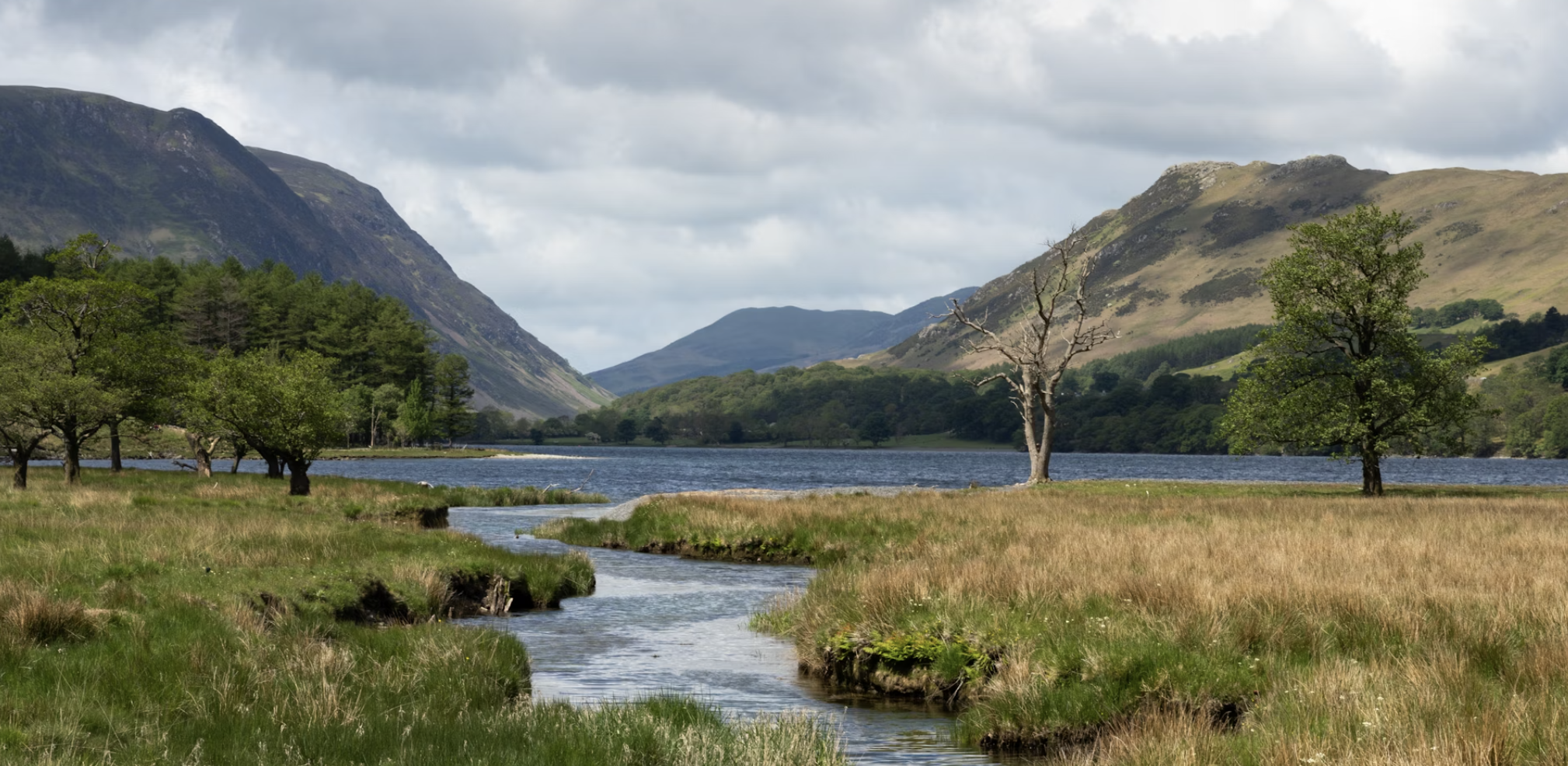
The Buttermere circuit is one of the great low-level lake walks in the national park, looping the full perimeter of the lake beneath a ring of high fells including Fleetwith Pike, Haystacks and High Stile. The route is mostly flat, combining lakeside paths, short woodland sections and a dramatic tunnel cut through the rock at the northern end. The setting is exceptional throughout, with reflections on still mornings making the circuit feel genuinely special.
The lakeshore has a cool, slightly mineral smell after rain, and dogs tend to work the margins intently as the route switches between open water and sheltered woodland. The lake is accessible in multiple places for swimming, and most of the route allows off-lead walking. Leads are needed near the farmland at the southern end where livestock graze close to the path, and around the village of Buttermere itself. This walk suits water-loving dogs well and rewards owners with some of the finest low-level scenery in the national park.
- Distance: 7.2 km (4.5 miles)
- Duration: 2 hrs
- Difficulty: Easy
- Elevation Gain: 90 m
- Walk Type: Lake
- Route Type: Circular
- Terrain: Lakeside paths, woodland tracks, one short rocky tunnel section
- Off Lead Potential: High
- Livestock Potential: Moderate
- Facilities: Café and pub in Buttermere village; the Bridge Hotel and Fish Inn both welcome dogs
Tip: Reward yourself with ice cream at Syke Farm Tea Room — they even serve a dog-friendly scoop.
Grasmere to Rydal Water
Rating: 7/10 — Varied and scenic with good water access, but livestock near Rydal and busy paths in summer mean leads are needed regularly.
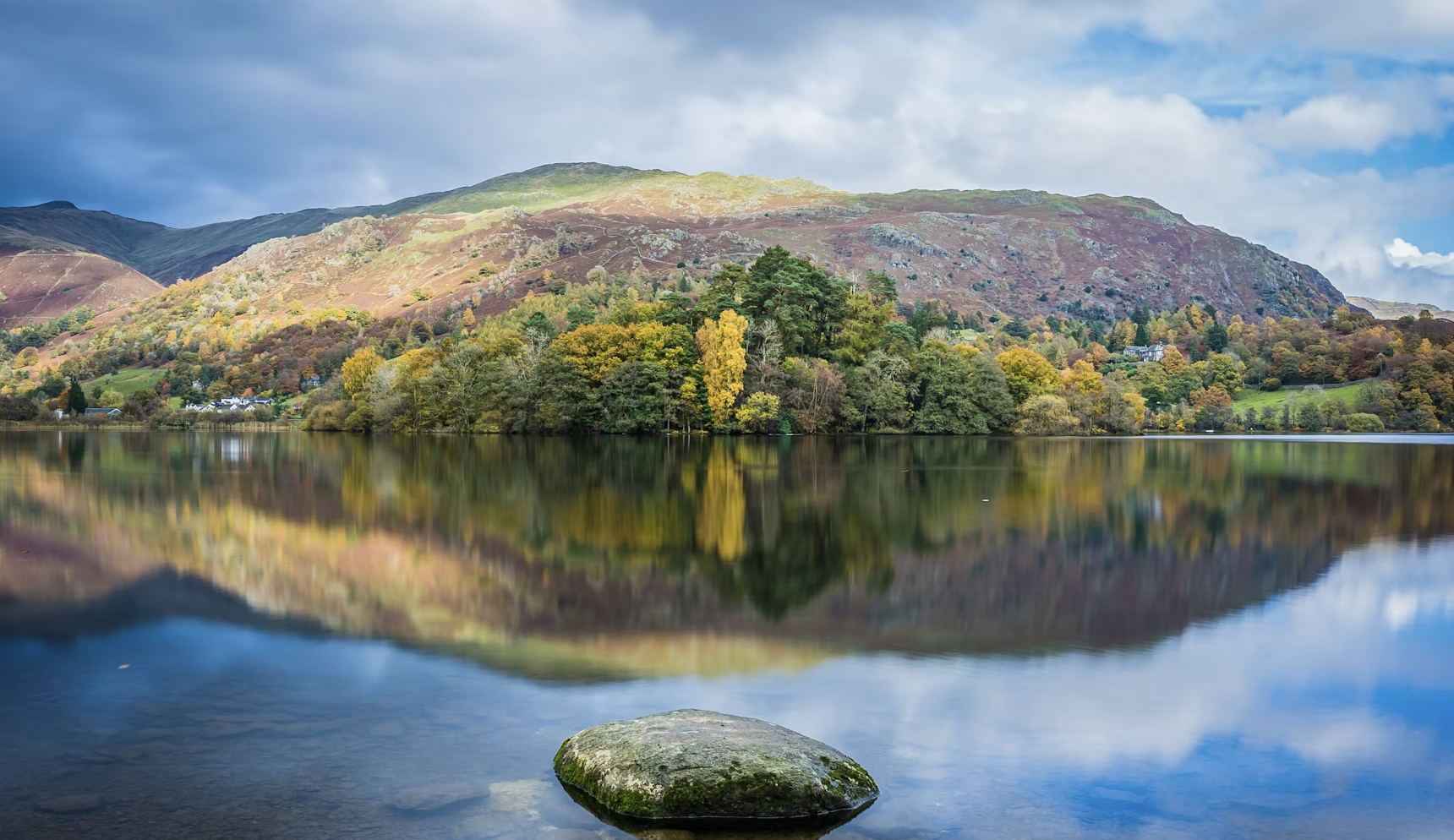
This route links two of the Lake District’s most famous lakes through a varied mix of riverside path, open meadow and sheltered woodland. Starting from Grasmere village, the walk follows the River Rothay south before climbing gently to Rydal Water, with the option to explore Rydal Cave, a dramatic flooded quarry cavern cut into the hillside above the lake. The return along the opposite shore gives a different perspective and keeps the route feeling fresh throughout.
The riverside sections carry a rich smell of damp moss and waterside vegetation, and dogs moving between the open meadow and wooded stretches will find plenty to investigate along the way. The River Rothay offers accessible paddling at several points, and Rydal Water has good entry points for dogs that enjoy a swim. Leads are needed near Rydal Hall and around livestock grazing in the lower meadows, with more off-lead freedom available on the fell sections above the cave. This walk suits dogs that enjoy variety and owners who want a scenic half-day without committing to high fell walking.
- Distance: 8.7 km (5.4 miles)
- Duration: 2 hrs 30 mins
- Difficulty: Moderate
- Elevation Gain: 195 m
- Walk Type: Lake
- Route Type: Circular
- Terrain: Riverside paths, woodland tracks, some uneven rocky sections near the cave
- Off Lead Potential: Moderate
- Livestock Potential: Moderate
- Facilities: Cafés and pubs in Grasmere; Rydal Hall tea room is dog friendly in its outdoor area
Tip: Let your dog paddle in the shallows at White Moss. It’s a safe, slow-moving spot for a cool-down, especially during Summer.
Helvellyn via Thirlmere
Rating: 6/10 — A magnificent mountain day but the length, exposure and lack of water on the upper fell make this demanding for dogs as much as owners.
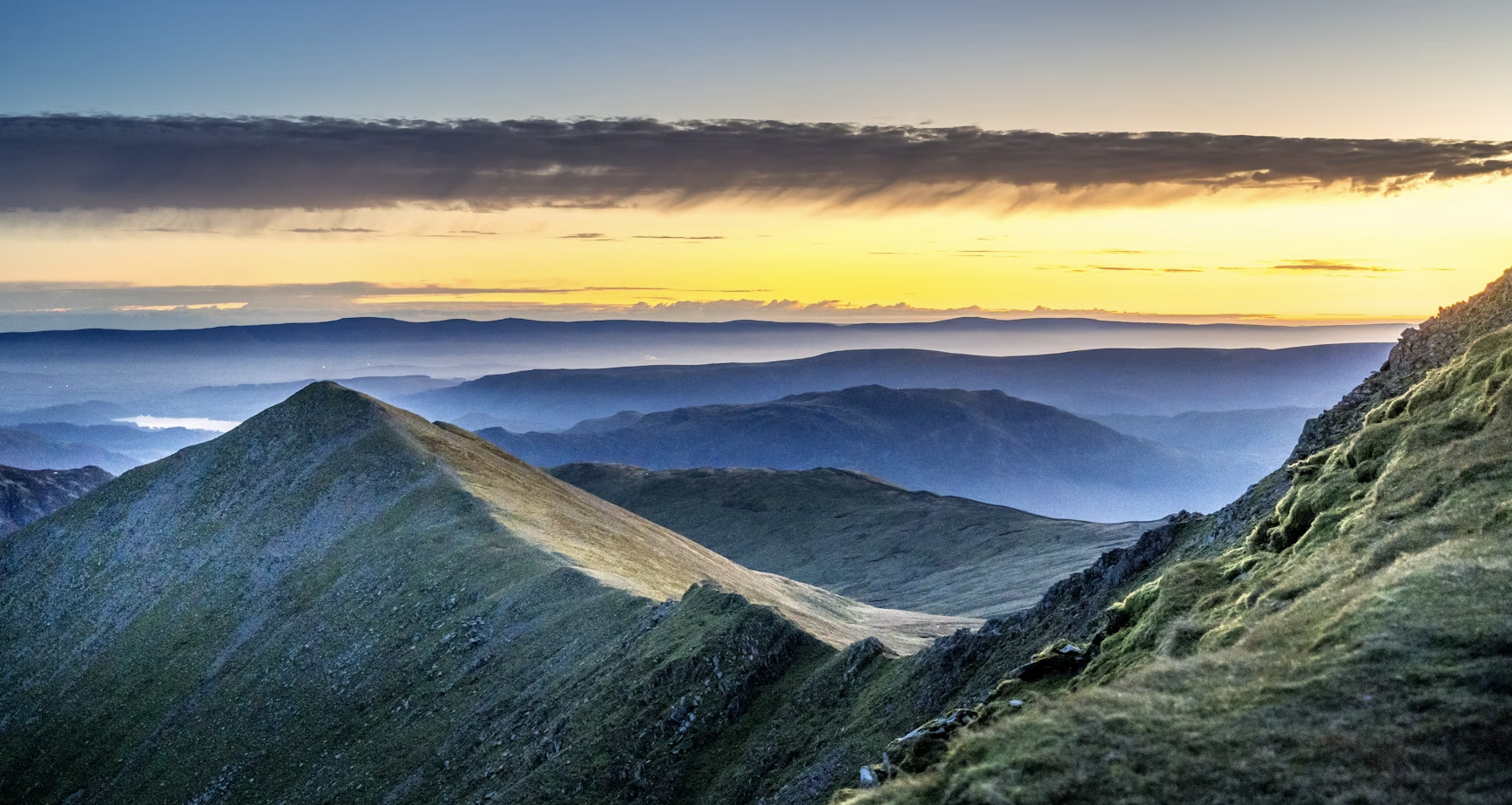
The Thirlmere approach to Helvellyn is steadier and quieter than the more famous Striding Edge route (which is NOT dog friendly), climbing through plantation forest before breaking onto open fell and ascending via Browncove Crags to the broad summit plateau at 950 metres. The views from the top stretch across the central fells in every direction, and the summit on a clear day gives a genuine sense of the scale of the national park. This is a long, committed day out and should be treated as such.
The upper fell carries the sharp, clean smell of high altitude air and wet rock, and dogs that are fit and experienced will find the exposed ridgeline absorbing. The summit plateau allows off-lead time, but leads are essential on the lower forest tracks where the path runs close to the reservoir fence, and on any sections where other walkers are concentrated around the upper crags. Carry all water needed for the day as reliable sources become scarce above the forest line. This walk is best suited to fit, experienced dogs used to sustained effort on rough and exposed terrain.
- Distance: 11.3 km (7 miles)
- Duration: 4 hrs 30 mins
- Difficulty: Challenging
- Elevation Gain: 850 m
- Walk Type: Peak
- Route Type: Out and Back
- Terrain: Forest tracks, open fell, rocky ridge, exposed summit plateau
- Off Lead Potential: Moderate
- Livestock Potential: Low
- Facilities: Toilets at Swirls car park; no facilities on route; nearest options in Grasmere or Keswick
Tip: Carry plenty of water and snacks for both you and your dog — this is a long, exposed route with few streams higher up.
Friar’s Crag and Derwentwater Lakeshore
Rating: 8/10 — Excellent lakeshore access, mostly off-lead walking and easy underfoot; a reliable and rewarding walk for dogs of all ages.
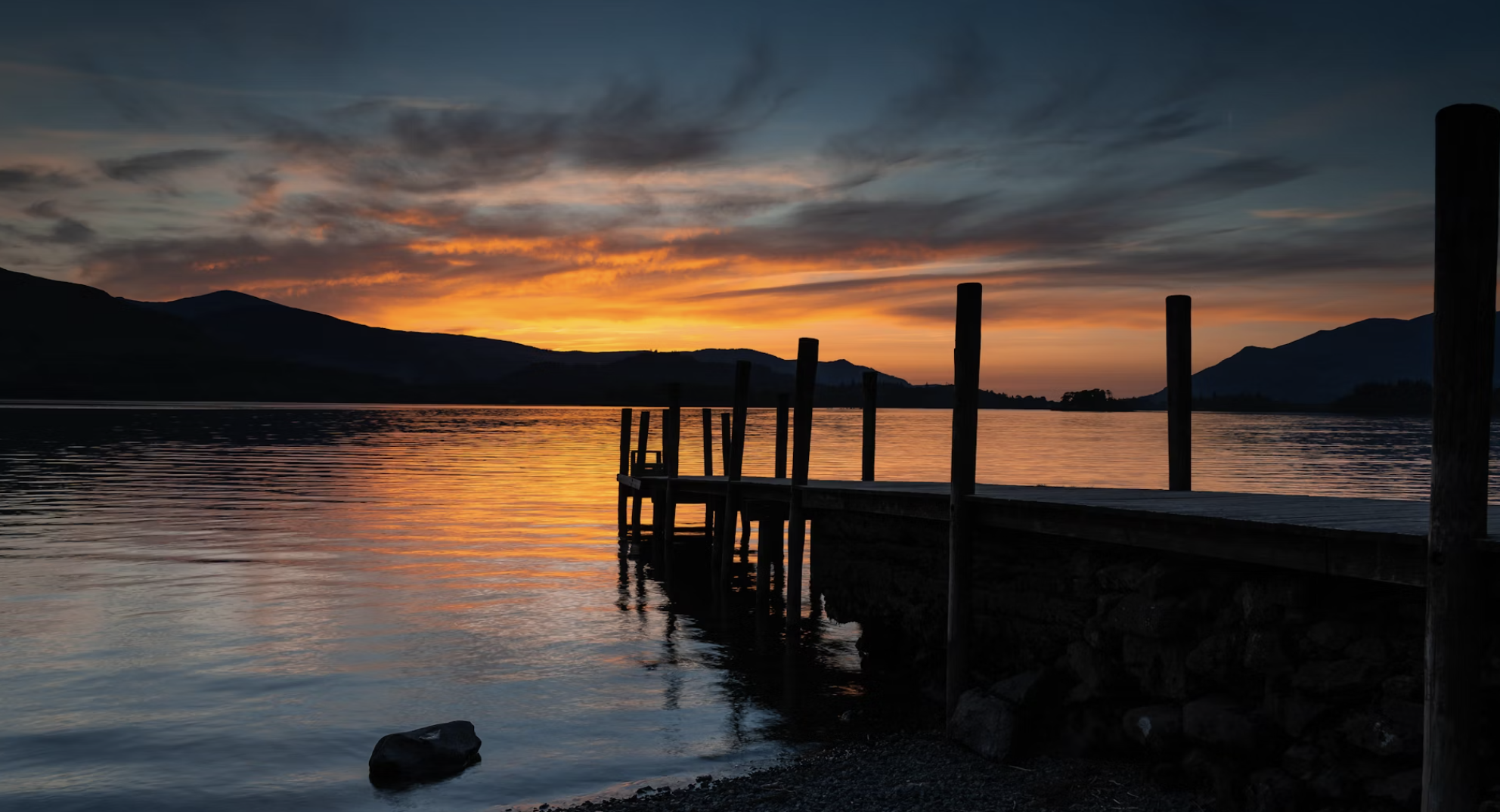
Friar’s Crag is one of the most celebrated viewpoints in the Lake District, a short wooded promontory jutting into Derwentwater with views across the lake to Borrowdale and the surrounding fells. The walk from Keswick follows the lakeshore path south to the viewpoint and continues along the western shore, passing boathouse jetties, wooded bays and open grassy sections before looping back through the town. It works well as a standalone gentle walk or as an addition to a longer day based in Keswick.
The lakeshore has a distinctive smell of lake water and damp leaf litter from the overhanging oaks, and dogs that enjoy water will find plenty of access points for paddling along the way. Much of the route is off lead, particularly the open lakeshore sections; leads are needed near the busy car park at the start and in the town on the return. The ground is mostly firm and well-drained, making this a reliable choice in most weather conditions. This walk is well suited to older dogs, puppies and less mobile owners who still want a proper Lakeland experience.
- Distance: 4.5 km (2.8 miles)
- Duration: 1 hr 15 mins
- Difficulty: Easy
- Elevation Gain: 56 m
- Walk Type: Lake
- Route Type: Circular
- Terrain: Woodland paths, lakeshore tracks, some tree roots and uneven ground in wooded sections
- Off Lead Potential: High
- Livestock Potential: Low
- Facilities: Café at the Theatre by the Lake; accessible toilets at the lakeside car park; full range of cafés and pubs in Keswick
Tip: Extend the route around the Lakeshore Path for more off-lead opportunities.
Elterwater to Skelwith Bridge
Rating: 8/10 — Excellent riverside access, relaxed off-lead potential and a dog-friendly café at the finish make this one of the most enjoyable easy walks in the Lakes.
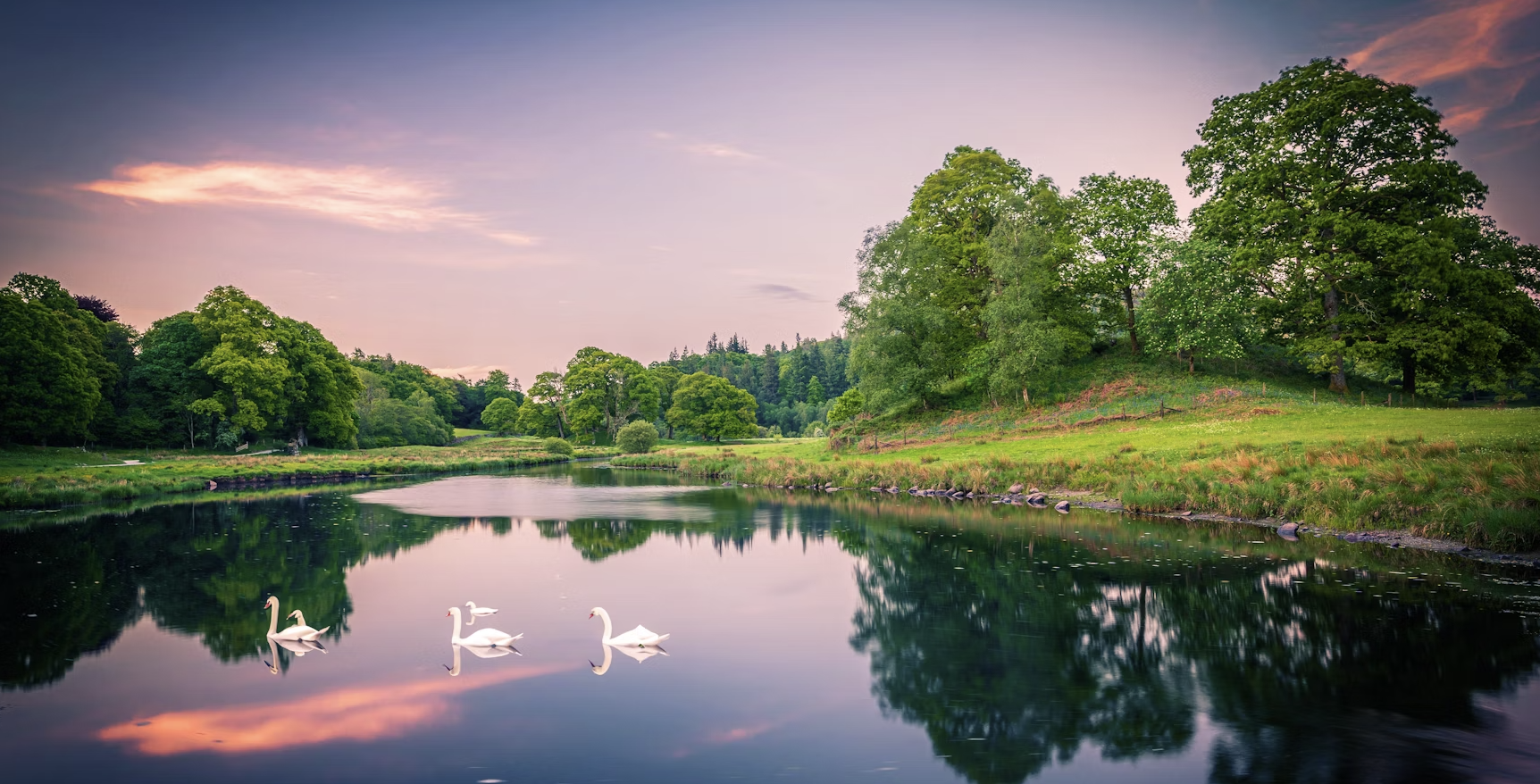
This riverside walk follows the Great Langdale Beck and the River Brathay between the village of Elterwater and Skelwith Bridge, passing through open meadow, mixed woodland and riverside flats. The route is largely flat and easy to follow, with Skelwith Force waterfall providing a dramatic highlight roughly two thirds of the way along. The path is well-trodden and clearly signed, making it straightforward even for less experienced walkers.
The river carries a cool, mossy smell throughout, and dogs enjoy the meadow sections where the path opens out and the grass holds the scent of recent grazing. Water access along the Brathay is excellent, with shallow pools and gravel banks ideal for dogs that enjoy wading. Leads are needed through Elterwater village and near the farmland sections where the path passes close to grazing fields, with good off-lead stretches along the open riverside. This walk suits relaxed walkers and dogs that enjoy water, and works well as a half-day with a café stop built in at either end.
- Distance: 5 km (3 miles)
- Duration: 1 hr 15 mins
- Difficulty: Easy
- Elevation Gain: 60 m
- Walk Type: Waterfall
- Route Type: Point to Point
- Terrain: Riverside paths, woodland tracks, some muddy sections after rain
- Off Lead Potential: High
- Livestock Potential: Moderate
- Facilities: Britannia Inn in Elterwater and Chester’s by the River at Skelwith Bridge are both dog friendly
Tip: Grab lunch at Chester’s by the River, one of the most dog-friendly cafés in the Lakes.
Loughrigg Fell (Ambleside)
Rating: 8/10 — Open fell, a tarn for swimming and good off-lead potential across the upper sections make this a strong choice; loses a point for boggy ground and enclosed farmland on the lower approaches.
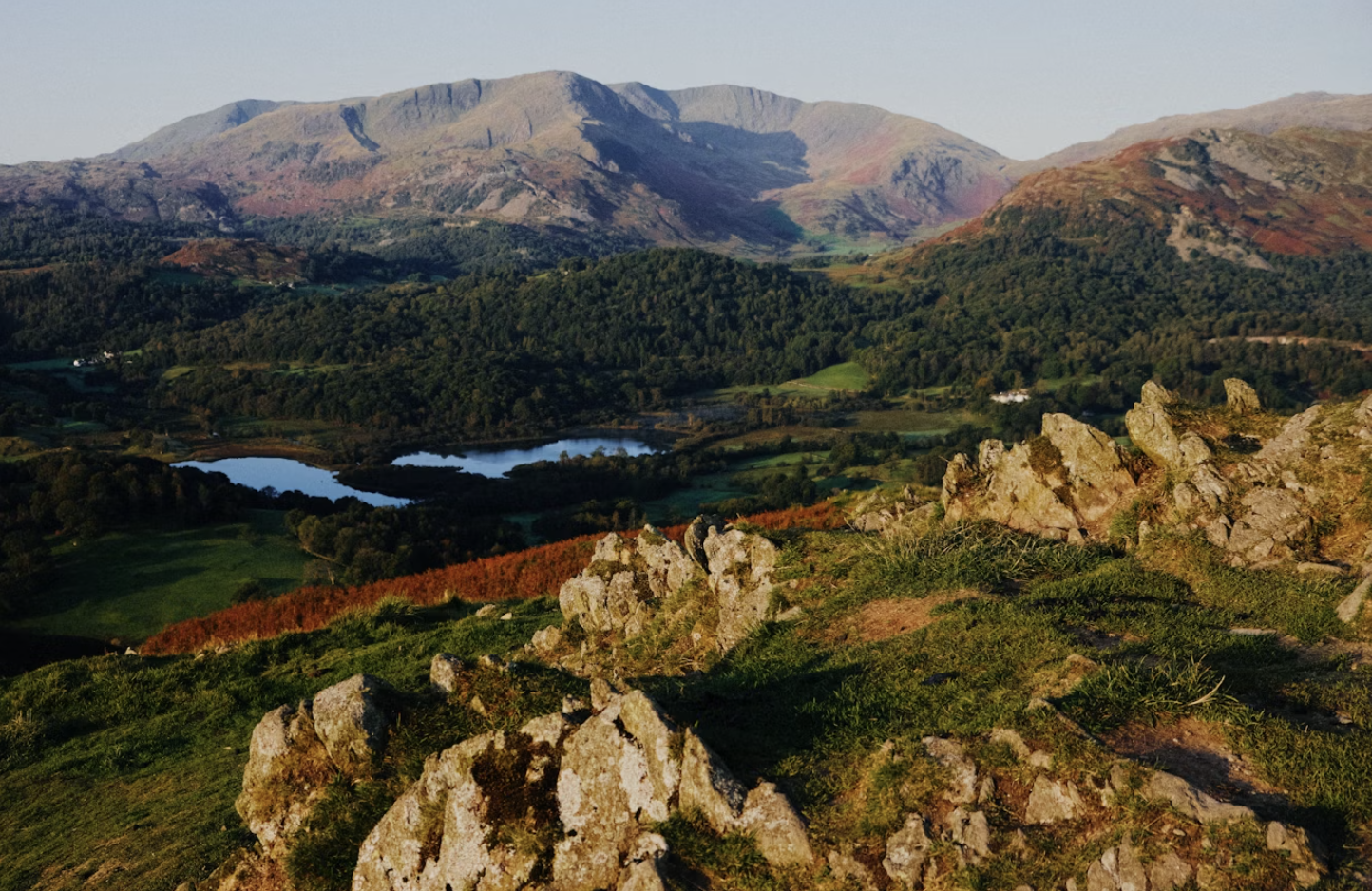
Loughrigg Fell is a compact but richly varied walk that punches well above its height, with the summit at just 335 metres delivering panoramic views across Windermere, Grasmere and Rydal Water in three directions. The route from Ambleside climbs steadily through bracken and open fell, passing Loughrigg Tarn before reaching the rocky summit plateau. The descent can be varied to take in the Loughrigg Terrace path above Grasmere, adding a longer and more scenic return.
The bracken carries a sharp green scent in summer and a rich, earthy smell in autumn, and the tarn provides a reliable swimming spot that most dogs make the most of on the way round. The fell is largely unfenced and allows good off-lead walking across the upper sections; leads are needed on the lower approaches from Ambleside where the path passes through enclosed farmland. The ground can be boggy in places after wet weather, particularly around the tarn margins. This walk suits dogs that enjoy open fell and water, and works well as a half-day when time is limited but proper views are non-negotiable.
- Distance: 10.5 km (6.5 miles)
- Duration: 3 hrs
- Difficulty: Moderate
- Elevation Gain: 430 m
- Walk Type: Peak
- Route Type: Circular
- Terrain: Fell paths, bracken-covered slopes, some boggy ground, rocky summit
- Off Lead Potential: High
- Livestock Potential: Moderate
- Facilities: Full range of cafés and pubs in Ambleside at the start and finish
Tip: On clear days, you’ll see Windermere, Grasmere and Rydal Water all from the summit.
Ennerdale Water Circuit
Rating: 9/10 — Remote, spacious and with excellent lake access and off-lead potential throughout; the lack of facilities is the only meaningful limitation.
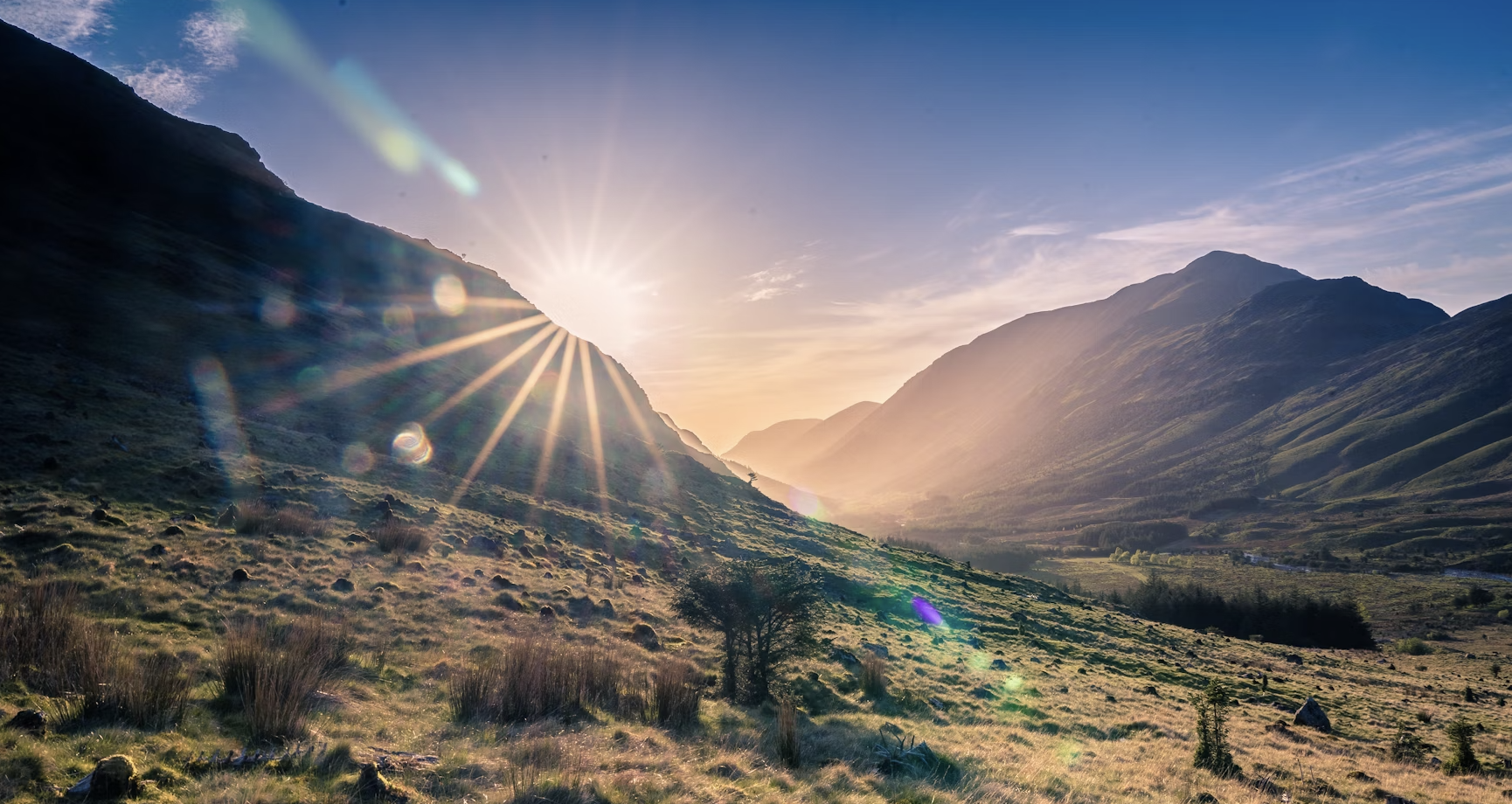
Ennerdale Water sits in the far western corner of the national park and feels noticeably different to the busier central lakes, with a quiet, remote character that makes it one of the most rewarding circuits for owners who want genuine space. The route follows the northern shore on a clear path before crossing to the rougher, less-trodden southern shore and returning along the forest track above the treeline. The lack of road access to the far end of the lake keeps crowds minimal even in peak season.
The western fells carry a particular smell of damp forestry and peaty moorland that dogs find thoroughly engaging, and the lake shore has several natural entry points for swimming. Off-lead walking is possible for much of the circuit given the remote character of the southern path; leads are needed at the car park end and near the river crossing at the eastern end of the lake where livestock sometimes graze on the riverside fields. Come prepared with everything you need as there are no facilities on route. This walk suits experienced dogs and owners who enjoy genuine solitude and wild Lakeland scenery.
- Distance: 11.5 km (7.2 miles)
- Duration: 3 hrs 30 mins
- Difficulty: Moderate
- Elevation Gain: 100 m
- Walk Type: Lake
- Route Type: Circular
- Terrain: Clear lakeside path on north shore, rougher rocky tracks on south shore, forest road return
- Off Lead Potential: High
- Livestock Potential: Low
- Facilities: No facilities on route or nearby; pack food, water and supplies before setting out
Tip: There are few facilities here, so pack all the essentials before heading out.
Wansfell Pike (Ambleside)
Rating: 7/10 — Good open fell walking and off-lead potential on the upper sections, but sheep on the Troutbeck descent and steep rocky ground make this less straightforward than the rating might suggest.
_001.jpg)
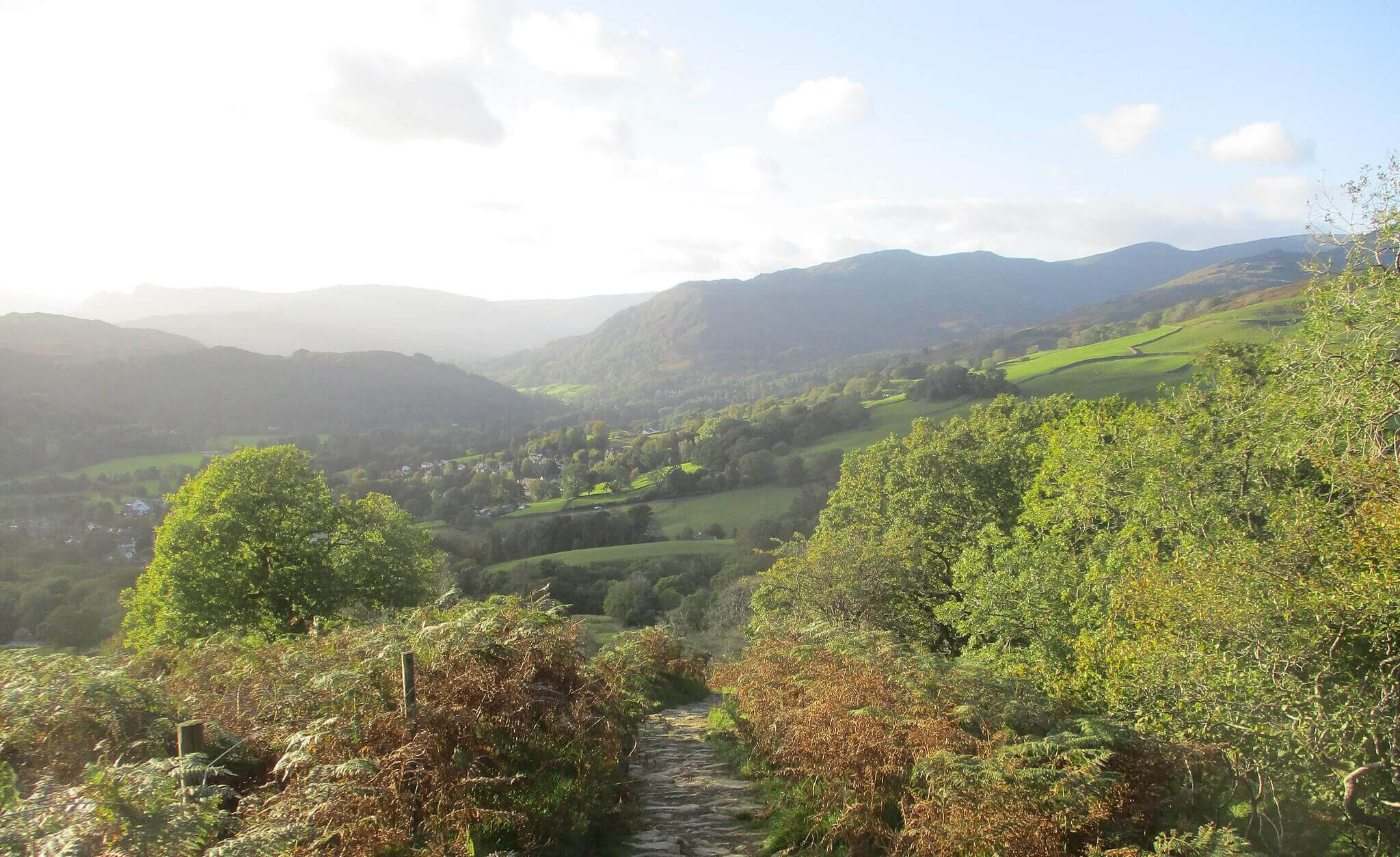
Wansfell Pike is a short, direct climb from the centre of Ambleside that delivers a disproportionate amount of scenery for its modest height. The route ascends via stone-pitched paths through Stock Ghyll Park before breaking onto open fell and climbing to the summit at 482 metres, where the views across Windermere and toward the Langdale Pikes open up on clear days. The return via Troutbeck and Skelghyll Wood adds length and variety, making this a satisfying half-day rather than a quick out-and-back.
The lower sections through the gorge carry the sound and smell of the beck long before it comes into view, and dogs tend to work the bracken edges on the open fell sections with purpose. The upper fell allows good off-lead time; leads are needed through Stock Ghyll Park where the path is enclosed, and on the Troutbeck descent where sheep graze close to the path. The stone-pitched sections can be slippery when wet, so take care on the descent. This walk suits active dogs comfortable with steep, rocky paths and owners wanting a proper fell walk within easy reach of town.
- Distance: 10.1 km (6.3 miles)
- Duration: 3 hrs
- Difficulty: Moderate
- Elevation Gain: 502 m
- Walk Type: Peak
- Route Type: Circular
- Terrain: Stone-pitched paths through gorge, open fell, grassy descent via Troutbeck, woodland return
- Off Lead Potential: Moderate
- Livestock Potential: High
- Facilities: Full range of cafés and pubs in Ambleside; The Golden Rule is one of the most dog-friendly options
Tip: Finish with a pint at The Golden Rule, one of Ambleside’s most dog-friendly pubs.
The Old Man of Coniston
Rating: 7/10 — A classic fell day with good off-lead potential on the upper mountain and a rewarding tarn stop on the descent; quarry terrain and sheep on lower approaches keep the score from going higher.
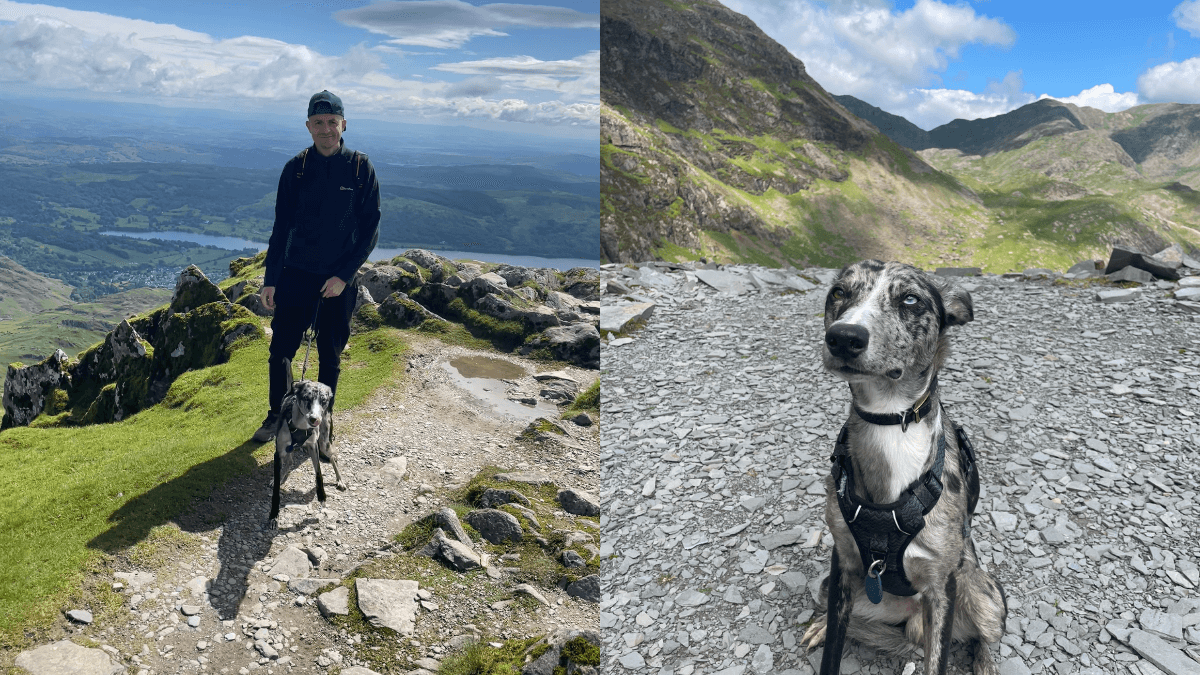
The Old Man of Coniston rises to 803m above the town of Coniston and is one of the most satisfying fell days in the southern Lakes. The standard circular route climbs steadily past the disused Coniston copper mines and old quarry workings before breaking onto open fell, reaching the summit ridge and descending via the shore of Low Water tarn. The industrial history gives the lower slopes a distinctive character: slate underfoot, rusting machinery, and the faint smell of old workings before the mountain opens up above.
Dogs get a genuinely varied experience here. The mineral smell of the quarry tracks gives way to the clean, thin air of high fell as you gain height, and Low Water tarn on the descent is a reliable and popular swimming spot. The upper fell is largely unfenced and good for off-lead walking; leads are needed on the lower quarry paths where the terrain is uneven and loose, and through the farmland approaches on the return into Coniston where sheep are present. Best suited to fit, confident dogs comfortable with sustained climbing and rough ground.
- Distance: 11.3 km (7 miles)
- Duration: 4 hrs (240 mins)
- Difficulty: Challenging
- Elevation Gain: 770 m
- Walk Type: Peak
- Route Type: Circular
- Terrain: Quarry tracks, rocky fell paths, grassy summit ridge, loose scree on upper sections
- Off Lead Potential: Moderate
- Livestock Potential: Moderate
- Facilities: Pubs and cafés in Coniston town; Sun Hotel and Black Bull both dog friendly
Tip: Low Water tarn sits in a dramatic corrie just below the summit ridge and is one of the finest wild swim spots in the Lakes for dogs, it’s worth timing the descent to pass through it.
Map of Dog Friendly Walks in The Lake District
Looking to take on a few of these hikes? Our handy map shows you where you can find each of these dog friendly walks across the Lake District. Click the pins for more information and to get directions.
The Old Man of Coniston rises to 803m above the town of Coniston and is one of the most satisfying fell days in the southern Lakes. The standard circular route climbs steadily past the disused Coniston copper mines and old quarry workings before breaking onto open fell, reaching the summit ridge and descending via the shore of Low Water tarn. The industrial history gives the lower slopes a distinctive character: slate underfoot, rusting machinery, and the faint smell of old workings before the mountain opens up above.
Dogs get a genuinely varied experience here. The mineral smell of the quarry tracks gives way to the clean, thin air of high fell as you gain height, and Low Water tarn on the descent is a reliable and popular swimming spot. The upper fell is largely unfenced and good for off-lead walking; leads are needed on the lower quarry paths where the terrain is uneven and loose, and through the farmland approaches on the return into Coniston where sheep are present. Best suited to fit, confident dogs comfortable with sustained climbing and rough ground.
- Distance: 11.3 km (7 miles)
- Duration: 4 hrs (240 mins)
- Difficulty: Challenging
- Elevation Gain: 770 m
- Walk Type: Peak
- Route Type: Circular
- Terrain: Quarry tracks, rocky fell paths, grassy summit ridge, loose scree on upper sections
- Off Lead Potential: Moderate
- Livestock Potential: Moderate
- Facilities: Pubs and cafés in Coniston town; Sun Hotel and Black Bull both dog friendly
Wansfell Pike is a short, direct climb from the centre of Ambleside that delivers a disproportionate amount of scenery for its modest height. The route ascends via stone-pitched paths through Stock Ghyll Park before breaking onto open fell and climbing to the summit at 482 metres, where the views across Windermere and toward the Langdale Pikes open up on clear days. The return via Troutbeck and Skelghyll Wood adds length and variety, making this a satisfying half-day rather than a quick out-and-back.
The lower sections through the gorge carry the sound and smell of the beck long before it comes into view, and dogs tend to work the bracken edges on the open fell sections with purpose. The upper fell allows good off-lead time; leads are needed through Stock Ghyll Park where the path is enclosed, and on the Troutbeck descent where sheep graze close to the path. The stone-pitched sections can be slippery when wet, so take care on the descent. This walk suits active dogs comfortable with steep, rocky paths and owners wanting a proper fell walk within easy reach of town.
- Distance: 10.1 km (6.3 miles)
- Duration: 3 hrs
- Difficulty: Moderate
- Elevation Gain: 502 m
- Walk Type: Peak
- Route Type: Circular
- Terrain: Stone-pitched paths through gorge, open fell, grassy descent via Troutbeck, woodland return
- Off Lead Potential: Moderate
- Livestock Potential: High
- Facilities: Full range of cafés and pubs in Ambleside; The Golden Rule is one of the most dog-friendly options
Ennerdale Water sits in the far western corner of the national park and feels noticeably different to the busier central lakes, with a quiet, remote character that makes it one of the most rewarding circuits for owners who want genuine space. The route follows the northern shore on a clear path before crossing to the rougher, less-trodden southern shore and returning along the forest track above the treeline. The lack of road access to the far end of the lake keeps crowds minimal even in peak season.
The western fells carry a particular smell of damp forestry and peaty moorland that dogs find thoroughly engaging, and the lake shore has several natural entry points for swimming. Off-lead walking is possible for much of the circuit given the remote character of the southern path; leads are needed at the car park end and near the river crossing at the eastern end of the lake where livestock sometimes graze on the riverside fields. Come prepared with everything you need as there are no facilities on route. This walk suits experienced dogs and owners who enjoy genuine solitude and wild Lakeland scenery.
- Distance: 11.5 km (7.2 miles)
- Duration: 3 hrs 30 mins
- Difficulty: Moderate
- Elevation Gain: 100 m
- Walk Type: Lake
- Route Type: Circular
- Terrain: Clear lakeside path on north shore, rougher rocky tracks on south shore, forest road return
- Off Lead Potential: High
- Livestock Potential: Low
- Facilities: No facilities on route or nearby; pack food, water and supplies before setting out
This riverside walk follows the Great Langdale Beck and the River Brathay between the village of Elterwater and Skelwith Bridge, passing through open meadow, mixed woodland and riverside flats. The route is largely flat and easy to follow, with Skelwith Force waterfall providing a dramatic highlight near the Skelwith Bridge end. The path is well-trodden and clearly signed, making it straightforward even for less experienced walkers.
The river carries a cool, mossy smell throughout, and dogs enjoy the meadow sections where the path opens out and the grass holds the scent of recent grazing. Water access along the Brathay is excellent, with shallow pools and gravel banks ideal for dogs that enjoy wading. Leads are needed through Elterwater village and near the farmland sections where the path passes close to grazing fields, with good off-lead stretches along the open riverside. This walk suits relaxed walkers and dogs that enjoy water, and works well as a half-day with a café stop built in at either end.
- Distance: 5 km (3 miles) each way; walk both ways for 10 km total
- Duration: 1 hr 15 mins one way; 2 hrs 30 mins return
- Difficulty: Easy
- Elevation Gain: 60 m
- Walk Type: Waterfall
- Route Type: Point to Point
- Terrain: Riverside paths, woodland tracks, some muddy sections after rain
- Off Lead Potential: High
- Livestock Potential: Moderate
- Facilities: Britannia Inn in Elterwater and Chester’s by the River at Skelwith Bridge are both dog friendly
Friar’s Crag is one of the most celebrated viewpoints in the Lake District, a short wooded promontory jutting into Derwentwater with views across the lake to Borrowdale and the surrounding fells. The walk from Keswick follows the lakeshore path south to the viewpoint and continues along the western shore, passing boathouse jetties, wooded bays and open grassy sections before looping back through the town. It works well as a standalone gentle walk or as an addition to a longer day based in Keswick.
The lakeshore has a distinctive smell of lake water and damp leaf litter from the overhanging oaks, and dogs that enjoy water will find plenty of access points for paddling along the way. Much of the route is off lead, particularly the open lakeshore sections; leads are needed near the busy car park at the start and in the town on the return. The ground is mostly firm and well-drained, making this a reliable choice in most weather conditions. This walk is well suited to older dogs, puppies and less mobile owners who still want a proper Lakeland experience.
- Distance: 4.5 km (2.8 miles)
- Duration: 1 hr 15 mins
- Difficulty: Easy
- Elevation Gain: 56 m
- Walk Type: Lake
- Route Type: Circular
- Terrain: Woodland paths, lakeshore tracks, some tree roots and uneven ground in wooded sections
- Off Lead Potential: High
- Livestock Potential: Low
- Facilities: Café at the Theatre by the Lake; accessible toilets at the lakeside car park; full range of cafés and pubs in Keswick
The Thirlmere approach to Helvellyn is steadier and quieter than the more famous Striding Edge route, climbing through plantation forest before breaking onto open fell and ascending via Browncove Crags to the broad summit plateau at 950 metres. The views from the top stretch across the central fells in every direction, and the summit on a clear day gives a genuine sense of the scale of the national park. This is a long, committed day out and should be treated as such.
The upper fell carries the sharp, clean smell of high altitude air and wet rock, and dogs that are fit and experienced will find the exposed ridgeline absorbing. The summit plateau allows off-lead time, but leads are essential on the lower forest tracks where the path runs close to the reservoir fence, and on any sections where other walkers are concentrated around the upper crags. Carry all water needed for the day as reliable sources become scarce above the forest line. This walk is best suited to fit, experienced dogs used to sustained effort on rough and exposed terrain.
- Distance: 11.3 km (7 miles)
- Duration: 4 hrs 30 mins
- Difficulty: Challenging
- Elevation Gain: 850 m
- Walk Type: Peak
- Route Type: Out and Back
- Terrain: Forest tracks, open fell, rocky ridge, exposed summit plateau
- Off Lead Potential: Moderate
- Livestock Potential: Low
- Facilities: Toilets at Swirls car park; no facilities on route; nearest options in Grasmere or Keswick
A stunning circular route linking two of the Lake District’s most picturesque lakes. This trail offers a mix of riverside paths, wooded trails, and open meadows, with the impressive Rydal Cave as a highlight along the way. Ideal for energetic dogs who enjoy varied terrain and the occasional paddle.
Highlights: Rydal Cave, woodland paths, lake views, riverside access.
Dog tips: Expect other walkers and some livestock near Rydal — use a lead when needed.
Distance (Miles): 6
Difficulty: Moderate
Off Lead Possibility: Some
Parking: Yes
The Buttermere circuit is one of the great low-level lake walks in the national park, looping the full perimeter of the lake beneath a ring of high fells including Fleetwith Pike, Haystacks and High Stile. The route is mostly flat, combining lakeside paths, short woodland sections and a dramatic tunnel cut through the rock at the northern end. The setting is exceptional throughout, with reflections on still mornings making the circuit feel genuinely special.
The lakeshore has a cool, slightly mineral smell after rain, and dogs tend to work the margins intently as the route switches between open water and sheltered woodland. The lake is accessible in multiple places for swimming, and most of the route allows off-lead walking. Leads are needed near the farmland at the southern end where livestock graze close to the path, and around the village of Buttermere itself. This walk suits water-loving dogs well and rewards owners with some of the finest low-level scenery in the national park.
- Distance: 7.2 km (4.5 miles)
- Duration: 2 hrs
- Difficulty: Easy
- Elevation Gain: 90 m
- Walk Type: Lake
- Route Type: Circular
- Terrain: Lakeside paths, woodland tracks, one short rocky tunnel section
- Off Lead Potential: High
- Livestock Potential: Moderate
- Facilities: Café and pub in Buttermere village; the Bridge Hotel and Fish Inn both welcome dogs
Tarn Hows is one of the most visited spots in the national park, and for good reason: the circular path around the tarn is beautiful in every season, with wooded hillsides, open water and views toward the Coniston fells making it consistently rewarding. The route is largely level, following a well-maintained gravel path that loops around the tarn with minimal elevation change. A short detour down to Tom Gill and its waterfall adds something extra if the main circuit feels too brief.
The tarn carries a clean, peaty scent that dogs find immediately engaging, and the grassy margins offer plenty of sniffing along the route. Most of the circuit allows off-lead walking, though leads are needed near the car park and in busier sections where the path narrows. Dogs must be kept on leads throughout as this is a designated Site of Special Scientific Interest; the tarn itself is accessible in several spots for paddling, and the gill below offers a quieter place to cool off. This is one of the most reliably enjoyable walks in the Lakes for dogs of any age or fitness level.
- Distance: 3.2 km (2 miles)
- Duration: 1 hr
- Difficulty: Easy
- Elevation Gain: 172 m
- Walk Type: Lake
- Route Type: Circular
- Terrain: Compacted gravel path, mostly level with one gentle rise
- Off Lead Potential: Low
- Livestock Potential: Moderate
- Facilities: Small café kiosk in the car park in season; accessible toilets at the trailhead
Loughrigg Fell is a compact but richly varied walk that punches well above its height, with the summit at just 335 metres delivering panoramic views across Windermere, Grasmere and Rydal Water in three directions. The route from Ambleside climbs steadily through bracken and open fell, passing Loughrigg Tarn before reaching the rocky summit plateau. The descent can be varied to take in the Loughrigg Terrace path above Grasmere, adding a longer and more scenic return.
The bracken carries a sharp green scent in summer and a rich, earthy smell in autumn, and the tarn provides a reliable swimming spot that most dogs make the most of on the way round. The fell is largely unfenced and allows good off-lead walking across the upper sections; leads are needed on the lower approaches from Ambleside where the path passes through enclosed farmland. The ground can be boggy in places after wet weather, particularly around the tarn margins. This walk suits dogs that enjoy open fell and water, and works well as a half-day when time is limited but proper views are non-negotiable.
- Distance: 10.5 km (6.5 miles)
- Duration: 3 hrs
- Difficulty: Moderate
- Elevation Gain: 430 m
- Walk Type: Peak
- Route Type: Circular
- Terrain: Fell paths, bracken-covered slopes, some boggy ground, rocky summit
- Off Lead Potential: High
- Livestock Potential: Moderate
- Facilities: Full range of cafés and pubs in Ambleside at the start and finish
Dog Friendliness: 7/10 — Open fell with good off-lead freedom, but limited water on the ridge and sheep on the lower slopes keep the score from going higher.
Cat Bells is one of the most iconic short fell walks in the Lake District, a steep-sided ridge rising above the western shore of Derwentwater with views that open up almost immediately. The route climbs from Hawse End, follows the ridge to the summit at 451 metres, and can be retraced for a straightforward out-and-back or extended via Manesty for a longer loop. A few rocky sections and light scrambles near the top add interest without making the walk technically demanding.
Dogs find the open fell here absorbing, with the sharp mineral scent of heather and sun-warmed rock carrying across the ridge on most days. The upper sections are largely off lead, though leads are needed on the lower slopes where sheep graze the unfenced fell. There is no reliable water on the ridge itself, so carry enough for the climb; Derwentwater is accessible at the start and finish for a cool-down. This walk suits active, confident dogs comfortable with rocky terrain and open exposure.
- Distance: 5.6 km (3.5 miles)
- Duration: 2 hrs
- Difficulty: Moderate
- Elevation Gain: 300 m
- Walk Type: Peak
- Route Type: Out and Back
- Terrain: Grassy lower slopes, rocky ridge, short scramble sections near summit
- Off Lead Potential: Moderate
- Livestock Potential: Moderate
- Facilities: No facilities on route; cafés and pubs in Keswick nearby
Explore more dog friendly locations, including hikes, campsites and road trips on our Wildpack Map, our curated and ever growing map of locations to explore with your dog.
Tips for Walking in the Lake District with a Dog
- Livestock and lambing: Sheep roam unfenced fell across much of the national park. Keep dogs on leads wherever livestock are present, and be especially cautious between March and May when ewes are lambing. A dog that disturbs sheep during lambing can cause serious harm, and farmers have the legal right to shoot dogs worrying livestock.
- Tick awareness: The Lake District has a significant tick population, particularly in bracken and long grass from spring through autumn. Check your dog thoroughly after every walk, paying attention to ears, groin and between the toes. Consider a vet-recommended tick prevention treatment if you’re visiting regularly.
- Water on high routes: Natural water sources become unreliable above the forest line on fell routes. Carry enough for both you and your dog on any walk above 400 metres, and don’t assume streams shown on maps will be running in dry summer conditions.
- Weather changes fast: The Lake District receives some of the highest rainfall in England and conditions on the fells can shift from clear to misty and wet within the hour. Carry waterproofs for yourself and check the fell forecast on the Met Office website before committing to any high-level route.
- Blue-green algae: Several lakes in the national park have experienced blue-green algae blooms in recent years, particularly in late summer. Check the current situation before letting your dog swim, as ingestion can be fatal. Windermere, Ullswater and Bassenthwaite have all been affected at various times.
What’s Nearby?
If you’re exploring the Lake District with your dog, there are plenty of other great adventures nearby that pair perfectly with these hikes:
- Dog friendly campsites in the Lake District – Ideal if you’re planning a multi-day stay or touring the area with a campervan.
- The Lake District Loop Road Trip – Living the vanlife or taking a longer trip? Why not try this beautiful road trip and see a lot of what the Lakes has to offer.
- Dog friendly beaches in Cumbria – From the dramatic cliffs of St Bees to the wide, windswept sands of Silecroft and Haverigg.
- Dog friendly walks in the Yorkshire Dales – Rolling hills, limestone scenery and quieter valleys just east of the Lakes.
- Dog friendly walks in the Peak District – A great option if you’re travelling south, with rugged moorland, edges and reservoirs to explore.
- Dog friendly walks in Lancashire – Expect big skies, steady waterside miles and properly rewarding hill routes that feel spacious without the crowds