
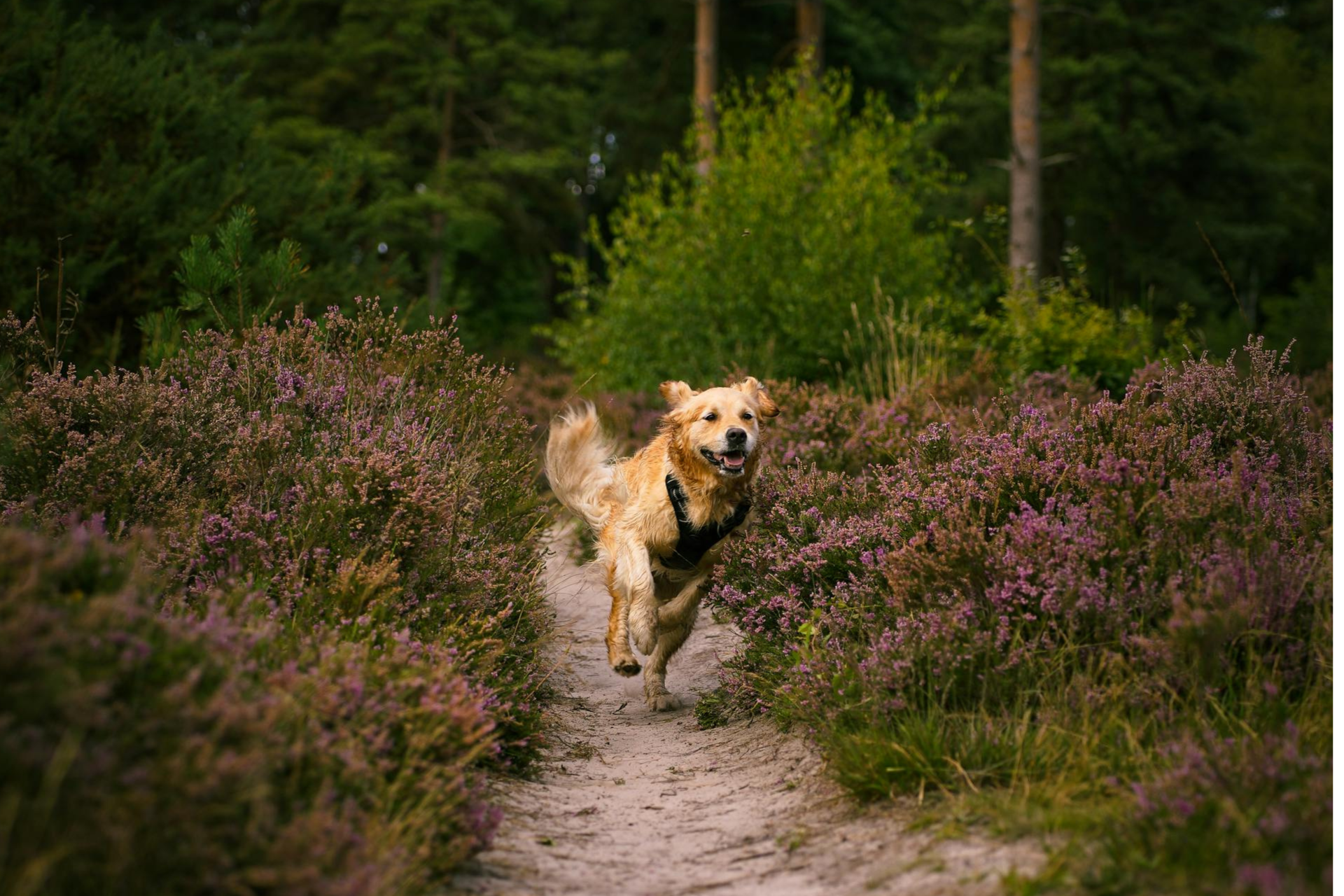

Berkshire is a county of pleasing contrasts, stretching from the broad Thames floodplain in the north through the commuter towns of the Kennet Valley to the open chalk ridgeline of the North Wessex Downs in the south. The landscapes shift quickly here: one walk might take you across wide chalk grassland with views into three counties, and the next puts you under ancient oak canopy in what remains of one of England’s oldest hunting forests. That variety means Berkshire rewards regular visitors rather than just passing through.
For dogs, the county offers an unusually diverse set of experiences. The Thames Path brings long stretches of riverside walking with regular water access; the Ridgeway corridor provides wide, wind-scoured chalk downland; and Windsor Great Park and Swinley Forest offer vast expanses of woodland where dogs can move freely through varied terrain. There are some livestock considerations on the downs and seasonal restrictions in parts of the royal estates, but the county overall is generous with off-lead opportunity, and the walking infrastructure is reliably well-maintained.
The Ridgeway at Streatley and the River Thames
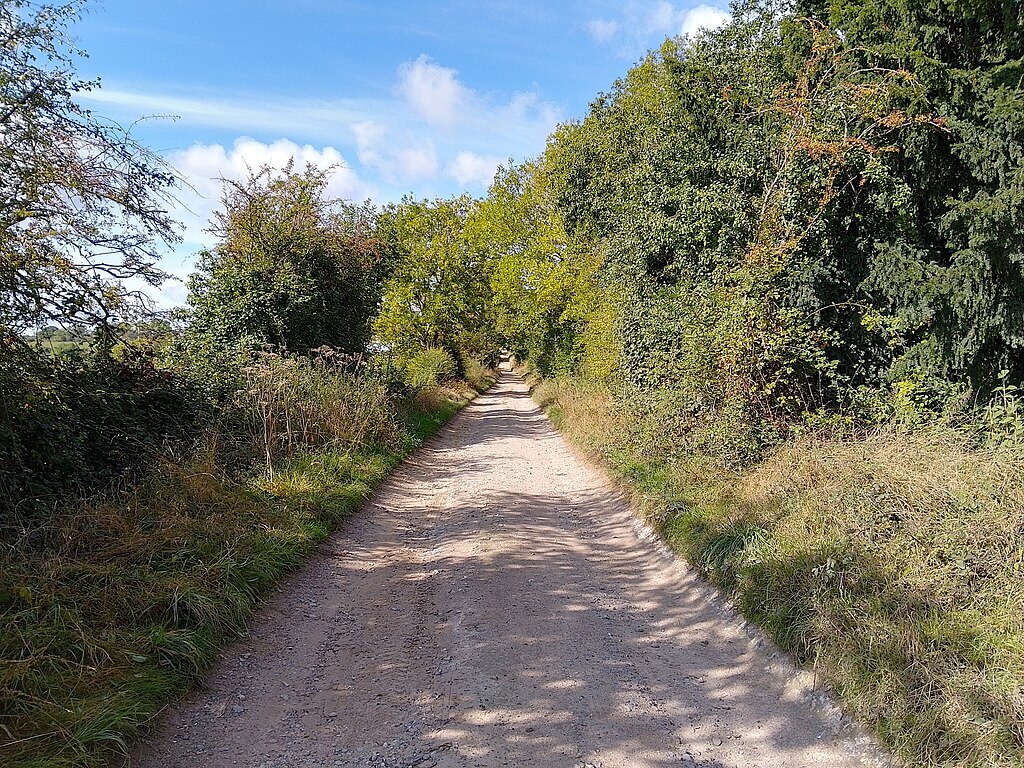

The walk at Streatley makes excellent use of two of Berkshire’s defining landscape features within a single outing. Starting from the village, the route climbs quickly onto the chalk ridge above the Thames, following the ancient Ridgeway track west along an elevated spine of open downland before looping back down to the river and returning through water meadows and riverside path. The total circuit covers around 9.7 km (6 miles) and the elevation gain is steady but never severe, rewarding the climb with long views south into Oxfordshire and north over the Goring Gap.
Dogs find the chalk upland section rich with rabbit and fox scent baked into dry, short-cropped turf, and the surface underfoot is firm and well-drained for most of the year. The descent back to the Thames brings a complete change of sensory register: cooler air, the damp smell of waterside vegetation, and easy access to the river at several points for a drink or a swim. Sheep graze parts of the downland so leads are needed on the ridge section, but the riverside return allows off-lead running through open meadow where livestock are not typically present.
- Distance: 9.7 km (6 miles)
- Difficulty: Moderate
- Parking: Streatley village car park, RG8 9JJ
- Facilities: Pub and café in Streatley; toilets in village
- Terrain: Chalk track on ridge (firm, can be chalky and slippery after rain), grass and riverside path on return
- Best for: Dogs who enjoy mixed terrain and water access; confident walkers
Windsor Great Park: The Long Walk and Deer Park
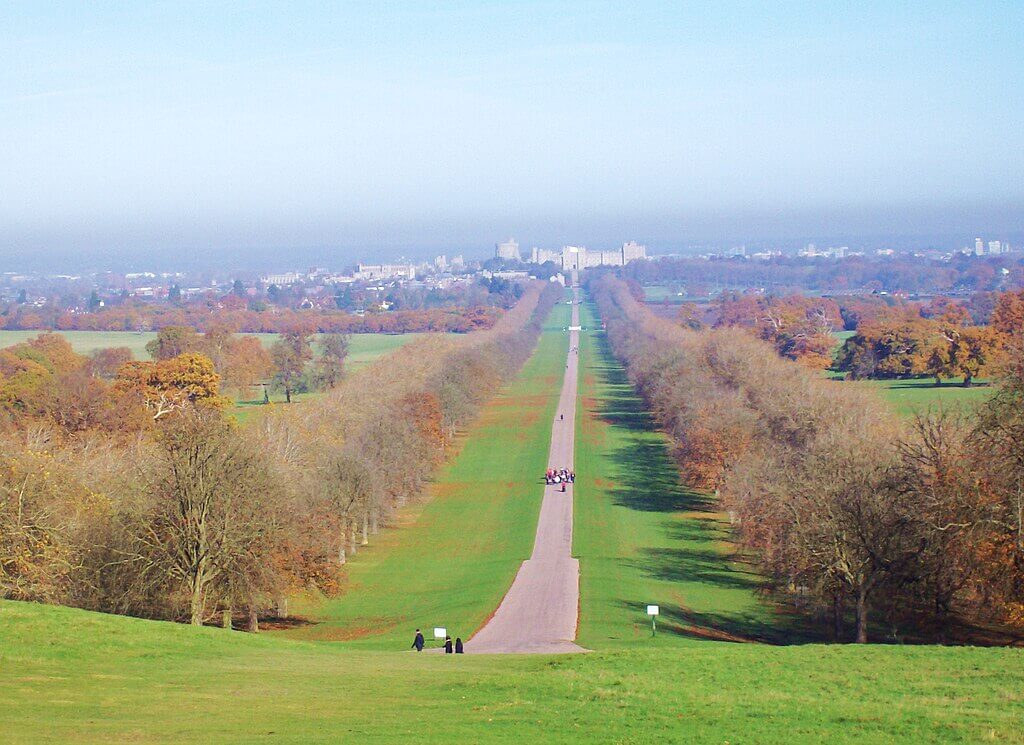

Windsor Great Park is one of the finest open walking landscapes in the south of England, and its scale alone makes it worth the visit. The Long Walk, a dead-straight avenue of plane and chestnut trees stretching 4.8 km (3 miles) from the Castle to the Copper Horse statue on Snow Hill, is the most famous route, but the park offers much more: woodland paths, meadow tracks, and the shores of Virginia Water lake if you extend south. A circuit from the Bishops Gate car park taking in the Long Walk and the deer park grassland comes to around 10.5 km (6.5 miles).
The park holds a large herd of red and fallow deer, and this shapes the rules significantly: dogs must be kept on leads throughout Windsor Great Park at all times to protect the deer, which can be encountered anywhere across the grassland at any season. Despite this restriction, the park remains a superb dog walk. The grass underfoot is soft and well-maintained, the ancient oaks and sweet chestnuts carry deep woodland scent, and the sheer openness of the landscape means even lead-walking dogs get a genuine sense of space. The Long Walk surface is graded gravel, easy on older dogs and those with joint issues.
- Distance: 10.5 km (6.5 miles)
- Difficulty: Easy
- Parking: Bishops Gate car park, Windsor Great Park, SL4 2HP
- Facilities: Savill Garden café nearby; toilets at main car parks
- Terrain: Graded gravel (Long Walk), firm grassland, some woodland path
- Best for: Dogs of all ages including older or less mobile dogs; all leads required throughout
Swinley Forest, Bracknell
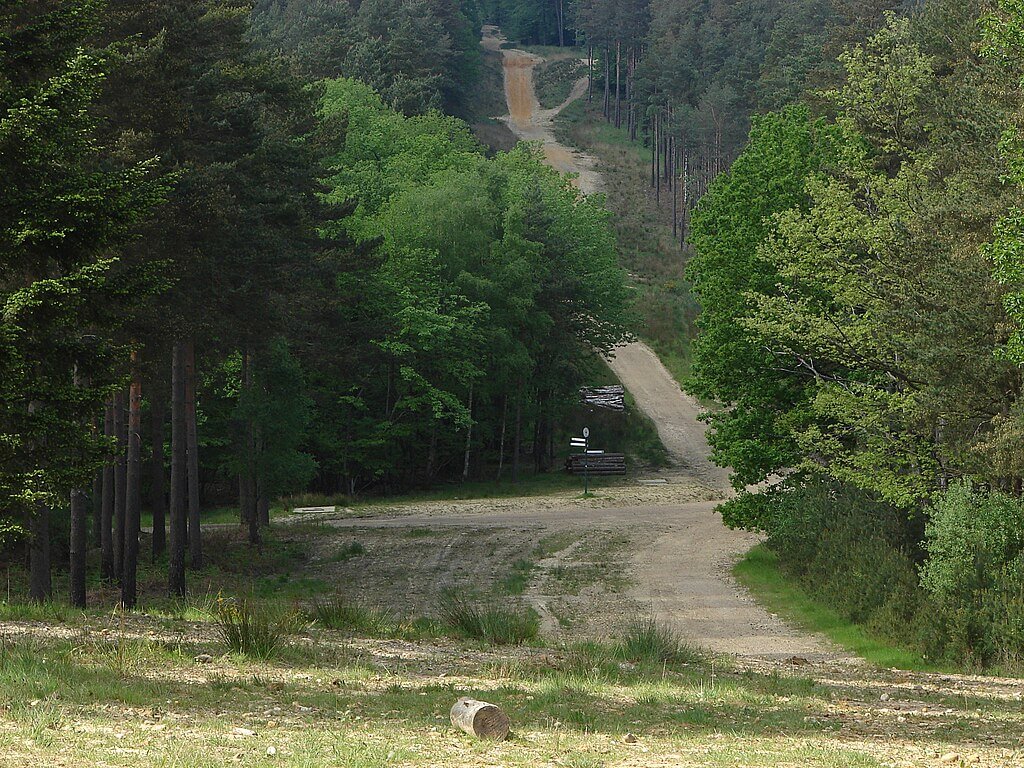

Swinley Forest is a large Crown Estate woodland of Scots pine, birch, and heather covering around 1,000 hectares to the south of Bracknell, and it is one of Berkshire’s most dog-friendly destinations. The network of waymarked trails and open forest tracks means you can tailor the walk easily, with a comfortable circuit of around 7.5 km (4.7 miles) available from the Look Out car park. The terrain is varied within a short distance: sandy pine forest floor, open heathland glades, and in places dense birch scrub that dogs find endlessly interesting.
The dry, sandy soil carries scent well and the forest holds roe deer, foxes, and abundant birdlife, giving dogs a consistently engaged nose for the full walk. The surface is soft underfoot year-round, making this particularly kind to dogs with sensitive pads or older joints. Dogs can run off-lead through most of the forest, though the open heathland sections are managed for ground-nesting birds between April and August, when leads are asked for on heathland areas specifically. The pine canopy gives the air a resinous, clean quality that is especially pleasant on warm days.
- Distance: 7.5 km (4.7 miles)
- Difficulty: Easy
- Parking: The Look Out car park, Nine Mile Ride, Bracknell, RG12 7QW (pay and display)
- Facilities: Café and toilets at The Look Out visitor centre
- Terrain: Sandy forest track, pine needle path, some gravel; mostly flat
- Best for: Dogs who love woodland and scent work; families with younger or older dogs
Snelsmore Common, Newbury
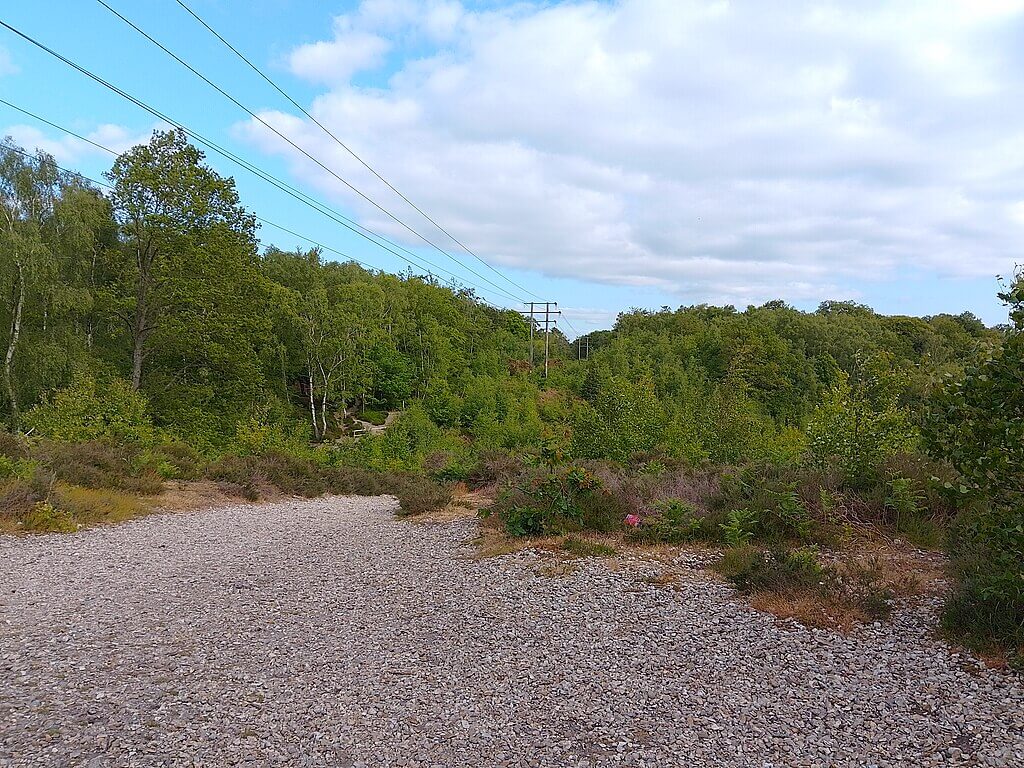

Snelsmore Common is a Berkshire Wildlife Trust nature reserve on the edge of Newbury: a compact but beautifully varied heathland and bog complex that offers a short but genuinely rewarding walk of around 4.5 km (2.8 miles). The reserve combines open wet heath, dry heathland, birch woodland, and small bog pools, with a circular path that loops the entire site. It is an underrated Berkshire gem that sits well under the radar compared to the county’s more famous destinations.
For dogs, the common provides an unusually layered sensory environment. The wet heath carries the rich, ferrous smell of peat and sphagnum, quite different from the chalk and pine scents of other Berkshire walks, and dogs investigate the heathland scrub with focused attention for the full circuit. The bog pools offer drinking water and some dogs wade in, though the peaty water stains pale coats. The surface is boardwalked across the wettest sections, keeping paws off the most sensitive vegetation, and the dry heathland paths are firm sandy tracks. Dogs can be off-lead for most of the circuit, but leads are needed near the managed heath where ground-nesting birds are present in spring.
- Distance: 4.5 km (2.8 miles)
- Difficulty: Easy
- Parking: Snelsmore Common car park, off B4494 north of Newbury, RG14 7QE
- Facilities: None on site
- Terrain: Boardwalk over boggy sections, sandy heathland track, some muddy woodland path in winter
- Best for: Dogs who enjoy varied scent environments; shorter walks; nature-focused walkers
Hamstead Marshall and the Kennet Valley
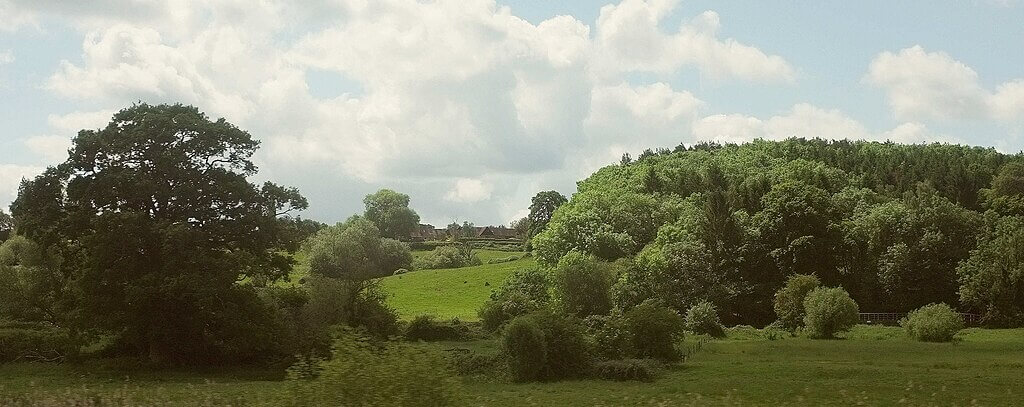
The walk from Hamstead Marshall through the Kennet Valley is a quiet, pastoral outing through one of Berkshire’s lesser-visited river corridors. The route follows green lanes and field paths north from the village, drops into the Kennet floodplain, picks up the towpath beside the Kennet and Avon Canal for a flat middle section, then returns via farmland and hedgerow tracks. The full circuit is around 8.2 km (5.1 miles) and the terrain is predominantly gentle, with no significant climbs.
The canal towpath section gives dogs a reliable flat surface and consistent access to water along the bank, and the smell of the Kennet here is rich with waterweed, mud, and the occasional duck or coot that sends a nose skyward. The field sections carry seasonal scent from pheasant and rabbit, and the green lane return has good hedgerow cover that dogs enjoy investigating. Livestock are present in several of the fields along the route, so leads are needed when crossing paddocks, but the canal section and green lane return allow off-lead walking in open, clear ground.
- Distance: 8.2 km (5.1 miles)
- Difficulty: Easy to Moderate
- Parking: Roadside parking in Hamstead Marshall village, RG20 0HU
- Facilities: None on route; nearest pub in Kintbury
- Terrain: Canal towpath (gravel and compressed earth), field paths (can be muddy in winter), green lane
- Best for: Dogs who enjoy water access and varied farmland smells; a quieter, less-frequented walk
Walbury Hill and Combe Gibbet
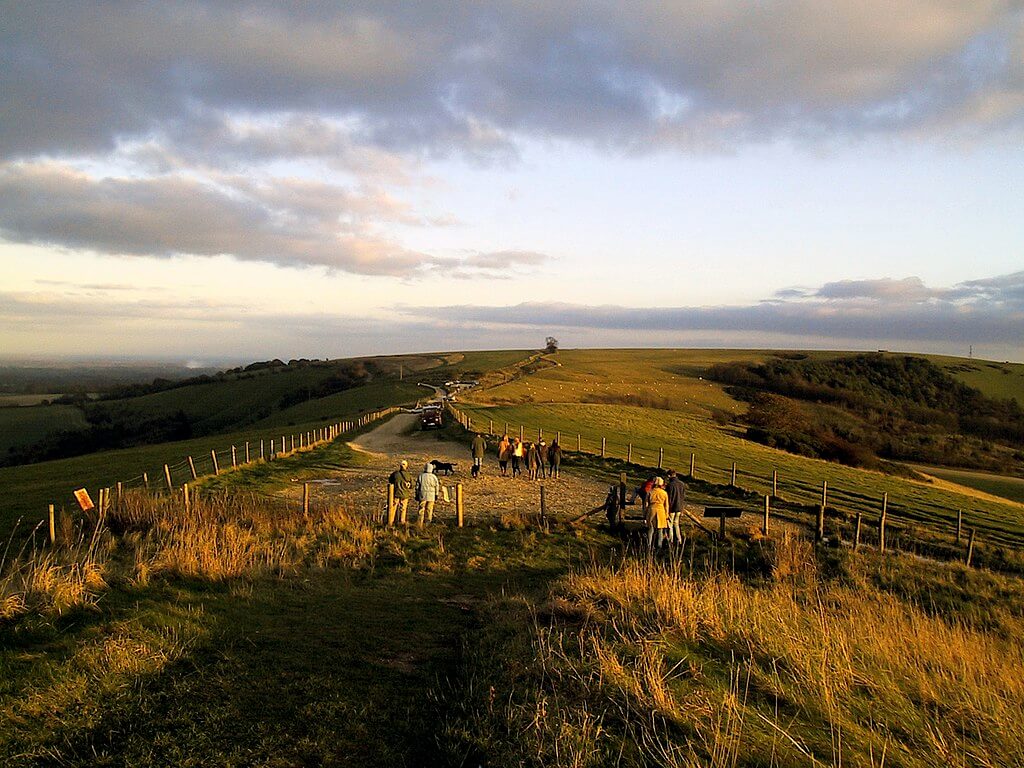
Walbury Hill, at 297 metres, is the highest point in Berkshire and the highest chalk hill in England, and the walk from Combe village to the summit and along the ridge towards the famous Combe Gibbet is one of the best upland circuits the county offers. The route covers around 10.2 km (6.3 miles) and involves a sustained climb onto the ridge before a long, exhilarating traverse along the open chalk escarpment, with views stretching south into Hampshire and west into Wiltshire on clear days.
The ridge top here is wide, firm, and almost entirely open: closely grazed chalk turf with a dry mineral smell, rabbit warrens in the banks, and the constant movement of skylarks above. Dogs get a genuine sense of space up here that is hard to match anywhere else in the county, and the going underfoot is good except in prolonged wet weather when the clay-with-flints cap can become heavy. Sheep graze below the ridge line so leads are needed on the approach and descent from Combe, but the ridge traverse itself is generally livestock-free and dogs can run freely along the top. This is a full-day commitment for dog and owner.
- Distance: 10.2 km (6.3 miles)
- Difficulty: Challenging
- Parking: Combe village, near the church, RG17 9SD
- Facilities: None on route
- Terrain: Chalk and flint track on ridge (firm in dry weather, heavy in wet), grass field paths on approach
- Best for: Fit dogs and confident walkers; best in late spring and summer; avoid after prolonged rain
Pangbourne Meadows and the Thames Path
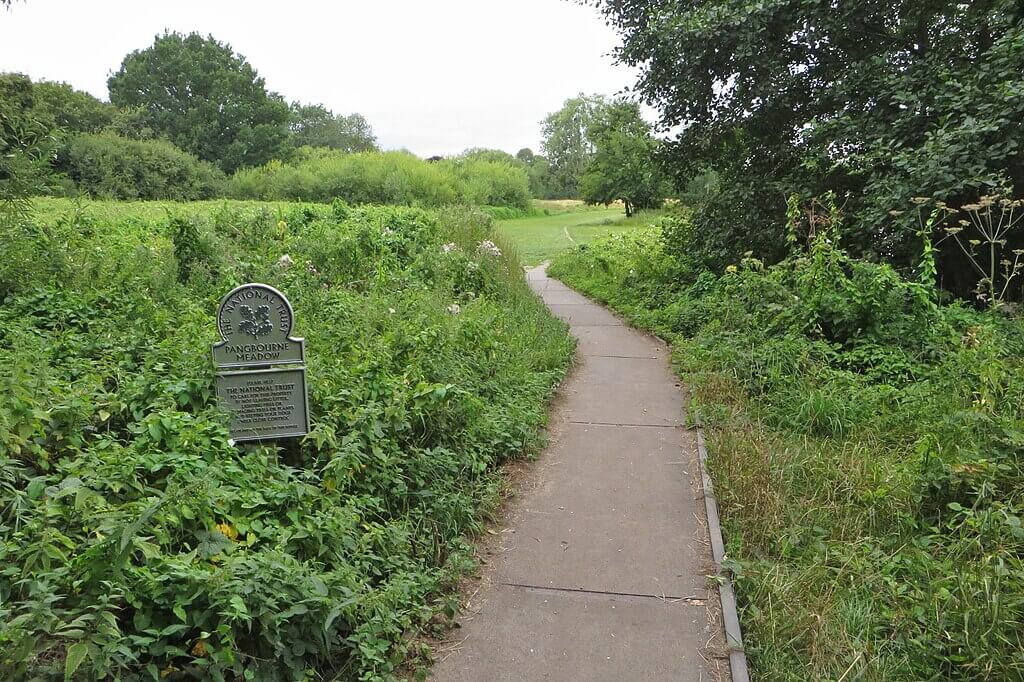

The walk from Pangbourne along the Thames Path is a relaxed, largely flat riverside outing that works well in almost any season and for almost any dog. From the village, the route joins the Thames Path heading upstream through Pangbourne Meadows, a stretch of open riverside grassland that gives dogs room to move, before continuing through the Hardwick Estate to reach Whitchurch-on-Thames. The return follows a slightly inland route through farmland, making a circuit of around 7.8 km (4.9 miles).
The Thames is wide and accessible throughout this section, and most dogs with any interest in water will want to make the most of the gently shelving banks. The meadow grass carries strong rabbit and goose scent, and the transition between open riverside and the light woodland of the Hardwick section brings a different set of smells that keeps dogs engaged across the full walk. The meadow sections allow off-lead running freely, though the farmland return requires leads where livestock are encountered. This is a reliable, well-loved walk with an excellent pub reward at both ends.
- Distance: 7.8 km (4.9 miles)
- Difficulty: Easy
- Parking: Pangbourne village car park, RG8 7DY
- Facilities: Multiple pubs and cafés in Pangbourne; toilets in village
- Terrain: Flat riverside grass, gravel Thames Path, field paths (some mud in winter)
- Best for: All dogs including older or less mobile dogs; riverside-loving dogs; year-round walking
Caesar’s Camp and Sandhurst Heath
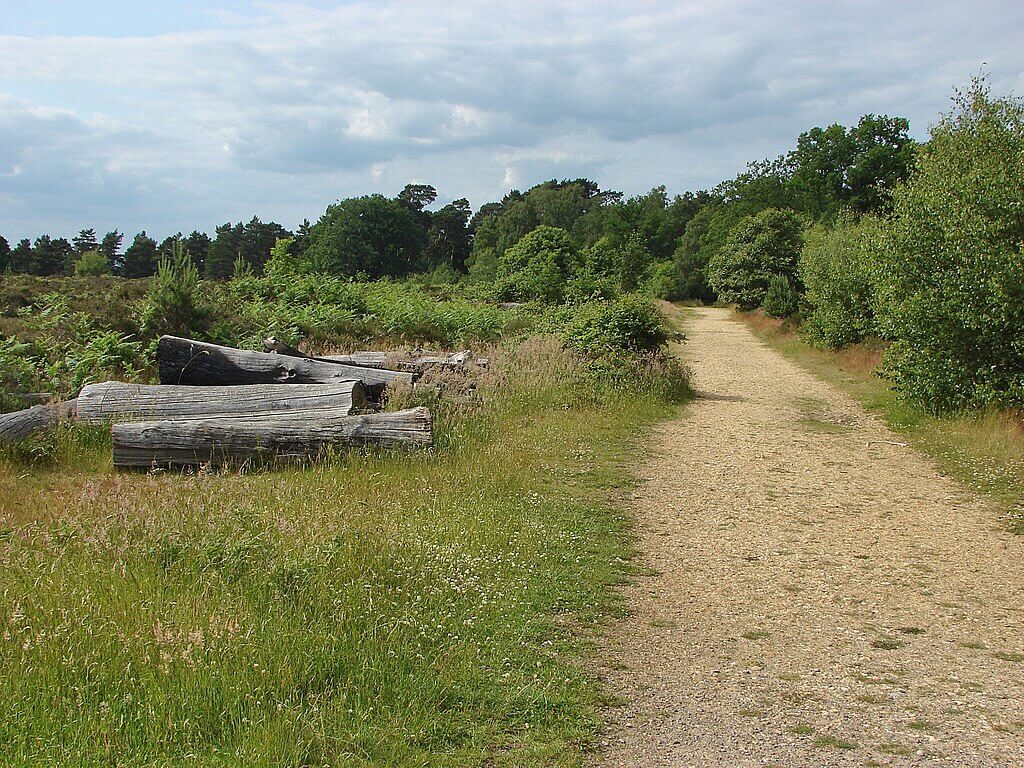

Caesar’s Camp is an Iron Age hillfort on the Surrey border east of Sandhurst, and the circuit that takes in the fort earthworks, the surrounding heathland, and the Edgbarrow Wood section is one of Berkshire’s more atmospheric shorter walks. The route covers around 6.1 km (3.8 miles) through a landscape of lowland heath, mixed woodland, and ancient earthwork ridges, all on Crown Estate land managed jointly with the adjoining Surrey commons.
The heathland here is dry and sandy, with low gorse and heather giving a warm, resinous smell on sunny days, and the higher ground of the hillfort ramparts provides views south over a surprisingly undeveloped landscape. Dogs run well on the soft sandy tracks, and the woodland sections between heath glades carry the complex smells of old deciduous and conifer mix that serious sniffer dogs find deeply satisfying. Much of the walk is off-lead accessible, though the heathland sections are managed for ground-nesting birds and dogs should be kept close to the track between March and August. The Caesar’s Camp earthworks themselves are open and grassy and dogs enjoy working along the old bank lines.
- Distance: 6.1 km (3.8 miles)
- Difficulty: Moderate
- Parking: Sandhurst Memorial Park car park, RG45 6NZ, or Edgbarrow Wood car park, RG45 6PP
- Facilities: None on route; cafés in Sandhurst town
- Terrain: Sandy heathland track, woodland path, some grass; generally dry year-round
- Best for: Dogs who enjoy heathland and woodland; those with good recall for bird-nesting season
Bucklebury Common
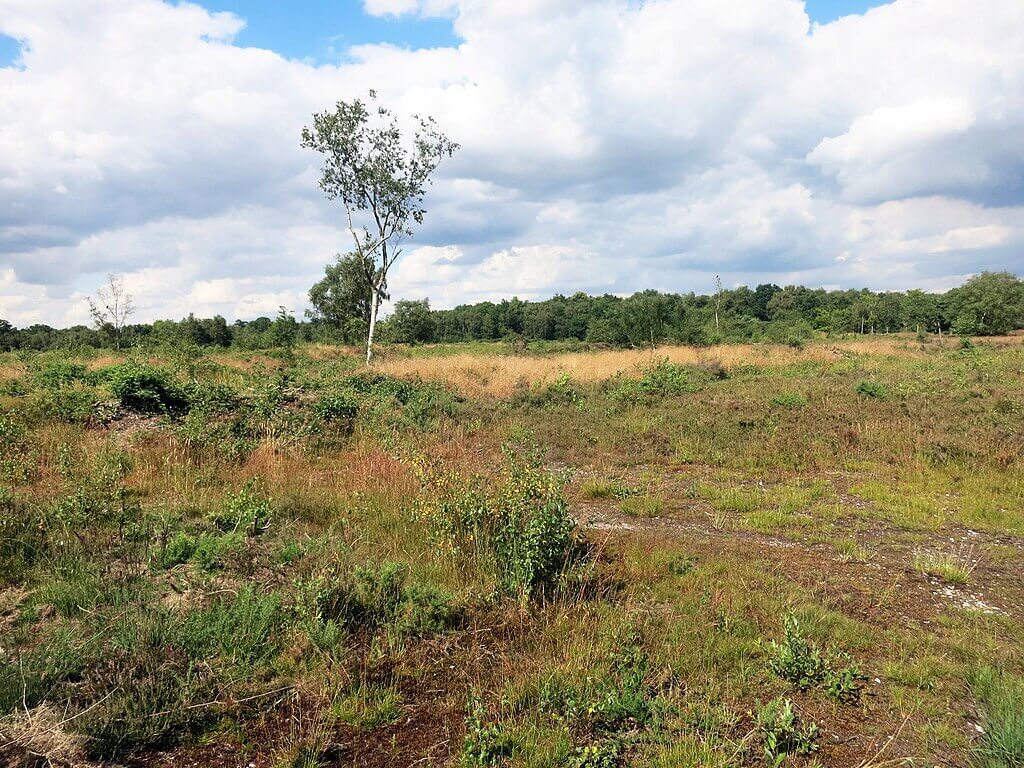

Bucklebury Common is a large area of ancient common land between Newbury and Reading, covered in oak and birch woodland with a network of paths and rides that allows a flexible walk of around 6.8 km (4.2 miles) without ever crossing a road. The common has been managed as open woodland for centuries, and the sense of age in the old oaks is palpable: wide, spreading trees with rough-barked bases that small dogs treat as olfactory archives of every creature that has passed through. The paths are sandy and relatively flat throughout.
The woodland floor is thick with bluebell and bracken cover that varies the sensory environment through the seasons: in spring the whole common smells of bluebell and new leaf growth; in autumn the decaying oak leaf smells rich and earthy underfoot. Dogs can run freely off-lead across most of the common, which has no formal road crossings, and the absence of livestock makes this a relaxed outing for dogs who need space without complications. Water is limited on route so bring enough for the walk, particularly in summer. This is an excellent choice when conditions elsewhere are too muddy or exposed.
- Distance: 6.8 km (4.2 miles)
- Difficulty: Easy
- Parking: Bucklebury Common car park, RG7 6QR
- Facilities: None on site; pub in Chapel Row nearby
- Terrain: Sandy woodland track and grassy rides; good year-round drainage
- Best for: Dogs needing off-lead freedom without livestock pressure; woodland-loving walkers
Thatcham Nature Discovery Centre and Reed Bed
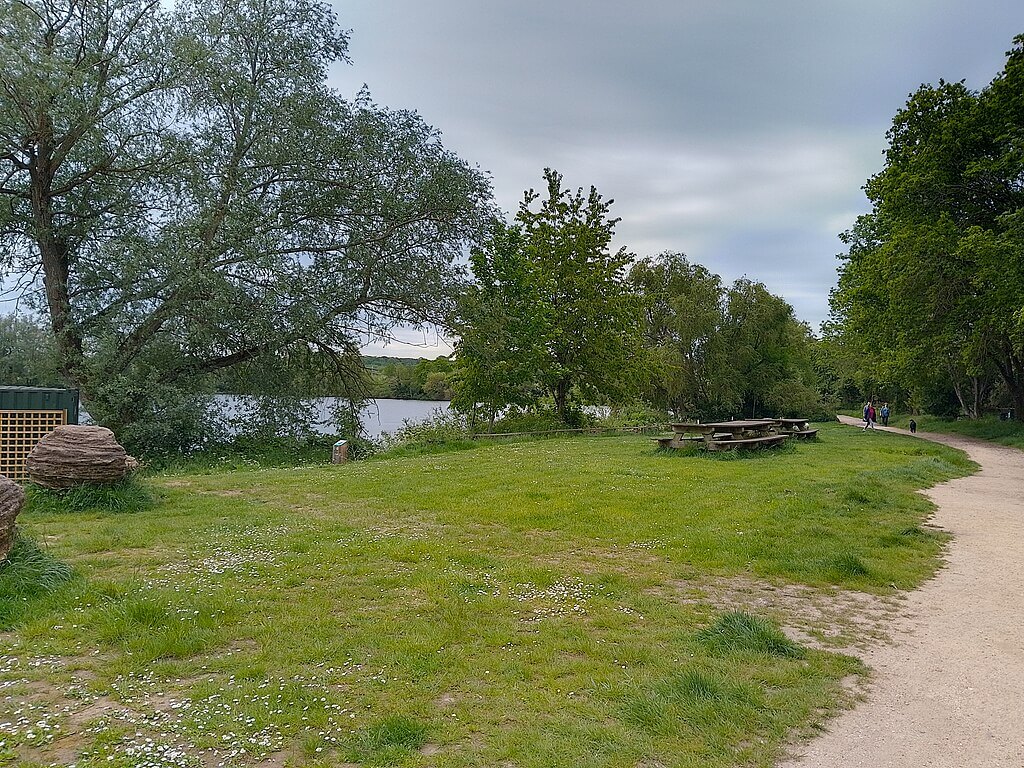

The walk around Thatcham Moors and the reed bed nature reserve managed by the Berks, Bucks and Oxon Wildlife Trust (BBOWT) offers something genuinely different from most Berkshire walks: a low, wetland landscape of open water, reedbed, scrub, and marsh beside the River Kennet. The circuit from the Nature Discovery Centre covers around 5.5 km (3.4 miles) on well-maintained paths and boardwalks, with the Discovery Centre providing a clear start and end point.
Dogs find the wetland environment richly stimulating: the smell of standing water, mud, and reed bed is distinct and complex, quite unlike the chalk downland or woodland of other Berkshire walks, and the reedbeds hold large populations of waterfowl including reed warbler, bearded tit, and Cetti’s warbler that keep dogs’ noses and ears busy throughout. Leads are required around the sensitive reserve areas to protect ground-nesting birds and the wetland margin habitat, but the broader grassland sections of the circuit allow some off-lead time. Waterproof footwear is advisable year-round; the boardwalk keeps the worst underfoot, but approaches can be soft.
- Distance: 5.5 km (3.4 miles)
- Difficulty: Easy
- Parking: Thatcham Nature Discovery Centre, Lower Way, Thatcham, RG19 3FU
- Facilities: Café and toilets at the Nature Discovery Centre (seasonal hours)
- Terrain: Boardwalk, compressed gravel path, some grass; flat throughout
- Best for: Dogs who enjoy water-adjacent environments; families; those wanting a shorter accessible walk
Map of Dog Friendly Walks in Berkshire
The ten walks in this guide are spread across Berkshire from the Thames riverside corridor in the north through the Kennet Valley towns of the centre to the high chalk of the North Wessex Downs in the south. Use the map below to identify walks closest to you, and note that the southern walks around Walbury Hill and Streatley pair well with a night away.
The walk around Thatcham Moors and the BBOWT wetland reserve covers around 5.5 km (3.4 miles) on well-maintained paths and boardwalks beside the River Kennet, offering something genuinely different from most Berkshire walking. The circuit combines open water, reedbed, scrub, and marsh in a low, flat landscape that has a distinct atmosphere quite unlike the chalk downs or woodland walks elsewhere in the county. The Nature Discovery Centre provides café and toilets and makes a clear, easy start and end point.
Dogs find the wetland environment richly stimulating: the smell of standing water, mud, and reedbed is complex and distinct, and the reedbeds hold large populations of waterfowl that keep noses and ears busy throughout the walk. Leads are required around the sensitive reserve areas to protect ground-nesting birds and wetland margin habitat, but the broader grassland sections allow some off-lead time. Waterproof footwear is advisable year-round, as approaches to the boardwalk can be soft even in dry spells.
- Distance: 5.5 km (3.4 miles)
- Difficulty: Easy
- Parking: Thatcham Nature Discovery Centre, Lower Way, Thatcham, RG19 3FU
- Facilities: Café and toilets at the Nature Discovery Centre (seasonal hours)
- Terrain: Boardwalk, compressed gravel path, some grass; flat throughout
- Best for: Dogs who enjoy water-adjacent environments; families; those wanting a shorter accessible walk
Bucklebury Common is a large area of ancient common land between Newbury and Reading, covered in oak and birch woodland with a network of paths and rides allowing a flexible circuit of around 6.8 km (4.2 miles) without ever crossing a road. The common has been managed as open woodland for centuries and the sense of age in the old oaks is palpable: wide, spreading trees with rough-barked bases and a woodland floor that varies through the seasons from bluebell and new growth in spring to deep, rich oak leaf in autumn. Sandy paths and good year-round drainage make this a reliable destination regardless of recent weather.
Dogs can run freely off-lead across most of the common, which has no formal road crossings and no livestock pressure, making this a relaxed outing for dogs that need space without complications. The woodland floor holds excellent scent year-round, and the transition between open rides and denser oakwood creates a varied environment that keeps dogs engaged throughout the walk. Water is limited on route so bring enough for the distance, particularly in summer.
- Distance: 6.8 km (4.2 miles)
- Difficulty: Easy
- Parking: Bucklebury Common car park, RG7 6QR
- Facilities: None on site; pub in Chapel Row nearby
- Terrain: Sandy woodland track and grassy rides; good year-round drainage
- Best for: Dogs needing off-lead freedom without livestock pressure; woodland-loving walkers
Caesar’s Camp is an Iron Age hillfort on the Surrey border east of Sandhurst, and the circuit taking in the fort earthworks, surrounding heathland, and Edgbarrow Wood section covers around 6.1 km (3.8 miles) through a landscape of lowland heath, mixed woodland, and ancient earthwork ridges on Crown Estate land. The heathland here is dry and sandy, with low gorse and heather giving a warm resinous smell on sunny days, and the higher ground of the hillfort ramparts provides views south over a surprisingly undeveloped landscape. Dry sandy tracks make this one of Berkshire’s most reliable year-round walks.
Dogs run well on the soft sandy surface and the woodland sections between heath glades carry the complex smells of old deciduous and conifer mix that serious sniffer dogs find deeply satisfying. Much of the walk is accessible off-lead, though the heathland sections are managed for ground-nesting birds and dogs should be kept close to the track between March and August to protect nesting skylarks and nightjars. The Caesar’s Camp earthworks themselves are open and grassy, and dogs enjoy working along the old bank lines.
- Distance: 6.1 km (3.8 miles)
- Difficulty: Moderate
- Parking: Sandhurst Memorial Park car park, RG45 6NZ
- Facilities: None on route; cafés in Sandhurst town
- Terrain: Sandy heathland track, woodland path, some grass; generally dry year-round
- Best for: Dogs who enjoy heathland and woodland; those with good recall for bird-nesting season
The walk from Pangbourne along the Thames Path is a relaxed, largely flat riverside circuit that works well in almost any season and for almost any dog. From the village, the route follows the Thames Path upstream through Pangbourne Meadows — open riverside grassland giving dogs room to move — before continuing through the Hardwick Estate to Whitchurch-on-Thames and returning via farmland paths for a circuit of around 7.8 km (4.9 miles). There are good pub options at both ends and the walk is reliably well-maintained year-round.
The Thames is wide and accessible throughout this section, with gently shelving banks that most water-loving dogs will make the most of. The meadow grass carries strong rabbit and goose scent, and the transition from open riverside into the lighter woodland of the Hardwick section brings a different set of smells that keeps dogs engaged across the full walk. The meadow sections allow off-lead running freely, though the farmland return requires leads where livestock are encountered in the fields.
- Distance: 7.8 km (4.9 miles)
- Difficulty: Easy
- Parking: Pangbourne village car park, RG8 7DY
- Facilities: Multiple pubs and cafés in Pangbourne; toilets in village
- Terrain: Flat riverside grass, gravel Thames Path, field paths (some mud in winter)
- Best for: All dogs including older or less mobile dogs; riverside-loving dogs; year-round walking
Walbury Hill, at 297 metres the highest chalk hill in England, is the focal point of one of Berkshire’s finest upland circuits, starting from Combe village and running to around 10.2 km (6.3 miles) along the ridge towards the landmark Combe Gibbet. The route involves a sustained climb onto the chalk escarpment before a long traverse along the open ridge, with views stretching south into Hampshire and west into Wiltshire on clear days. This is a full-commitment walk best tackled in dry conditions and good weather.
Dogs get a genuine sense of space on the ridge top that is hard to match anywhere else in the county: closely grazed chalk turf with a dry mineral smell, rabbit warrens in the banks, and the constant movement of skylarks overhead. Sheep graze below the ridge line so leads are needed on the approach and descent from Combe, but the ridge traverse itself is generally livestock-free and dogs can run freely along the top. The clay-with-flints cap on the highest ground can become heavy after prolonged rain, so this walk is best reserved for dry spells.
- Distance: 10.2 km (6.3 miles)
- Difficulty: Challenging
- Parking: Combe village, near the church, RG17 9SD
- Facilities: None on route
- Terrain: Chalk and flint track on ridge, grass field paths on approach
- Best for: Fit dogs and confident walkers; best in late spring and summer; avoid after prolonged rain
The walk from Hamstead Marshall through the Kennet Valley is a quiet, pastoral circuit through one of Berkshire’s lesser-visited river corridors, combining green lanes and field paths with a flat canal towpath section along the Kennet and Avon. The full loop runs to around 8.2 km (5.1 miles) on predominantly gentle terrain, with no significant climbs, and the middle section along the canal gives the walk a reliable flat spine whatever the season. It is the kind of low-key, unhurried walk that rewards those who seek it out.
The canal towpath section gives dogs consistent water access along the bank and a firm, flat surface, while the smell of the Kennet here is rich with waterweed, mud, and the occasional duck that sends a nose skyward. The field and green lane sections carry seasonal scent from pheasant and rabbit, and the hedgerow return has good cover that dogs enjoy investigating at length. Livestock are present in several fields along the route so leads are needed when crossing paddocks, but the canal and green lane sections allow off-lead walking on clear, open ground.
- Distance: 8.2 km (5.1 miles)
- Difficulty: Easy to Moderate
- Parking: Roadside parking in Hamstead Marshall village, RG20 0HU
- Facilities: None on route; nearest pub in Kintbury
- Terrain: Canal towpath, field paths (can be muddy in winter), green lane
- Best for: Dogs who enjoy water access and varied farmland smells; a quieter, less-frequented walk
Snelsmore Common is a Berkshire Wildlife Trust nature reserve on the edge of Newbury: a compact but beautifully varied heathland and bog complex offering a circular walk of around 4.5 km (2.8 miles). The reserve combines open wet heath, dry heathland, birch woodland, and small bog pools, with a boardwalked path across the wettest sections keeping feet off the most sensitive vegetation. It is an underrated gem that sits well under the radar compared to the county’s more prominent walking destinations.
For dogs, the common provides an unusually layered sensory environment quite distinct from Berkshire’s chalk and woodland walks: the wet heath carries the rich ferrous smell of peat and sphagnum, and dogs investigate the heathland scrub with focused attention for the full circuit. The bog pools offer drinking water and some dogs wade in, though the peaty water stains pale coats. Dogs can be off-lead for most of the circuit, but leads are needed near managed heath sections in spring where ground-nesting birds are present.
- Distance: 4.5 km (2.8 miles)
- Difficulty: Easy
- Parking: Snelsmore Common car park, off B4494 north of Newbury, RG14 7QE
- Facilities: None on site
- Terrain: Boardwalk over boggy sections, sandy heathland track, some muddy woodland path in winter
- Best for: Dogs who enjoy varied scent environments; shorter walks; nature-focused walkers
Swinley Forest is a large Crown Estate woodland of Scots pine, birch, and heather covering around 1,000 hectares south of Bracknell, and the circuit from The Look Out car park runs to around 7.5 km (4.7 miles) through some of the most varied and dog-friendly terrain in the county. The forest combines sandy pine tracks, open heathland glades, and dense birch scrub within a short distance of each other, and the surface is dry and well-drained year-round thanks to the sandy substrate. The Look Out visitor centre provides a convenient start and end point with café and toilets.
Dogs find this environment consistently engaging: the dry sandy soil carries scent well, and the forest holds roe deer, foxes, and abundant birdlife that keeps noses busy for the full walk. The soft underfoot surface is particularly kind to dogs with sensitive pads or older joints, and much of the forest allows off-lead running freely. The open heathland sections are managed for ground-nesting birds between April and August, when leads are asked for on heathland specifically to protect nesting skylarks and nightjars.
- Distance: 7.5 km (4.7 miles)
- Difficulty: Easy
- Parking: The Look Out car park, Nine Mile Ride, Bracknell, RG12 7QW (pay and display)
- Facilities: Café and toilets at The Look Out visitor centre
- Terrain: Sandy forest track, pine needle path, some gravel; mostly flat
- Best for: Dogs who love woodland and scent work; families with younger or older dogs
Windsor Great Park is one of the finest open walking landscapes in the south of England, and the Long Walk — a dead-straight avenue of plane and chestnut trees stretching 4.8 km from the Castle to the Copper Horse statue on Snow Hill — is the centrepiece of a circuit that covers around 10.5 km (6.5 miles) from Bishops Gate. The park’s scale is impressive: wide graded gravel avenues give way to open deer park grassland and ancient oak and sweet chestnut woodland on the return leg. The Long Walk surface is even and well-maintained, making it one of the most accessible big walking landscapes in the county.
The park holds a large herd of red and fallow deer, which shapes the one firm rule: dogs must be kept on leads throughout Windsor Great Park at all times to protect the herds, which can be encountered anywhere across the grassland. Despite this, it remains a superb dog walk — the ancient oaks carry deep woodland scent, the gravel is kind underfoot for older dogs or those with joint issues, and the sheer openness gives even lead-walking dogs a genuine sense of space. Wardens are present and the rule is enforced.
- Distance: 10.5 km (6.5 miles)
- Difficulty: Easy
- Parking: Bishops Gate car park, Windsor Great Park, SL4 2HP
- Facilities: Savill Garden café nearby; toilets at main car parks
- Terrain: Graded gravel (Long Walk), firm grassland, some woodland path
- Best for: Dogs of all ages including older or less mobile dogs; all leads required throughout
The walk at Streatley makes excellent use of two of Berkshire’s defining landscape features within a single outing. Starting from the village, the route climbs quickly onto the chalk ridge above the Thames, following the ancient Ridgeway track west along an elevated spine of open downland before looping back down to the river and returning through water meadows and Thames riverside path. The total circuit covers 9.7 km (6 miles) and the elevation gain is steady but never severe, rewarding the climb with long views south into Oxfordshire and north over the Goring Gap.
For dogs, the chalk upland section is rich with rabbit and fox scent baked into dry, short-cropped turf, and the firm, well-drained surface is good underfoot in most conditions. The descent back to the Thames brings a complete change of register: cooler air, the damp smell of waterside vegetation, and easy access to the river at several points for a drink or a swim. Sheep graze parts of the downland so leads are needed on the ridge section, but the riverside return allows off-lead running through open meadow.
- Distance: 9.7 km (6 miles)
- Difficulty: Moderate
- Parking: Streatley village car park, RG8 9JJ
- Facilities: Pub and café in Streatley; toilets in village
- Terrain: Chalk track on ridge, grass and riverside path on return
- Best for: Dogs who enjoy mixed terrain and water access; confident walkers
Explore more dog friendly walks across the UK on our Wildpack Map.
Tips for Dog Friendly Walking in Berkshire
- Deer in Windsor Great Park: Dogs must remain on leads throughout Windsor Great Park at all times. The red and fallow deer herds are present year-round and can be encountered anywhere across the open grassland. This is a firm rule and wardens do enforce it.
- Heathland ground-nesting season: The heathland walks at Swinley Forest, Caesar’s Camp, and Snelsmore Common are all managed for ground-nesting birds. Between April and August, keep dogs close or on leads on open heathland sections specifically, even where leads are not formally required elsewhere on the walk.
- Chalk downland after rain: The Walbury Hill ridge and the Streatley downs walk both involve chalk-with-flints tracks that can become heavy and slippery after significant rainfall. The chalk itself drains quickly, but the clay-with-flints cap on the highest ground holds moisture longer. Check conditions before setting out in winter.
- Thames swimming: The Thames at Pangbourne and Streatley is accessible and most dogs enjoy it, but the current can be stronger than it looks, particularly after heavy rain. Supervise swimming dogs, particularly in the main channel, and use the gentler, shelving bank sections rather than steep drops.
- Parking charges: Swinley Forest’s Look Out car park charges for parking and can fill at weekends. Arrive before 9am in summer to secure a space. Windsor Great Park car parks also charge and should be pre-checked on the Crown Estate website for current pricing.
- Kennet and Avon Canal towpath: The towpath sections used in the Hamstead Marshall walk are shared with cyclists, particularly at weekends. Keep dogs aware and recall-ready as cyclists can approach quietly and at speed along straight towpath sections.
What’s Nearby
Dog Friendly Walks in Oxfordshire — the county directly to the north offers Thames water meadows, the Cotswold escarpment, and ancient woodland along the Chiltern fringe, making it a natural pairing with the northern Berkshire walks.
Dog Friendly Walks in Hampshire — to the south, Hampshire’s New Forest provides one of England’s great open dog walking landscapes, with ancient forest, open heath, and ponies to navigate carefully around.
Dog Friendly Walks in Wiltshire — west of Berkshire, Wiltshire’s chalk downland continues the North Wessex Downs ridge and includes the Vale of Pewsey, Savernake Forest, and the Marlborough Downs.
Dog Friendly Walks in Surrey — to the east, Surrey offers the North Downs ridge, National Trust commons, and extensive woodland walking that complements the eastern Berkshire heathland walks around Sandhurst and Caesar’s Camp.
Dog Friendly Walks in Buckinghamshire — to the northeast, Buckinghamshire brings the Chiltern Hills, beech woodland valleys, and the Chess and Misbourne river walks within easy reach of north Berkshire.