
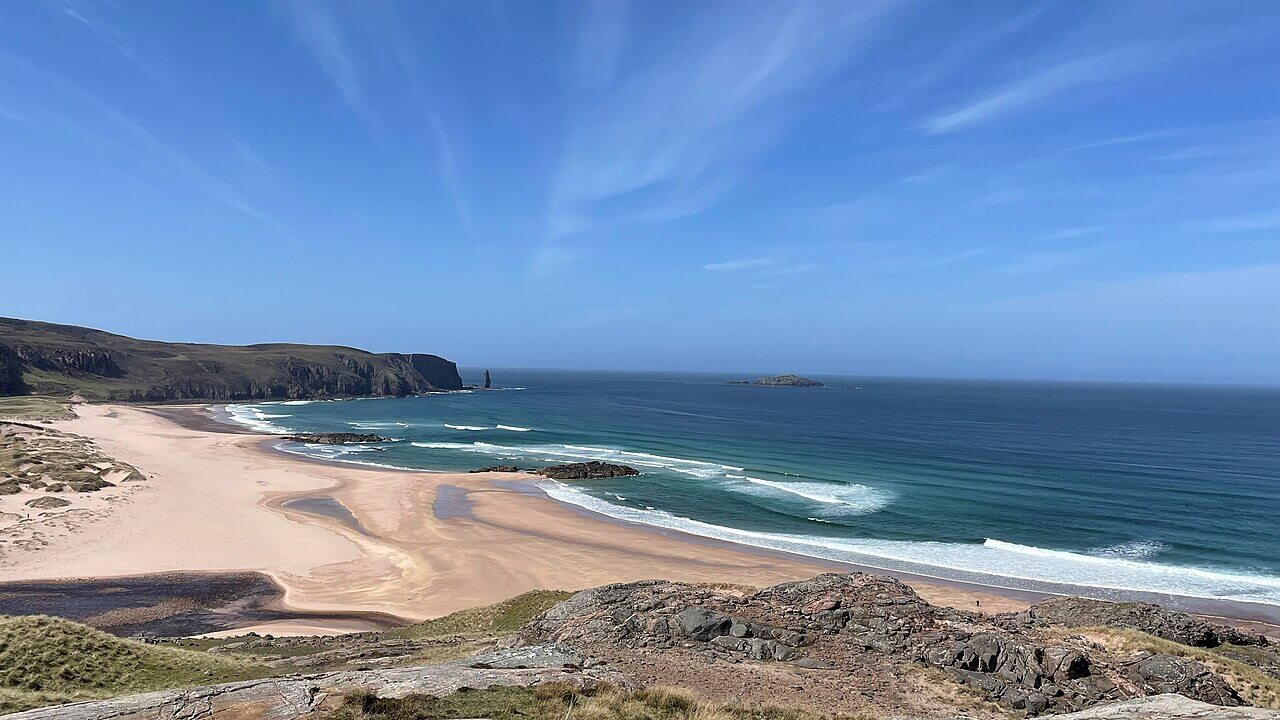

Ask most people when to drive the North Coast 500 and they will talk about weather. With a dog there are four other things on the calendar that matter as much: midges, ticks, lambs and nesting birds. Each has its own season, and between them they decide how much of the trip your dog spends on a lead and how pleasant the evenings are.
The short answer is May or September. Both have long days and most places open, without the midges and traffic of high summer. Which of the two suits you depends on how you feel about leads.
The four seasons that matter to a dog
Nesting birds: 1 April to 31 July. Birds nest on the ground on moorland, in dunes and along the shore. During those months the Scottish Outdoor Access Code asks you to keep dogs on a short lead or close at heel in those places. On the NC500 that covers a lot of the best walking, and most of the beaches above the tideline.
Lambing: spring. Early lambing starts on lower ground in March, and by April lambs are everywhere, including on unfenced roads. Sheep graze right down to the sand on the north and west coasts. Leads on near livestock, always.
Ticks: March to October. They are most active in the warmer months and at or near their peak in May. Bracken, long grass and moorland are where you pick them up. Check your dog, and yourself, after every walk. Our guide to preventing and dealing with ticks covers how.
Midges: late spring to September. They peak in July and August and are worst on the west coast, at dawn and dusk, in still, humid weather. A steady breeze keeps them down, so exposed beaches and headlands are often fine when a sheltered glen is unbearable.
The NC500 month by month
| Month | Verdict | What to expect |
|---|---|---|
| January | Hard going | Around seven hours of daylight, snow and ice on high roads, and the Bealach na Bà often impassable. Many seasonal businesses are shut. |
| February | Fair | Still short days and wintry roads. Very quiet, with no midges and few ticks, but many cafés and attractions closed. |
| March | Fair | Days lengthen fast and roads are quiet. Ticks become active and early lambing begins. Some places reopen around Easter. |
| April | Good | Most businesses reopen, no midges, good light. Nesting season starts and lambs are everywhere, so dogs are on leads much of the time. |
| May | Best | Long days, everything open, and usually before the midges build. Often one of the driest months. Ticks peak, and there is plenty of on-lead walking. |
| June | Good | Close to 18 hours of daylight. Midges arrive, especially in the west, and traffic builds late in the month. Nesting rules still apply. |
| July | Fair | Peak midges in the west and one of the busiest months. Book dog friendly accommodation well ahead. Nesting season runs to 31 July. |
| August | Fair | Busy and midgy, particularly in the north-west. Heather in bloom and the warmest sea of the year, by local standards. |
| September | Best | Midges fade, crowds thin once schools are back, and most businesses are still open. Nesting restrictions have ended. |
| October | Good | Autumn colour and quiet roads. Seasonal businesses start closing and days shorten quickly. Deer on the roads at dusk. |
| November | Hard going | Short, often wet and windy days, with many cafés, attractions and campsites closed until Easter. |
| December | Hard going | Around six and a half hours of daylight and winter conditions on the passes. For experienced winter drivers with flexible plans. |
May or September?
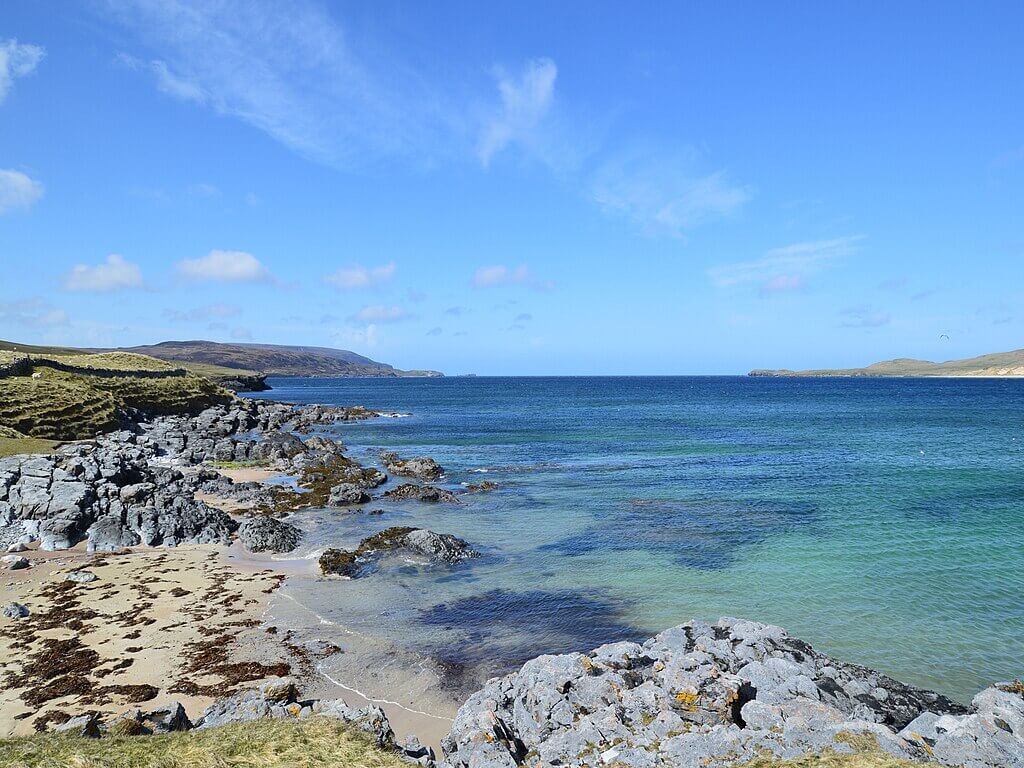
Choose May for the longest days and the driest odds. You pay for it in lead time: nesting season is in full swing, lambs are about and ticks are at their worst.
Choose September if your dog lives for running free. The nesting restrictions have lifted and the midges are fading. The trade is shorter days, and in the hills stag stalking is under way, so check before you set off on a hill walk.
Going in summer anyway
Most people are tied to school holidays, and July and August are still a good trip if you plan for them.
- Book everything early. Dog friendly rooms and beach campsites go first.
- Walk early or where it is breezy. Both beat the midges.
- Never leave a dog in a parked vehicle on a warm day. Even here, a car heats fast.
- Carry water for the dog on longer walks.
For beds, see where to stay on the NC500 with a dog.
For pitches, see dog friendly campsites on the NC500.
Going in winter
November to February is for well prepared, flexible travellers. The days are short, high roads can be icy, and the Bealach na Bà is often closed. A lot of cafés, campsites and attractions shut until Easter, so a winter trip works better as a stay in one or two cottages than as a full lap of the route.
However long you have, see how many days you need for the NC500 with a dog.
And for where to let them run, see dog friendly beaches on the NC500.
Final thoughts
There is no bad month for scenery on the NC500, only months that ask more of you. May and September ask the least. April and June are close behind, October is for people who like it quiet, and high summer works if you book early and carry repellent.
If the choice is yours, go in September. Your dog will thank you for the beaches.
More on the NC500 with a dog
- The dog friendly NC500: an overview: Van setup, the main stops and a 10-day outline.
- Dog friendly campsites on the NC500: Where to pitch round the route, and each site's dog rules.
- NC500 7-day itinerary with a dog: The classic week, day by day, built around beaches and walks.
- Dog friendly beaches on the NC500: Twelve beaches worth stopping for, east coast to west.
- Dog friendly Inverness: Where to eat, drink, walk and sleep at the start of the route.
- How many days do you need for the NC500 with a dog?: Five, seven, ten or fourteen days compared.
- Where to stay on the NC500 with a dog: Cottages, hotel rooms that take dogs, and campsites.
- Dog friendly Ullapool: Bars, cafés, walks and boat trips in the west coast's main town.
- Dog friendly campervan hire for the NC500: Hire firms that take dogs, and what to check before you book.