

The North Coast 500 has more empty sand than any other road trip in Britain, and very little of it comes with a rulebook. We found no seasonal dog bans on beaches round the route in Highland Council's published guidance. What you get instead is the Scottish Outdoor Access Code: dogs are welcome, under proper control, with extra care around livestock and nesting birds.
That last part matters more here than on most coasts. From April to July, birds nest on the ground in the dunes and along the shore, and sheep graze down to the sand on the north and west coasts. A beach can be open to dogs all year and still need a lead for part of it.
These twelve are the ones we would stop for, in the order you reach them driving anticlockwise from Inverness.
Planning the whole trip? Start with our overview of the NC500 with a dog.
Rosemarkie Beach, Black Isle
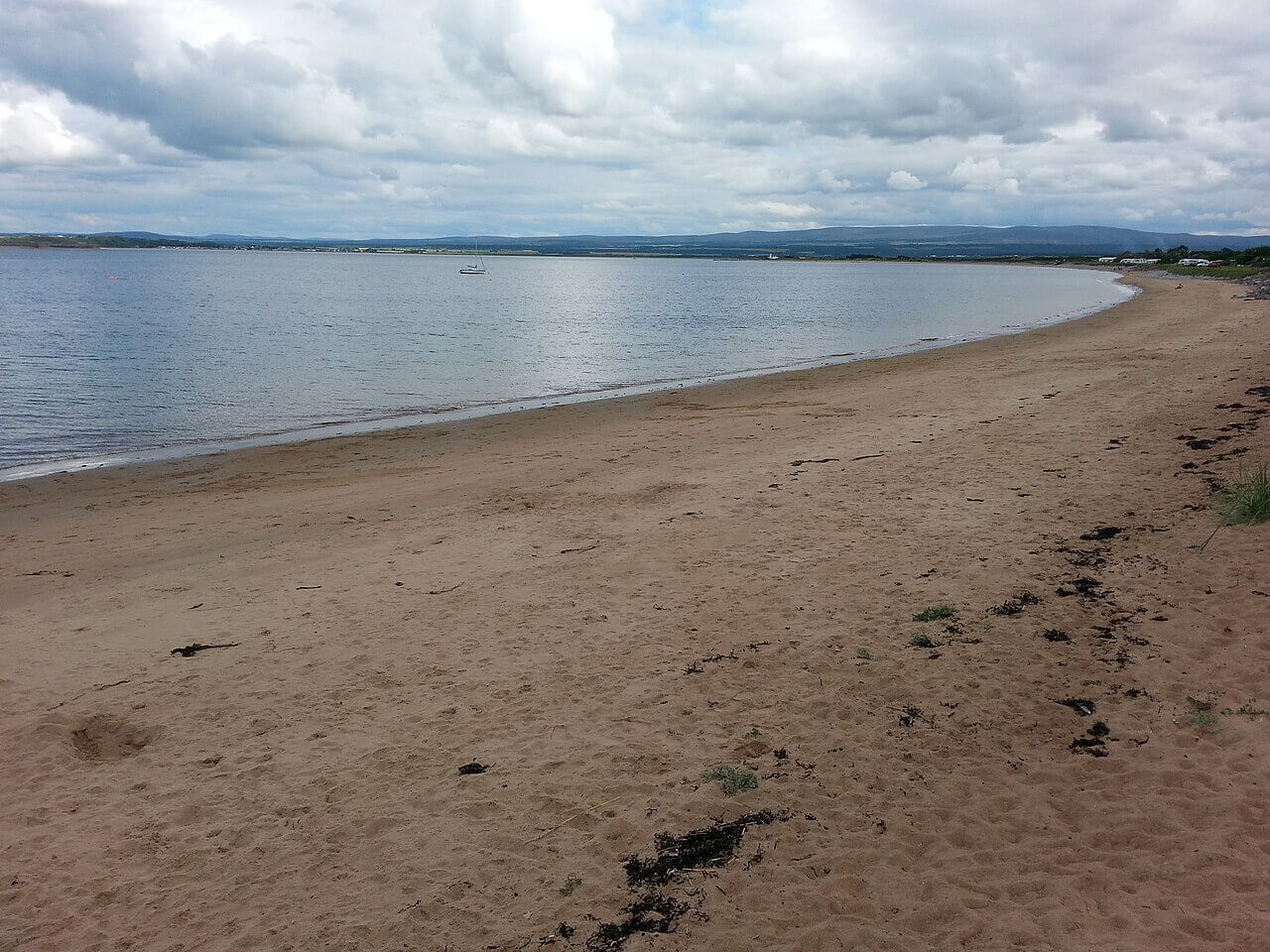
A sandy beach a short walk from Chanonry Point, where dolphins come close to the shore on a rising tide. It is the first proper beach run of the route and an easy one to pair with the walk out to the point.
The small car park fills early in summer. Keep your dog on a lead near the beach café, and keep dogs out of the water at the point itself, where the currents are dangerous.
- Dog access: All year
- Best for: A first run, with dolphins next door
Dornoch Beach, Dornoch
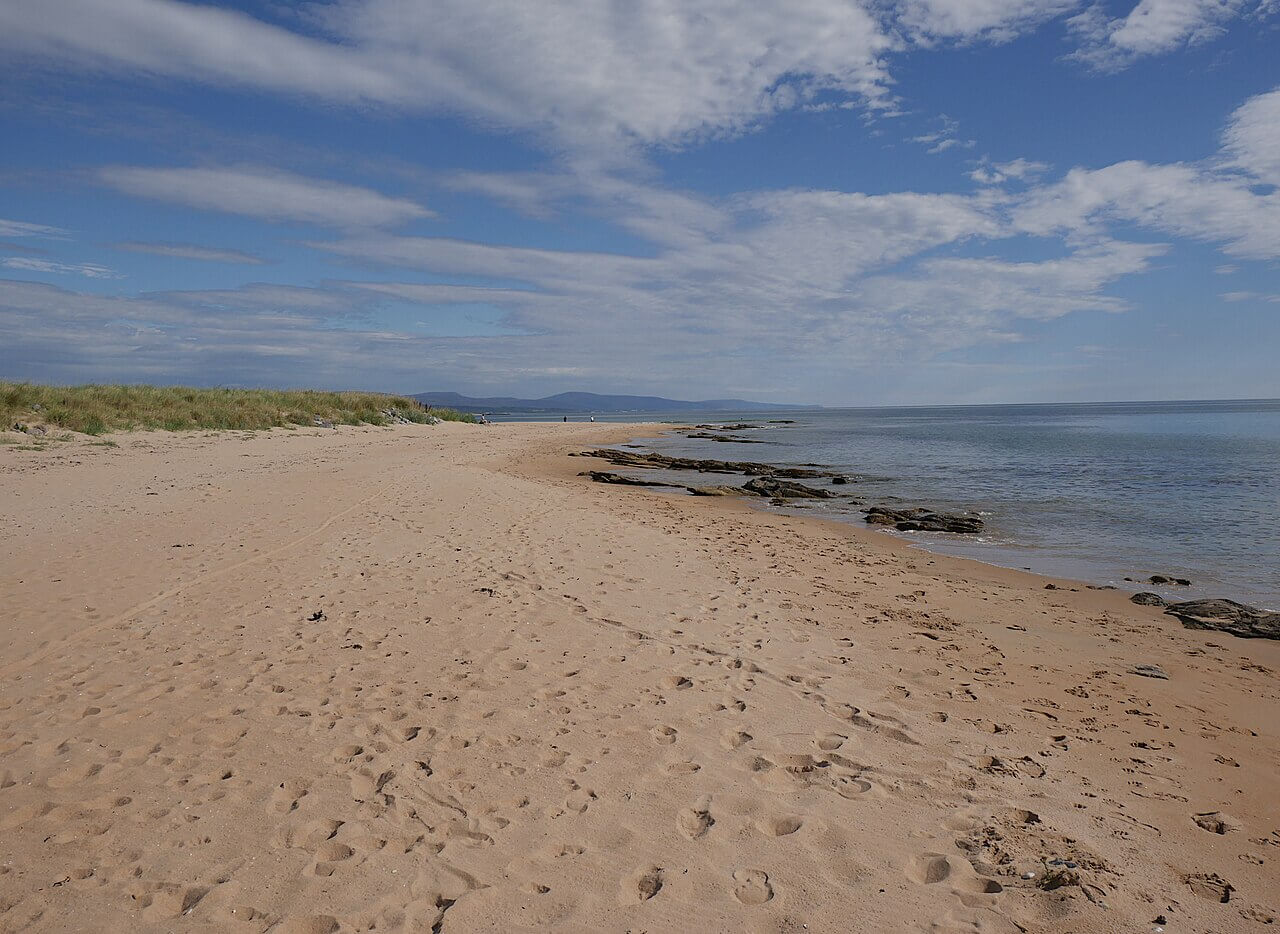
Miles of wide, pale sand beside the golf links, a few minutes from the middle of a handsome small town. Dogs are welcome on the beach all year, and it is big enough that you can always find space.
The caravan park behind the dunes asks for dogs strictly on leads on its own ground, so walk through and let the lead off on the sand.
- Dog access: All year
- Best for: A long, easy walk with a town for coffee afterwards
Dunnet Bay, Caithness
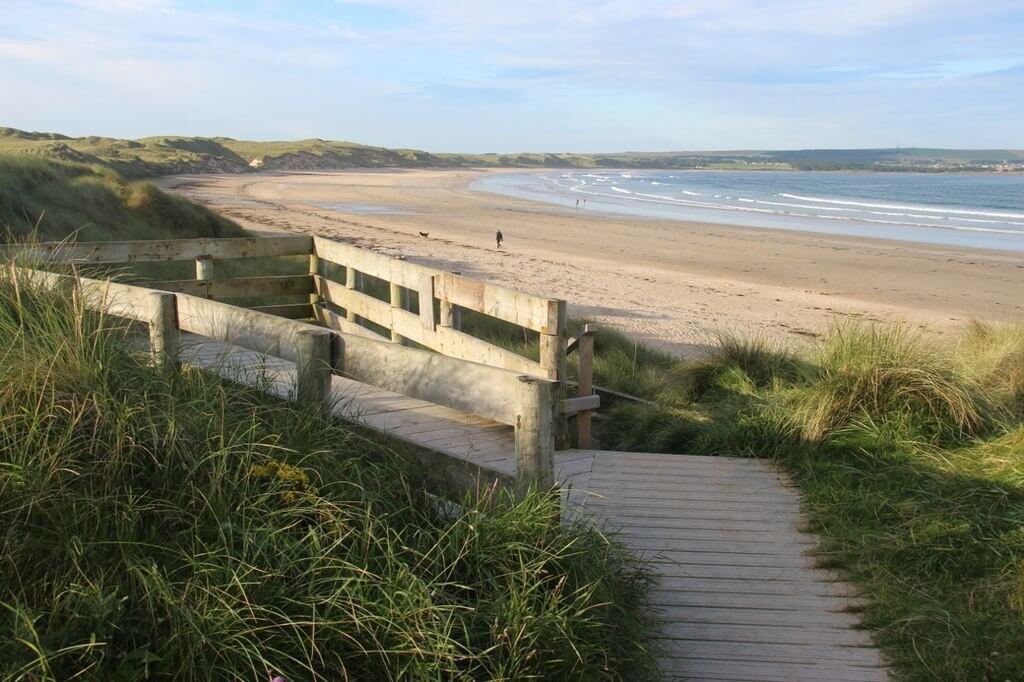
A huge arc of sand on the north Caithness coast, with dunes behind and a forest inland for days when the wind makes the beach hard work. Access is open all year.
It is exposed. On a rough day the sand blows and the sea is not one for swimming dogs.
- Dog access: All year
- Best for: Sheer space
Bettyhill Beach, Sutherland
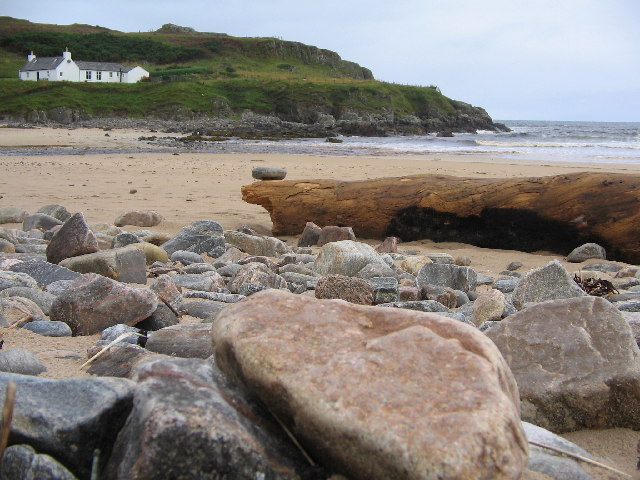
Bettyhill has sand on both sides of the village: Farr Bay below the museum, and the great sweep of Torrisdale Bay at the mouth of the River Naver. Dogs are welcome on both all year.
Sheep graze the ground behind Farr Bay, so use a lead there, and keep dogs close in the dunes from April to July.
- Dog access: All year, short lead in the dunes April to July
- Best for: A beach walk with lunch in the village
Balnakeil Bay, Durness
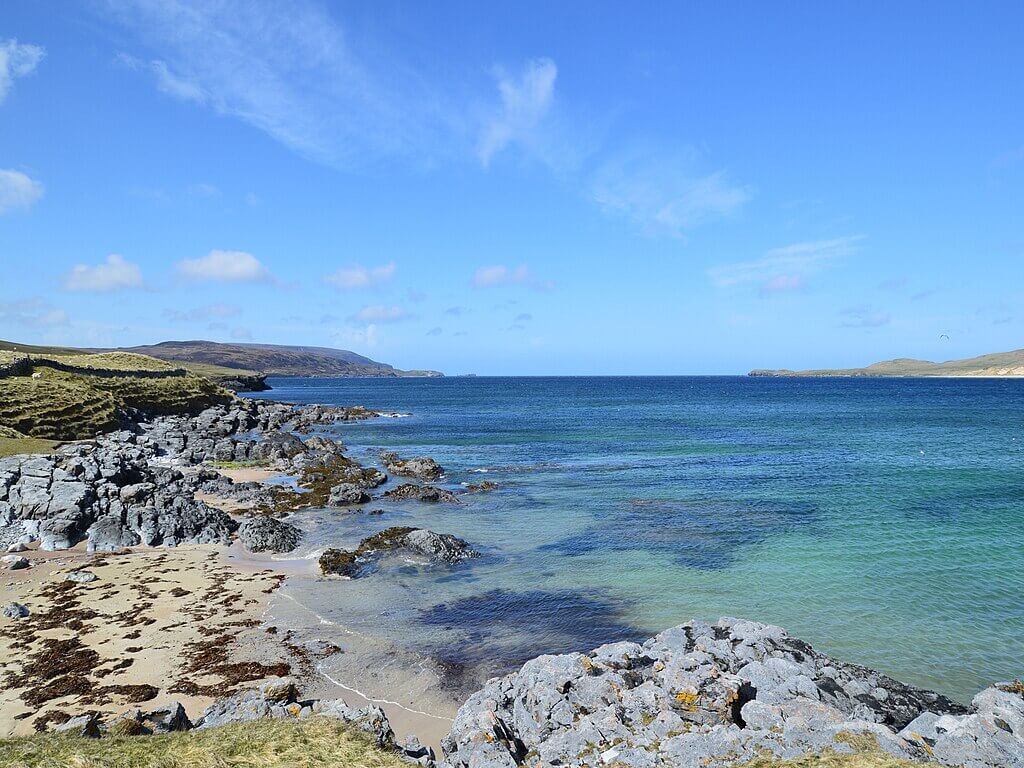
White sand, turquoise water and a long line of dunes, a mile from Durness. It is one of the best places on the whole route to have a dog, and you can turn it into a longer walk by carrying on towards Faraid Head.
Stick to the established paths through the dunes, which are fragile. Faraid Head is grazed by sheep and has a military station at its tip, so the lead goes on there.
- Dog access: All year, short lead April to July
- Best for: The beach you came for
Oldshoremore Beach, Kinlochbervie
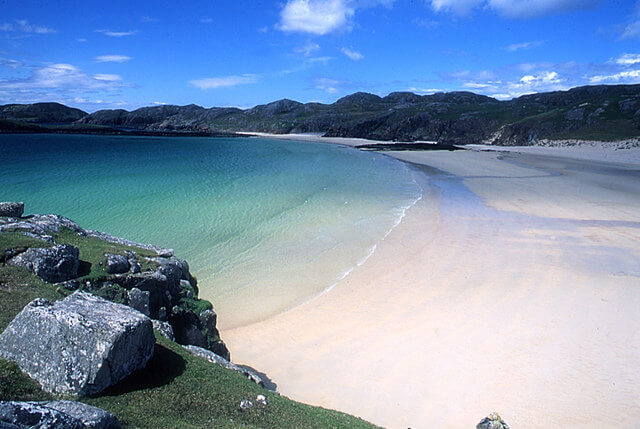
A wide, remote beach of pale sand on a side road past Kinlochbervie, with clear Atlantic water and very few people. It is a short stroll from the car.
It is a detour of a few miles off the main route each way, on single-track road.
- Dog access: All year
- Best for: The empty beach feeling without a long walk in
Sandwood Bay, Kinlochbervie
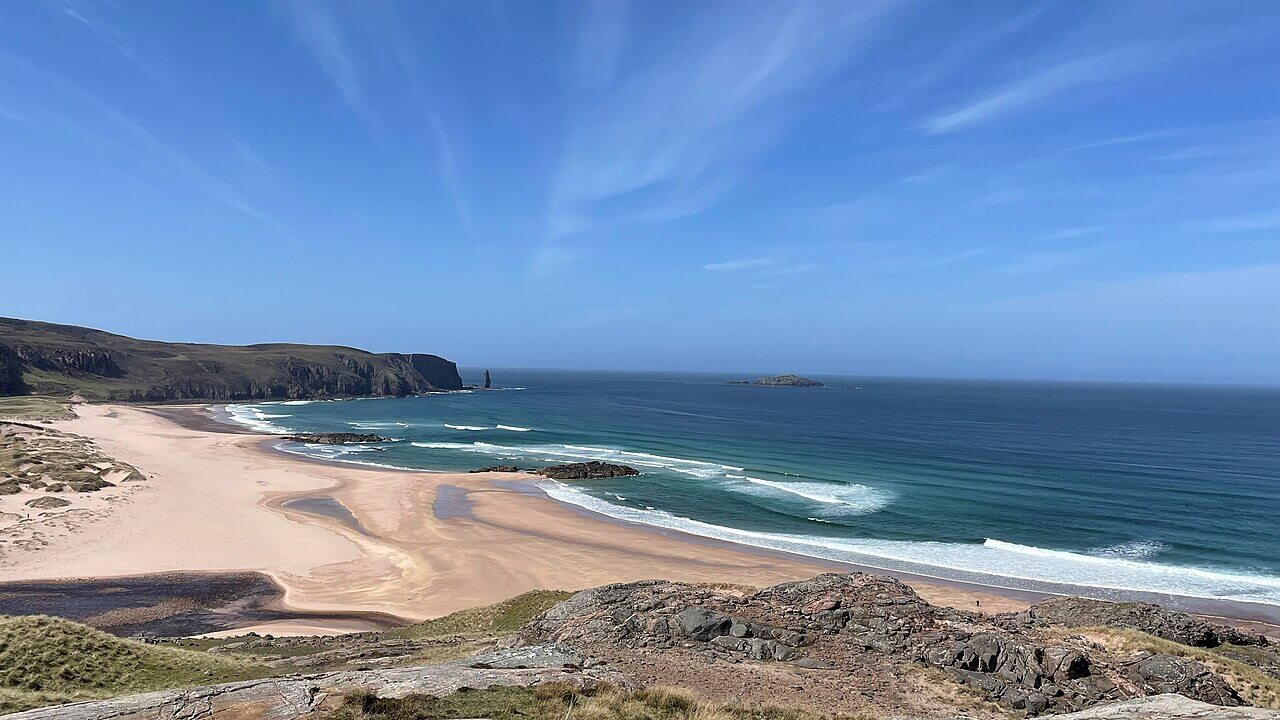
A mile of sand backed by dunes and a loch, with a sea stack at one end and no road to it. You walk in from Blairmore, about four miles each way across moorland, and it takes most of a day.
The John Muir Trust, which looks after the estate, asks for dogs on leads because it is active crofting land. The surf is heavy, so keep dogs out of the water when the sea is up. There is nothing beyond the car park, so carry water for you both.
- Dog access: All year, on a lead
- Best for: A full day out, for fit dogs and walkers
Clachtoll Beach, Assynt
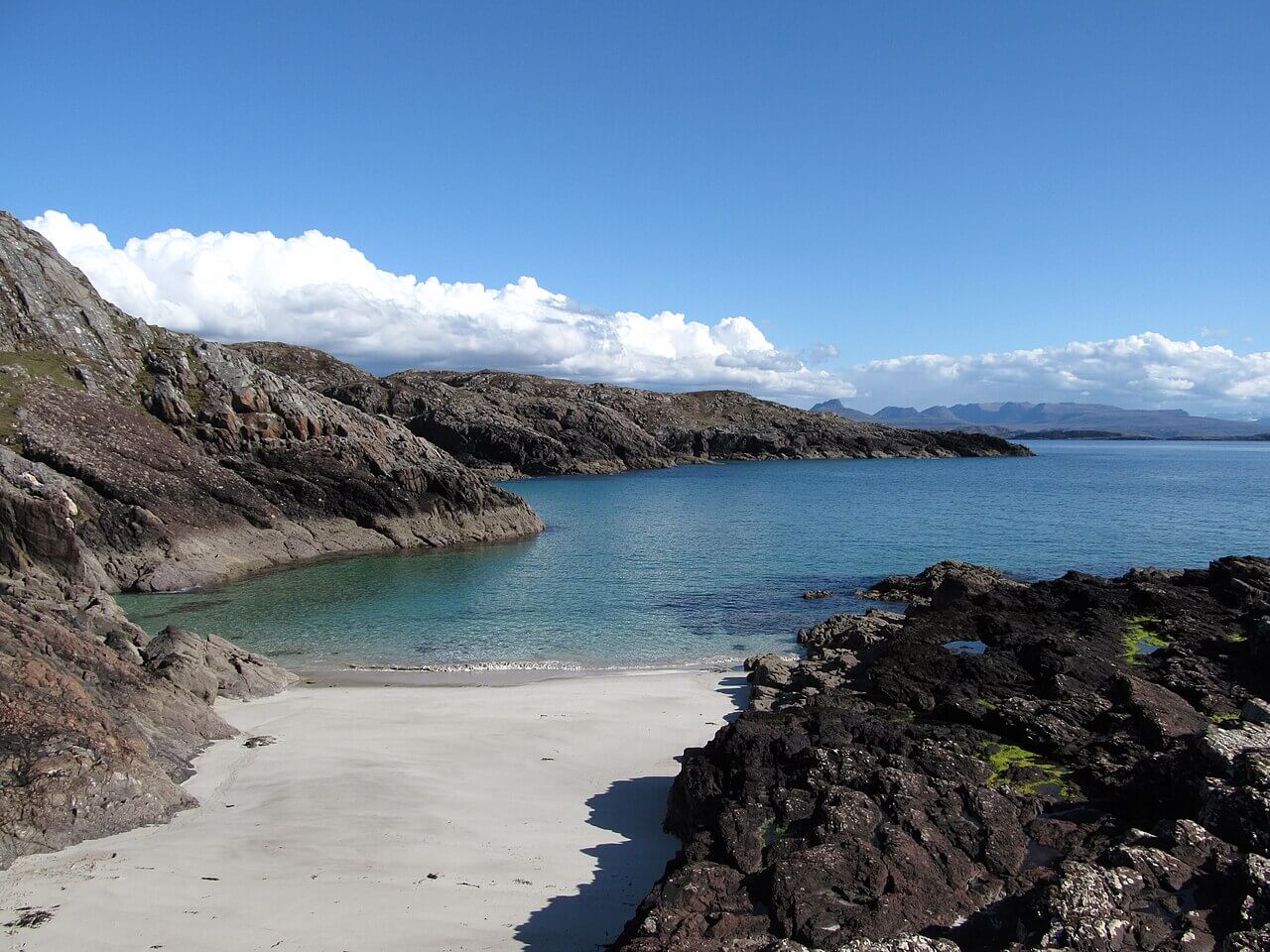
Golden sand, wooden walkways through the dunes and clear water, with an Iron Age broch a short walk along the shore. The campsite behind it is about as welcoming to dogs as campsites get.
The road in is single-track whichever way you come. Dogs are on a lead at the campsite.
- Dog access: All year
- Best for: A beach day with a campsite on the doorstep
Achmelvich Beach, Assynt
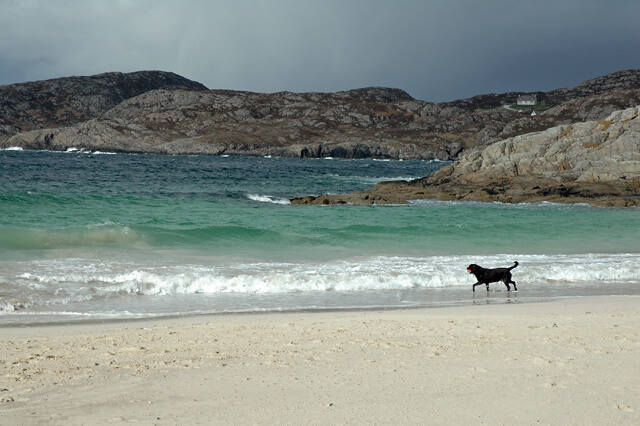
A small white cove with clear water and a backdrop of Assynt's mountains. Dogs are allowed all year under close control, despite claims online of a summer ban.
Use a short lead near seals and, from April to July, near nesting birds. The car park is free but fills in summer, and the road in is narrow.
- Dog access: All year, under close control
- Best for: Clear, calm water on a still day
Achnahaird Beach, Coigach
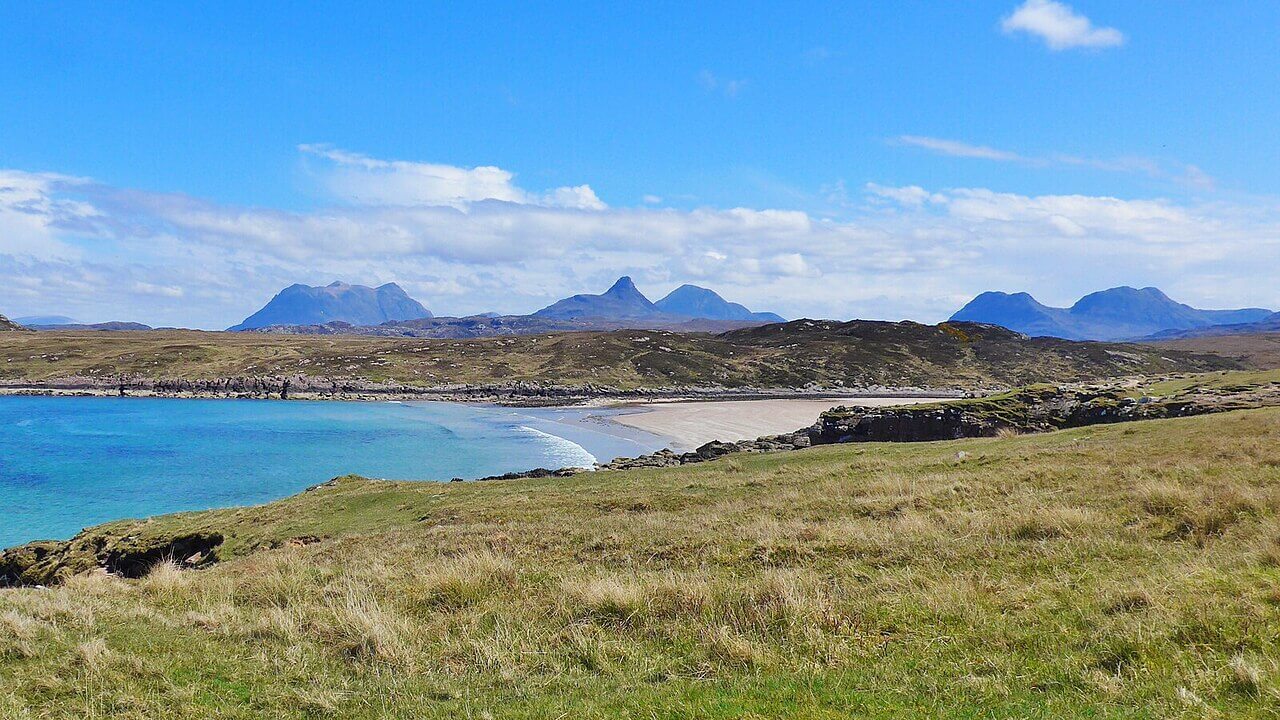
A broad, dune-backed beach on the Coigach peninsula north of Ullapool, with the Assynt hills lined up across the water. Dogs are welcome all year.
It is about seven miles off the main road on single-track, so allow half a day for the detour.
- Dog access: All year
- Best for: Combining with a walk at Stac Pollaidh
Mellon Udrigle Beach, Wester Ross
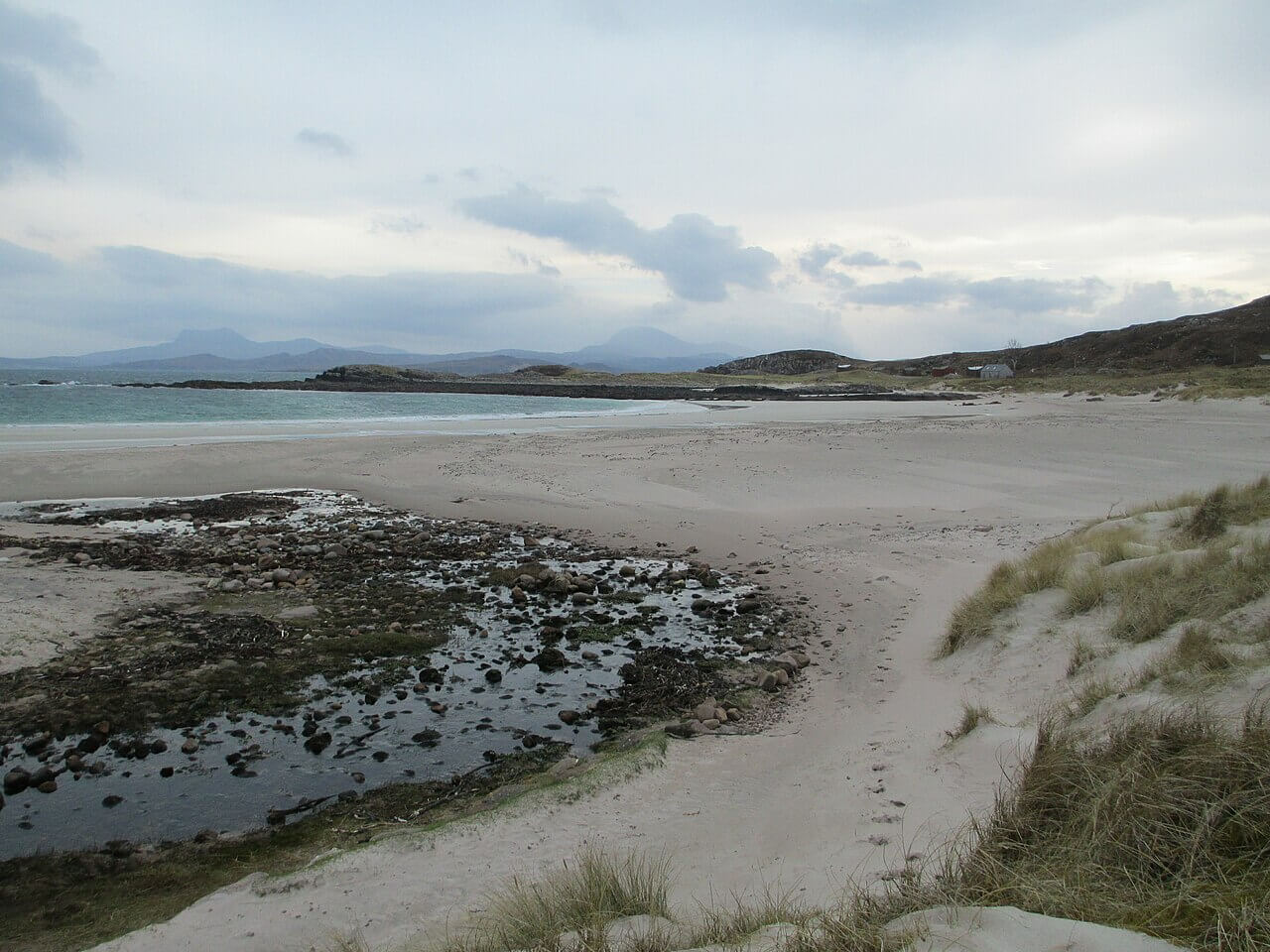
White sand at the end of its own side road, with mountains in every direction. There are no seasonal restrictions.
Keep dogs on the wooden walkway from the car park, because the dunes are protected. The moor north of the beach is very boggy.
- Dog access: All year
- Best for: The view
Big Sand Beach, Gairloch
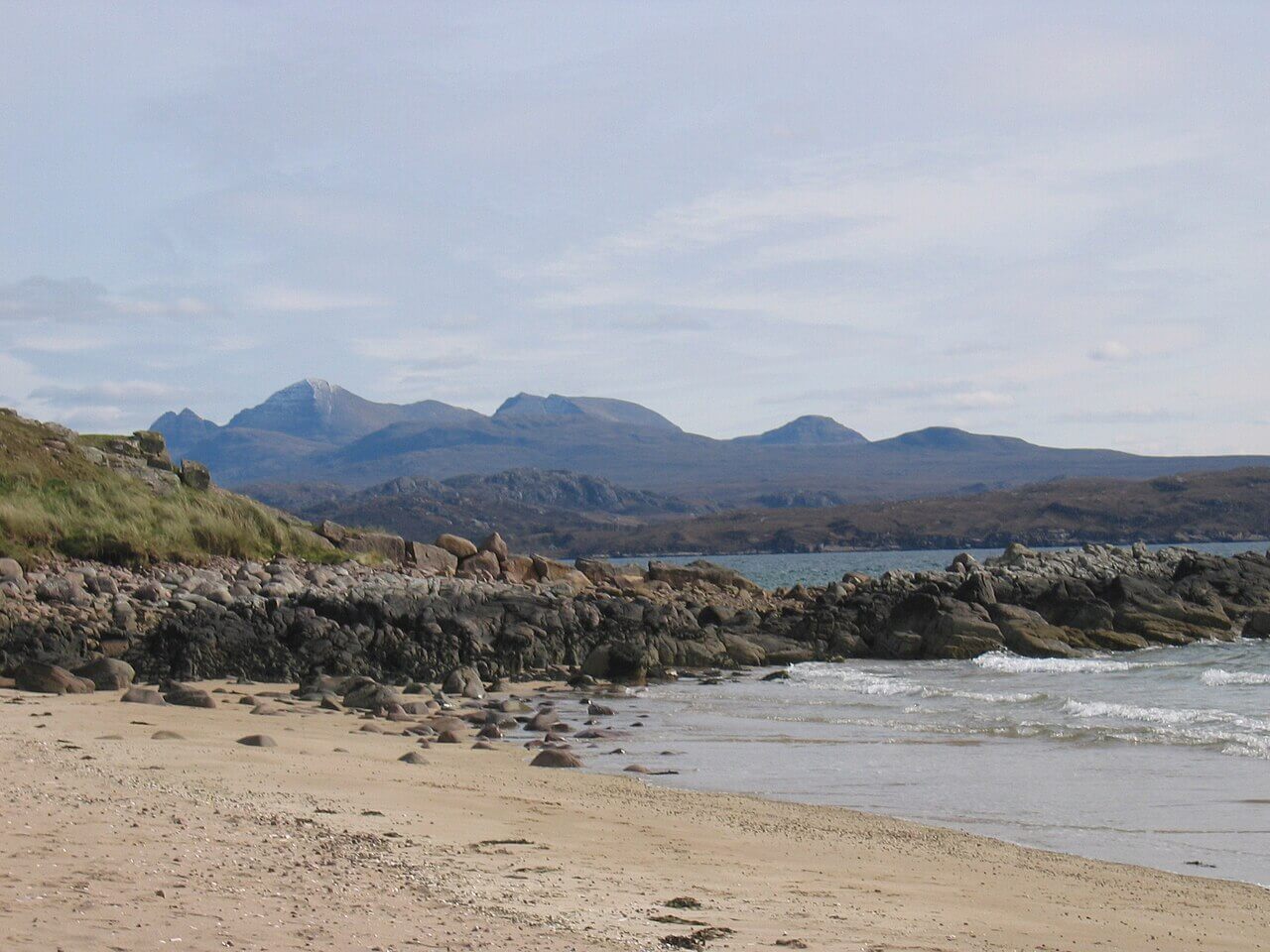
An enormous beach a few miles north of Gairloch that is close to empty on most days, with views west to the islands. There are no seasonal restrictions on the sand.
The trail inland along the Sand River crosses cattle and sheep grazing, so keep dogs under tight control there, and on a lead through the campsite behind the dunes.
- Dog access: All year
- Best for: A long off lead run with nobody about
Practical advice for beaches on the NC500
- April to July: keep dogs on a short lead or close at heel in dunes and on the upper shore, where birds nest on the ground.
- Seals: put the lead on and keep well back if seals are hauled out on the sand or rocks.
- Livestock: sheep graze right down to several of these beaches. If in doubt, lead on.
- Bins: they can be miles apart. Carry spare bags and a sealed tub in the car.
- Cold water: the sea here is cold even in August. Keep swims short, especially for small or older dogs.
Several of these have a campsite right behind the sand. See dog friendly campsites on the NC500.
For nesting season, midges and the quiet months, see the best time to do the NC500 with a dog.
Looking further afield? Our pick of dog friendly beaches in Scotland covers the rest of the country.
Final thoughts
The east coast beaches are the easy ones: big, close to the road and near a town. The north coast is where they start to feel remote, and the north-west, from Durness to Achmelvich, is the stretch people remember. If you only have time for three, make them Balnakeil Bay, Achmelvich and Big Sand.
Go with a lead in your pocket and an eye on the calendar, and nearly every beach on the route is yours to walk.
More on the NC500 with a dog
- The dog friendly NC500: an overview: Van setup, the main stops and a 10-day outline.
- Dog friendly campsites on the NC500: Where to pitch round the route, and each site's dog rules.
- NC500 7-day itinerary with a dog: The classic week, day by day, built around beaches and walks.
- Dog friendly Inverness: Where to eat, drink, walk and sleep at the start of the route.
- How many days do you need for the NC500 with a dog?: Five, seven, ten or fourteen days compared.
- Where to stay on the NC500 with a dog: Cottages, hotel rooms that take dogs, and campsites.
- Dog friendly Ullapool: Bars, cafés, walks and boat trips in the west coast's main town.
- The best time to do the NC500 with a dog: Midges, ticks, lambing and nesting season, month by month.
- Dog friendly campervan hire for the NC500: Hire firms that take dogs, and what to check before you book.
Some links in this guide are affiliate links. We may earn a commission if you book through them, at no extra cost to you. It never affects which places we list or what we say about them.