

The Moray coast is built from long sand and small fishing towns rather than seaside resorts, and it asks you to carry more of your own day as a result. At the western end, Roseisle backs its beach with a whole forest of Scots pine. In the middle, the River Spey runs out through a shingle reserve where ospreys fish and terns nest. Out east, three sea stacks called the Three Kings stand on the sand below Cullen. Between those points the facilities come and go, and plenty of the best stretches have a car park and nothing else.
What matters to a dog owner is that the calendar never shuts any of it. All nine beaches below are recorded as dog friendly through all twelve months, including the weeks when much of the English coast turns dogs away. The one qualification is at Spey Bay, where dogs stay on leads inside the nature reserve to protect nesting birds. Everywhere else the questions are tide, wind and currents at the river mouths, which is a much better set of questions to be asking in August.
Findhorn Beach, Forres
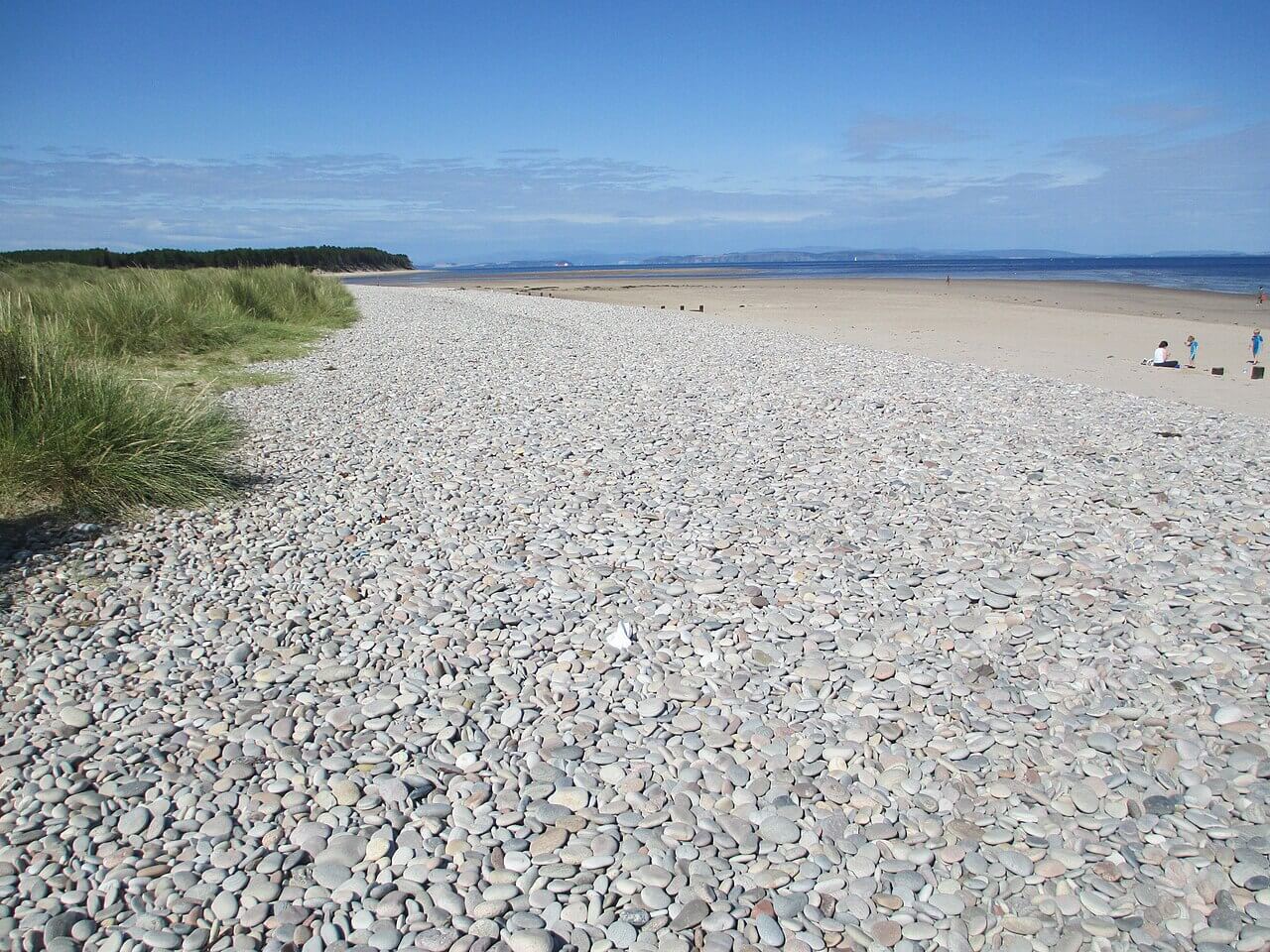
Findhorn sits at the mouth of Findhorn Bay, and its beach is a wide run of sand with dunes behind it and the Moray Firth in front. The village is known for two quite different things: the Royal Findhorn Yacht Club and the Findhorn Community, an international eco-village with a spiritual bent. Dolphins are a regular sight offshore, so a pair of binoculars earns its place in the bag.
For a dog, the sheltered bay makes this one of the calmer places on the coast to get paws wet, and there are no dog restrictions on the sand in any season. The trade is that the beach itself has no infrastructure at all. Parking, the shop and the cafe are all back in the village, while the Hill 99 trail in Culbin Forest, our closest listed walk, means a drive of over three miles. Roseisle is 1.7 miles along the coast if you want a second beach.
- Dog access: Every month, no seasonal ban
- Terrain: Sand and dunes
- Tides: Sheltered bay with calm conditions, dolphins often offshore
- Parking: Village car park at Findhorn
- Facilities: Village shop and cafe, yacht club, nothing on the beach
- Nearest walk: Culbin Forest Hill 99 Trail from Wellhill, 3.3 miles
- Best for: Calm water and a dolphin watch from the dunes
Roseisle Beach
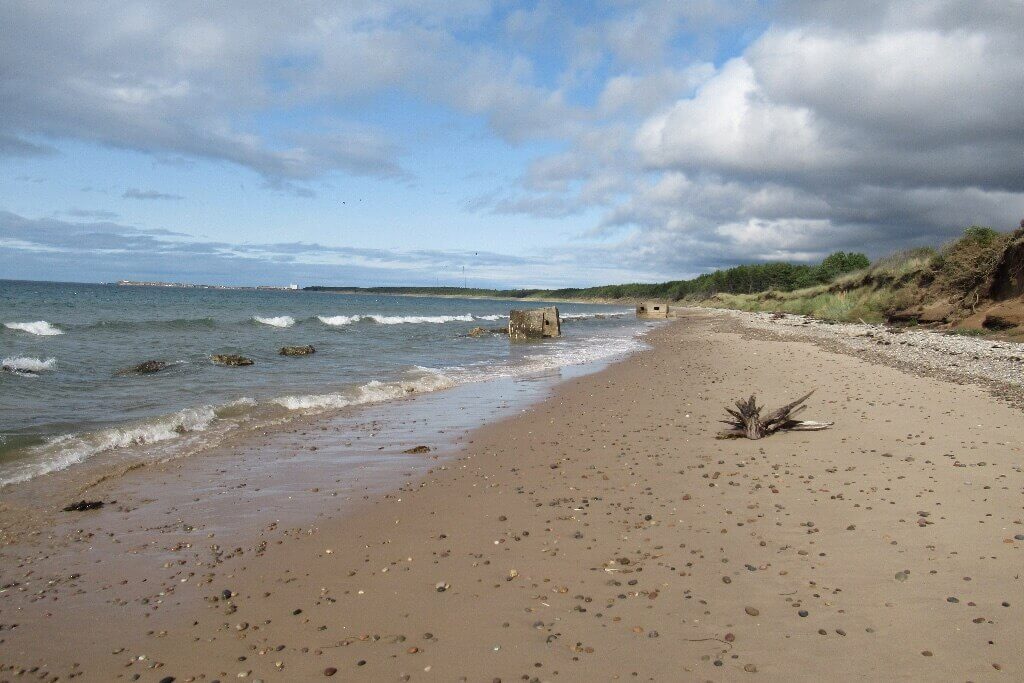 Roseisle Beach – Photo Credit: Richard Webb
East of Findhorn the coast runs out as a long, flat strip of golden sand with a planted forest of Scots pine and broadleaf trees pressed right up behind it. Roseisle is lightly developed and rarely busy, and the Burghead headland to the east keeps off the north westerly winds, so it is often quieter underfoot than the more open stretches further along.
The draw for a dog is choice. Firm sand runs off in both directions for a long walk, and when the wind picks up the forest paths offer shelter and a nose full of pine and woodland smells. Dogs can go off lead here in every month. The caveat is that everything useful sits at the Forestry and Land Scotland car park: there are toilets there and nothing on the beach, so water and bags have to come with you.
- Dog access: Every month, off lead welcome
- Terrain: Sand, with pine forest behind
- Tides: Good at all states of tide, sheltered from north westerlies by the Burghead headland
- Parking: Forestry and Land Scotland car park at Roseisle
- Facilities: Toilets at the car park only
- Nearest dog beach: Findhorn Beach, 1.7 miles
- Best for: Switching between open sand and forest shelter on a windy day
Burghead Beach, Elgin
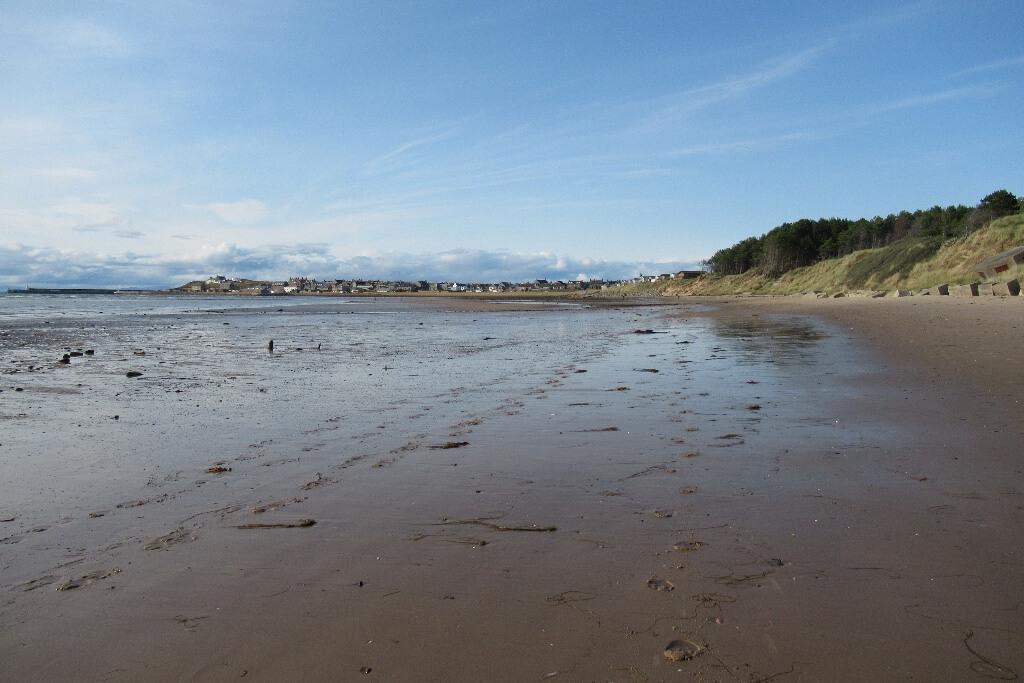
Burghead is a town on a headland with a working harbour and a surprising amount of history for its size. It grew up on a Pictish promontory fort, and the Burghead Bull carvings and an underground Pictish well are both found here. The beach below is a sandy stretch that locals use for their daily walks, and it seldom gets crowded.
No dog restriction applies here at any time of year, and the Moray Coast Trail passes close by for anyone who wants to stretch the walk along the shore. Our notes on the beach itself are brief, though, and it has no facilities of its own, with parking in town near the harbour. The headland takes some of the edge off the weather. For a longer run on sand, Roseisle is 3.6 miles away.
- Dog access: Every month, no seasonal ban
- Terrain: Sand
- Tides: Moray Firth beach with some shelter from the headland
- Parking: Town parking near the harbour and beach
- Facilities: Burghead town amenities, none on the beach
- Nearest dog beach: Roseisle Beach, 3.6 miles
- Best for: A quiet local walk with Pictish history at the end of it
Lossiemouth West Beach
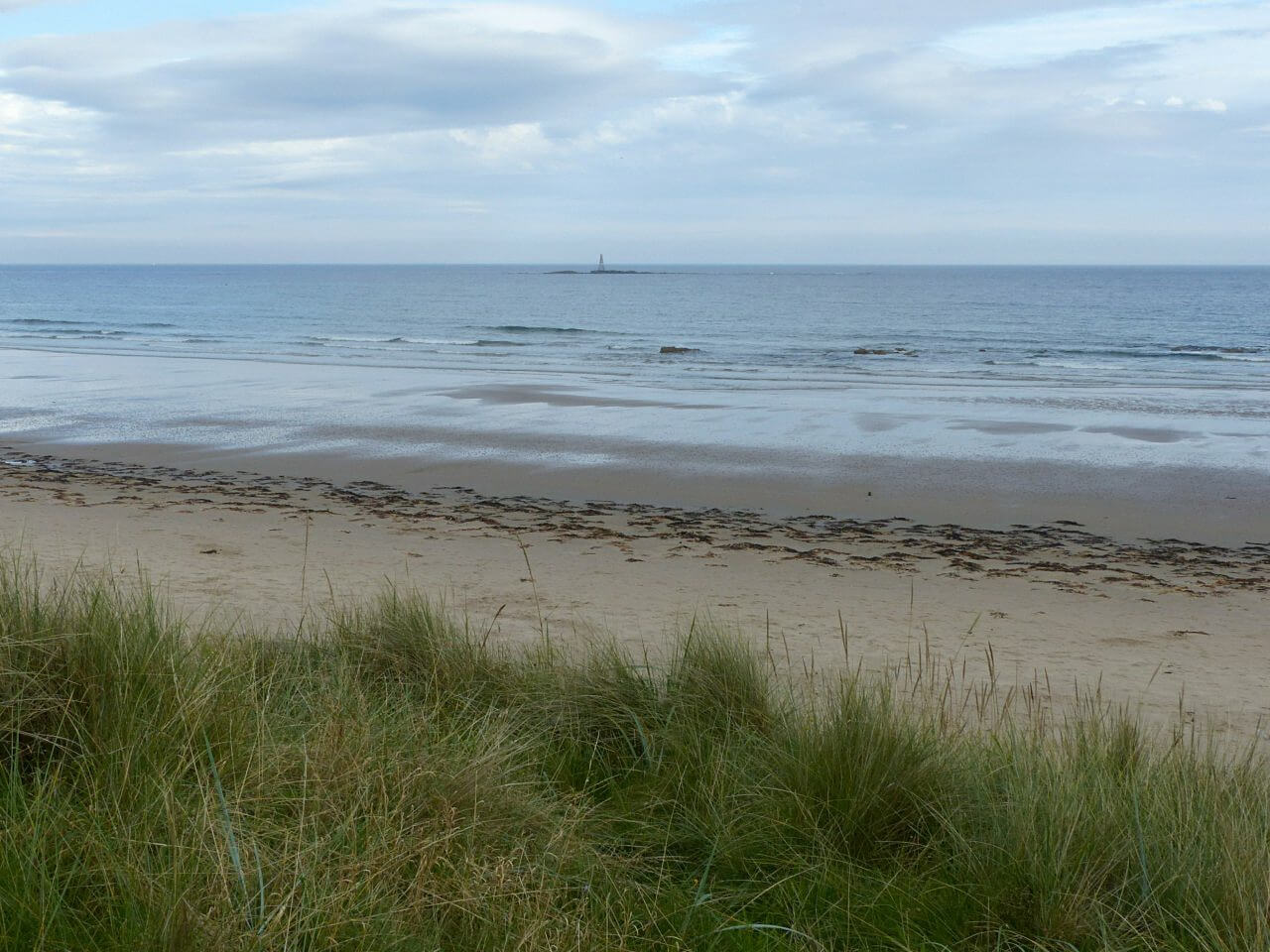
Three miles of wide, flat sand make this one of the longest single beaches on the Moray coast. Near the car park a natural reef encloses a sheltered bay that swimmers use, and on a clear day the view west over the Firth takes in the hills of the Black Isle and Easter Ross.
With a dog, the length is the whole point. You can walk a long way out and back at any state of the tide, and the dogs are allowed on every part of it in every month. The beach is popular with families, surfers and other dog walkers, however, so the stretch nearest the car park is rarely empty, and our closest listed walk sits 15 miles off. Toilets at the car park and the whole of Lossiemouth close by make it an easy beach to organise a day around.
- Dog access: Every month, no seasonal ban
- Terrain: Sand
- Tides: Three miles of sand accessible at all tides, sheltered bay by the reef
- Parking: West Beach car park, Lossiemouth
- Facilities: Car park and toilets, full town amenities nearby
- Nearest dog beach: Lossiemouth East Beach, 1.3 miles
- Best for: Distance, with toilets and a town at the end
Lossiemouth East Beach
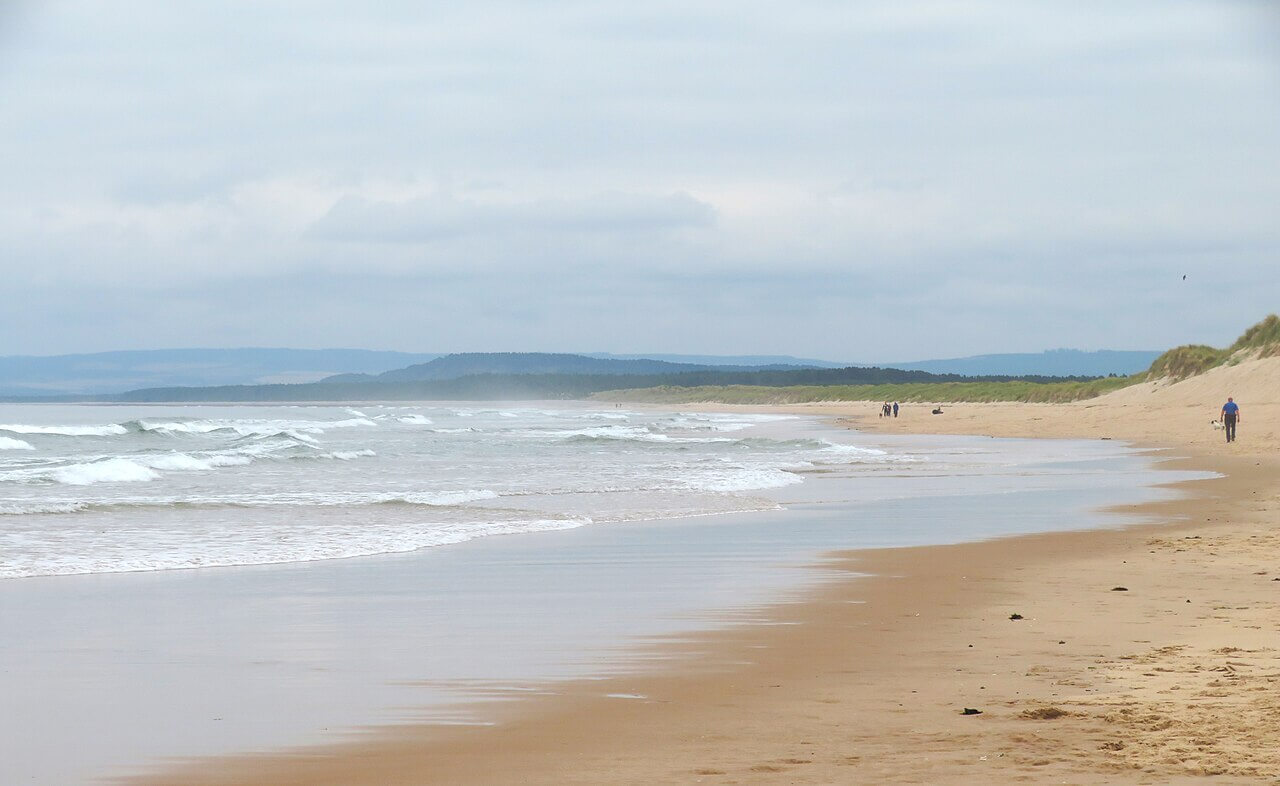
The other side of town has the wilder of Lossiemouth's two beaches. East Beach sits by the mouth of the River Lossie with grassy dunes behind, and when the tide is out it spreads into a broad sheet of pale sand looking across Spey Bay to Buckie and the Bin of Cullen. Bottlenose dolphins and grey seals are seen from the shore regularly, and surfers, windsurfers and wild swimmers all use it.
The dunes give a dog sheltered ground to explore, and access is unrestricted at every point in the calendar. Be aware of the water, though. Currents run near the river outflow and the beach takes the full Moray Firth weather, so keep a strong swimmer close to the shore. The path in crosses the dunes from the car park, which is the only facility on site, and the walk we list nearest is a long way inland on the Speyside Way.
- Dog access: Every month, no seasonal ban
- Terrain: Sand and dunes
- Tides: Wide sands at low tide, currents near the river outflow, exposed
- Parking: East Beach car park, short walk through the dunes
- Facilities: Car park only, Lossiemouth town for everything else
- Nearest dog beach: Lossiemouth West Beach, 1.3 miles
- Best for: A wilder walk with a chance of dolphins and seals
Spey Bay Beach, Fochabers
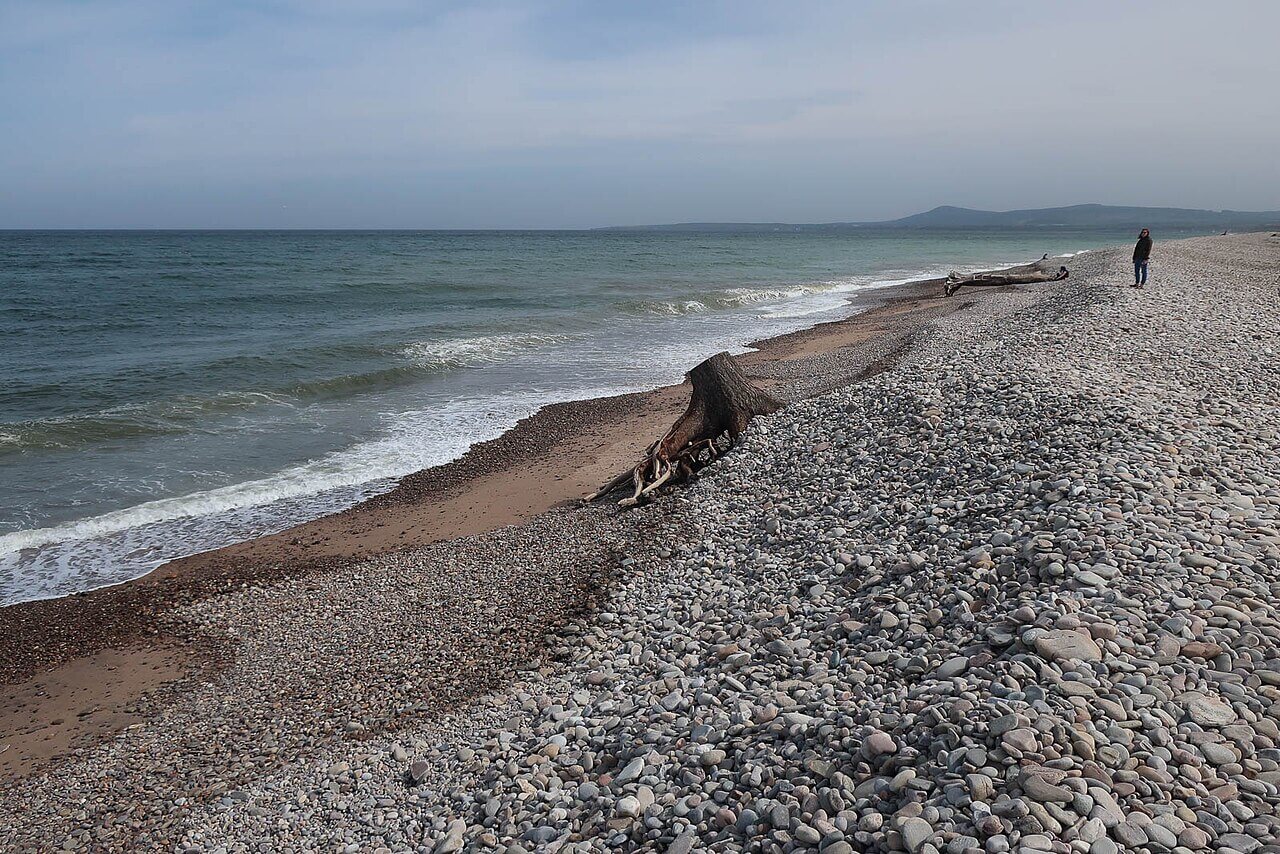
Spey Bay is where one of Scotland's best known rivers meets the sea, and the beach there is remote shingle and sand inside the Spey Bay Wildlife Reserve. It is a wildlife beach before it is anything else. Bottlenose dolphins are regularly seen offshore, ospreys fish the river mouth, and common and little terns breed and roost on the shore. The Whale and Dolphin Conservation visitor centre is close by.
Dogs are allowed here all year, but this is the one beach on the list with a standing lead rule. Inside the reserve dogs must be on leads at all times, and it matters most from May to August when the terns are nesting. Strong currents near the river mouth are a second reason to keep a dog close, and the shingle is harder on paws than the sand beaches either side. Come for the watching rather than a run.
- Dog access: Every month, on leads throughout the nature reserve
- Terrain: Shingle and sand
- Tides: River outflow shapes the beach, strong currents near the mouth
- Parking: Car park at Spey Bay off the B9104
- Facilities: WDC visitor centre, Fochabers for other amenities
- Nearest dog beach: Findochty Beach, 7.1 miles
- Best for: Dolphin and osprey watching with a calm dog on a lead
Findochty Beach, Buckie
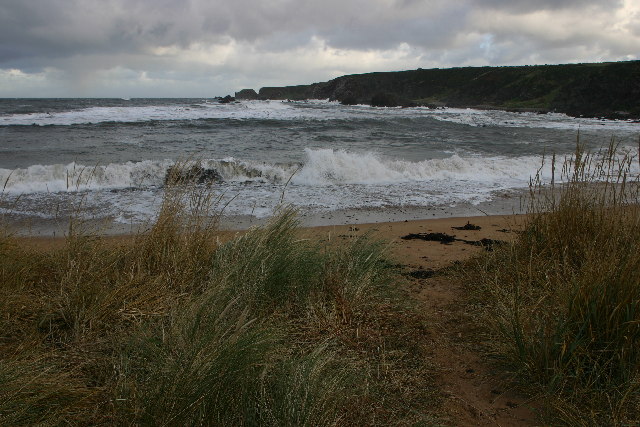
Findochty is a small village of brightly painted houses around a little harbour, and it has a strong enough look that people stop just to photograph it. The sandy beach sits in the sheltered harbour bay, and the Moray Coast Trail runs through the village on its way along the shore.
A dog can use the beach in any month without restriction, and the shelter makes it a pleasant place for a gentle potter. It is worth knowing that we hold very little detail on this one beyond that, and the village has only limited amenities, with Buckie the place for anything more. Its best use is as a stop on the coast trail, with Portknockie 1.7 miles further on.
- Dog access: Every month, no seasonal ban
- Terrain: Sand
- Tides: Sheltered harbour bay on the Moray Firth
- Parking: Village parking at Findochty
- Facilities: Limited village amenities, Buckie nearby
- Nearest walk: Cullen Coastal Walk and Viaduct, 3.2 miles
- Best for: A short, sheltered stop on the Moray Coast Trail
Portknockie Beach, Buckie
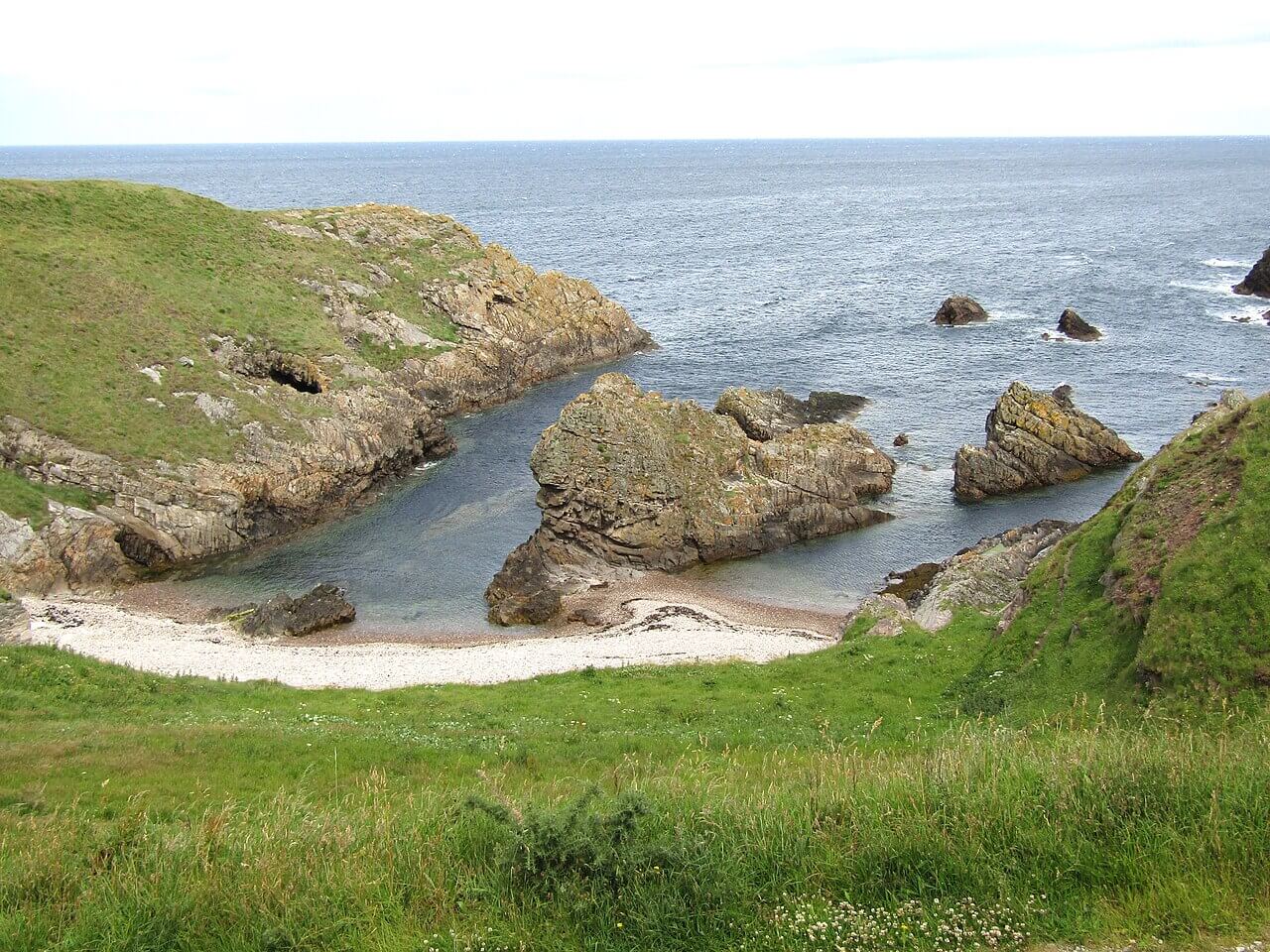
Portknockie is a traditional fishing village a short way from Cullen, quiet and unshowy, with its beach tucked in below the village headland. Underfoot it is part sand and part shingle, the headland gives it shelter, and the view runs out across the Moray Firth. The Moray Coast Trail passes through here too.
Dogs are free to use the beach in every season. It suits a dog that enjoys a quiet shore more than one that needs to gallop, since the shingle breaks up the sand and the beach is modest in size. Amenities in the village are limited, but Cullen is 1.7 miles away along the coast, and the Cullen coastal walk and viaduct route is within the same distance, which turns a short beach visit into a proper outing.
- Dog access: Every month, no seasonal ban
- Terrain: Sand and shingle
- Tides: Moray Firth beach, generally sheltered
- Parking: Village parking at Portknockie
- Facilities: Limited village amenities, Cullen and Buckie nearby
- Nearest dog beach: Cullen Beach, 1.7 miles
- Best for: A quiet village shore linked to the Cullen walk
Cullen Beach, Buckie
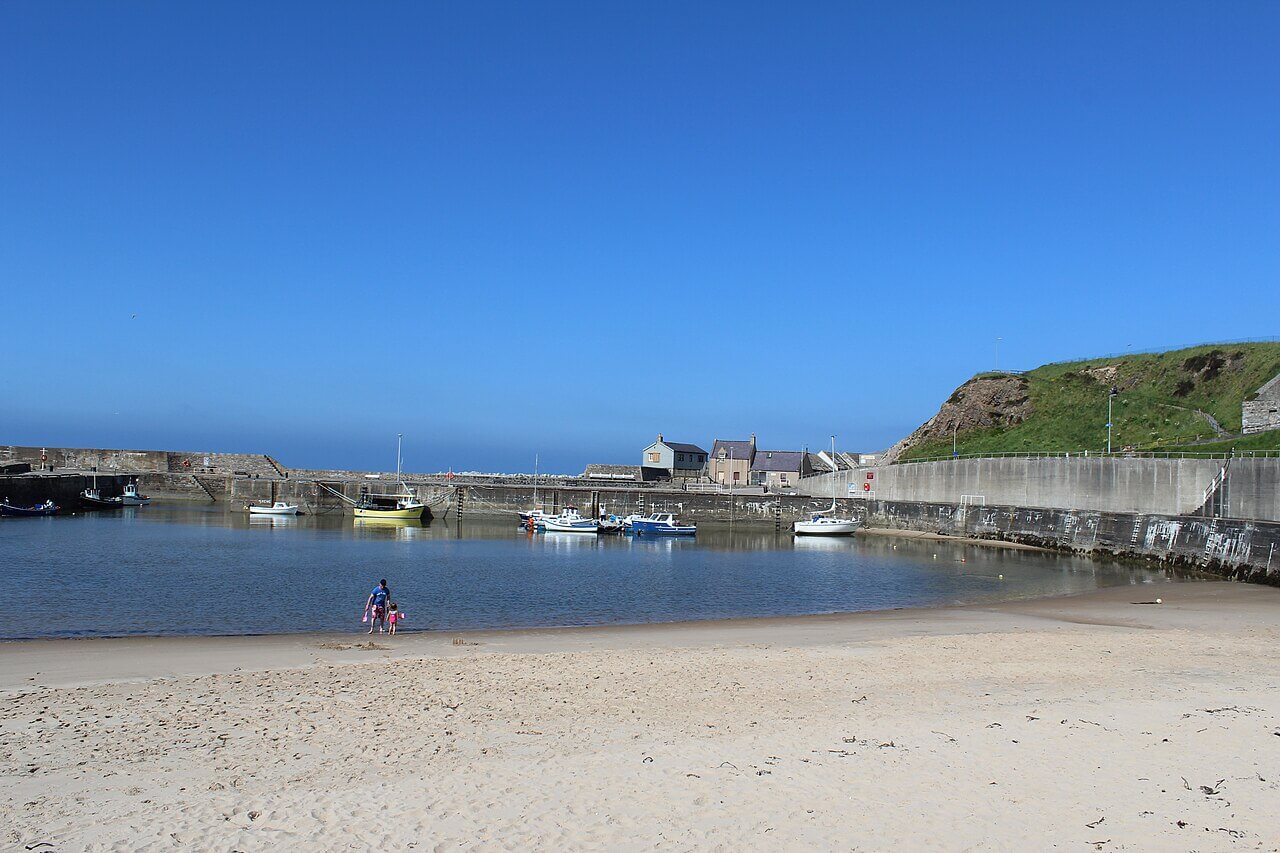
Cullen gives the Moray coast its most recognisable beach. The sand is wide, the bay offers some shelter from North Sea swells, and three big sea stacks known as the Three Kings rise straight out of the beach. The arches of the old railway viaduct cross above the town to the west, and Cullen is also the home of Cullen skink, the smoked haddock soup, which you can find a few steps from the sand.
No dog restrictions apply here in any month, and the Cullen Coastal Walk and Viaduct starts right at the beach, so a dog can have both sand and a longer route from the same car park. The Three Kings are at their most dramatic at low tide, which means timing a visit is worth the effort, and the bay is only partly sheltered. Village cafes, pubs, shops and public toilets are all within reach.
- Dog access: Every month, no seasonal ban
- Terrain: Sand
- Tides: Partly sheltered bay, sea stacks best seen at low tide
- Parking: Car park near the beach, plus village parking
- Facilities: Cafes, pubs, shops and public toilets in Cullen
- Nearest walk: Cullen Coastal Walk and Viaduct, 0.0 miles
- Best for: Sea stacks at low water, then a bowl of skink
Practical Advice for Moray Beaches Open to Dogs All Year
No seasonal ban does not mean no rules at all. These points will shape a day on this coast more than the date will.
- Leads at Spey Bay. The nature reserve requires dogs on leads at all times, with the tern nesting season from May to August the critical period. It is the only listed restriction on these nine beaches.
- Mind the river mouths. Currents run near the outflows of the Lossie and the Spey. Keep swimming dogs away from both and use the calmer water at Findhorn or the reef bay on Lossiemouth West instead.
- Facilities are patchy. Toilets are listed at the Roseisle car park, at Lossiemouth West, at the Spey Bay visitor centre and in Cullen. Findhorn, Burghead and Lossiemouth East have nothing on the beach itself.
- Use the pairs. Findhorn and Roseisle are 1.7 miles apart, the two Lossiemouth beaches 1.3 miles, and Findochty, Portknockie and Cullen form a chain along the coast trail. Most days can take in two beaches without much driving.
- Choose shelter by wind. Roseisle is protected from north westerlies by the Burghead headland, while Lossiemouth East takes the full Firth weather. Keep a sheltered option in mind before you set out.
Map of Dog Friendly Beaches in Moray With No Summer Ban
On the map the coast falls into three groups: Findhorn, Roseisle and Burghead to the west, the Lossiemouth pair and Spey Bay in the centre, and the three fishing villages out towards Cullen in the east. Pick a group and a single day covers it.
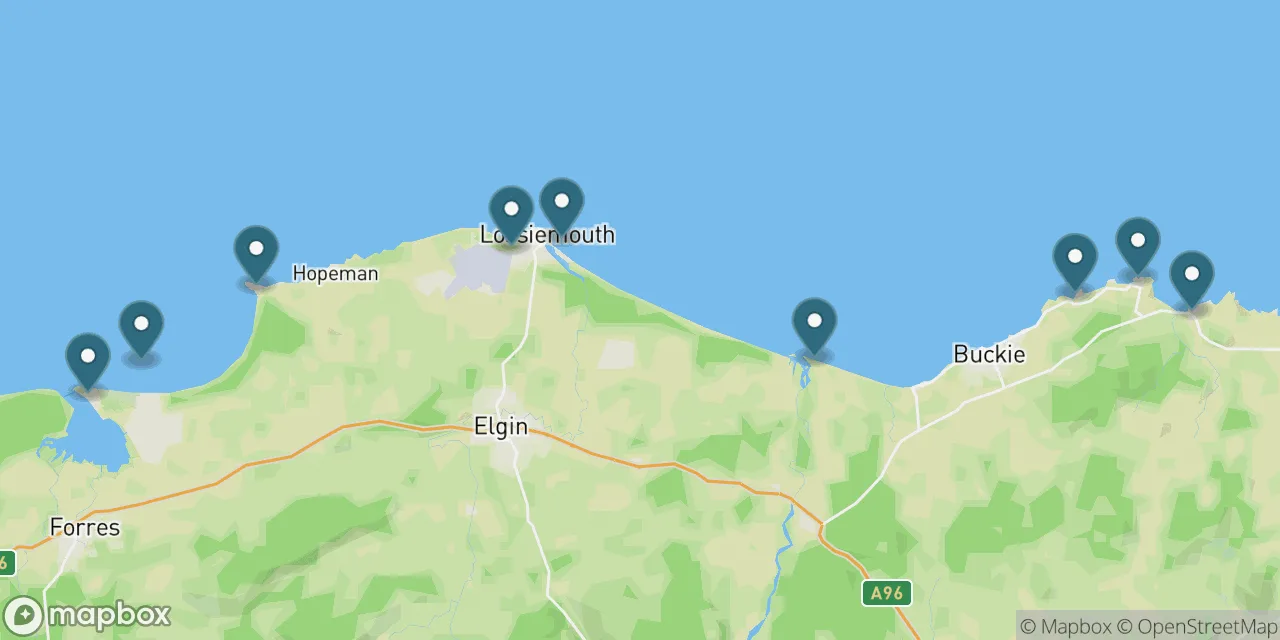 9 beaches on this page
Map these beaches, and thousands more
The Wildpack Map plots every dog friendly walk, beach, stay and attraction we have listed across the UK. Open it to see what else is within reach in Moray, filter by what your dog needs, and get directions to the car park.
What's Nearby?
For a trip that carries on beyond the Moray coast, these guides pick up where this one stops:
- Dog friendly beaches in Scotland: The country-wide selection, useful if you are heading on towards the west coast or the islands.
- Dog friendly walks in the Cairngorms: Follow the Spey inland to the mountains when you want hills instead of sand.
- Dog friendly beaches in Fife with no summer ban: The same year round test on the other side of Scotland's east coast, with harbour villages of its own.
- Dog friendly beaches in County Down with no summer ban: Another coast with no summer dog ban, across the water in Northern Ireland.
Every beach we hold for the county is on the Moray beaches page, and the Wildpack map shows what lies beyond it.
Final Thoughts
Moray suits the owner who values space and wildlife over convenience. The beaches are long, the crowds are thin, and there is a real chance of seeing dolphins from the sand, but you will often be the one bringing the water, the bags and the lunch.
For the longest walk, go to Lossiemouth West. For shelter from a blustery day, take the forest paths behind Roseisle. For wildlife, Spey Bay is the place, as long as your dog is happy on a lead. For a day with a little of everything, start at Portknockie, follow the coast to Cullen, and finish under the Three Kings at low tide.
Some links in this guide are affiliate links. We may earn a commission if you book through them, at no extra cost to you. It never affects which places we list or what we say about them.