
The woods around Birmingham and the Black Country come in pockets rather than great forests, and much of their appeal lies in how close they sit to everyday life. Ancient oak and hazel coppice survives at Chaddesley, Hay Wood runs between Baddesley and Rowington, and Saltwells keeps its bluebells among old clay and coal workings between Dudley and Netherton. These twelve routes run from 2 to 5.6 miles across the West Midlands and the neighbouring edges of Staffordshire, Worcestershire and Warwickshire.
For a dog, the trees bring shade in summer and shelter from wet weather, along with deep leaf litter and fallen timber full of scent. The rules change sharply from one wood to the next. Lickey lets dogs off lead on nearly every trail, while the National Trust estates keep most of the walking on a lead. All twelve sit on the Wildpack map, and we note what counts against each one, which lets you match the wood to your dog before leaving home.
Baddesley Clinton and Hay Wood Circuit
 Photo Credit: DeFacto
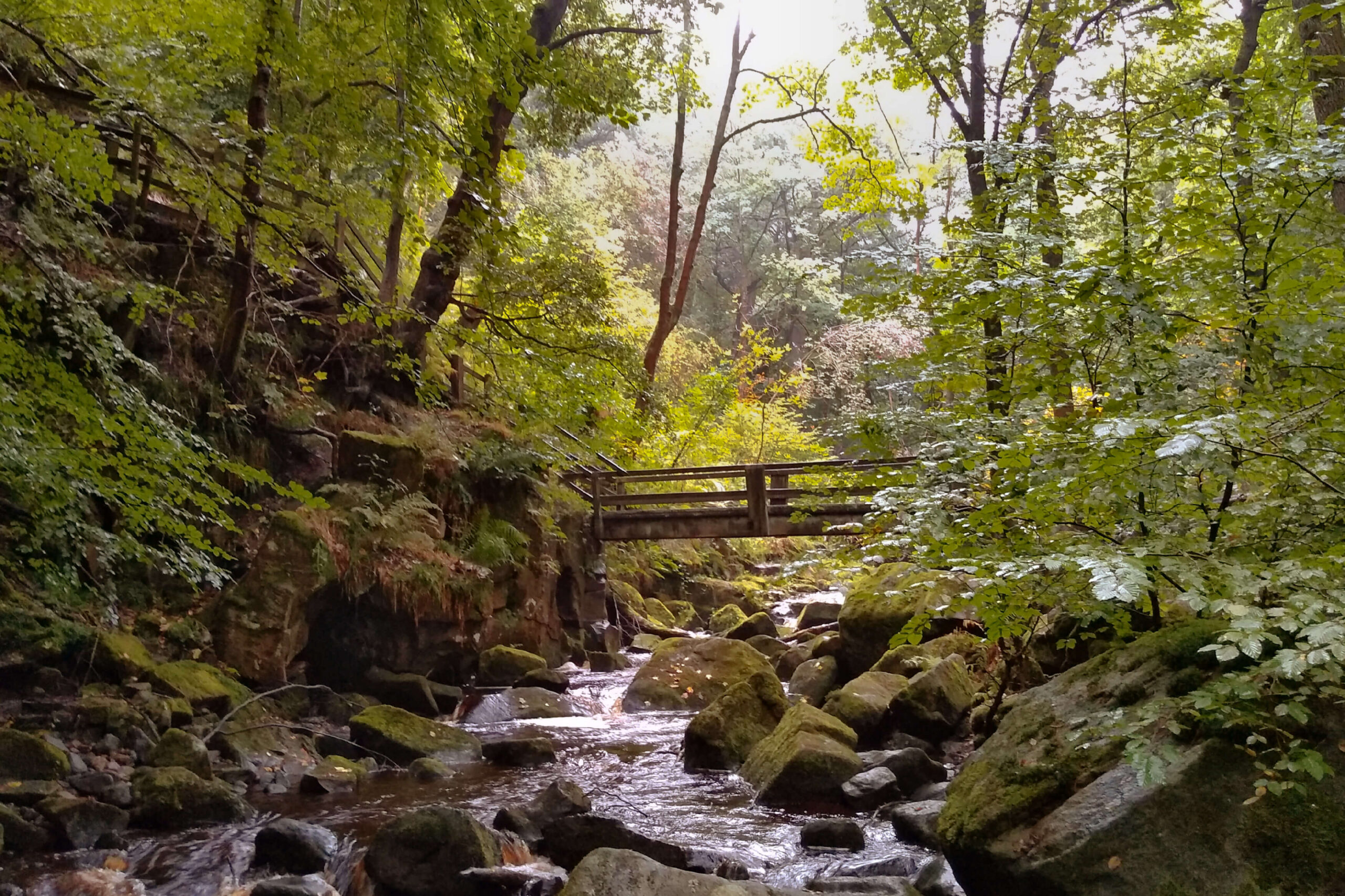
This 4 mile circuit starts with a moated medieval manor in National Trust care and ends up somewhere much wilder. Past the lake and through managed parkland, it crosses into Hay Wood, where the branches meet above you and the paths shrink to muddy tracks between coppiced hazel and holly. Bluebells fill the wood in spring, fungi appear on fallen timber through autumn, and 59 metres of climbing barely registers.
The catch is how much of the walk comes before the good part. Leads are needed through the estate grounds and wherever livestock graze the surrounding fields, so free running is scarce overall and only opens up in the deeper woodland. Muntjac deer also frequent Hay Wood, which dogs notice immediately. The National Trust car park charges non-members, and there is a cafe, shop and toilets at the house, with a dog-welcoming pub in nearby Rowington.
- Distance: 4.0 miles, circular
- Difficulty: Easy
- Terrain: Parkland, lakeside and soft woodland tracks
- Off lead potential: Low, limited to the deeper parts of Hay Wood
- Best for: Older dogs and owners who want a house, a wood and a cafe in one outing
Highgate Common Circular Walk, Wombourne
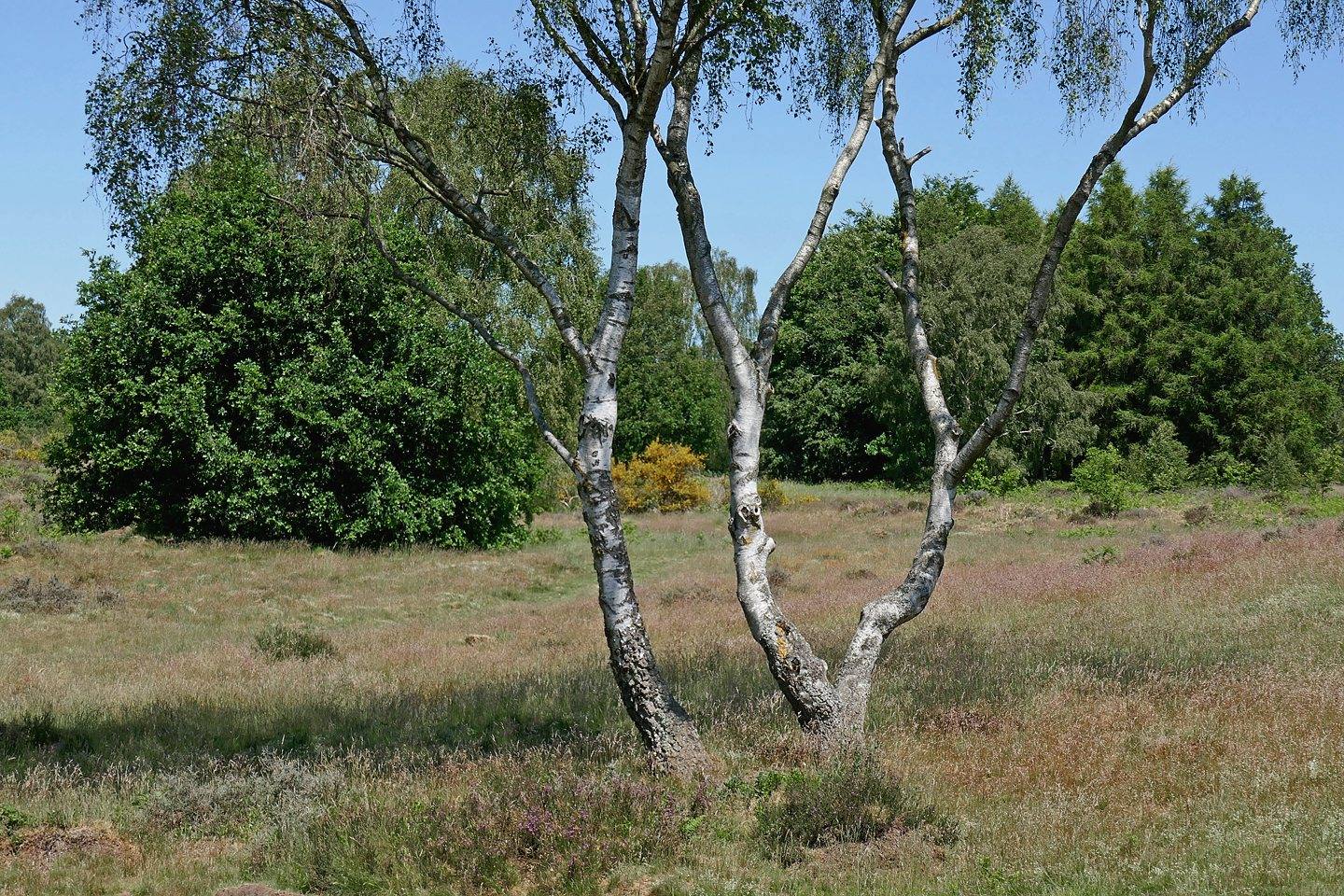
Highgate is a 132 hectare remnant of the lowland heath that once ran for miles across south Staffordshire, and its Second World War years as farmland left concrete tracks you can still trace. Staffordshire Wildlife Trust and Wombourne Parish Council now manage it jointly. The 3.1 mile loop crosses open heather on a sandy ridge above the Smestow valley, then takes in wooded fringes of birch and pine and a couple of ponds.
Woodland is the fringe here rather than the main event, so choose it for space more than for canopy. With no grazing livestock, a dog under effective control can range well away from other walkers, and the ponds offer a paddle on warm days. Wetter hollows turn boggy after rain, the ground can be uneven, and the small holes dug by nesting solitary bees and wasps in summer are worth keeping a nose out of. The Common Road car park is free, with daytime toilets at the main car park and no cafe on site.
- Distance: 3.1 miles, circular
- Difficulty: Easy
- Terrain: Sandy heath paths and mixed woodland, with boggy hollows
- Off lead potential: Moderate, and the common carries no livestock
- Best for: Dogs who want room to roam with some shade to come back to
Lickey Hills Country Park Circular Walk, Rednal

Just south of Birmingham, the Lickey Hills are a chain of wooded ridges under oak, beech and birch, with Beacon Hill as the standout viewpoint. Its 5.6 miles make it the biggest outing of the twelve, undulating through the trees with a steady climb to Beacon Hill and a gentler one up Bilberry Hill. The paths drain well, so it holds up in all seasons.
Dogs can be off lead on nearly all the trails, which is the reason most people come, and there is a water bowl on the visitor centre terrace. Popularity is the trade-off. The free car park fills by mid morning on sunny weekends, leaving only a small lay-by at the trailhead, and dogs have to stay out of the visitor centre itself. Toilets and a small cafe are at the start, and livestock is low.
- Distance: 5.6 miles, circular
- Difficulty: Moderate
- Terrain: Mostly wooded tracks with a handful of steady climbs
- Off lead potential: High, on the main trails
- Best for: Energetic dogs and an early start
Yarningale Common and Lowsonford Canal Walk

Lowsonford is a Warwickshire canal village on the Stratford upon Avon Canal, and this 5.3 mile loop strikes north across farmland to the quiet heath of Yarningale Common, a designated SSSI. It returns along the towpath beside some lovely stretches of still water, through kissing gates and along short sections of country lane.
We will be straight about it: this is the least wooded walk here, a canal and common route with trees along the way rather than a walk through a wood. Dogs must be on a lead along the towpath and through fields grazed by livestock and horses, and the field sections get properly muddy after heavy rain. Parking is tight too, with roadside room for around six cars and more at the Fleur de Lys for paying customers. That pub, dog friendly and known for its lardy cake, is the reward at the end.
- Distance: 5.3 miles, circular
- Difficulty: Moderate
- Terrain: Flat towpath, field paths and short road sections, muddy in winter
- Off lead potential: Moderate, with leads on the towpath and near livestock
- Best for: Lead-steady dogs and a pub at the finish
Clowes Wood and New Fallings Coppice, Earlswood

Warwickshire Wildlife Trust manages this SSSI on the edge of Earlswood, a pocket of ancient oak and birch with wet meadows and heathland alongside. The 4.7 mile loop links the bluebell woods to Earlswood Lakes and Terry's Pool by way of the Birmingham to Stratford canal, so a dog gets shade, open water and quiet lanes on mainly level ground.
Dogs can trot off lead through most of the woodland, which makes this one of the strongest all-round choices here, but leads go on at the canal towpath, at road crossings and near livestock on the adjacent farmland. Expect mud and roots after wet weather too. The reserve has no toilets, and the free car park on Wood Lane has modest capacity. Cafes at the Earlswood Craft Centre and beside the lakes cover the stop afterwards.
- Distance: 4.7 miles, circular
- Difficulty: Easy
- Terrain: Gentle woodland paths, canal towpath and short lane sections
- Off lead potential: High in the woodland, with leads at the canal and roads
- Best for: Dogs who like a run under trees with water at the end
Kinver Edge Rock Houses Circular Walk

Kinver Edge is a wooded sandstone ridge on the Staffordshire and Worcestershire border, owned by the National Trust and known for the Holy Austin rock houses carved straight into the cliff. This 3.2 mile circular climbs through beech and birch onto the open edge, then drops back past the rock houses on good gravel paths, with a couple of short steep sections on the way.
Dogs can be off lead across most of the edge, but the exceptions need watching. Seasonal lead areas are signed near ground nesting bird habitat, and a lead is needed in the cattle enclosures on the heath and around the tea room. The wooded sections can also get greasy when wet, which matters on the steeper pitches. Parking on Compton Road is free, the tea room is seasonal, and Kinver village has toilets and cafes a short walk away.
- Distance: 3.2 miles, circular
- Difficulty: Moderate
- Terrain: Gravel paths and wooded climbs, greasy after rain
- Off lead potential: Moderate, with cattle enclosures and seasonal restrictions
- Best for: Sure-footed dogs and a dose of history along the way
Chaddesley Woods, Chaddesley Corbett
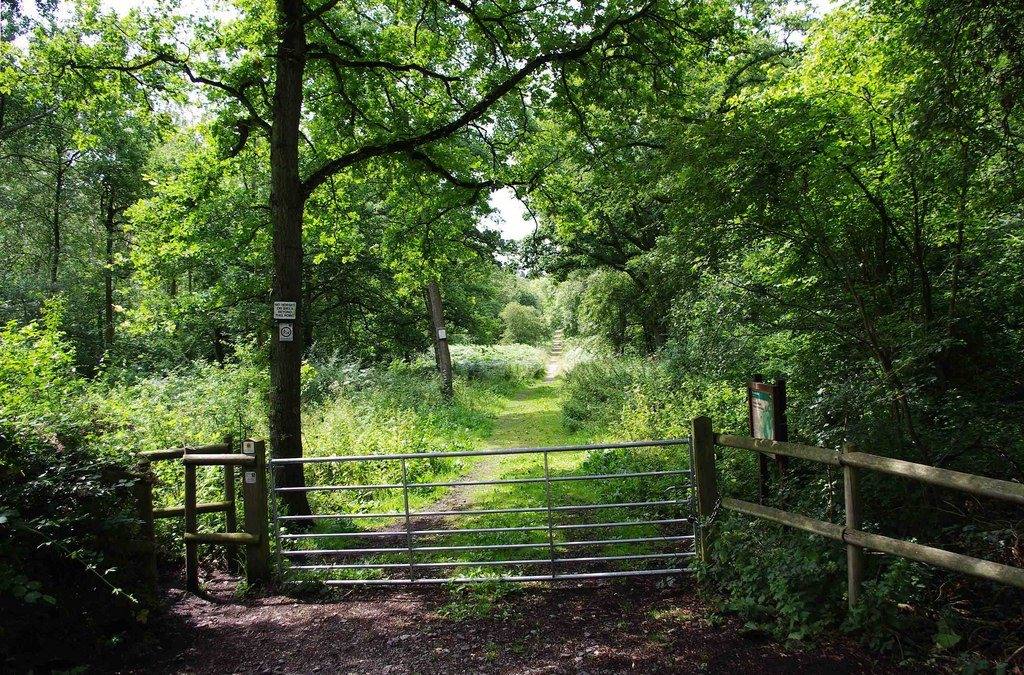
Few woods carry a longer record than this one. The eastern half of this 101 hectare National Nature Reserve is oak and hazel coppice thought to have been wooded for around 10,000 years, since the last Ice Age. Worcestershire Wildlife Trust looks after the reserve, also an SSSI, and is restoring the former conifer plantation on the western side to native broadleaf. The 3.1 mile circuit follows the main tracks and rides on mostly level ground.
With no livestock on the wooded paths and a canopy that holds its shade through summer, this is the most purely woodland walk on the list, and standing dead wood left for beetles and hole-nesting birds gives a dog plenty to investigate. The drawback is the lack of anything else. There are no facilities in the reserve, so bring water, and the car park near the entrance is small. The Hockley and Black Meadow grasslands open only on the Trust's designated days, so keep to the woodland paths at other times. Chaddesley Corbett village, a short walk away, has a dog friendly pub.
- Distance: 3.1 miles, circular
- Difficulty: Easy
- Terrain: Wide woodland rides and forest tracks, mostly level
- Off lead potential: Moderate, with no grazing livestock on the wooded paths
- Best for: Hot days and owners who want a real old wood
Packwood House Estate Circuit
 Photo Credit: Derek Harper
The National Trust looks after Packwood, a Tudor manor between Solihull and Henley-in-Arden, and this 4 mile circuit keeps changing its surroundings. It moves from field edges to the Grand Union Canal towpath, past narrowboats and stone bridges, then into the shaded paths of Chessetts Wood, which fills with bluebells in spring. Just 62 metres of climbing keeps everything gentle.
Your dog will see the estate rather than the famous yew garden, because dogs are not permitted in the formal gardens. Off lead potential is also limited, as the route crosses fields with seasonal grazing, and those crossings can be muddy after rain. What the walk offers instead is variety: water access on the towpath and rich scent under the trees, on mostly firm estate paths. The National Trust car park charges non-members, the cafe and toilets are on site, and the Nag's Head in Hockley Heath welcomes dogs.
- Distance: 4.0 miles, circular
- Difficulty: Easy
- Terrain: Woodland, canal towpath and parkland
- Off lead potential: Low, with seasonal livestock in the fields
- Best for: Dogs who enjoy a change of scene more than a long run
Clent Hills Circular Walk

The Clent Hills are a cluster of ancient summits in the far north of Worcestershire, cared for by the National Trust and very popular with Birmingham dog walkers. This 2.4 mile loop climbs steeply but briefly out of Nimmings Wood to the viewpoint and four standing stones on Clent Hill, with views over three counties, then descends more gently through the beech woods.
The grassy top is what most people remember, and it comes with a condition: sheep are usually out in the grazed fields near the summit, so leads go on there, and also in the car park and cafe courtyard. That leaves the woods as the easier place to relax. The walk is also short for a fit dog. Nimmings Wood has pay and display parking, a cafe with dog bowls, a small shop and toilets, and Walton Hill just down the road has free parking.
- Distance: 2.4 miles, circular
- Difficulty: Easy
- Terrain: Grass and woodland paths with a short sharp climb
- Off lead potential: Moderate, with sheep near the summit
- Best for: A quick outing with a view and a cafe at the bottom
Saltwells Nature Reserve Circular, Netherton

Saltwells is one of the country's largest urban nature reserves and the jewel of the Black Country Geopark, tucked between Dudley and Netherton. At 2 miles this is the shortest route here, looping through Saltwells Wood and Doulton's Claypit, past the clay and coal workings that give the reserve its gritty industrial backstory. Colour-coded paths make it easy to follow, and most of the going is flat.
Dogs can mooch off lead through the woods where the sight lines are open, but this is no place to switch off. A lead is sensible near the canal, the main entrance and the quarry edges, and some of the rougher sections turn muddy after rain. There are no toilets on the reserve. The free car park behind the Saltwells Inn has room for around forty cars, and the inn itself serves food and welcomes dogs.
- Distance: 2.0 miles, circular
- Difficulty: Easy
- Terrain: Surfaced paths and woodland trails, muddy in places
- Off lead potential: High in the woods, with leads near the quarries and canal
- Best for: A short weekday run and dogs who love bluebell-season scent
Hanbury Hall Estate Circuit, Worcestershire
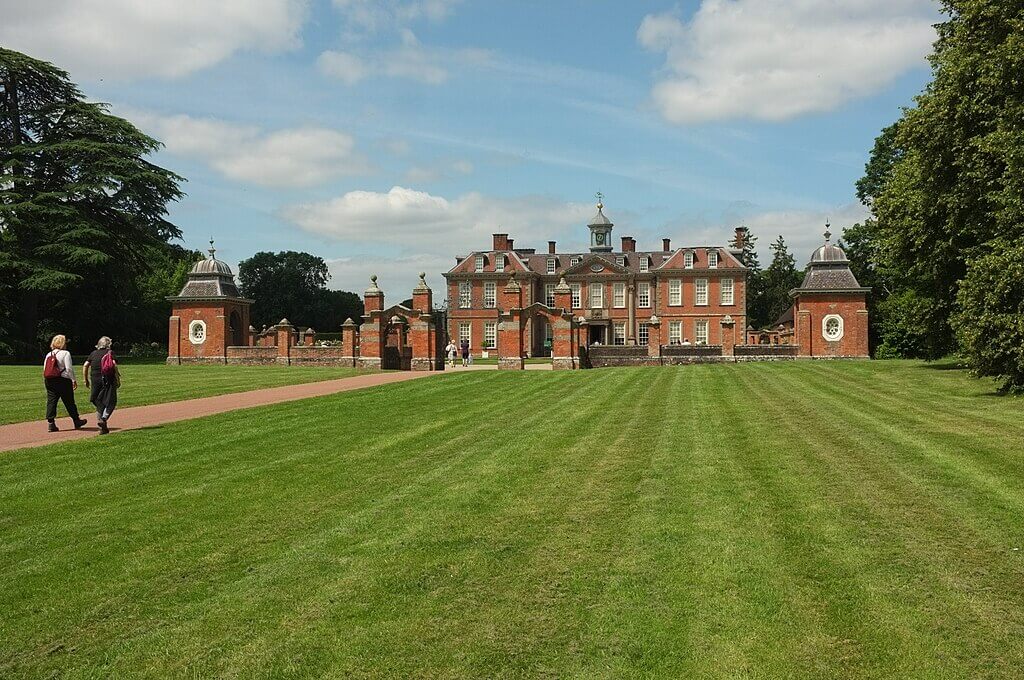 Photo Credit: Derek Harper
A William and Mary mansion east of Droitwich anchors this 4 mile circuit, which uses the hall's 400 acres to link parkland with woods and towpath. The route passes through working farmland and mature broadleaf woodland thick enough to pass for real forest, with a peaceful stretch of the Worcester and Birmingham Canal adding water access and an easy towpath rhythm.
Leads are required in most areas of the estate and livestock is moderately likely in the farmed sections, so this walk only suits a dog happy to stay attached, and anyone looking for a free run should head elsewhere. The compensation is ease, on terrain that suits dogs of all ages. The National Trust car park charges non-members, and there is a cafe, shop and toilets at the hall.
- Distance: 4.0 miles, circular
- Difficulty: Easy
- Terrain: Woodland, canal towpath and parkland
- Off lead potential: Low, as most of the estate is on lead
- Best for: Unhurried dogs used to a lead
Arrow Valley Country Park
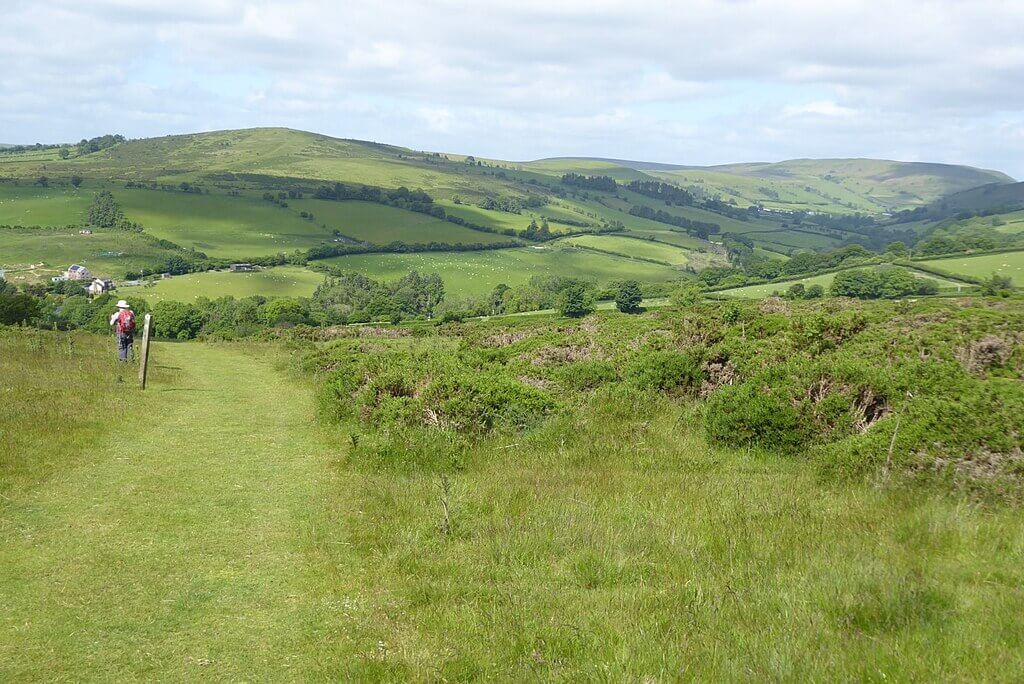 Photo Credit: Philip Halling
Arrow Valley spreads across 900 acres on the southern edge of Redditch, built around a central reservoir and lake where the River Arrow runs through woodland, wetland and meadow. The main lakeside circuit is 3 miles on surfaced paths with water in view throughout and just 40 metres of climbing, and extensions into the woods and meadows can stretch the walk to 11 km.
The trees here were planted, not inherited. They have matured into something dense and shady, but this is a managed country park rather than an old wood, and it feels that way on the surfaced lakeside paths. Swans, geese and other wildfowl live on the lake year-round, which keeps dogs alert and may test your recall, and some meadows are grazed periodically, so check before letting a dog run. The shoreline is open for wading in several places. Parking is paid, with toilets, a cafe and a visitor centre.
- Distance: 3.0 miles, circular
- Difficulty: Easy
- Terrain: Surfaced lakeside paths, with woodland and riverside extensions
- Off lead potential: Moderate, with periodic grazing in the meadows
- Best for: Older dogs and everyday walks with facilities close by
Practical Advice for Woodland Dog Walks in West Midlands
- Choose by the lead rule: Lickey, Clowes Wood and Saltwells offer the most off lead time, while the National Trust estates at Baddesley Clinton, Packwood and Hanbury keep most of the walking on a lead.
- Expect mud after rain: Hay Wood, Clowes Wood, Saltwells and the Yarningale field sections all turn soft, and Highgate Common has boggy hollows.
- Carry water to the quieter reserves: Chaddesley Woods has no facilities at all, and neither Clowes Wood nor Saltwells has toilets on the reserve.
- Arrive early at the popular car parks: the free spaces at Lickey fill by mid morning on sunny weekends, and Lowsonford has room for only around six cars by the road.
- Respect the seasonal signs: ground nesting bird areas at Kinver are marked on the ground, and the Chaddesley meadows open only on the Trust's designated days.
- Watch for wildlife in the undergrowth: muntjac live in Hay Wood, and solitary bees and wasps nest in the sandy ground at Highgate in summer.
Map of Woodland Dog Walks in West Midlands
Plotted together, the walks form a loose arc around Birmingham, with Highgate, Kinver and Saltwells to the west, Lickey, Clent and Chaddesley to the south west, and Clowes Wood, Packwood and Baddesley Clinton to the south east. Hanbury, Arrow Valley and Lowsonford sit further south. For places to stay close to any of them, and for further routes in the same countryside, open the Wildpack map.
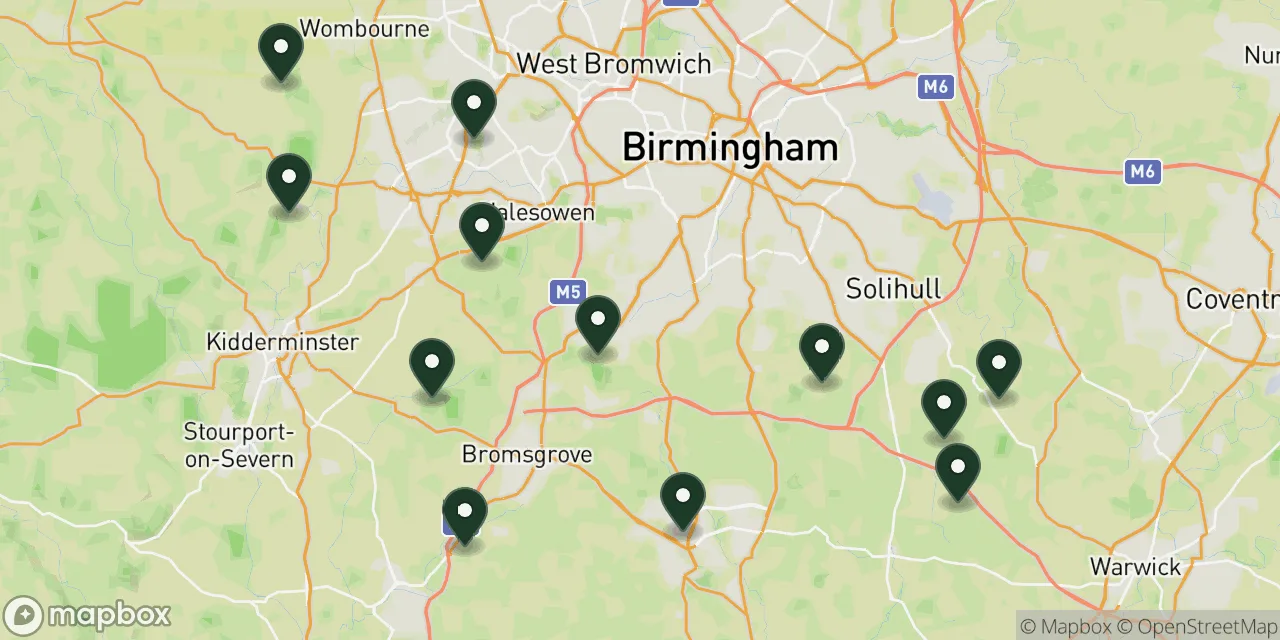 12 walks on this page
Map these walks, and thousands more
The Wildpack Map plots every dog friendly walk, beach, stay and attraction we have listed across the UK. Open it to see what else is within reach in West Midlands, filter by what your dog needs, and get directions to the car park.
What's Nearby?
If you want more after these woods, try these next:
- Dog friendly walks in Warwickshire: More towpaths and country parks for anyone who liked Lowsonford or Packwood.
- Dog friendly walks in Worcestershire: A wider look at the county beyond Clent and Chaddesley, out to the Malvern Hills.
- Dog friendly walks in Staffordshire: Moorland views and woodland trails north of Highgate Common and Kinver.
- Dog friendly walks in Shropshire: Quiet hills and old paths to the west, for a longer trip out of the city.
- Woodland dog walks in the Peak District: Oak gorges and shaded rivers, if the trees are what brought you here.
The full lists for the area are under the West Midlands and Worcestershire.
Final Thoughts
These woods suit owners who live nearby and want somewhere reliable for a regular walk more than they suit anyone chasing a grand day out. If your dog needs to run, go to Lickey, Clowes Wood or Saltwells. If you care most about the trees themselves, Chaddesley Woods is the one to choose, provided you bring your own water.
Baddesley Clinton, Packwood and Hanbury are lead walks with a cafe attached, and they work best when the dog is settled and you want a house to look at. For an older dog, the surfaced paths at Arrow Valley ask the least. And if you only have an hour, the short climb at Clent gives you beech woods and a view over three counties.
Some links in this guide are affiliate links. We may earn a commission if you book through them, at no extra cost to you. It never affects which places we list or what we say about them.